Replacing a lawn with new grass usually costs somewhere between a few hundred dollars and a few thousand, and the final number depends far more on what is under the old lawn than on the grass you choose. Removal, grading, soil and irrigation fixes often cost more than the seed or sod itself. If you are replacing grass because of drought, water bills or upkeep, the better question is what the lawn will cost you over the next ten years, and a water-wise landscape designed for your yard can change that math. We design and build those landscapes, so this guide shows the real numbers first and then where a different kind of lawn replacement pays off.
TL;DR
- One published homeowner guide puts new-lawn projects at $400 to $22,500, with a national average of $2,380; size and scope drive the spread.
- Seed is the cheapest way to grow grass, sod costs more but establishes faster, and artificial turf is the most expensive per square foot.
- Tearing out a neglected lawn, grading and hauling away debris can add $1,000 or more before any new grass goes down.
- Cool-season lawns are best replaced in early fall; sod is more forgiving on timing than seed.
- In dry regions, replacing grass with a drought-tolerant garden can cut ongoing water use and may qualify for a rebate, so check before you remove anything.
Table of Contents
- What a lawn replacement actually costs
- Seed vs. sod: why the price gap exists
- The costs most quotes bury
- A worked example: a 1,000 square foot lawn
- What is the cheapest way to replace grass?
- When to replace a lawn
- Replacing grass in a dry climate
- How to get an accurate quote
- Our perspective
- Plan the replacement with a designer first
- FAQ
- Sources
What a lawn replacement actually costs
The most useful way to read cost figures is as ranges tied to a method. According to Bob Vila’s budget guide, a new lawn in the United States can run from $400 to $22,500 in total, with an average of $2,380. That is a wide range because “replace my lawn” can mean anything from re-seeding a small patch to stripping a whole property and starting over.
The same guide breaks the cost down by method:
| Method | Typical total cost | Best suited to |
|---|---|---|
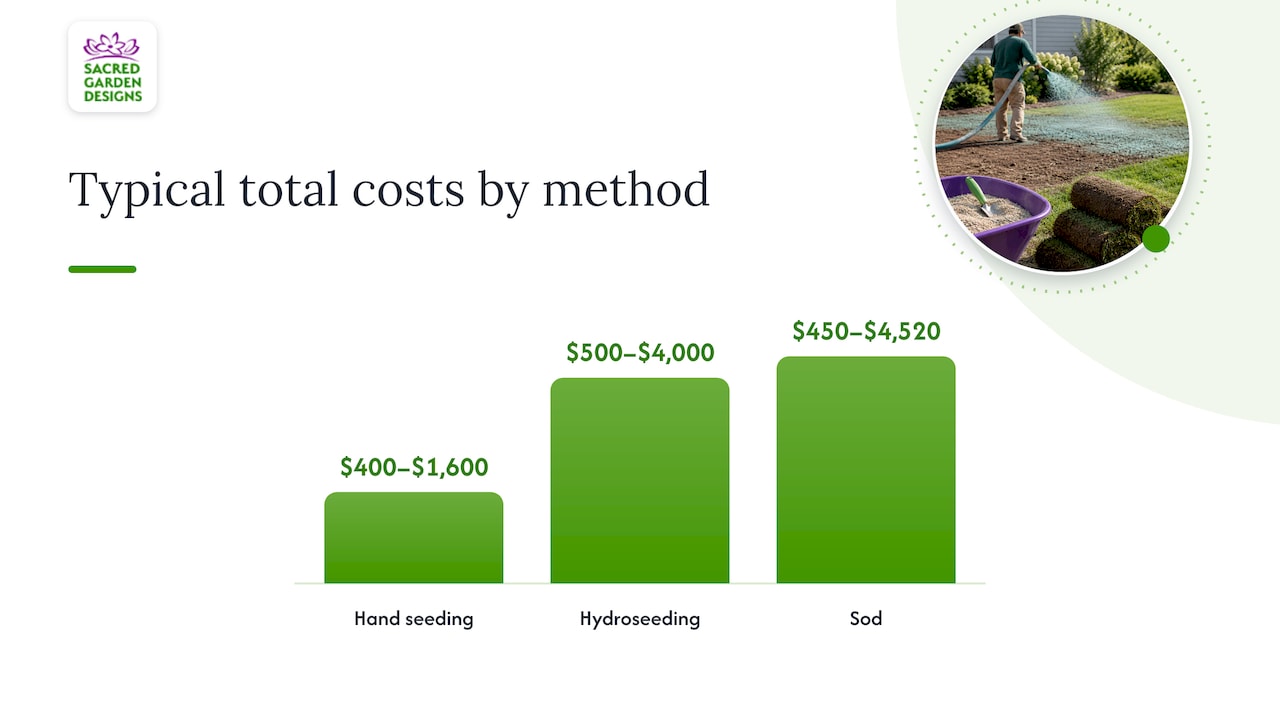
| Hand seeding | $400–$1,600 | Small to mid-size yards, tight budgets, patience for a few months of establishment |
| Hydroseeding | $500–$4,000 | Larger areas and slopes where a sprayed seed-and-mulch slurry helps hold soil |
| Sod | $450–$4,520 | Fast results, erosion control, yards you want to use within weeks |
| Artificial turf | $6–$20 per square foot | Zero-water surfaces, though with the highest upfront price |
Source for the ranges: Bob Vila’s new-lawn guide. Prices are national figures from 2024 and will differ by region, season and contractor, so treat them as a way to sanity-check a quote, not as a quote.
Because the lowest and highest totals are so far apart, size matters. Cost per square foot is the cleaner comparison, and it is what an estimator will use. Ask any contractor to write quotes per square foot with prep, materials and haul-away shown separately. That lets you compare bids on equal terms.
Seed vs. sod: why the price gap exists
Seed costs less per square foot than sod. The University of Maryland Extension explains the tradeoff plainly: seed takes longer to establish and carries a greater risk of weed invasion and erosion, while sod costs more, establishes faster and reduces erosion risk right away. Sod is also heavier and more labor-intensive to transport and lay.
How big is the premium? Columnist Jeff Rugg, in a September 2026 lawn-renovation article, describes sod as costing three to ten times more than seed. He attributes part of that to sod growers maintaining mature grass while controlling water, fertility, insects, disease and compaction. You are buying a lawn that has already survived its most fragile stage.
In practice:
- Seed makes sense when the budget is tight, the area is flat and you can keep the soil evenly moist for several weeks.
- Sod makes sense on slopes, near driveways where runoff is a concern, or when kids and pets need the space soon. Rugg notes it can be installed whenever water is available and the ground is not frozen, and becomes usable within weeks.
- Hydroseeding sits in the middle, and it is usually quoted by the job for larger areas.
The costs most quotes bury
Grass is often the smaller line item. The bigger numbers come from the work before it.
Removing the old lawn
Stripping existing turf is labor and disposal. Bob Vila’s guide says removal of severely neglected grass and debris can cost $1,000 or more, and delivery fees for soil or materials can run $75 to $350 for five cubic yards depending on location. A quick estimate for a healthy, even lawn will be much lower than a yard full of weeds, roots, old irrigation and buried rubble.
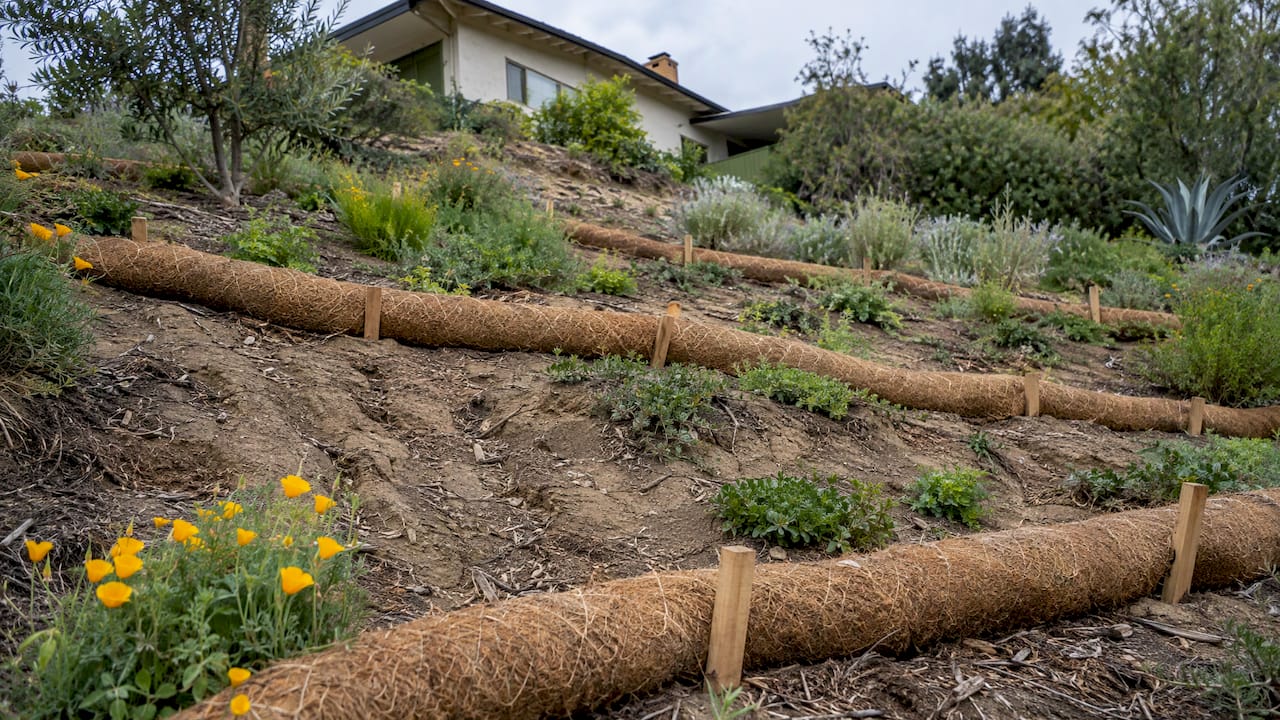
If the job involves regrading, drainage changes or moving significant soil, the work starts to look like site preparation and excavation, and costs rise accordingly. Flag any low spots or standing water before you get quotes, because correcting drainage after new grass is down means tearing it up again.
Labor
The same guide says laborers charge about $35 to $75 per hour for lawn installation, and a professional typically lays about 25 square yards of sod per hour. That is 225 square feet an hour, which gives you a way to check a bid.
Soil, grading and irrigation
New grass in compacted or depleted soil struggles, and then you pay twice. Budget for amending the soil, leveling the surface and checking that sprinkler heads cover the new area evenly. Old heads often sit at the wrong height once the grade changes. If your irrigation is aging, replacing it at the same time is cheaper than reopening a finished lawn later.
A worked example: a 1,000 square foot lawn
Here is how the pieces add up for a 1,000 square foot front yard. The labor figure below is our own arithmetic from the published rates, not a quote.
- Laying sod: 1,000 square feet is about 111 square yards. At 25 square yards an hour, that is roughly 4.4 hours. At $35 to $75 an hour, labor for laying alone comes to about $155 to $333.
- Removal and haul-away: A healthy lawn is a modest job. A neglected one can reach $1,000 or more, per the guide above.
- Materials and delivery: Sod or seed, soil amendments and delivery fees, which can be $75 to $350 for five cubic yards depending on where you live.
- Irrigation adjustments: Priced by the contractor once they see the system.
- Artificial turf alternative: At $6 to $20 per square foot, the same 1,000 square feet would run $6,000 to $20,000.
The point is that the project total moves with the prep, not the grass. Two neighbors with identical lawns can pay very different amounts if one yard is flat and clean and the other needs regrading.
What is the cheapest way to replace grass?
Seeding is the lowest-cost way to get a green lawn, and it costs the least when you do the prep well. Cheap does not mean cost-free: seed needs steady watering while it germinates, and thin spots invite weeds. If you plan to hire out any of it, ask for the prep and the planting to be priced separately.
There is a bigger savings available for many homeowners. A lawn is a recurring expense: water, mowing, fertilizer and reseeding. A lawn that you replace with a lower-water landscape does not start that cycle again. Our guide to lawn alternatives that match play, pets and shade shows how to cut water use by 40 to 70 percent, and a no-dig sheet mulching method can remove grass without hauling it all away.
When to replace a lawn
Timing affects both success and cost, because a failed seeding means paying twice.
- Cool-season grasses: The University of Maryland Extension recommends late summer to early autumn, roughly mid-August to mid-October for Maryland. Spring planting is harder. Rugg agrees that fall is best, with early to mid spring second.
- Warm-season grasses: The Extension recommends late spring to early summer, mid-May into June for Maryland.
- Sod: It has a longer window. The Extension says it can go down when the ground is above freezing and daytime temperatures are below 90°F.
Those dates are for Maryland, so use them as a pattern and ask your local cooperative extension office for your area. Because it is now mid-November, in much of the country the practical window for seed has closed and the better plan is to get quotes over winter for early spring or fall work. If you have an irrigation system, winterizing your sprinkler system protects the lines you will rely on when the new lawn goes in.
Replacing grass in a dry climate
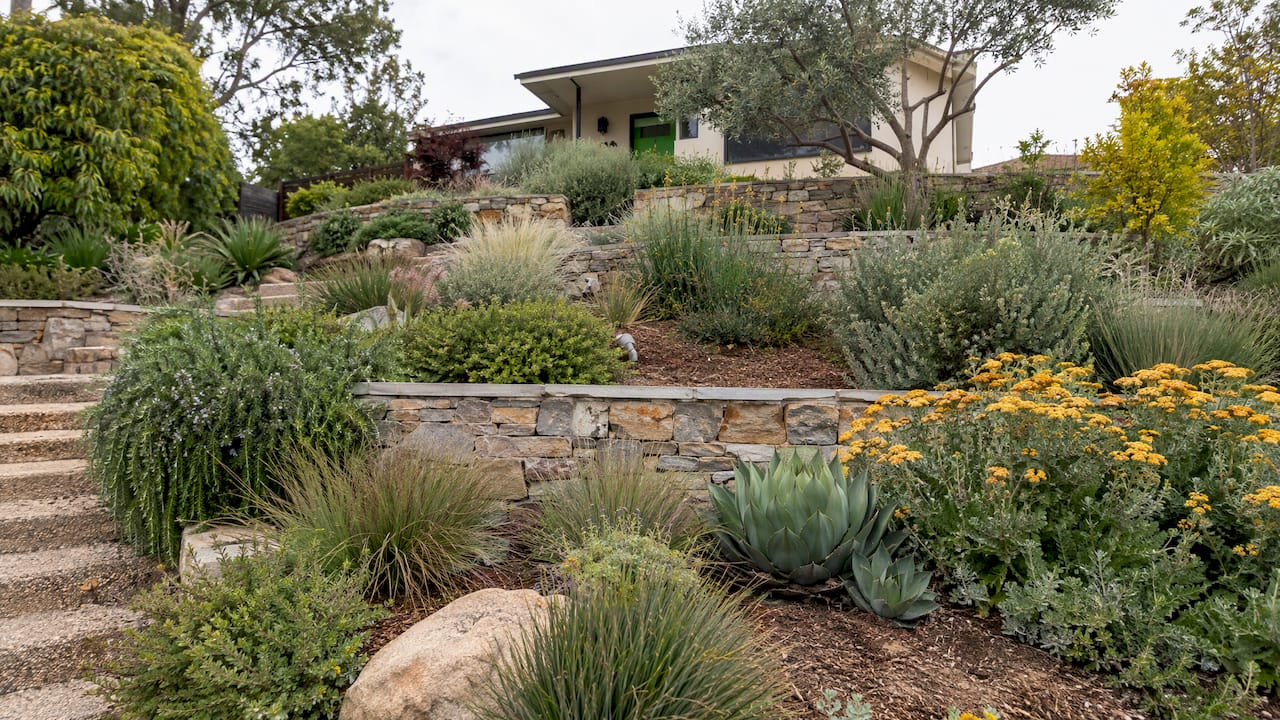
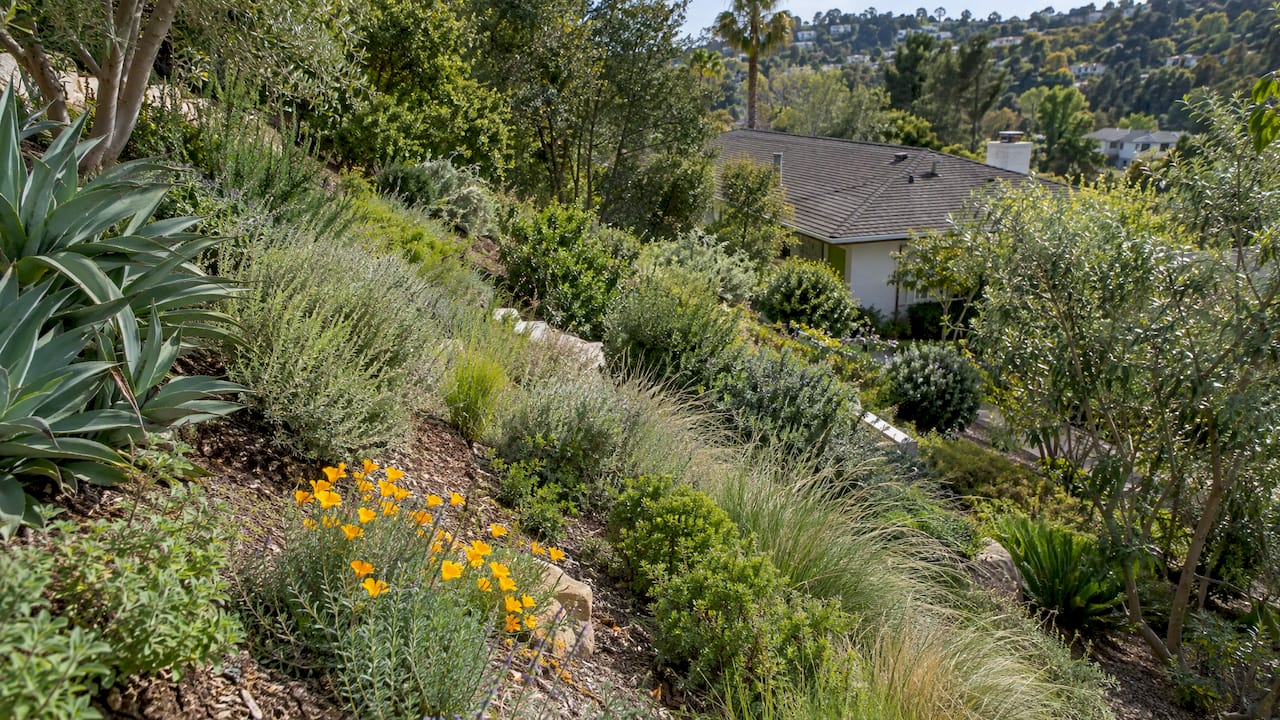
In Los Angeles and similar drought-prone regions, replacing the lawn with new grass can be the costliest long-term choice because the water bill never stops. A drought-tolerant landscape moves the cost to the front, at installation, and trims it afterward.
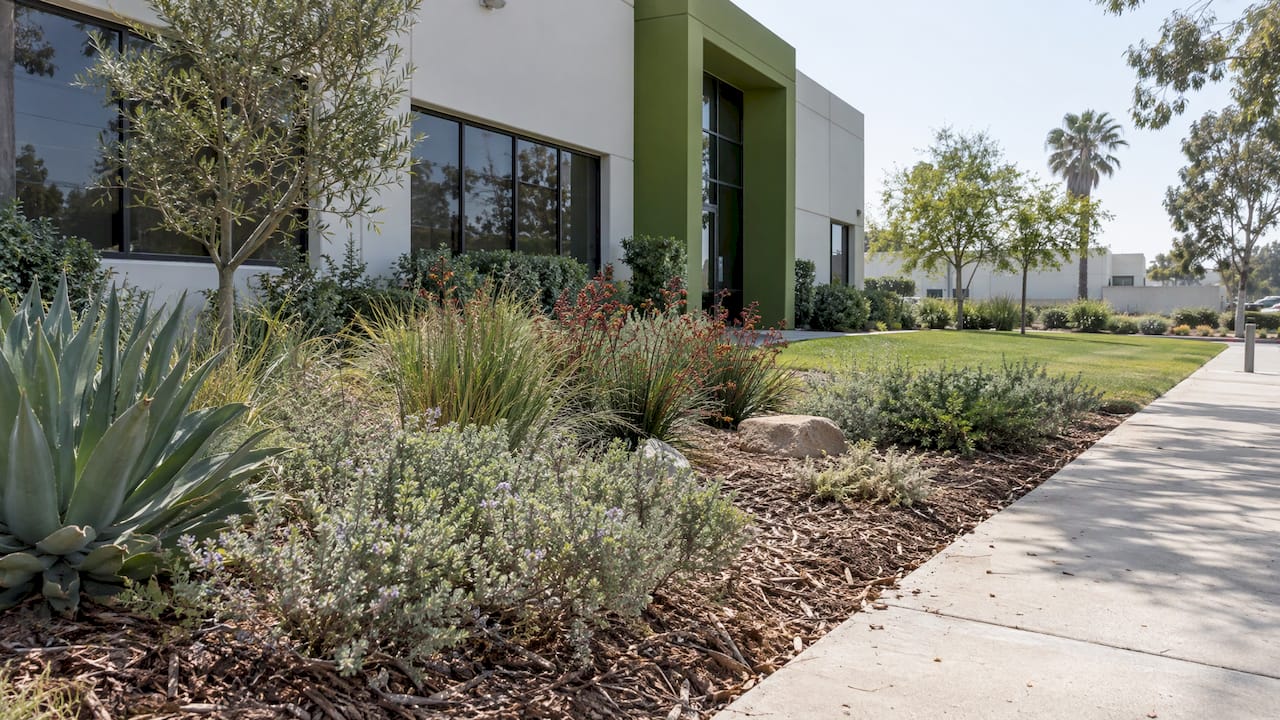
Policy is moving the same way. Starting in January 2027, California prohibits potable water for irrigating non-functional turf on non-residential properties such as schools, parks, homeowner associations and office parks. The regional program for these properties also offers a rebate for turf replacement, but rebate amounts depend on funding and change over time, and you must apply and be approved before you start. Residential rules differ by water agency. Our guide to the LADWP turf replacement rebate explains why reserving preapproval first matters in Los Angeles. If you manage a property, see our commercial drought landscaping guide.
If you want to keep a usable patch for kids or pets, you do not have to choose all or nothing. The idea behind keeping a play patch and converting the rest is to shrink the high-maintenance area to the part you actually use. For a smaller yard, a small yard drought design shows how a plan comes together. Homeowners who want wildlife value can read about converting a lawn to a native wildlife garden over one to three years.
How to get an accurate quote
Few homeowners get a dependable price from a phone call. Before anyone prices the job, have these ready:
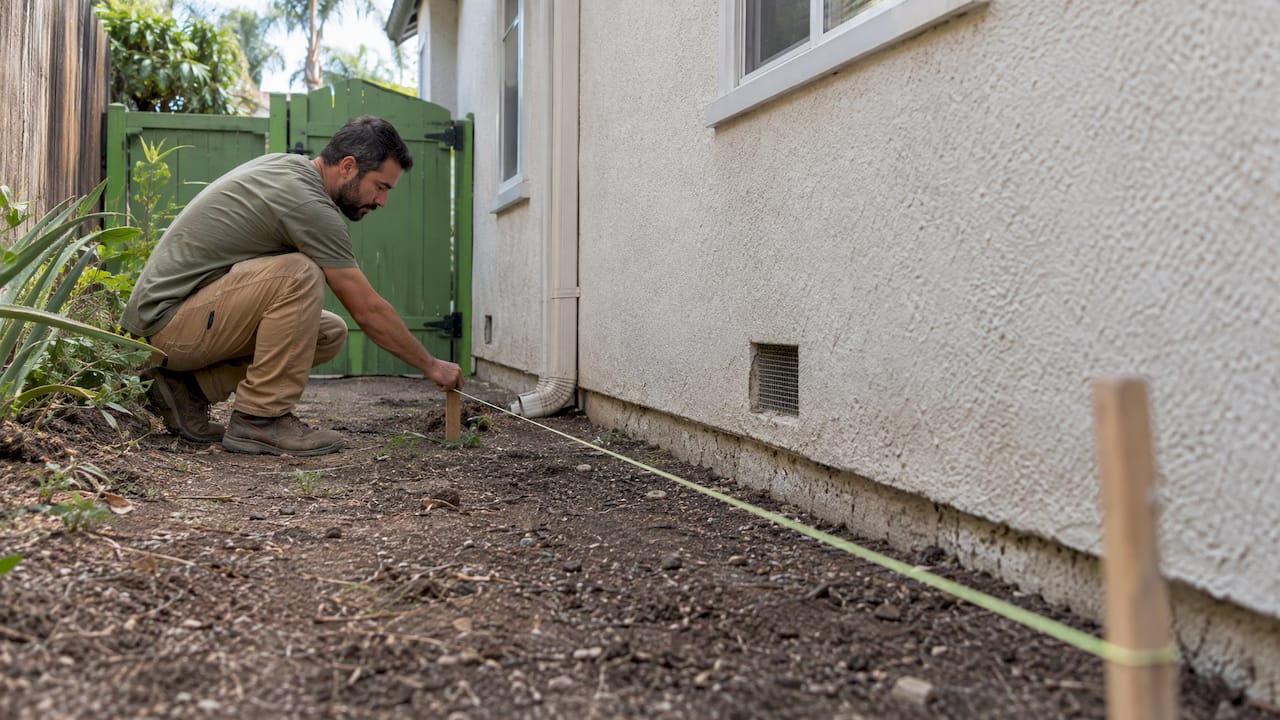
- Measured square footage of the area, not the whole lot.
- A description of the current lawn: healthy, patchy, weedy or compacted.
- Slope and drainage notes: where water pools and where it runs off.
- Irrigation status: what exists, what works and what needs relocating.
- Your goal: a lawn again, a lower-water yard or a mix of play space and planting.
Then ask that quotes show removal, soil work, materials, irrigation and labor as separate lines. A single lump sum hides the pieces you most need to compare.
Our perspective
Most homeowners who ask us about lawn replacement cost are really asking how to stop paying for a lawn that is working against their yard. Swapping dead grass for new grass fixes the surface, but the water, mowing and upkeep come back with it.
For more than 25 years we have designed and built water-wise landscapes in Los Angeles and beyond, where drought and climate pressure are daily facts. Our approach joins design and environmental thinking so that a yard looks good, works for the people who use it and handles dry years. We start with how you live in the space, then choose plants, hardscape and irrigation to suit it.
That is why we would rather talk to you before you spend money on removal and sod. A design done first tells you what to remove, what to keep and what the site needs, so the money goes into a yard that lasts.
Denise Buchanan
Plan the replacement with a designer first
If you want a yard built around your site, our landscape design service is priced per project. Landscape design for yards under 5,000 square feet is $1,500, and a full landscape design is $2,500. We also offer sustainable landscape design and installation, irrigation design and installation, slope stabilization, hardscape and clean-up and haul-away, so the removal, planting and watering can be planned as one project. You can see the full list on our services page.

If you would like to start with a conversation, we offer an initial landscape consultation. Reach us through Sacred Garden Designs.
FAQ
How much does it cost to replace my lawn?
Published national figures range widely, from $400 to $22,500, with an average of $2,380, according to Bob Vila’s guide. Your price depends on lawn size, the method, how much old grass and debris must come out, and your local labor rates. Get itemized quotes for removal, prep and planting.
What is the cheapest way to replace grass?
Seed costs less per square foot than sod, according to the University of Maryland Extension. It takes longer to establish and carries a greater risk of weeds and erosion, so it works best on flat ground with consistent watering. Reducing the lawn area also lowers the cost.
What time of year should I replace my lawn?
For cool-season grass, fall is best and early to mid spring is second best, according to columnist Jeff Rugg. Warm-season grass goes in during late spring to early summer. Sod has a wider window than seed. Local climate sets the exact dates, so ask your cooperative extension office.
Is sod worth the extra cost?
Sod costs three to ten times more than seed, per Rugg, but it controls erosion faster and can be used within weeks. That makes it a sound choice on slopes or where you need the yard back quickly. On a flat yard with time to spare, seed can meet the same goal for less.
Can I replace my lawn without grass?
Yes. Drought-tolerant gardens, native plantings and mixed designs with a small play area are common replacements. In California, check rebate rules and apply before removing turf, since approval usually comes first. Our LADWP turf replacement guide covers the Los Angeles process.
Sources
- How Much Does a New Lawn Cost? (Budget Guide)
- Starting a New Lawn, University of Maryland Extension
- Renovating a Lawn, by Jeff Rugg
- Commercial Turf Replacement Program, SoCal Water$mart