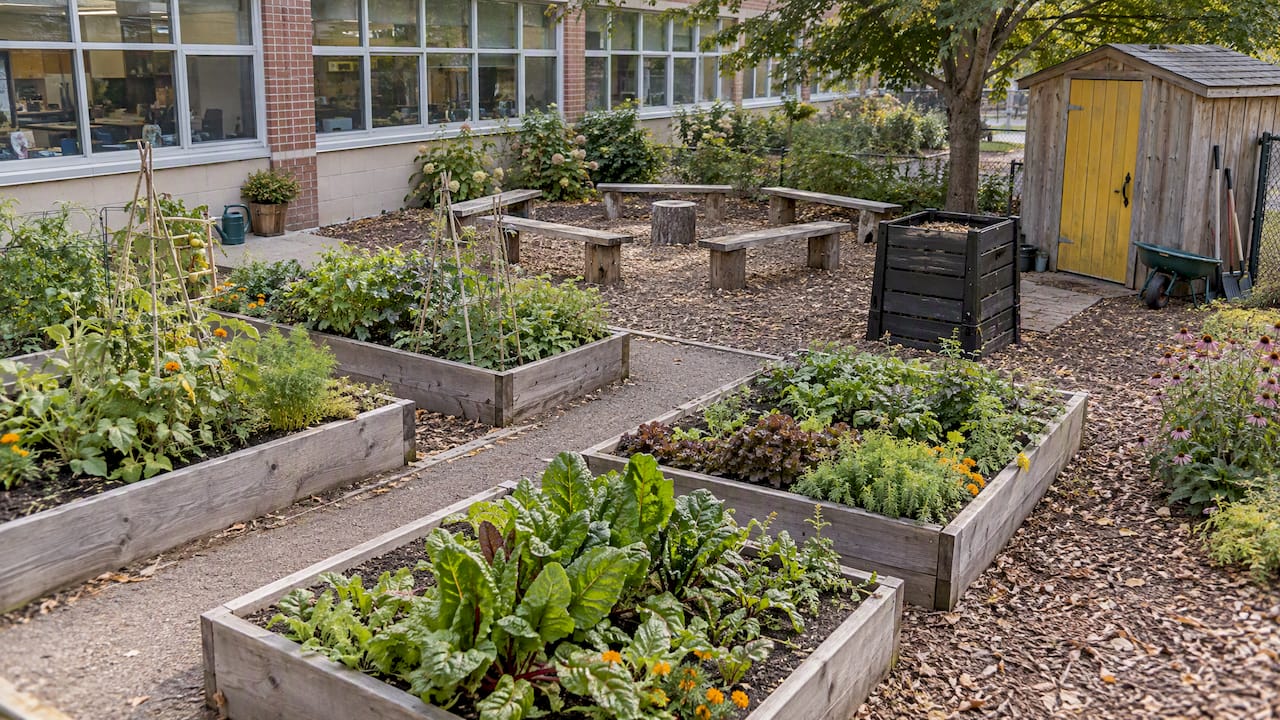
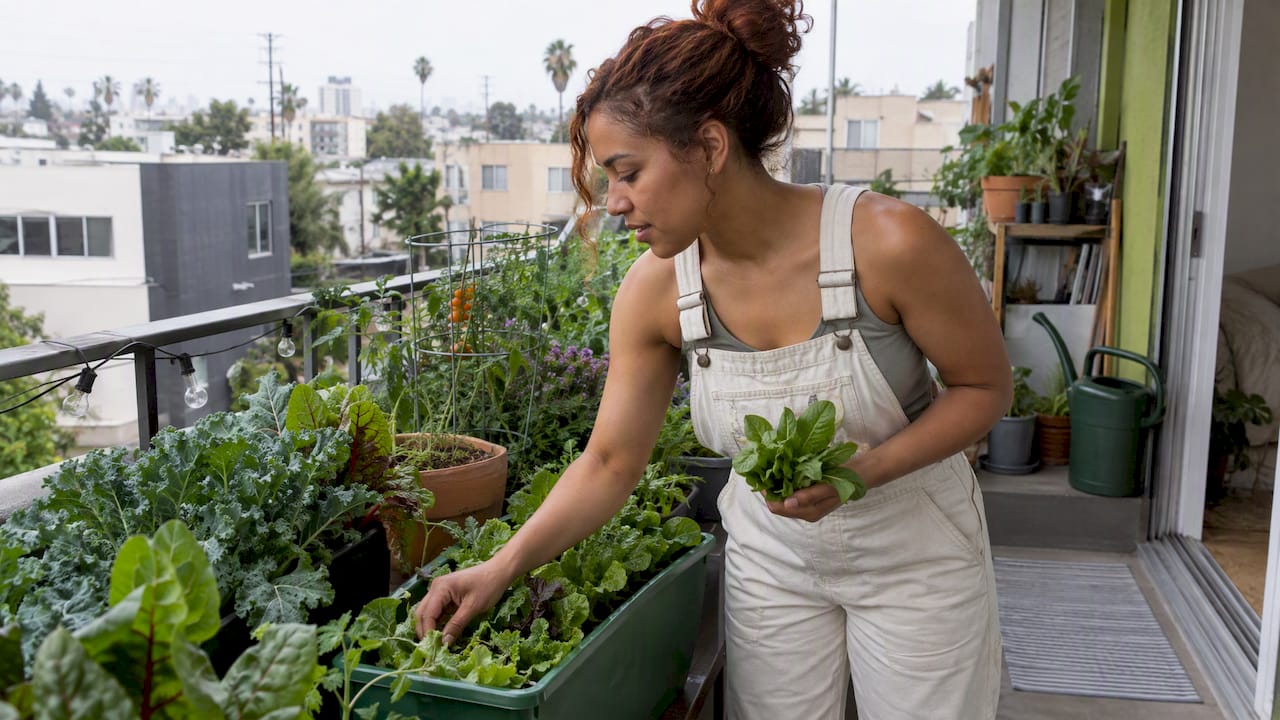
Commercial drought landscaping means redesigning a business property’s grounds so they look good on far less water: regionally appropriate plants, healthy soil, mulch and efficient irrigation instead of thirsty turf. Done well, it cuts the water bill, lowers maintenance hours and keeps curb appeal high. This guide covers how to design it, what to plant, how to irrigate, what it costs, which rebates and rules to check, and how to keep it healthy after installation.
TL;DR
- On larger properties with irrigated landscapes, as much as 30 percent of the water bill can go to landscape maintenance, so the landscape is often the biggest single place to save.
- Design around your climate: hydrozone plants by water need, keep turf only where people actually use it, and mulch every planted bed.
- Swap spray irrigation in beds for drip, add a weather-based controller, and audit the system on a schedule.
- Check local rules and rebates before you remove anything. Some water utilities pay per square foot, and some require plan approval first.
- Write water-efficiency targets into your maintenance contract so the result lasts.
Table of Contents
- What commercial drought landscaping actually is
- Start with the site, not the plant list
- Design principles that cut water use
- Plants, trees and lawn alternatives for commercial properties
- Irrigation and soil: where most savings are won or lost
- What it costs and what changes the budget
- Rebates and rules to check before you remove turf
- Perspective: how we approach commercial drought landscapes
- Maintaining a drought-tolerant landscape
- A phased plan you can start this quarter
- Work with Sacred Garden Designs
- FAQ
- Sources
What commercial drought landscaping actually is
The phrase gets confused with a gravel lot and a few cacti. It is not that. New Mexico State University describes xeriscape as a landscape that uses little supplemental water, not a dry, barren one. A good drought-tolerant commercial landscape has layers of color, texture and shade. It simply asks less of the irrigation system.
The EPA’s guidance for commercial buildings frames the approach as regionally appropriate plants, healthy soils, mulch and efficient irrigation, which together reduce outdoor water use and operating costs while improving plant health and curb appeal.
For an office park, retail center, HOA common area, hotel, school or multifamily community, the benefits fall into four groups:
- Lower water bills. Outdoor irrigation is usually the most discretionary water use on a site.
- Lower labor and inputs. Less mowing, less edging, fewer fertilizer and fuel runs.
- Resilience. Plants adapted to your climate cope with dry years and watering restrictions better than cool-season lawn.
- Community value. The Pacific Institute notes that replacing turf with climate-appropriate plants and efficient irrigation supports local ecosystems, improves air quality and builds resilience to climate change.
A real commercial example
The Village at Stone Oak, a shopping center in San Antonio, Texas, converted 50,000 square feet of turf to xeriscape and upgraded to drip irrigation. EPA WaterSense reports savings of nearly 14 million gallons of water a year. Your numbers will differ with climate, plant palette and starting irrigation, but the case shows what large turf areas cost in water.
Start with the site, not the plant list
The most common mistake is choosing plants first. The EPA recommends the reverse: evaluate sun, shade, soil type and wind exposure, then customize the design to local climate conditions. It also suggests consulting your local university Extension office for climate-specific recommendations. Extension offices know which species survive in your county and which ones struggle.
A practical site assessment covers:
- Sun and shade map. Note the hot west-facing walls, reflected heat from parking lots and the shaded north sides.
- Soil. Texture, compaction and drainage. Commercial sites are often built on compacted fill, and construction debris is common near buildings.
- Slopes. Steep banks need erosion control and plants with deep roots, not just groundcover. We handle slope stabilization alongside planting for this reason.
- Use patterns. Where do employees, tenants, customers, kids or pets actually walk or gather?
- Existing irrigation. Zones, valve types, sprinkler heads, controller age and any leaks.
- Visibility and signage. Entrances, monument signs and sight lines for vehicles and pedestrians.
This assessment drives everything that follows. It also tells you which areas deserve premium treatment, such as entrances, and which can be simple, low-input plantings.
Design principles that cut water use
Hydrozone everything
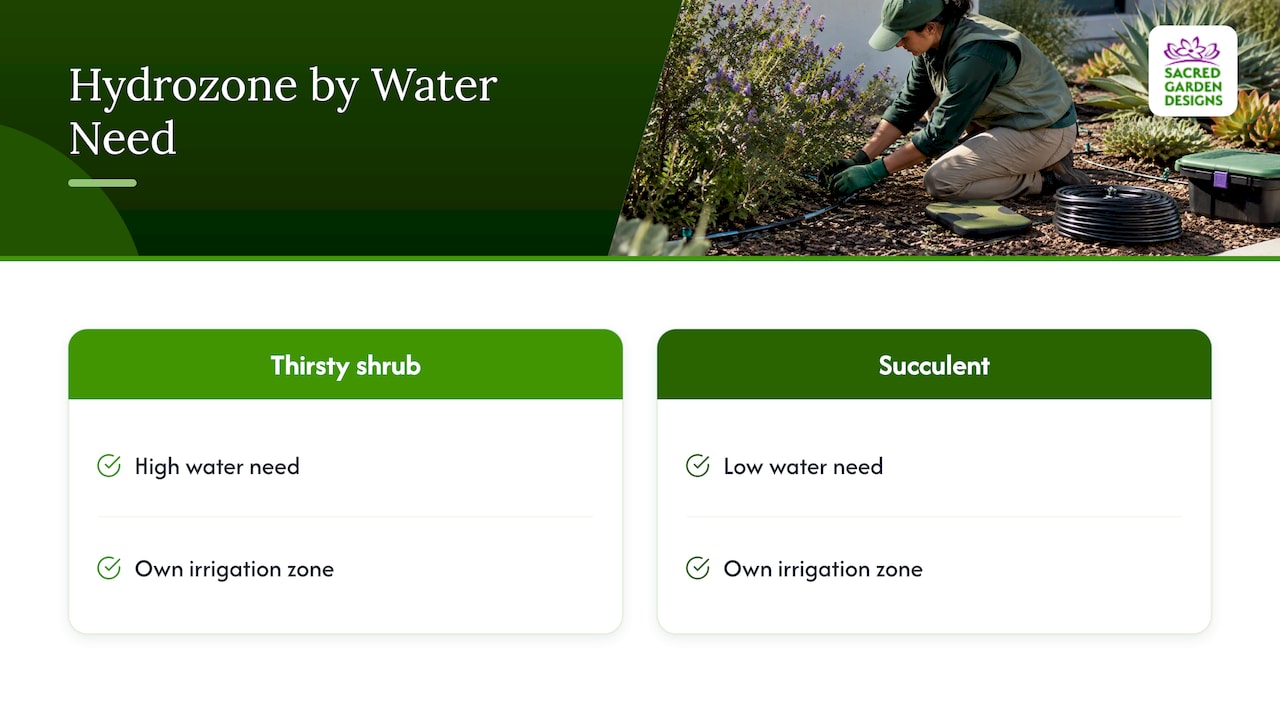
Hydrozoning means grouping plants by how much water they need, then putting each group on its own irrigation zone. Best practices from EPA WaterSense include using regionally appropriate or native plants, hydrozoning, and limiting high-water-use turfgrass to functional areas. When a thirsty shrub shares a zone with a succulent, one of them suffers or you overwater both.
Keep turf only where it works
Turf has a job: event space, a play area, a dog run, a picnic spot. Where it does that job, keep it and consider a drought-tolerant or regionally appropriate turfgrass. Where it only fills space, such as median strips, narrow side yards, parking-lot islands and slopes, replace it. Our guides on matching lawn alternatives to play, pets and shade and lawn alternatives that keep a play patch walk through the options in more detail, and they apply to commercial common areas as well as yards.
Build in layers
A plant-forward design uses canopy trees, mid-height shrubs and grasses, perennials for seasonal color and groundcover to shade the soil. Layering fills the planting bed quickly, which means less bare soil, fewer weeds and less evaporation. If you want ideas for groundcover, see our guide to layered drought-tolerant groundcovers.
Manage stormwater on site
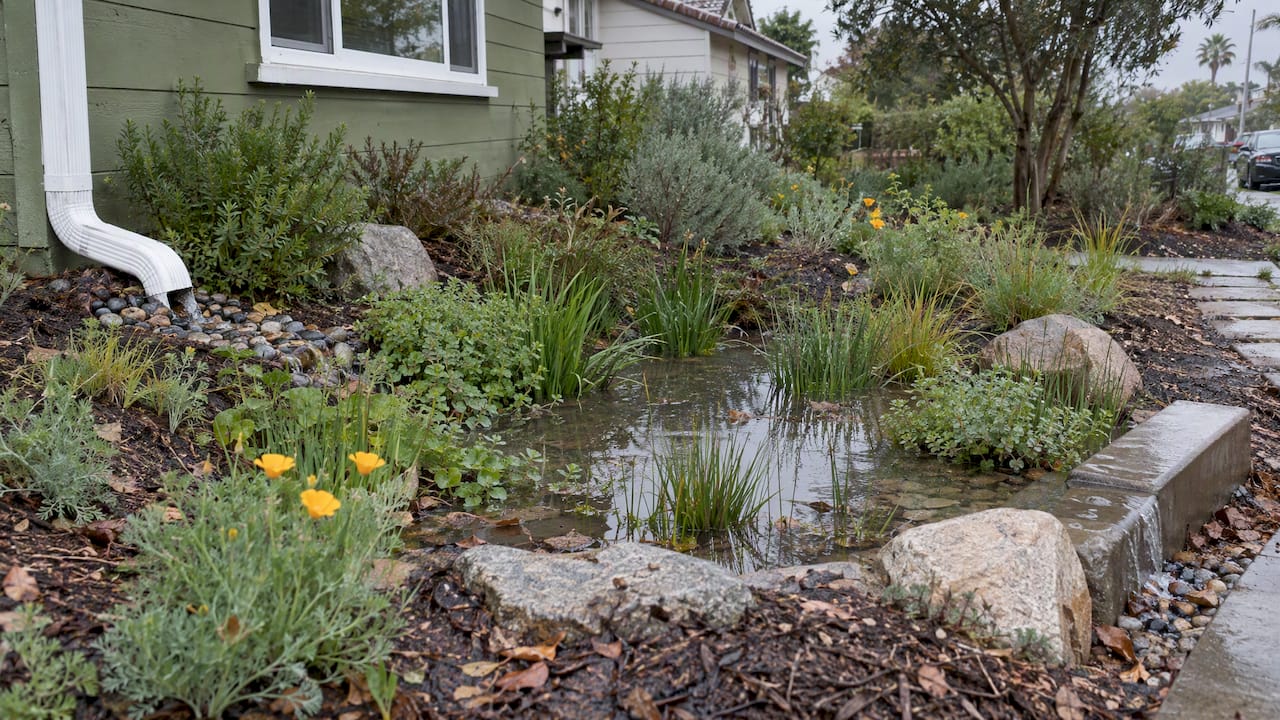
Drought landscaping and stormwater management work together. EPA WaterSense notes that features such as rain gardens can help manage runoff on site, with the potential to reduce runoff volume by up to 90 percent. In a dry climate that means rare storms water your plants instead of rushing into the street. If you add irrigation or capture features that connect to your potable supply, make sure backflow testing and filing requirements are handled, since rules vary by water authority.
Plants, trees and lawn alternatives for commercial properties
The EPA lists suitable choices as drought-tolerant or regionally appropriate turfgrass, trees, shrubs and groundcover, with turfgrass kept for functional purposes such as recreation and planted beds mulched. The exact species depend on your region, so treat the table below as a way of thinking about categories, not a universal plant list.
| Landscape role | What to look for | Typical commercial use |
|---|---|---|
| Canopy trees | Regionally adapted, deep-rooting, suitable mature size | Parking-lot shade, building cooling, entrances |
| Shrubs | Low-water, evergreen or seasonal color, tolerant of pruning | Foundation beds, screening, edges |
| Ornamental grasses and perennials | Hardy, long bloom or strong texture | Entrance displays, courtyards |
| Groundcovers | Spreading, dense, low-growing | Slopes, medians, between shrubs |
| Functional turf | Drought-tolerant turfgrass, sized to real use | Event lawns, play areas |
| Mulch or decomposed material | Organic mulch in beds, gravel only where it suits | Bare soil, paths, low-traffic areas |
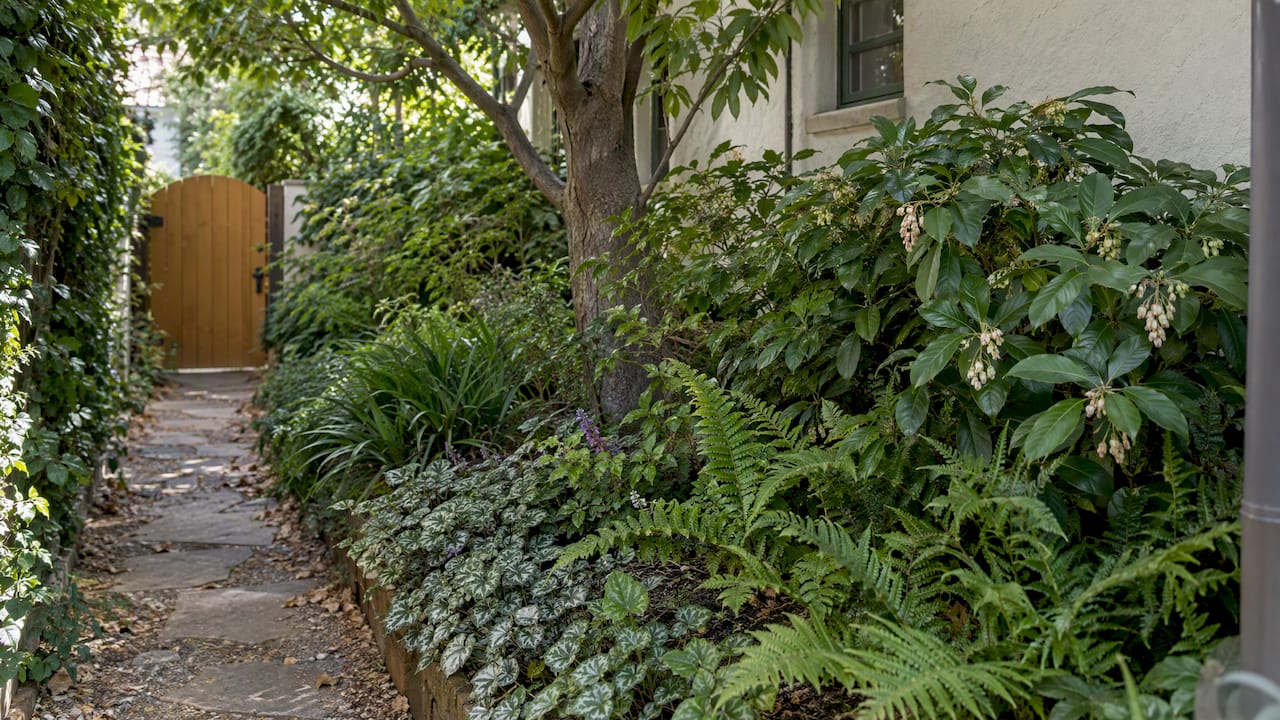
Trees deserve special attention. They cool buildings and pavement, but young trees need careful watering and older trees suffer in prolonged dry spells. Our guide to drought tree care explains how to keep them alive through dry years. If you operate in Los Angeles, see our list of drought-tolerant plants for Los Angeles. Shaded courtyards and north-side beds have their own palette, covered in our guide to dry shade plants.
After dark, lighting is part of how a landscape reads. Many property managers pair a low-water planting scheme with efficient fixtures, and low voltage landscape lighting is one way to compare long-term operating costs against conventional options.
Irrigation and soil: where most savings are won or lost
A drought-tolerant plant on a badly run irrigation system still wastes water. The EPA’s commercial guidance points to periodic irrigation inspections and audits, weather-based controllers, drip irrigation in plant beds, sufficient topsoil and compost amendments.
Irrigation checklist
- Switch beds to drip. WaterSense highlights drip irrigation as a highly efficient alternative to spray for planted beds.
- Use a weather-based controller. It adjusts run times to conditions rather than a fixed calendar.
- Audit at least once a year. Look for broken heads, mismatched nozzles, pressure problems and zones that overlap onto pavement.
- Fix leaks fast. A small leak runs unnoticed for weeks on a large site. Our irrigation leak troubleshooting guide shows how to find them.
- Follow local watering rules. In Los Angeles, for example, there are day and time limits. See our summary of Los Angeles irrigation rules.
Soil and mulch
The EPA guidance recommends keeping about 4 to 6 inches of good topsoil, adding compost to water-logged or fast-draining soils, and mulching bare plant-bed soil. WaterSense also treats soil as a living system, where aeration and organic matter maximize infiltration and plant health.
Mulch is the cheapest water-saving tool on the site. It shades soil, slows evaporation and suppresses weeds. We compare options in our mulch types for drought guide. For converting turf without heavy equipment, sheet mulching is one method worth knowing, though large commercial areas may call for professional site preparation.
What it costs and what changes the budget
Commercial costs depend on site size, access, demolition, soil work, irrigation changes, plant sizes, hardscape and local labor rates, so any single per-square-foot figure from another city can mislead you. What we can ground in published data is narrow but useful.
One extension example: Olbrich Botanical Gardens’ 730-square-foot gravel garden had $3,743 in material costs, excluding edging, based on 2021 prices. That is a public garden with a specific design, not a quote for your property, but it shows that materials alone add up even on a small area.
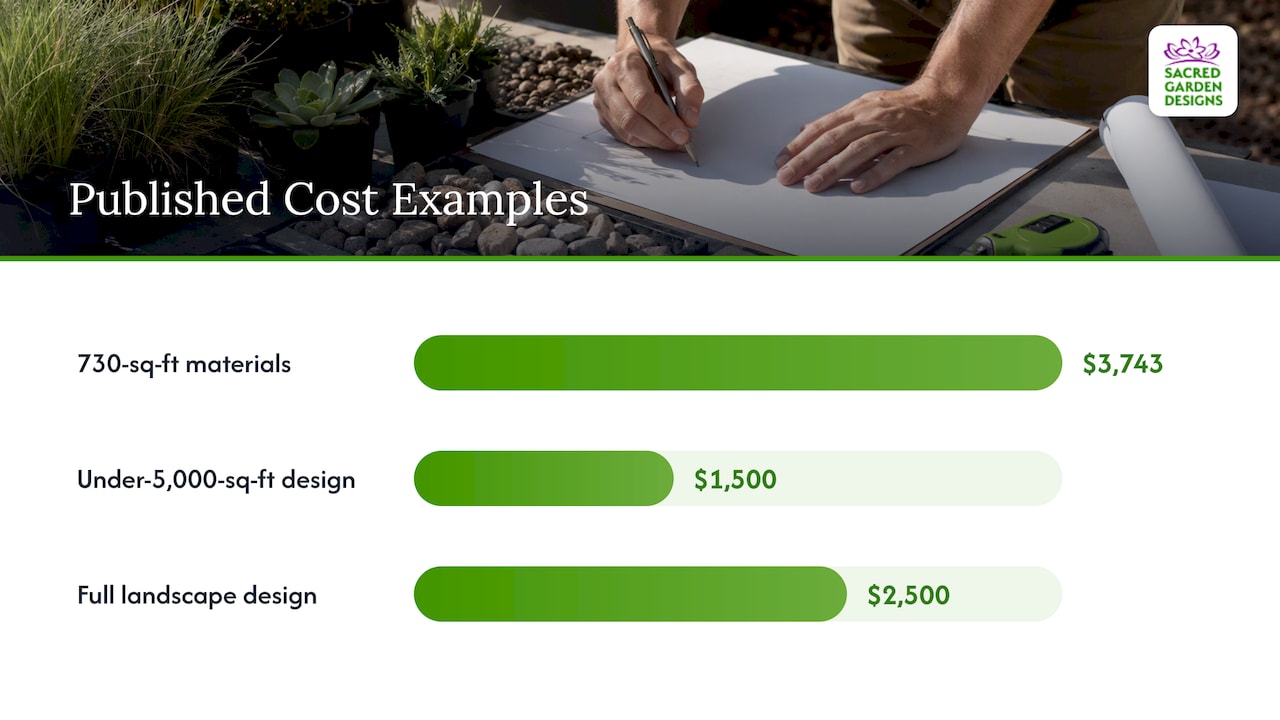
Our own published design fees are $1,500 for yards under 5,000 square feet and $2,500 for a full landscape design. Installation is priced per project after a consultation and site visit, since the scope varies so much.
Budget drivers to ask about
- Turf removal method and disposal (hauling is a real line item)
- Soil preparation and amendments
- Irrigation redesign, drip conversion and controllers
- Plant sizes: 5-gallon shrubs fill in faster than 1-gallon, but cost more
- Hardscape, retaining walls and slope work
- Permits and plan review
- Establishment watering and the first year of maintenance
Think in lifecycle costs
A lower install price can mean higher costs later. Utah State University provides life-cycle assessment models that help property managers quantify the trade-offs in water, labor, fertilizer and fuel for different landscape designs. Compare 10-year costs, not just the first invoice.
Rebates and rules to check before you remove turf
This is the step that saves the most money and prevents the most mistakes. Water utilities and cities often pay for turf removal, but requirements differ widely. A few examples show the range:
| Program | What it offers or requires |
|---|---|
| Tucson Water | Rebates of up to $25,000 per project for eligible commercial and multifamily customers removing ornamental turf. Requires approval from the relevant planning or development department and a revised landscape plan approved by Tucson Water. Black plastic sheeting is not allowed in the conversion area. |
| Otay Water District, California | Commercial turf-removal rebates of $2 to $5 per square foot, plus rebates for smart irrigation equipment. |
| City of Chandler, Arizona | At least 5,000 square feet of grass must be removed unless all remaining grass on the property is removed. A pre-application meeting is required before applying. |
The lesson from all three: apply before you demolish. Many programs will not pay for work already done. In California, legislation enacted in 2022 exempts local water agency turf-replacement rebates from state income tax, which improves the net value of those rebates. Programs, amounts and funding change, so confirm current terms on the utility’s own page before you plan the budget.
Also check HOA or owner association design guidelines, municipal landscape ordinances, fire-safety clearances if you are near wildland areas, and any lease terms that limit exterior changes.
Perspective: how we approach commercial drought landscapes
For more than 25 years we have designed water-wise landscapes in Los Angeles and beyond, and the pattern is consistent: the properties that succeed treat the landscape as a system, not a planting list. Plants, soil, irrigation, grading and maintenance are decided together.
We believe a drought landscape should still feel generous. Our approach pairs design artistry with environmental consciousness, so a courtyard, entrance or campus edge looks intentional and welcoming while using far less water. That is why our work has been recognized with eight Houzz Awards.
Because we design, install, irrigate and maintain, we can keep the design intent through every stage. We handle irrigation design and installation, slope stabilization, hardscape such as patios and retaining walls, tree trimming, clean-up and haul-away, and ongoing maintenance. A single team reduces the handoffs where water-saving ideas usually get lost.
Our advice to property managers: start with an honest site assessment, convert in phases if you need to, and tie the maintenance contract to water-use goals from day one.
Denise Buchanan
Maintaining a drought-tolerant landscape
Low water does not mean no care. Oregon State University’s guidance for Central Oregon says water-wise gardens need consistent, routine maintenance such as seasonal pruning, weeding and irrigation tune-ups to stay resilient and attractive.
Establishment period
New plantings need more water at first, then less. An extension guide for a gravel garden suggests watering often, 4 to 5 times per week, until plants root, then 1 to 2 times weekly after about four weeks, and only in drought in years two and three. From year four it suggests perhaps only in severe drought. That schedule is for one garden in one climate, so ask your designer or local Extension office for a schedule that fits your plants and region.
A simple annual routine
- Early spring: inspect and test the irrigation system, replace broken heads, reset the controller, refresh mulch.
- Late spring: prune after bloom where needed, remove weeds before they seed.
- Summer: check for leaks and runoff, adjust run times to weather, avoid heavy pruning in extreme heat.
- Fall: the best planting window in many regions, and a good time to divide perennials and top off mulch.
- Winter: prune dormant trees and shrubs where appropriate, and review the year’s water use.
The timing varies by frost dates and climate. Our garden maintenance schedule guide explains why frost dates beat fixed calendar days.
Put it in the contract
EPA WaterSense suggests that property managers formalize water-efficiency requirements in service agreements with landscape maintenance contractors so performance targets are met. Specify annual irrigation audits, controller programming standards, mulch depth, and who responds to leaks and how quickly. Track monthly water use so you notice problems early.
A phased plan you can start this quarter
Most commercial properties do not convert everything at once. A phased plan spreads cost and lets you learn from the first zone.
- Audit water use. Pull 12 months of bills and identify irrigation meters or seasonal peaks.
- Walk the site with a designer. Mark the high-visibility areas and the low-use turf that can go first.
- Check rebates and approvals. Confirm requirements with your water utility and city before demolition.
- Fix the irrigation. Repairs and controller upgrades often pay back quickly and protect the new plants.
- Convert phase one. Choose a zone where results will be visible, such as the main entrance.
- Measure and adjust. Compare water use against the baseline, then plan phase two.
Work with Sacred Garden Designs
If you manage a commercial property, HOA, campus or community space and want a landscape that saves water without looking stripped down, we can help. Start with an initial landscape consultation, then move into design and installation. You can see everything we offer, from sustainable landscape design and installation to irrigation, slope stabilization and maintenance, and our published design fees are on the landscape design services page.
For education-focused sites, our campus landscaping ideas show how the same principles work on school and campus grounds.
FAQ
How much water can a commercial property save with drought-tolerant landscaping?
It depends on how much turf you replace and how your irrigation runs today. The EPA notes that on larger maintained properties, as much as 30 percent of the water bill goes to landscape maintenance. One Texas shopping center that converted 50,000 square feet of turf and moved to drip reported savings of nearly 14 million gallons a year. Pull your own water bills to set a baseline.
Do I have to remove all the grass?
No. Keep turf where people use it, such as event lawns or play areas, and replace the decorative strips and slopes. Some rebate programs, such as Chandler’s, have their own rules about how much grass must come out, so confirm that before you plan.
Are there rebates for commercial turf removal?
Often, yes, but they are local. Tucson Water offers up to $25,000 per eligible project, and Otay Water District offers $2 to $5 per square foot for commercial landscapes. Apply and get approval before you start work, and check your own utility’s current terms.
How long does a drought-tolerant landscape take to establish?
Plan on regular watering for the first few weeks, reduced watering over the first season, and drought-only watering by years two and three or later, depending on plant types and climate. A designer or your local Extension office can give you a schedule for your plants.
Does a drought-tolerant landscape still need maintenance?
Yes. Seasonal pruning, weeding, mulch refreshes and irrigation tune-ups keep it healthy. We offer garden maintenance so the water savings last beyond installation.
Sources
- Water Efficiency Management Guide: Landscaping and Irrigation (EPA, 2017)
- Texas Shopping Mall Buys Into WaterSense (EPA, 2017)
- Sustainable Landscapes in California (Pacific Institute, 2020)
- Landscape Water Conservation: Principles of Xeriscape (NMSU)
- WaterSense at Work: Landscaping (EPA, 2023)
- WaterSense at Work Section 5.1: Landscaping (EPA, 2023)
- Gravel Gardens: Gardens that Rock (UW Extension)
- Value Landscape Engineering (Utah State University)
- Waterwise Gardening in Central Oregon (Oregon State University)
- Turf Removal Rebate (City of Tucson)
- Rebates and Programs (Otay Water District)
- Large User Water Conservation Rebates (City of Chandler)
- California Is Making It Cheaper to Replace Your Lawn (State of California, 2022)