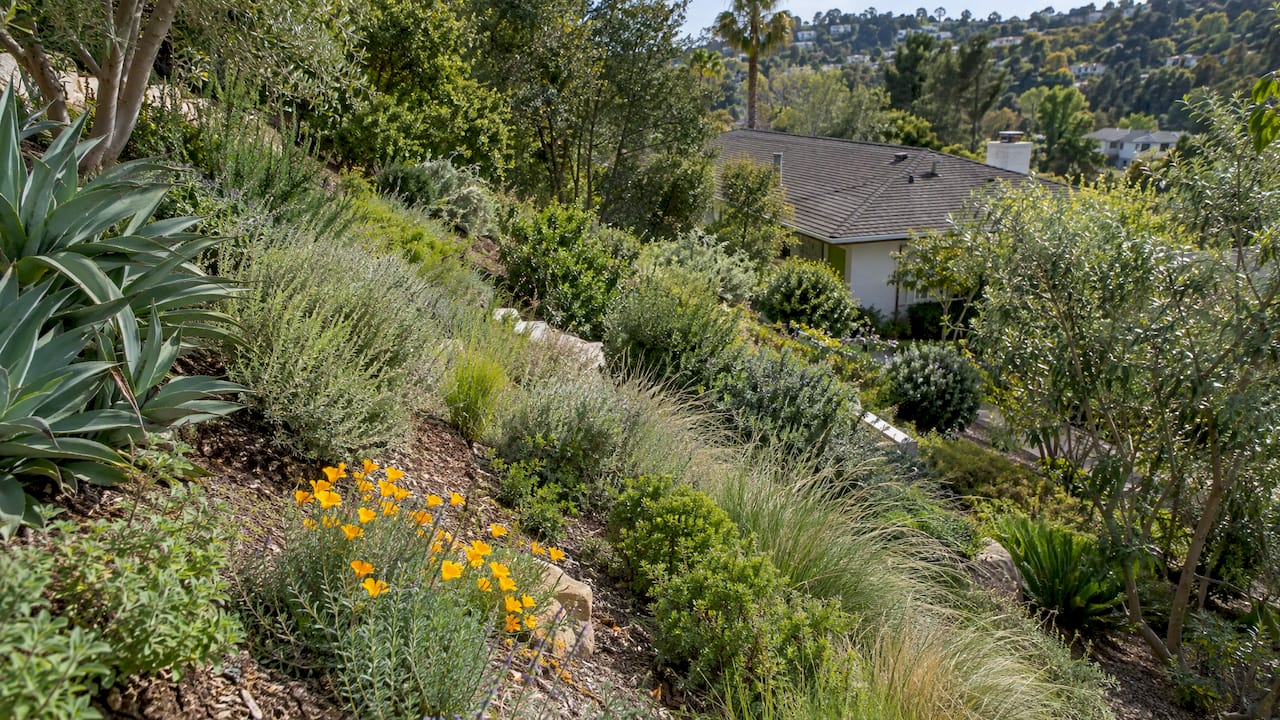
The best deer-resistant native plants are the ones with strong scent, hairy or tough leaves, or a texture deer dislike: mountain mint, yarrow, little bluestem, switchgrass, Pennsylvania sedge, ferns, wild indigo (Baptisia), spicebush and American holly. No plant is deer-proof, though. Hungry deer will eat nearly anything, so the winning approach is to choose plants that suit your region and site, plant them in layers, and protect anything young. That also happens to be the approach that saves the most water.
TL;DR
- No plant is deer-proof. University extension services describe “resistant” as plants most deer skip when other food is abundant.
- Strong scent (mountain mint, bee balm, anise hyssop), hairy or tough leaves (asters, coneflowers), and fine texture (grasses, sedges, ferns) are the most dependable traits.
- Natives matched to your region and soil are more likely to resist deer, and many are drought tolerant once established.
- Young trees and shrubs need physical protection for their first few years, whatever the species.
- Plant ferns and grasses first, then aromatic perennials, then add shrubs, with your local extension list as the final check.
Table of Contents
- What “deer resistant” really means
- The traits that keep deer away
- Native perennials deer usually leave alone
- Grasses, sedges and ferns: the safest layer
- Shrubs and trees: resistance is weaker here
- Choose by region
- Resistant and drought tolerant: where the lists overlap
- A planting order that cuts browsing
- What native deer-resistant plants cost
- Promo: a design that plans for deer from the start
- Perspective: resistant plants are a design choice, not a shield
- FAQ
- Sources
What “deer resistant” really means
A deer-resistant plant is one deer find unappealing, not one they cannot eat. University of Maryland Extension says plainly that there is no deer-proof plant, and that resistance lists sometimes contradict each other because deer preferences shift with whatever else is available nearby. When favorite foods run short, deer will eat even toxic plants like milkweed.
UC ANR puts it the same way: plants most deer will not eat when food is abundant. It adds a point many lists skip. Temperature, light and moisture needs must all be met, not just deer tolerance, or the plant struggles and gets browsed anyway.
Several things change how hard deer browse your yard:
- Location. Yards beside woods or water see more deer.
- Weather stress. Mid-Atlantic Gardeners Network lists temperature extremes, rainfall, flooding and snow cover as factors, along with deer overpopulation, habit and age.
- Fawns. Young deer have not yet learned what they dislike, so even resistant plants can be sampled.
- Season. Winter scarcity sends deer to plants they ignore in summer. UConn’s native plant guide warns that in harsh winters or other times of scarcity deer may eat any accessible plant.
The practical reading: treat resistance as odds in your favor, not a guarantee, and design so one nibbled plant never ruins the look of a bed.
The traits that keep deer away
Research from the Missouri Botanical Garden’s Shaw Nature Reserve, based on a three-year study in Wildwood, Missouri, found that deer tend to avoid plants with hairy leaves, thorns or strong smells. Mid-Atlantic Gardeners Network adds thick leaves and says deer pass up most ferns.
That gives you a quick field test when you look at a plant you do not know:
- Crush a leaf. A sharp, minty or spicy smell is a good sign.
- Feel it. Fuzzy, rough or leathery foliage usually beats soft, juicy foliage.
- Look for fine, grassy or fern-like texture. Grasses, sedges and ferns are rarely first choice for deer.
- Check for thorns or prickles on shrubs.
Traits help, but your local list is the final word, because deer in one county can behave differently from deer in the next.
Native perennials deer usually leave alone
Perennials are where the most dependable choices live, and they carry the color in a native bed.
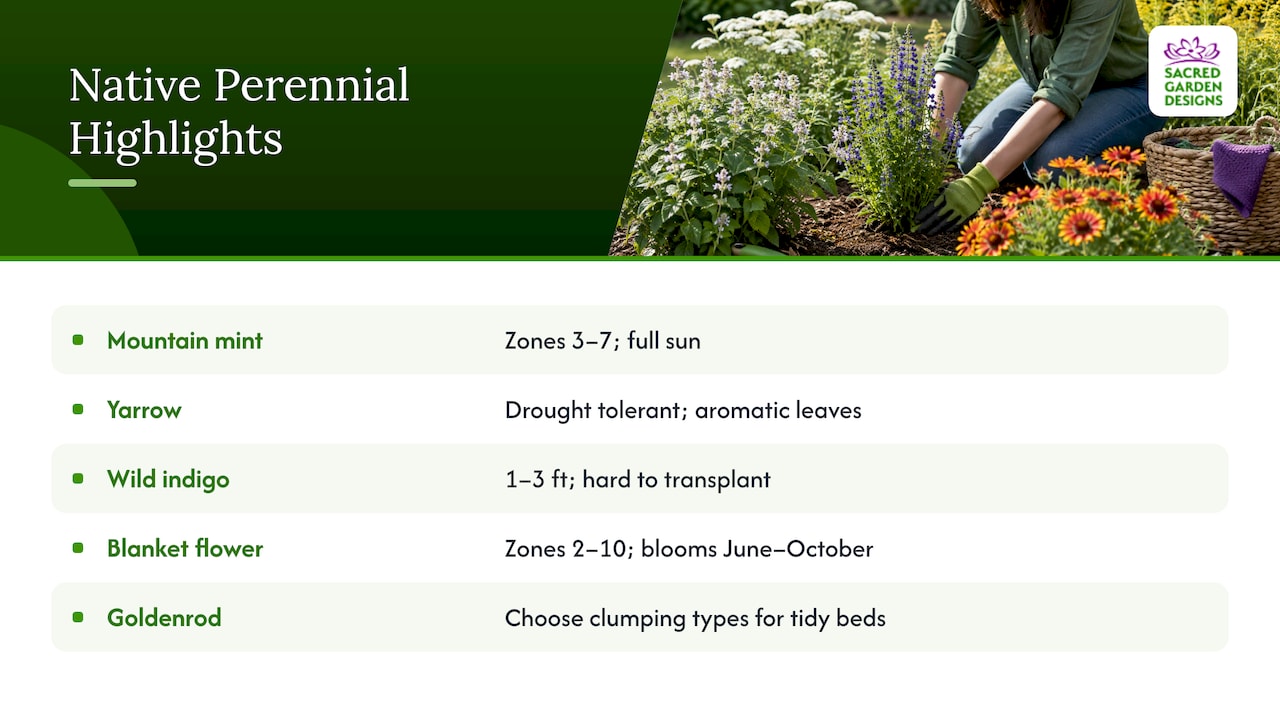
Mountain mint (Pycnanthemum). An erect, multi-stemmed plant with small white flowers in dense clusters from July to September. Direct Native Plants lists Pycnanthemum virginianum as hardy in zones 3 to 7 in full sun, with strong deer resistance because deer tend to dislike strong fragrances. Mountain mints also show up as rarely damaged at Blandy Experimental Farm, a working arboretum with a large deer population.
Yarrow (Achillea). According to NC State Extension, yarrow is generally drought tolerant, has feathery aromatic leaves and is deer resistant. Species vary in origin, so choose a native form for your region.
Wild indigo (Baptisia). NC State Extension describes Carolina wild indigo as a tough, long-lived perennial that tolerates drought, poor soil and erosion and resists deer damage. It grows 1 to 3 feet tall in partial shade to full sun in sandy, well-drained soil. Its deep taproot makes it drought tolerant but hard to transplant, so put it where you want it to stay. It also has low-level toxicity if eaten, which is worth knowing if children or pets chew plants.
Blanket flower (Gaillardia). Illinois Extension lists full sun, 18 to 24 inches tall, USDA zones 2 to 10 and bloom from June to October. It tolerates drought, heat and salt, is reported to be deer resistant, and needs very well-drained soil to survive winter. Deadhead it for continual bloom and skip heavy fertilizer.
Goldenrod (Solidago). Durham Master Gardeners reports that most goldenrods are heat tolerant, water wise and deer resistant once established, with no serious disease or insect problems. They prefer sun and well-drained soil across zones 2a to 8b. Weedy types spread by rhizomes and wind-blown seed, so pick a clumping species for a tidy bed.
Others worth knowing. Wild columbine and eastern coneflower (Rudbeckia fulgida) appear on University of Maryland Extension’s list of species that usually do not suffer significant browsing damage. The Missouri study found swamp milkweed and blue flag iris resisted browsing, which makes them good choices for wetter spots.
Grasses, sedges and ferns: the safest layer
If you want the lowest-risk plants, start with texture. Maryland’s list includes little bluestem (Schizachyrium scoparium), switchgrass (Panicum virgatum) and Pennsylvania sedge. Missouri’s study adds big bluestem (Andropogon gerardii) and prairie dropseed (Sporobolus heterolepis). The Native Plant Society of New Jersey also names river oats among its grasses and sedges, alongside ferns.
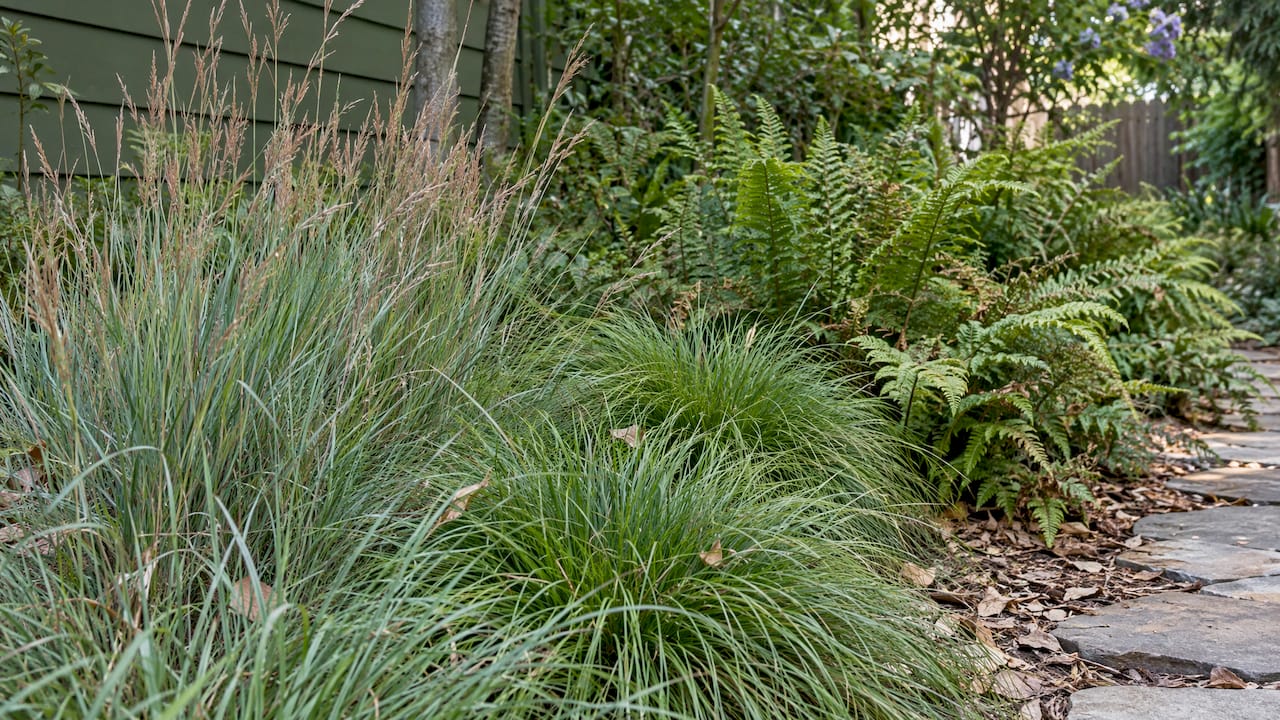
These plants do three jobs at once. They fill space so bare soil does not invite weeds, they give winter structure, and they act as a buffer: deer that wander through a bed of grasses and aromatic perennials find little to stop for. If you are replacing a thirsty lawn, a bed of native grasses and sedges works as a lawn alternative too. Our guide to drought-tolerant groundcovers covers the low-growing end of that palette.
Shrubs and trees: resistance is weaker here
Shrubs are less predictable than perennials, and young trees are the most vulnerable of all.
Shrubs that tend to be left alone:
- Spicebush (Lindera benzoin) and American holly (Ilex opaca) are on Maryland’s list.
- New Jersey tea and summersweet appear on the New Jersey native list.
- Silky dogwood, red-osier dogwood, shrubby cinquefoil and American smoketree are listed as deer resistant by UConn, with water needs from drought tolerant to moderate.
- For the Rockies and high plains, CSU Extension’s El Paso County list names leadplant (about 4 by 4 feet, full sun), western sage (4 to 6 feet tall), Apache plume and antelope bitterbrush, all happiest in well-drained soil. It notes that natives need little or no supplemental irrigation once established.
Trees. The New Jersey list includes eastern redbud, river birch, persimmon, American holly, red cedar, sweetgum, black gum, pines and oaks, but it warns that young tree seedlings must be protected. Even a resistant tree can show browsing: University of Maryland Extension notes that overpopulated deer strip the lower twigs of eastern redcedar, leaving a bare base up to the browse line.
Choose by region
A plant that deer ignore in Virginia may be a snack in Texas, and a plant that thrives in Colorado may sulk in Georgia. UC ANR says plants native to your own area are more likely to be deer resistant, and many have the bonus of being drought tolerant.
| Region | Starting points from the sources above |
|---|---|
| Mid-Atlantic and Northeast | Mountain mint, little bluestem, switchgrass, Pennsylvania sedge, spicebush, American holly, silky dogwood |
| Midwest and Plains | Big bluestem, prairie dropseed, swamp milkweed, blue flag iris, leadplant |
| Southeast | Carolina wild indigo, goldenrod, yarrow, river oats |
| Mountain West and Southwest | Western sage, Apache plume, antelope bitterbrush, blanket flower |
| California | Species native to your local area, which UC ANR says are more likely to resist deer and tolerate drought |
This is a starting shortlist, not a planting plan. Alabama Cooperative Extension advises matching species to the site’s soil pH, moisture and light, choosing overlapping bloom times for steady pollinator support, and planting species with similar spread rates together. Check your state extension’s native plant list before you buy.
Resistant and drought tolerant: where the lists overlap
The same traits that repel deer, such as aromatic oils, hairy leaves and deep roots, tend to help plants handle dry weather. Wild indigo, yarrow, blanket flower, goldenrod, western sage and Apache plume all appear above as both deer resistant and drought tolerant.
Two cautions keep that overlap working:
- Drainage matters. Blanket flower and wild indigo both want well-drained soil. In heavy clay they rot in winter, stress and become easier targets.
- Establishment takes water. Drought tolerant means tolerant once established. New plants need regular watering through their first season.
If you garden in a fire-prone region, plant choice and spacing also affect fire safety. Our defensible space guide covers how water-wise planting fits the zones around a house.
A planting order that cuts browsing
- Plant the unappealing layer first. USNativePlant.com recommends ferns and ornamental grasses first, then strongly aromatic foliage.
- Add aromatic perennials such as mountain mint, anise hyssop and wild bergamot at the edges nearest the woods, where deer enter.
- Group the tastier plants close to the house and surround them with the resistant ones.
- Protect every young tree and shrub with a cage or fence for its first few years. Resistance is mostly a perennial and shrub-layer trait, and seedlings are fragile whatever the species.
- Expect trial and error. Blandy reports that a native aster seemed deer resistant for years until its grounds closed to visitors in spring 2020, when deer ate it readily. Keep notes and swap out what gets eaten.
For shrubs that need protection from gnawing animals in general, this guide to preventing browsing damage to shrubs shows the kinds of guards that work.
What the lists cannot fix is deer numbers. Maryland’s extension says the only effective long-term solution to heavy pressure is bringing deer populations back to sustainable levels, so in areas with very high deer numbers, expect to combine resistant plants with fencing.
What native deer-resistant plants cost
Native perennials are inexpensive compared with shrubs and trees. Direct Native Plants lists mountain mint at $12.99 for a quart. A 2026 Wildtype Plants price list shows Achillea millefolium at $4.80 per 2-inch pot, or $92.00 for a 38-cell tray, which brings the per-plant cost down for larger beds. Prices change by season and supplier, so treat these as a guide to scale.
Promo: a design that plans for deer from the start
Choosing plants is half the job. Spacing, layering, drainage and protection for young trees decide whether the bed survives its first winter. Sacred Garden Designs has spent more than 25 years designing sustainable, water-wise landscapes in Los Angeles and beyond, and our work has earned eight Houzz Awards.

Our landscape design services are priced at $1,500 for yards under 5,000 square feet and $2,500 for a full landscape design. If you also need installation, irrigation or slope work, see our full list of services. For smaller properties, start with our small yard drought design plan.
Perspective: resistant plants are a design choice, not a shield
We have worked on drought and climate challenges in landscapes for over 25 years, and the lesson we return to is that a plant list is only the beginning. Deer follow food, water and cover, and a garden that offers little of any of them to deer, while looking generous to people, is a garden that was designed rather than shopped for.
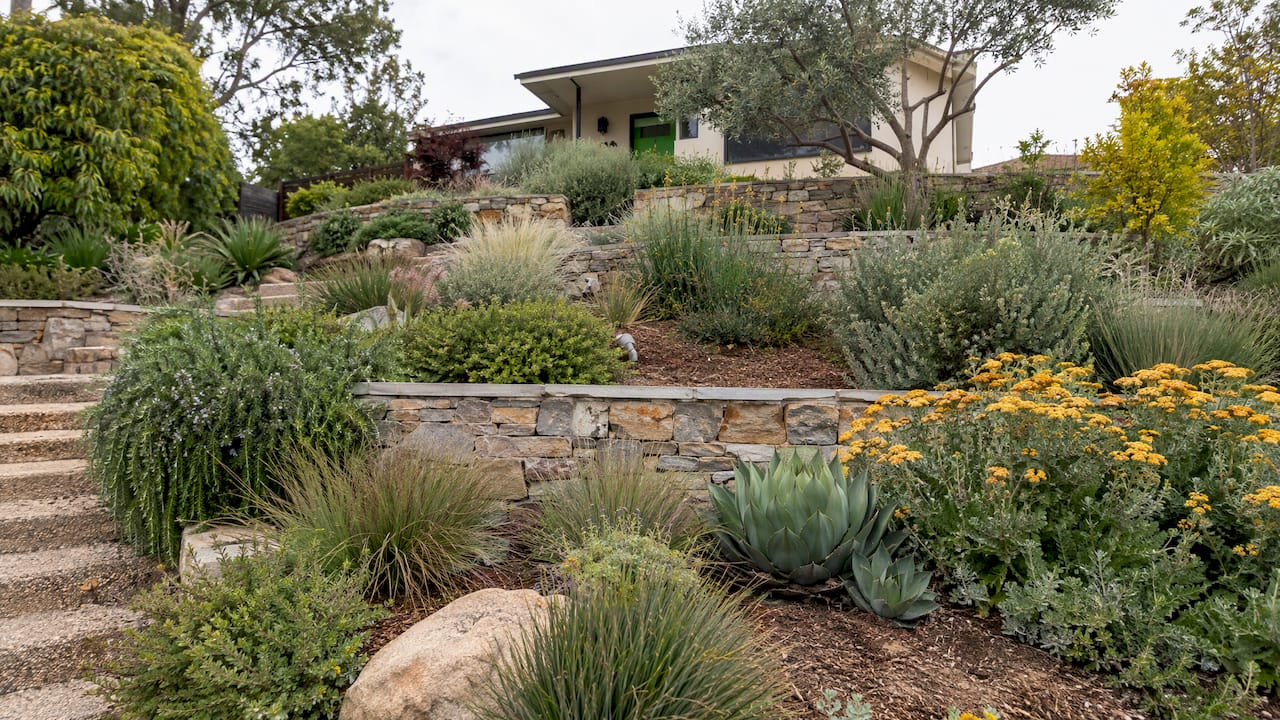
That is why we start from the site: soil, slope, sun and the way water moves across it. Native plants that suit those conditions establish faster, need less irrigation and are more likely to be the plants deer pass by. Grasses, sedges and aromatic perennials give you structure and color through the seasons, and they make a beautiful, calming garden for people.
We would rather see you plant a layered bed of the right natives than a single prized plant surrounded by bare mulch. Layering spreads the risk, and it gives pollinators and birds something to use all year.
Denise Buchanan
FAQ
Do deer eat lavender?
Usually not. Lavender is on common deer-resistant lists because of its strong fragrance, though it is not a North American native. For a native with a similar scent, try mountain mint or anise hyssop. Both rely on aroma, which deer tend to dislike.
Will coffee grounds keep deer away from plants?
The sources reviewed for this article do not support coffee grounds as a deer deterrent, so we would not rely on them. Plant choice and physical protection, such as cages around young trees, are the measures the extension guides describe.
What will keep deer away from trees?
Physical protection. Resistance is mostly a perennial and shrub trait, so young trees of any species, including those on resistant lists, need a cage or fence for their first few years. Even resistant eastern redcedar can lose its lower twigs where deer are overpopulated.
Are deer-resistant native plants also drought tolerant?
Many are. UC ANR notes that plants native to your area are more likely to be deer resistant and many are also drought tolerant. Wild indigo, yarrow, blanket flower and goldenrod all tolerate dry conditions once established, but they still need regular water in their first season.
Sources
- Deer Resistant Native Plants, University of Maryland Extension
- Deer Resistant Plants, UC ANR
- Deer Resistant Native Plants, Missouri Botanical Garden
- Plants That Deer Avoid (Usually), Mid-Atlantic Gardeners Network
- Native Plants Rarely Damaged by Deer, Mid-Atlantic Gardeners Network
- CT Native Plant & Sustainable Landscaping Guide, UConn
- Mountain Mint, Direct Native Plants
- Planting Resources, Blandy Experimental Farm
- Achillea, NC State Extension
- Baptisia cinerea, NC State Extension
- Blanket Flower, Illinois Extension
- Plant Goldenrod for Outstanding Fall Color, Durham Master Gardeners
- El Paso County Native Plant List for Deer Resistant Plants, CSU Extension
- Native Deer Resistant Plants, Native Plant Society of New Jersey
- Deer-Tolerant Native Flowers and Grasses for Alabama Landscapes, Alabama Cooperative Extension
- Deer-Resistant Native Plants, USNativePlant.com
- Wildtype Plants 2026 retail price list