Yes, you can legally water your landscape with greywater in California, and the simplest setup, a laundry-to-landscape system, can be installed without a permit if it meets the code. The catch is in the details: the water has to go below the surface, it can’t pool or run off, and some sources (kitchen sinks, toilets, diaper laundry) are off the table. This guide covers what counts as greywater, what the code requires, how a basic system works, what to do about edible plants, and what Los Angeles adds on top.
TL;DR
- Greywater in California comes from showers, bathtubs and clothes washers. Toilet water, kitchen-sink water, dishwasher water and diaper-soiled laundry are excluded.
- It must stay on your property, delivered below the surface, with no ponding, runoff, spraying, or contact with people or pets.
- A compliant laundry-to-landscape system is exempt from permits, but altering your plumbing generally requires one. Check with your local building department first.
- Keep greywater off edible plant parts and root crops, and choose plant-friendly detergents.
- Plan for weekly checks. Greywater is low-tech, but it is not set-and-forget.
Table of Contents
- What counts as greywater in California
- What the California greywater code requires
- Laundry-to-landscape: how a basic system works
- What Los Angeles adds
- Greywater and edible gardens
- Protect your soil and plants
- Maintenance and what can go wrong
- Greywater, rainwater and solar: building a resilient yard
- Our perspective
- Planning a yard that uses greywater well
- Frequently asked questions
- Sources
What counts as greywater in California
Greywater (also spelled graywater in the code) is untreated household wastewater that has not touched toilets. In California, the San Francisco Public Utilities Commission describes it as water from showers, bathtubs, washing machines and bathroom sinks, and says toilet water, diaper wash water and kitchen-sink water do not qualify. The Los Angeles Department of Water and Power defines it as untreated wastewater from showers, bathtubs and clothes washers, specifically excluding toilets, kitchen sinks, dishwashers and laundry soiled by diapers.
Notice the small difference: one agency names bathroom sinks, the other doesn’t. If you plan to tap a bathroom sink, ask your local building department which sources it accepts for your system type.
The practical takeaway:
| Source | Usable for garden irrigation in California? |
|---|---|
| Clothes washer (no diapers) | Yes, the most common choice |
| Shower and bathtub | Yes |
| Bathroom sink | Named by SFPUC; confirm with your local agency |
| Kitchen sink | No |
| Dishwasher | No |
| Toilet | No |
| Laundry with diaper waste | No |
Kitchen water is excluded because of grease, food solids and higher contamination. That is also why the “just dump the dishwater on the tomatoes” habit isn’t allowed.
What the California greywater code requires
Greywater rules sit in the California Plumbing Code. Two changes shaped what homeowners can do today. The SFPUC notes that in August 2009 California’s graywater regulations changed, allowing lower-cost systems to be installed legally, some without a permit.
The core requirements, as LADWP lays them out in its installation and maintenance guidance:
- Greywater is contained on your site, in a subsurface irrigation or disposal field.
- No spraying or discharging it on the ground surface.
- No ponding and no runoff, including onto a neighbor’s property or into the street.
- No contact with people or pets.
- A clothes washer system that complies with the code is exempt from permit requirements, but altering building plumbing needs a permit.
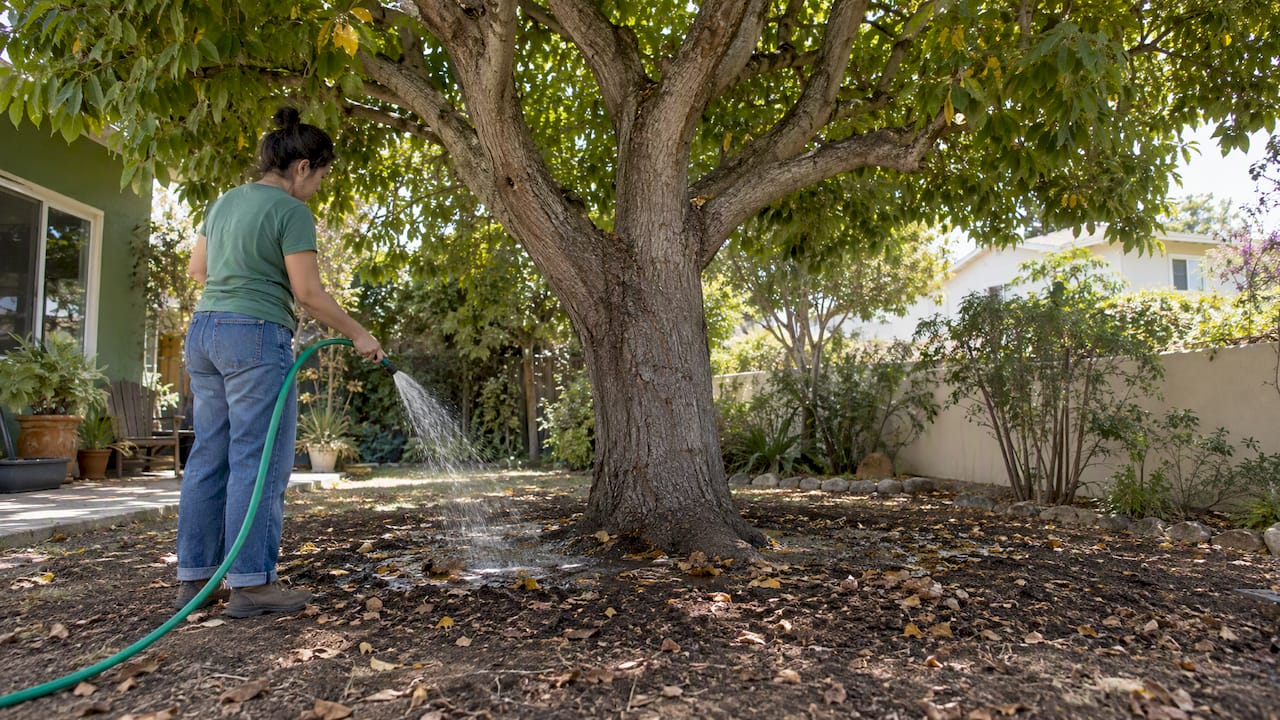
So is it illegal to dump greywater on the ground? Spreading it on the surface, or letting it pool, runs against the rules. A hose from the washer running across the lawn is not compliant. A buried, mulched delivery system is.
The bucket exception
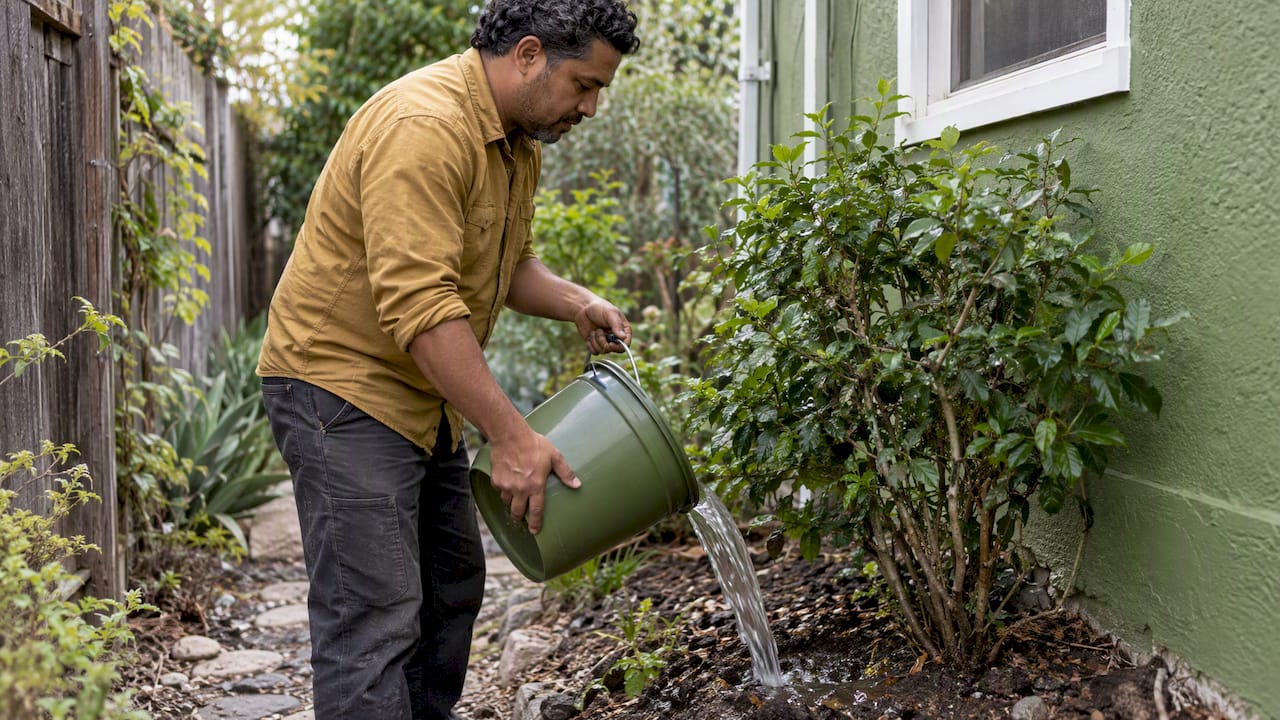
Carrying shower warm-up water out in a bucket is the lowest-tech reuse, and many households do it during droughts. It isn’t a plumbed system, so it sits outside the permit conversation, but the same common sense applies: use it promptly, don’t let it sit and turn foul, and don’t pour it so it ponds or runs off. If you want to know whether bucketing is addressed in your city, ask the local building department.
Laundry-to-landscape: how a basic system works
Laundry-to-landscape (often shortened to L2L) is the entry point because the washer already pushes water out with its own pump. No extra pump, tank or filter is needed in the simplest version.
Per LADWP, the basic layout looks like this:
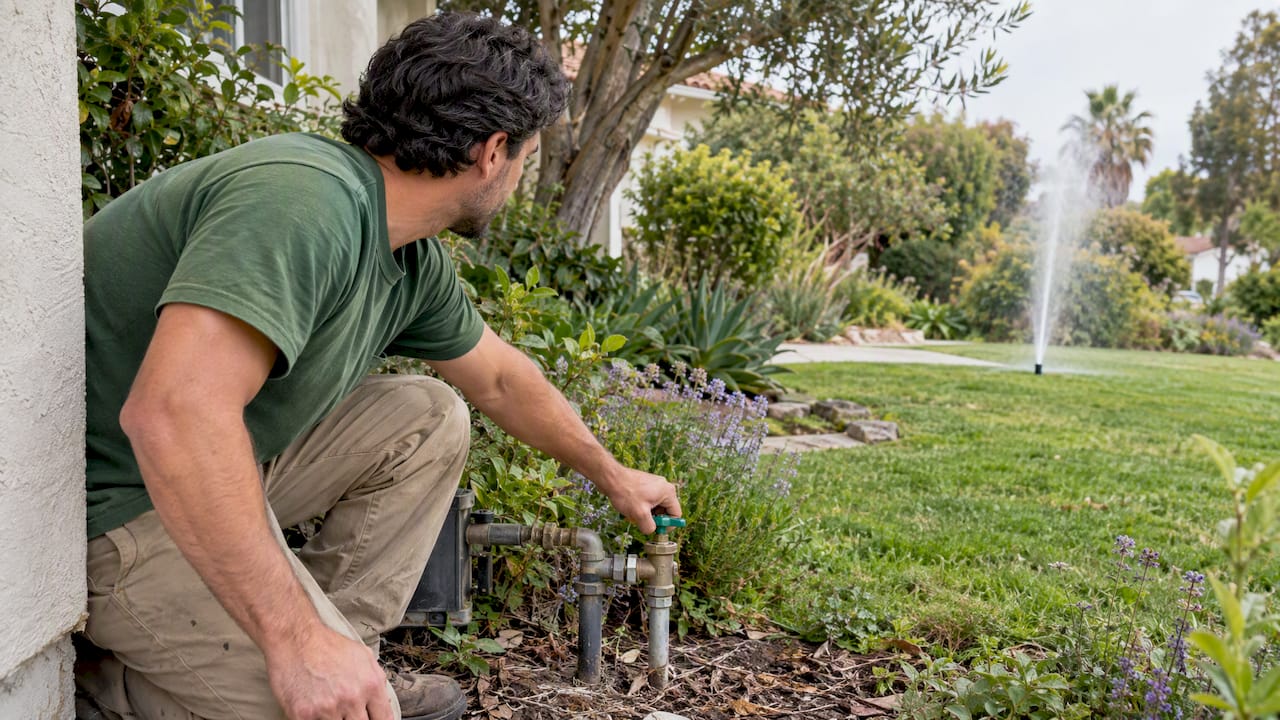
- Tap the washer’s discharge hose. A three-way valve lets you send the water either to the sewer or to the landscape.
- Run the line to the planting area. Pipe carries the water to outlets placed at individual plants or in mulch basins.
- Deliver it below the surface. The outlets sit in subsurface irrigation fields covered with at least 2 inches of mulch or soil.
- Keep the sewer option. The valve matters: switch to the sewer when you wash heavily soiled loads, use bleach, or when the soil is already saturated.
Placement matters more than the plumbing
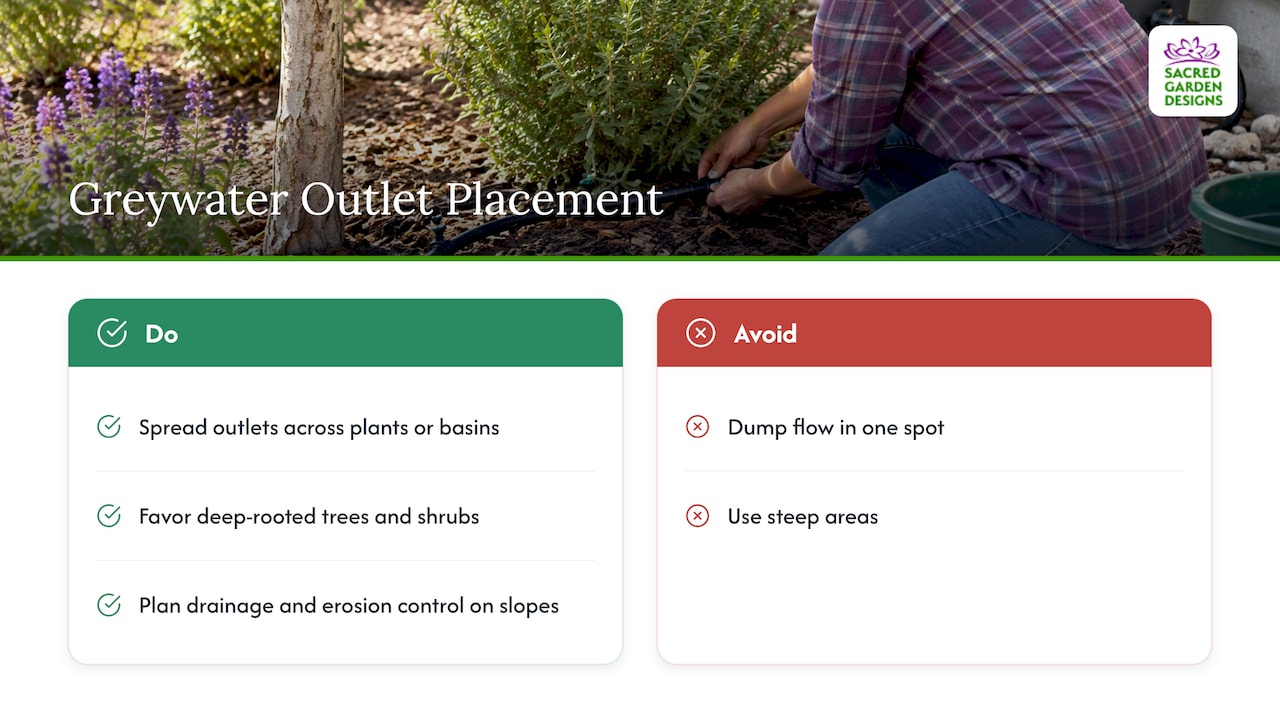
A washer can discharge many gallons per load, and soil only absorbs so fast. Spread outlets across several plants or basins rather than dumping everything in one spot. Aim at trees, shrubs and large ornamentals with deep roots. Slope also matters: water placed on a hillside can travel, so avoid steep areas, and if you are landscaping a slope, plan drainage and erosion control at the same time. We cover that in our guide to hillside landscaping in Los Angeles.
Plant choice helps too. Greywater suits plants that tolerate occasional moisture and don’t need perfectly pure water. Pairing the system with drought-tolerant plants for Los Angeles keeps total demand low, so a modest washer flow goes a long way.
What Los Angeles adds
For homes in the city, the Los Angeles Department of Building and Safety publishes a standard plan for residential greywater systems. The 2023 plan is based on the 2017 City Plumbing Code, Chapter 15, and is aimed at simple systems:
- Discharge of 250 gallons per day or less.
- No pump.
- No potable-water connection.
- No storage tank.
The plan also bars greywater irrigation of edible portions of plants, root crops included. If your idea involves a pump, a storage tank, a larger flow, or a commercial property, you are outside the simple residential plan and should talk to the department about what applies before buying equipment.
Other Los Angeles water rules still apply to the rest of your irrigation. Greywater doesn’t change the city’s watering schedule for your regular system, so review our summary of Los Angeles irrigation rules and watering days. If you are replacing a lawn at the same time, the LADWP turf replacement rebate has preapproval steps you must complete before work begins. Check the official program page for current terms, since rebate rules change.
Greywater and edible gardens
This is where the code and good sense line up. UC Agriculture and Natural Resources states in its drought tip on greywater in urban landscapes that direct contact with greywater can pose a health risk, and that it shouldn’t be applied directly to edible plant parts or root crops. Los Angeles’s standard plan says the same.
What that means in practice:
- Don’t water lettuce, carrots, beets, herbs or any crop you eat at ground level with greywater.
- Consider fruit trees carefully. A subsurface outlet near a mature tree, with water never touching fruit or the soil surface, is a different situation from a vegetable bed. Confirm with your local building department before you do it.
- Use potable water for the vegetable garden. Our guide to vegetable garden irrigation explains how much water beds actually need, and drip irrigation for raised beds is the clean way to deliver it.
If you want a garden that produces food and still saves water, the answer is usually design, not shortcuts: put edibles on efficient drip, and let ornamental trees and shrubs take the greywater. Our edible landscaping design approach is built around that separation.
Protect your soil and plants
The SFPUC advises choosing plant-friendly laundry products, avoiding detergents containing sodium or boron. Sodium can degrade soil structure over time, and boron can harm sensitive plants. Read labels, and favor products marketed for greywater use.
It is also honest to say the long-term picture isn’t fully mapped. UCANR notes that research on long-term effects of greywater on soil chemistry and plant health in California is limited, which is a reason for caution. Practical habits that follow:
- Rotate outlets among different plants and basins.
- Switch the valve to the sewer for bleach, harsh cleaners and heavily soiled loads.
- Watch plant health. Yellowing or burnt leaf edges are a signal to flush with fresh water and rethink the setup.
- Don’t send greywater to acid-loving plants without checking how they respond.
Maintenance and what can go wrong
Greywater systems fail quietly when nobody looks at them. LADWP’s maintenance guidance calls for:
- Weekly: check the soil to confirm the water is dispersing, and clean filters to remove lint, hair and similar debris.
- Every six months: if you have a surge tank, remove the sludge.
The warning signs are the disadvantages most people raise: soil that clumps, unusual odors, and ponding or runoff. Any of those means stop, switch the valve to the sewer, and fix the cause. Common culprits are a clogged line, too much water into one basin, or soil that drains slowly.
Here is an honest look at the tradeoffs:
| Benefit | Limit |
|---|---|
| Preserves drinking water supplies, as the SFPUC notes | Can’t be used on edible plant parts or root crops |
| Simple laundry systems are low-cost | Requires weekly attention |
| Connects you to where your water goes | Limits your detergent and cleaner choices |
| Can cut demand on landscape irrigation | Needs below-surface delivery and good drainage |
Greywater, rainwater and solar: building a resilient yard
Greywater is one tool. It works best with a landscape designed to need less water in the first place. Lawn is the biggest demand, so look at lawn alternatives that cut water use and the principles in plant-forward drought-tolerant landscaping. For areas without easy power, a solar-powered irrigation setup can run drip lines off-grid.
Our perspective
We have designed and built water-wise landscapes in Los Angeles for more than 25 years, and our view on greywater is practical. It is worth doing when it is designed into the yard, not bolted on afterward. The laundry-to-landscape system is the one we think most homeowners should look at first: it is simple, it fits the code’s intent, and it works only when outlets sit at the right plants on the right grade.
The mistake we see most is treating greywater as a way to keep a thirsty garden alive. It isn’t. The better order is to cut demand first with plant choice, mulch and efficient irrigation, then use greywater on trees and shrubs that can take it, while keeping the vegetable beds on clean drip water. A greywater system that waters a lawn-heavy yard is a lot of effort for little gain.
We also tell clients plainly that greywater needs a habit: a weekly look at the soil and the filter. If that sounds like too much, a simpler irrigation design may serve you better, and that is a perfectly good answer.
— Denise Buchanan
Planning a yard that uses greywater well
If you want greywater built into a whole-yard plan, our landscape design services cover planting, grading, irrigation and drainage together. Landscape design for yards under 5,000 sq. ft. is $1,500, and a full landscape design is $2,500. Installation, irrigation and slope work are quoted per project, and you can see everything we offer on our services page. Ask about greywater when you book your initial consultation, and we will tell you whether it makes sense for your site and which permits to confirm with your city.
Frequently asked questions
Is it illegal to dump greywater on the ground in California?
Spraying or discharging greywater on the ground surface is not allowed, and neither is ponding or runoff. The water must be contained on your property in a subsurface irrigation or disposal field. Delivering it below 2 inches or more of mulch or soil is the compliant route.
Can I use water from my washing machine in the garden?
Yes, with the right setup. A compliant clothes washer system is exempt from permit requirements, but it has to deliver water below the surface, avoid contact with people and pets, and skip laundry soiled by diapers. A three-way valve lets you send loads to the sewer when needed.
Can I use kitchen-sink water on plants?
Not as greywater under California’s definition, which excludes kitchen sinks and dishwashers. Both LADWP and the SFPUC leave them out. Use fresh water or a bucket of shower warm-up water instead.
What are the disadvantages of greywater systems?
They need regular attention: weekly soil and filter checks and, with a surge tank, sludge removal every six months. Problems include soil clumping, odors and runoff, and long-term soil effects haven’t been well studied in California. You also must choose low-sodium, boron-free detergents.
Does Los Angeles have extra rules?
The city’s standard plan covers simple residential systems at 250 gallons per day or less, with no pump, storage or potable connection. It bars irrigating edible portions of plants, including root crops. Anything larger or more complex needs a conversation with the city’s building department.
Sources
- Graywater Frequently Asked Questions (SFPUC)
- Graywater FAQs (LADWP)
- Graywater installation and maintenance (LADWP)
- Graywater systems for residential buildings, standard plan (Los Angeles Department of Building and Safety)
- Drought Tip: Use of Graywater in Urban Landscapes (UC Agriculture and Natural Resources)