Yes, home gardeners can grow productive grapevines if they give full sun, well-drained soil, a climate-appropriate cultivar, a sturdy support, and annual pruning. The core checklist is simple: pick the right site, choose a variety suited to your region, plant in spring, train the vine to a trellis, prune every year, and watch for disease early.
TL;DR:
- Selecting a site with at least six hours of direct sun and well-drained, slightly acidic soil is essential for healthy grape development.
- Matching the grape cultivar to your climate, such as choosing cold-hardy hybrids in colder regions, improves long-term success and fruit ripening.
- Proper dormant pruning in late winter and staged, aggressive removal help maintain a productive and manageable vine structure.
- Consistent, deep watering during early establishment prevents overwatering and overfertilizing that can harm fruit quality and hardiness.
- Annual fall cleanup of debris and timely disease management reduce fungal spores and improve vine health across seasons.
Table of Contents
- Why grow grapes: match your goals to the right vine
- How do you pick and prepare the best planting site?
- Which grape varieties suit your climate and goals?
- Step-by-step planting: timing, depth, and spacing
- Training systems and trellis basics for your yard
- Watering and fertilizing without overdoing it
- Core pruning rules that determine your harvest
- Identifying and managing common pests and diseases
- When to harvest and how to handle fresh fruit
- Propagating new vines and reviving old ones
- A seasonal checklist to keep your vine on track
- A grower’s honest take on sustainable grape growing
- FAQ
- Sources
Why grow grapes: match your goals to the right vine
Before you plant anything, decide what you actually want from your grapevine. Someone who wants a shady arbor over a patio will train and prune very differently from someone chasing homemade jelly or a few bottles of wine. That decision shapes which cultivar you buy, how hard you prune, and how much space you need to give the plant.
A single, healthy grapevine is a long-term commitment. Grapevines are self-fruitful, so one vine can produce a crop on its own without a second plant for pollination, and a well-managed vine can keep producing for decades once established.
- Table grapes need varieties bred for eating fresh, with thinner skins and sweeter flavor.
- Wine grapes often need more precise pruning and a warmer, drier site to concentrate sugars.
- Juice and jelly grapes, like classic Concord types, tolerate cooler climates and heavier cropping.
- Shade and ornamental vines prioritize vigorous canopy growth over fruit quality.
How do you pick and prepare the best planting site?
Grapevines need six or more hours of direct sun a day to ripen fruit properly and build sugar. A south-facing slope is ideal because it warms early in spring and drains cold air away from the vine, while low spots and valley bottoms trap frost and should be avoided.
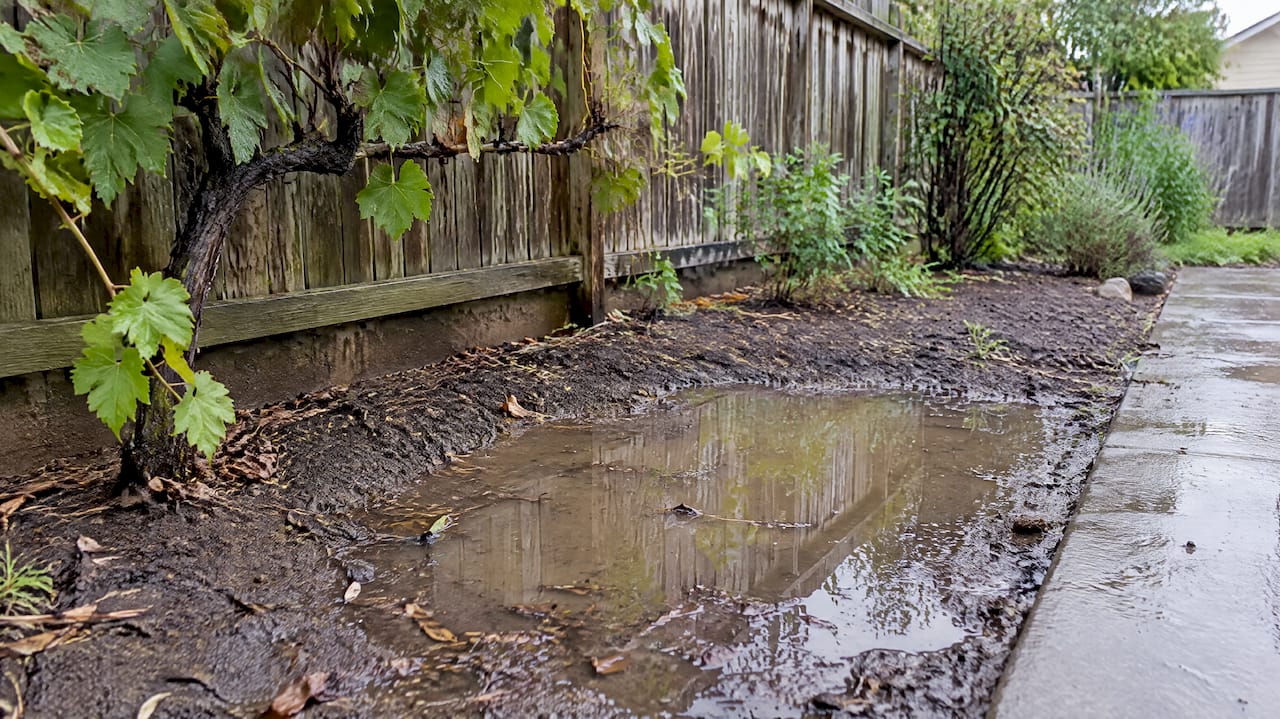
Soil drainage matters just as much as sunlight. Heavy clay that holds standing water after rain will rot roots, so test drainage by digging a one-foot hole, filling it with water, and watching how long it takes to empty: anything over a few hours signals a problem. Grapevines prefer a soil pH between 6.0 and 7.0, which you can confirm with a basic soil test kit or a sample sent to your local extension office.
- Clear the site of turf grass and perennial weeds that compete for water and nutrients.
- Dig a test hole to check drainage and loosen compacted subsoil if needed.
- Send a soil sample for pH and nutrient testing before you amend anything.
- Adjust pH gradually with lime to raise it or sulfur to lower it, based on test results.
- Build a raised bed or mound if drainage can’t be fixed any other way.
Site selection also affects winter survival. A spot with good air drainage and some windbreak protection reduces cold injury to buds and trunks, which matters more in regions with harsh winters.
Pro Tip: Walk your planting site after a heavy rain and note where water pools longest. That low spot is both a drainage risk and a frost pocket.
Which grape varieties suit your climate and goals?
Matching the cultivar to your climate is the single biggest factor in whether a vine thrives or struggles for years. Extension programs group grapes into a few broad categories, each suited to different growing conditions.
- Cold-hardy hybrids tolerate harsh winters and are a safer bet in USDA Zones 3 through 5, where extreme cold kills less hardy types.
- American types like Concord (Vitis labrusca) handle many temperate regions and are forgiving of inconsistent care, making them popular for juice and jelly.
- European wine grapes (Vitis vinifera) deliver classic wine flavors but generally need milder winters and longer, warmer growing seasons.
- Muscadines thrive in hot, humid conditions typical of the Southeast and resist many diseases that plague other types.
Your local extension office publishes cultivar recommendation lists specific to your area, often tied to growing degree days, a measure of accumulated heat that predicts whether a variety will ripen before frost. Checking that list before buying a vine saves years of disappointment with a mismatched cultivar.
Because grapevines are self-fruitful, planting one variety is enough to get fruit. Many home growers still plant two or three varieties anyway, not for pollination but to extend the harvest window or diversify how the fruit gets used, pairing an early table grape with a later wine or juice type.
Step-by-step planting: timing, depth, and spacing
Plant grapevines in early spring, as soon as the soil can be worked and the risk of hard freeze has passed. Bare-root vines need a few hours soaking in water before planting to rehydrate the roots, while potted vines can go in any time after the last frost once you’ve hardened them off by setting them outside for increasing periods over a week or two.
- Dig a hole wide enough to spread the roots naturally without bending them.
- Set the vine at the same depth it grew in the nursery, never deeper.
- Spread roots evenly and backfill with native soil, firming gently as you go.
- Space vines several feet apart depending on the training system and vigor of the variety.
- Cut the young vine back to a single strong cane with two or three buds.
- Drive a stake next to the trunk and tie the cane loosely for support.
- Water deeply right after planting to settle the soil around the roots.
Through the first growing season, water consistently to help the root system establish, then begin training the single cane upward as it grows. This first-year discipline, one trunk, one stake, patient watering, sets up everything that follows.
Training systems and trellis basics for your yard
How you train a vine depends on whether you want fruit, shade, or both. A vine grown for heavy fruit production needs an open canopy with good sun exposure on the clusters, which means more aggressive pruning. A vine grown mainly for shade on an arbor can carry more wood and foliage, accepting lower fruit quality in exchange for coverage.
- Single trunk with cordons is the standard home setup: one vertical trunk with horizontal arms trained along wires.
- Four-arm Kniffin uses two wires and four permanent arms, a traditional system for American types like Concord.
- Arbor or pergola training sacrifices some fruit quality for a dense, shady canopy over a seating area.
- Simple two-wire trellis works well in small home gardens and costs little to build.
A basic trellis uses sturdy end posts set deep enough to resist the pull of a loaded vine, with wires strung at about 3 feet and 5 to 6 feet off the ground. Intermediate posts every 15 to 20 feet keep the wires from sagging. For a single vine or two, a simple T-post and wire setup is enough; larger plantings benefit from pressure-treated posts and galvanized wire.
In year one, train the vine to a single trunk up the stake. In year two, select two strong shoots to become permanent cordons along the lower wire. By year three, those cordons should be filling in and producing the spurs or canes that will carry fruit going forward.
Pro Tip: If you’re mapping out trellis placement and spacing before you dig, a tool like Veete lets you lay out the design in 3D with live pricing so you can see the yard before committing to posts and wire.
Watering and fertilizing without overdoing it
Newly planted vines need steady moisture to establish roots. Water young vines at about 1/2 to 1 inch per week during the first two seasons, soaking the root zone deeply rather than sprinkling the surface, and taper off in fall so new growth has time to harden before winter.
Mature, established vines are a different story. Grapevines are naturally drought-tolerant once their roots run deep, and most home growers overwater and overfertilize far more often than they underdo it.
- Test your soil before adding any fertilizer rather than guessing.
- Skip nitrogen-heavy feeds unless a soil test shows a real deficiency.
- Apply a light layer of compost in early spring if the soil test calls for it.
- Keep mulch a few inches away from the trunk itself to avoid rot.
- Clear grass and weeds from beneath the canopy so the soil warms faster in spring.
Excess water and fertilizer encourage rank vegetative growth that fails to mature properly, which reduces both fruit quality and winter hardiness. A vine that looks lush and leafy but produces little fruit is almost always overfed, not underfed.
Core pruning rules that determine your harvest
Pruning is the single task that separates a productive grapevine from a tangled, unproductive mess. Dormant-season pruning should remove roughly 80 to 90 percent of the previous year’s growth in many training systems, which sounds drastic but is exactly what keeps fruit quality high.
- Prune in late winter while the vine is fully dormant, before buds swell.
- Remove all but the permanent trunk and cordons or arms from last year’s structure.
- Choose between spur pruning (short stubs with two or three buds) or cane pruning (longer canes with eight to ten buds), depending on your cultivar’s habit.
- Leave only enough buds to support a moderate, well-spaced crop, typically a set number per foot of cordon.
- Cut out any dead, diseased, or crossing wood regardless of the system.
Most home growers fail here by pruning too lightly out of fear of hurting the vine. Under-pruned vines produce too many small, poorly ripened clusters hidden inside a dense, shaded canopy, which is the most common mistake extension educators see in home vineyards.
If you’ve inherited or neglected an overgrown vine, don’t try to fix it in one season. A staged, multi-year pruning plan restores structure gradually while preserving some crop along the way, rather than shocking the plant with a single radical cut. Expect a partial harvest the first restoration year, with fuller production returning by year two or three as a clean trunk and cordon system reestablishes.
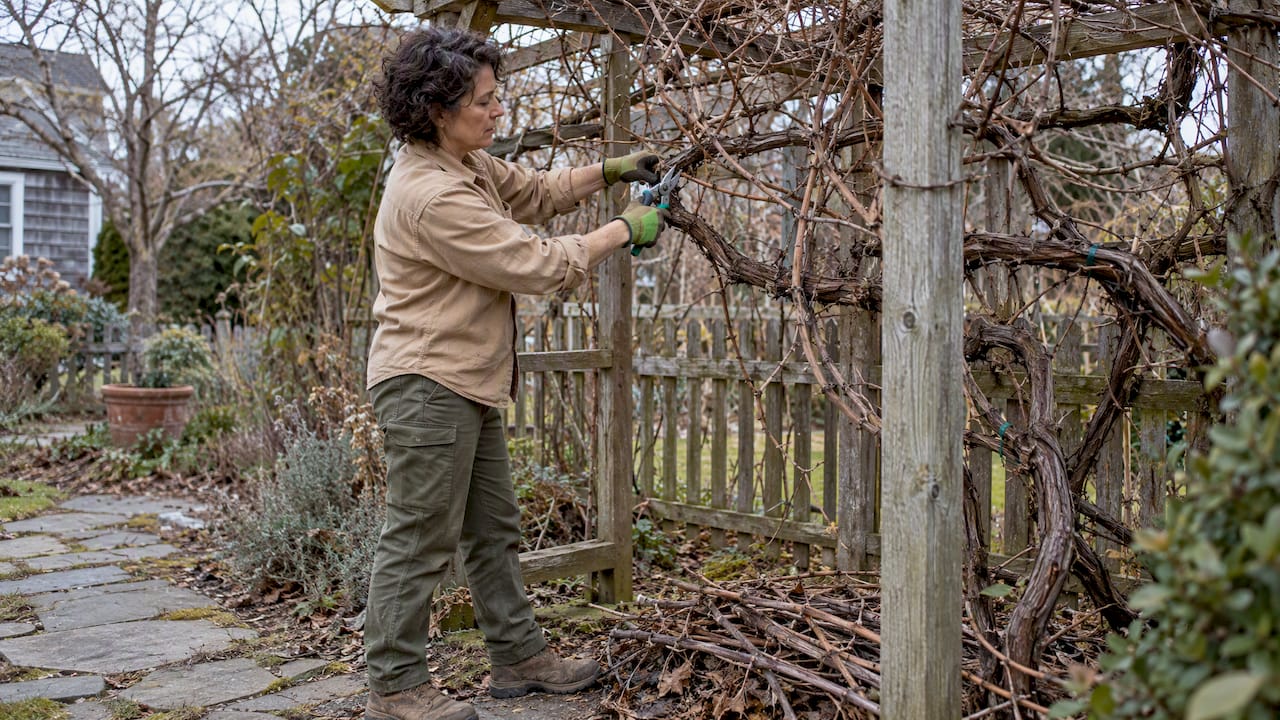
Pro Tip: When in doubt about how much to cut, prune harder rather than softer. A grapevine recovers from aggressive pruning far better than it recovers from years of neglect.
Identifying and managing common pests and diseases
Sanitation is the foundation of disease control in a home vineyard, and it costs nothing but time. Removing mummified berries, fallen leaves, and pruning debris from the ground each season reduces the fungal spores that overwinter and reinfect the vine the following spring.
- Black rot shows up as brown leaf spots and shriveled, mummified berries; sanitation and good air circulation are the first line of defense.
- Powdery mildew coats leaves and fruit in a grayish-white film and thrives in humid, crowded canopies.
- Phylloxera, a root-feeding insect, weakens vines gradually and is best managed by planting resistant rootstock where it’s a known regional problem.
- Birds can strip a ripening crop in days, so netting the canopy as fruit colors up is often the simplest fix.
Good sanitation directly lowers disease pressure the following season because spores overwinter on mummified fruit and leftover plant debris. Clearing that material every fall is one of the highest-value, lowest-cost habits a home grower can build.
One more caution worth knowing: herbicides containing 2,4-D can drift from neighboring lawns or fields and cause severe, twisted leaf damage on grapevines even at very low exposure. If you or a neighbor treats lawns nearby, avoid spraying on windy days and keep grapevines well away from treatment zones.
When to harvest and how to handle fresh fruit
Grapes ripen only on the vine. Once picked, they will not continue developing sugar or improving in flavor, so the only reliable way to judge readiness is tasting a few berries from different parts of the cluster rather than going by color alone. The on-vine ripening window is often short, so check clusters every few days as they approach maturity.
- Taste-test berries from several clusters before committing to a full harvest.
- Cut clusters with scissors or pruners rather than pulling, which bruises the fruit.
- Cool harvested grapes quickly in the refrigerator to extend their usable life.
- Net ripening clusters against birds, which target grapes right as sugars peak.
- Use fresh fruit for eating, freezing, juice, or jam within a few days of picking.
Propagating new vines and reviving old ones
If you want more vines without buying new stock, hardwood cuttings are the simplest method. In late winter, cut healthy, pencil-thick dormant wood into 12 to 18 inch sections, each with several buds, and bury them at an angle with at least two buds below the soil line until roots form by the following season.
- Take hardwood cuttings during dormant pruning, selecting vigorous one-year-old canes.
- Store cuttings cool and moist if not planting immediately.
- Plant cuttings in loose, well-drained nursery soil or containers in early spring.
- For layering, bend a low, flexible cane to the ground and bury a section while it’s still attached to the parent vine.
- Sever the rooted layer from the parent plant once it shows strong independent root growth, usually after one growing season.
Avoid growing vines from seed. Grape seedlings don’t come true to type, so a seed from a delicious table grape can produce fruit nothing like its parent. Stick to cuttings or layering, or buy certified nursery stock for any new variety.
A seasonal checklist to keep your vine on track
Grapevines reward a steady annual rhythm more than any single heroic effort. The table below outlines the core tasks by season so nothing slips through the cracks.
| Season | Key tasks | Priority |
|---|---|---|
| Late winter | Dormant pruning, trellis repair | High |
| Early spring | Planting, soil testing, mulching | High |
| Spring | Shoot thinning, tying new growth to wires | Medium |
| Pre-bloom | Cluster thinning for quality | Medium |
| Summer | Leaf pulling near fruit zone, disease scouting | Medium |
| Late summer | Bird netting, ripeness checks | High |
| Harvest | Taste-testing, careful cutting, cooling fruit | High |
| Fall | Cleanup of mummies and debris, reduced watering | High |
Thinning clusters before bloom and pulling a few leaves around the fruit zone in summer both improve sun exposure and ripening, while fall cleanup sets up a cleaner, lower-disease start the following spring.
A grower’s honest take on sustainable grape growing
Grapevines are one of the few food plants that genuinely reward restraint. The instinct to water more, feed more, and prune less is almost always wrong, and the vines that produce the best fruit are usually the ones left a little thirsty and cut back hard every winter. That runs counter to how most people treat the rest of their garden.
Water-wise choices matter here too: once established, a grapevine needs far less irrigation than most vegetable beds or lawns, which makes it a smart addition to a drought-conscious yard. Where a site has real challenges, a steep slope, poor drainage, or a trellis that needs engineering for wind and fruit load, working with a landscape designer to plan irrigation and structure can save years of trial and error.
— Denise Buchanan
FAQ
What is the 12 grapes rule?
The 12 grapes tradition is a New Year’s Eve custom, not a grape-growing guideline, where people eat 12 grapes at midnight for good luck in each month ahead. It has no bearing on how to plant, prune, or care for a grapevine in the garden.
What are common grape growing mistakes?
The most frequent mistakes are under-pruning, which leaves too much old wood and shaded, low-quality fruit, and overwatering or overfertilizing, which pushes rank vegetative growth at the expense of fruit and winter hardiness. Poor site selection, planting in shade, frost pockets, or heavy wet soil, also causes many early failures.
How long does it take to get grapes to grow?
A home grapevine can produce its first small crop as early as one year after planting, but healthy, well-trained vines typically need three to five years to reach full, consistent production. Patience during the early training years pays off in both yield and fruit quality later.
Do you need two grape vines to produce fruit?
No, grapevines are self-fruitful, so a single vine of one cultivar can produce a full crop without a second plant for pollination. Some gardeners plant multiple varieties anyway to extend the harvest season or diversify how the fruit gets used, not because a second vine is required.