For Los Angeles yards, the winning combination is coast live oak for canopy, toyon and manzanita for structure, hummingbird sage and California poppy for color, and deergrass for texture. Plant them between November and March, match each one to your yard’s sun and drainage, and you’ll cut irrigation needs while feeding local pollinators and birds. Get the timing and placement right, and these plants need almost no help after their first year.
TL;DR:
- Properly matching native plants to your site’s specific sun, drainage, and microclimate greatly increases their survival and reduces maintenance needs.
- Planting between November and March leverages winter rain to help establish roots, decreasing the need for supplemental watering in summer.
- Nurseries should provide provenance information, and plants should be inspected for healthy roots and proper propagation to avoid wild-collected or poor-quality stock.
- Grouping plants by water requirement and creating zones for xeric versus mesic species simplifies irrigation and supports sustainable landscaping.
- Maintaining a native landscape involves light pruning, annual mulching, and zone-specific irrigation, with timing and site assessment being key to long-term success.
Table of Contents
- Best Los Angeles Native Plants by Landscape Role
- How to Choose, Plant, and Establish Native Plants in LA
- Where to Find Los Angeles Native Plants and Trustworthy Plant Data
- Designing and Maintaining a Native Landscape in LA
- What 25 Years of LA Landscaping Experience Has Taught Experts
- Sources
- FAQ
Best Los Angeles Native Plants by Landscape Role
California is home to roughly 6,500 native plant taxa, and a good chunk of those never make it into a nursery catalog because they’re too specialized or too finicky for a home yard. The species below made the cut because they’re reliable, widely available, and suited to the specific stretch of coast, foothill, and valley terrain that makes up the Los Angeles basin.
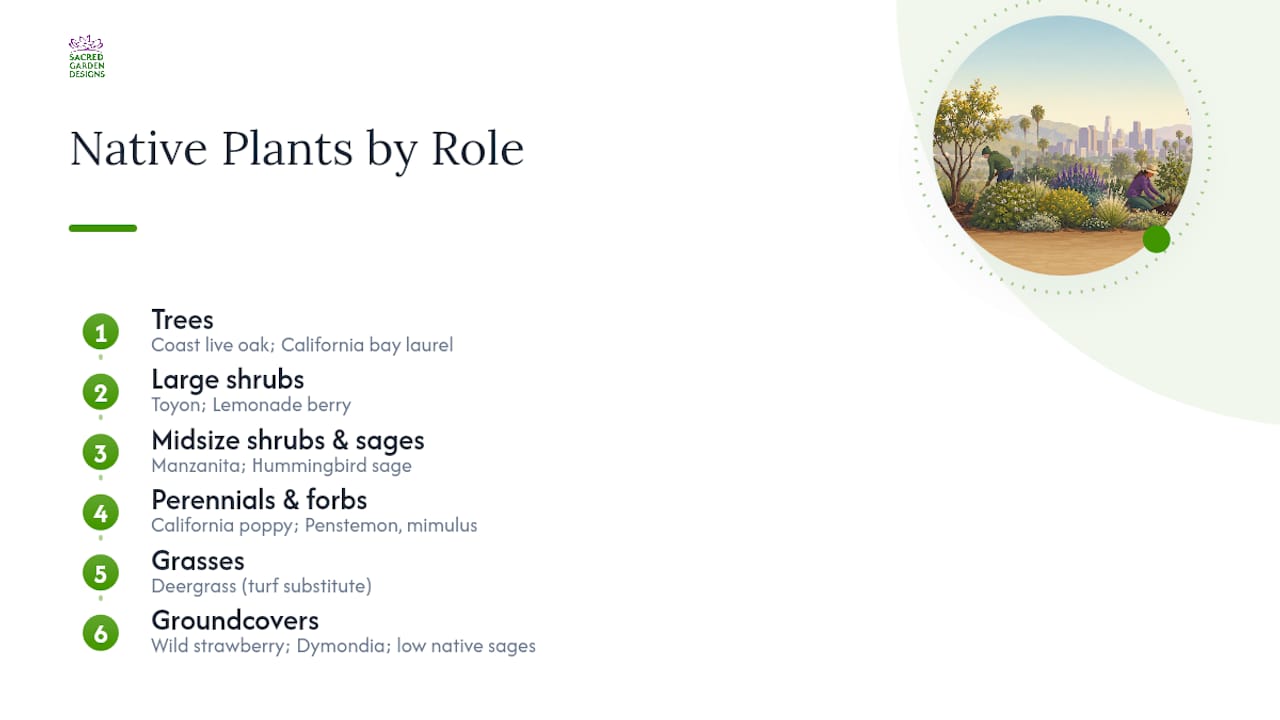
Trees. Coast live oak (Quercus agrifolia) is the backbone tree of Southern California landscapes. It grows slowly, lives for centuries, and supports more insect and bird species than almost any other plant you could put in the ground here. California bay laurel (Umbellularia californica) works as an alternate where you want a faster-growing evergreen with fragrant foliage, though it needs more consistent moisture than an oak.
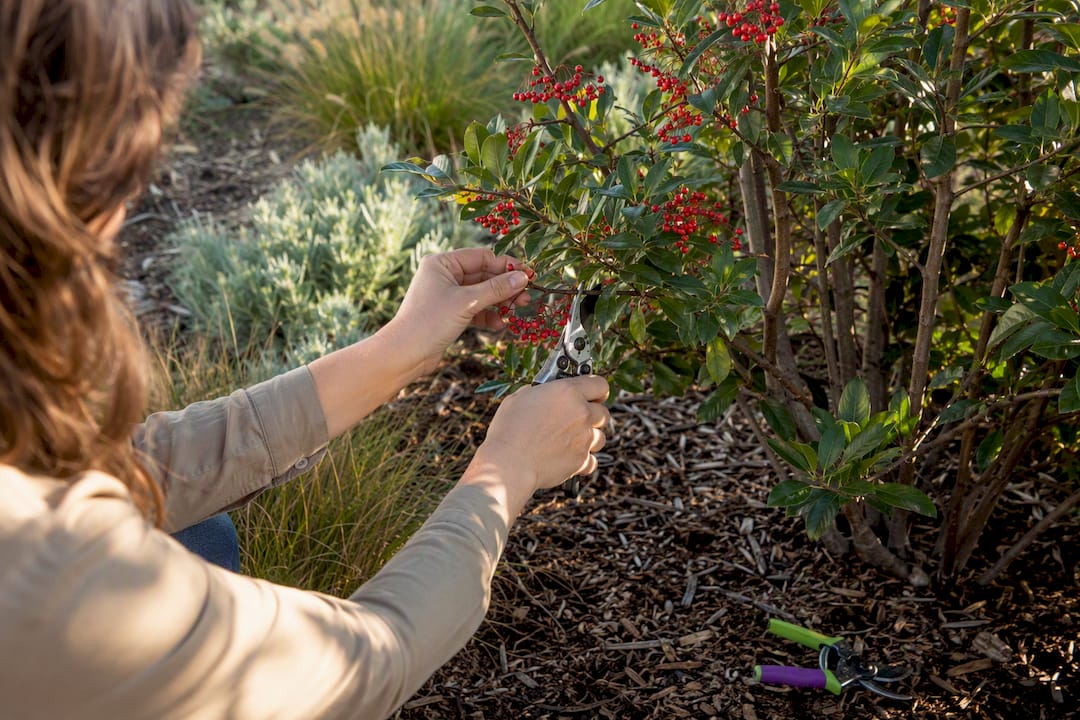
Large shrubs. Toyon (Heteromeles arbutifolia) earns its old nickname, “California holly,” from the bright red berry clusters that cover it every winter and draw robins and waxwings by the dozen. Lemonade berry (Rhus integrifolia) makes a denser hedge option, tough enough for coastal bluffs and freeway margins alike.
Midsize shrubs and sages. Manzanita (Arctostaphylos spp.) brings twisted red bark and small urn-shaped flowers that hummingbirds visit before almost anything else blooms in late winter. Hummingbird sage (Salvia spathacea) spreads by underground rhizomes and pumps out fruity-scented magenta flower spikes that pollinators treat like a buffet.
Perennials and forbs. California poppy (Eschscholzia californica) is the plant most people picture when they hear “California native.” It self-seeds readily and blooms orange from spring through early summer. Penstemon and mimulus, commonly called monkeyflower, add red, orange, and yellow tubular blooms that hummingbirds favor over almost anything in a typical suburban garden.
Grasses. Deergrass (Muhlenbergia rigens) works as a genuine turf substitute, forming dense fountain-shaped clumps that need mowing maybe once a year instead of weekly. One caution: dried grass clumps near structures should be thinned annually, since dead grass thatch is fuel in fire-prone canyons and hillsides.
Groundcovers. Wild strawberry (Fragaria spp.), Dymondia, and low-growing native sages hold slopes together and choke out weeds while using a fraction of the water a traditional lawn demands.
How to Choose, Plant, and Establish Native Plants in LA
Los Angeles isn’t one climate. It’s several, stacked on top of each other across a fairly small footprint. The region spans roughly Sunset zones 18 through 24, which means a yard in Woodland Hills bakes through summer heat that a yard in Santa Monica never sees, while a hillside lot in Eagle Rock might have three distinct microclimates on three sides of the same house. Before buying anything, walk your property and note where the sun hits hardest, where water pools after rain, and which spots get ocean breeze versus reflected heat off pavement.
Here’s the planting sequence that gives natives the best shot:
- Check your zone and site conditions. Match plant water needs to your yard’s actual sun exposure, slope, and drainage, not the label on the pot.
- Plant between November and March. LA County’s drought-tolerant garden guidance recommends this window because winter rain does the establishment work for you, letting roots settle in before summer heat arrives.
- Dig a hole only as deep as the root ball and skip heavy soil amendment. Most California natives evolved in lean native soil and resent rich, amended beds.
- Mulch two to three inches deep, keeping it clear of the trunk or crown. This holds moisture and suppresses weeds without inviting rot.
- Water deeply but infrequently for the first 12 to 24 months, then taper off as roots establish. Overwatering kills more new natives than drought ever does.
One legal note worth knowing: California lists 225 plant taxa as rare, threatened, or endangered, and over 2,000 taxa carry some conservation concern. Never dig up wild plants from open space or roadside habitat. Always buy nursery-propagated stock, and check with the California Department of Fish and Wildlife if you’re unsure whether a species is protected.
Pro Tip: Before you fall in love with a plant online, check what your specific slope and drainage will actually support. A manzanita that thrives on a well-drained hillside in La Crescenta can rot within a season in a low-lying, clay-heavy yard in Culver City. Match the plant to the site first, then pick the variety.
Where to Find Los Angeles Native Plants and Trustworthy Plant Data
Calscape is the fastest way to search native plants by your ZIP code, filtering for pollinator value, water need, and mature size. For identification and taxonomic accuracy, especially if you’re trying to confirm whether a plant you spotted on a hike is actually native or an invasive look-alike, Jepson eFlora remains the standard reference used by botanists statewide.
Beyond those tools:
- LADWP and LA County publish drought-tolerant plant lists and planting handbooks tailored to regional conditions.
- When buying, ask nurseries whether stock has southern California or LA basin provenance. Genetics matter. A manzanita grown from Northern California seed stock may struggle with our drier summers.
- Inspect root systems before buying. Roots should be white or tan and evenly distributed, not brown, mushy, or circling tightly around the pot.
- Ask nursery staff directly whether a plant was nursery propagated rather than wild collected. Reputable growers will know the answer immediately.
Designing and Maintaining a Native Landscape in LA
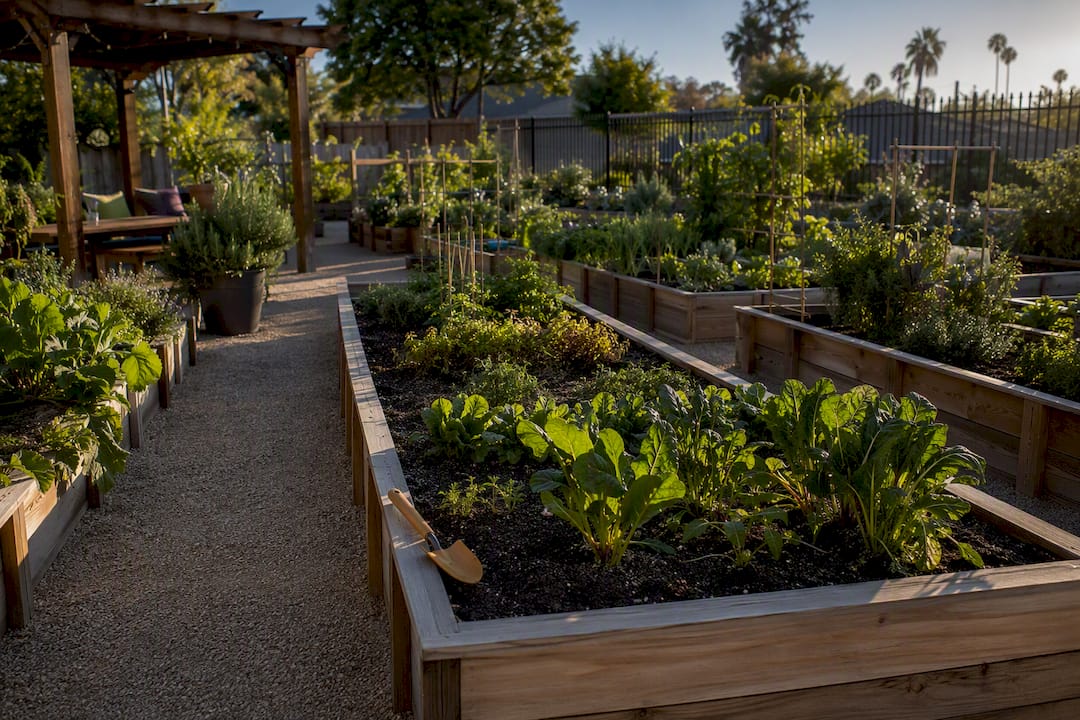
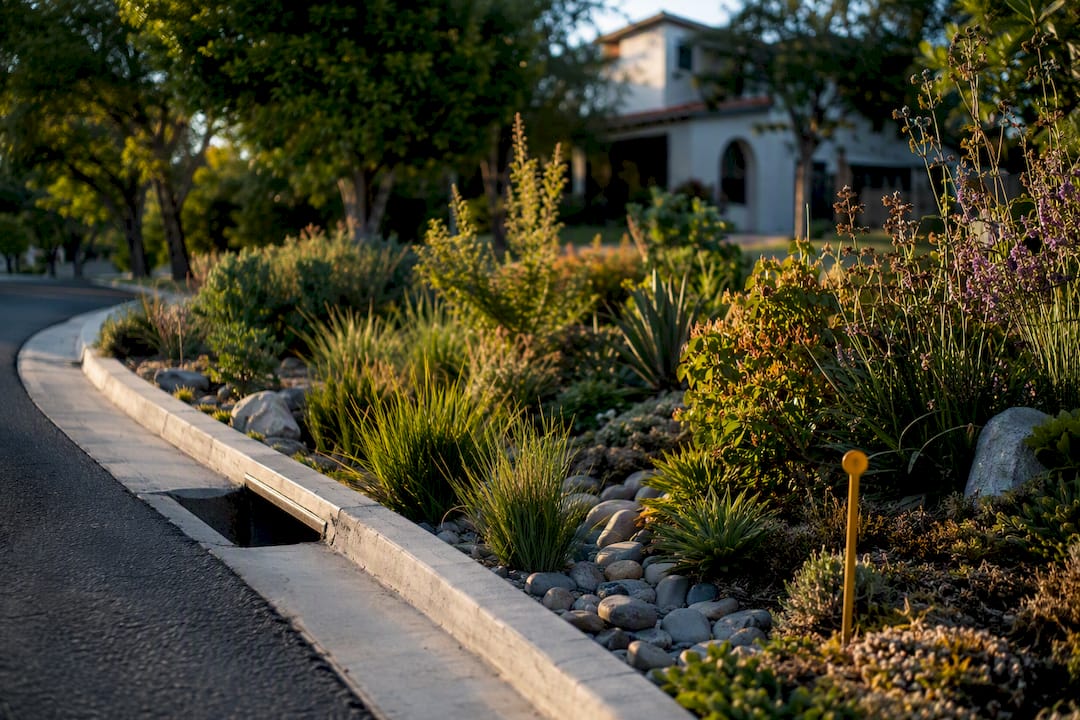
A native landscape works best when you group plants by how much water they actually want, not just how they look next to each other. Xeric species like manzanita and California poppy belong on slopes and in full-sun beds; mesic plants that tolerate more moisture, like rushes and some sages, fit naturally into swales or north-facing corners where runoff collects. This kind of zoning keeps your irrigation system simple instead of forcing one drip schedule to serve plants with opposite needs.
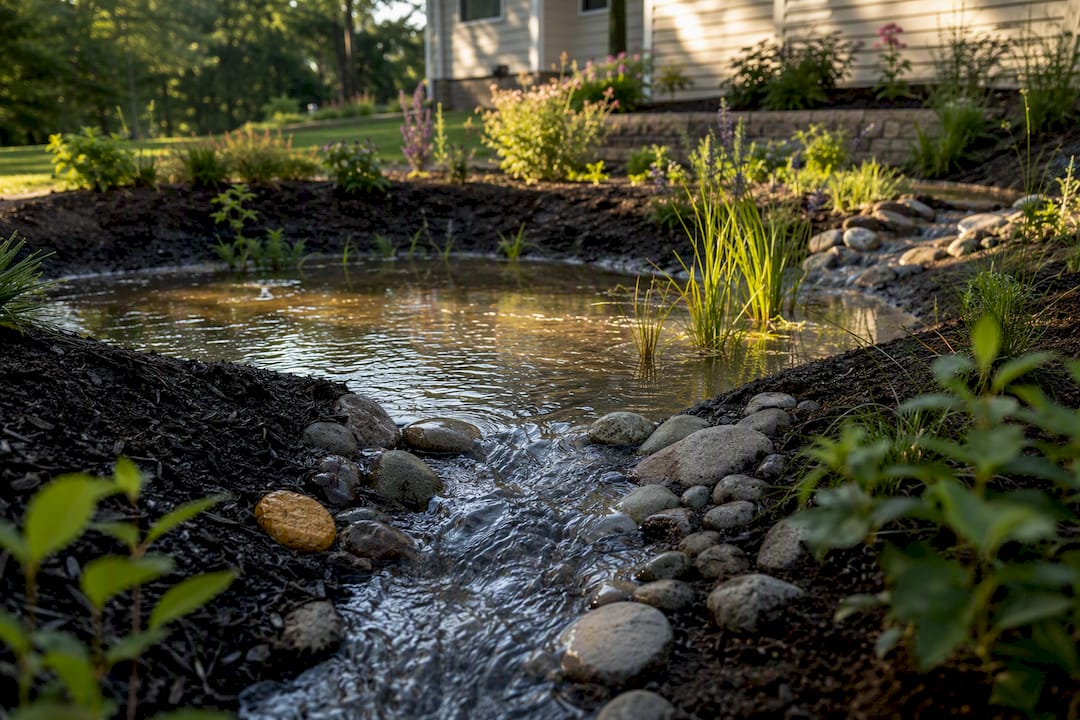
For layout ideas that read as intentional rather than accidental, try a deergrass meadow in place of a traditional lawn panel, a hummingbird sage and monkeyflower pocket near a patio where you’ll actually see the pollinator traffic, and a toyon or manzanita hedge along a property line instead of clipped boxwood. Rain gardens using rushes (Juncus spp.) at the low point of a swale capture winter runoff that would otherwise wash down the driveway.
Maintenance stays light once plants establish: prune most shrubs after their bloom cycle finishes, thin grass clumps annually to manage fire fuel load, and refresh mulch once a year. Drip irrigation, set on separate zones by water need, does the heavy lifting during establishment and can often be shut off entirely for xeric species after year two.
What 25 Years of LA Landscaping Experience Has Taught Experts
Two lessons keep repeating across two and a half decades of Sacredgardendesigns projects around Los Angeles. First, native understory planted beneath an existing coast live oak needs to respect that oak’s root zone. Oaks resent soil disturbance and summer water near their trunks, so the plants that thrive underneath them are usually the same dry-shade natives that evolved alongside them in the wild.
Second, timing beats almost everything else. A garden planted in November with proper mulch will often outperform, by its second summer, an identical garden planted in June and babied with extra water the whole way. If you’re staring at a bare yard right now and not sure where to start, a site assessment is the cheapest insurance you can buy before spending money on plants. Sacredgardendesigns offers landscape design services built around exactly this kind of site-specific matching, and the firm’s blog has more project-specific breakdowns if you want to see how these principles play out on real LA properties.
— Denise Buchanan
Sources
- California Department of Fish and Wildlife — Conservation: Plants
- Jepson eFlora — Jepson Flora Project
- Calscape | California’s native plant gardening destination
- Los Angeles County Department of Public Works — The Drought Tolerant Garden (handbook)
For general seasonal planting timing that echoes LA’s own fall-to-spring window, this planting calendar guide offers a useful supplemental reference.
FAQ
What are 10 native plants for a Los Angeles garden?
A solid starter list includes coast live oak, toyon, lemonade berry, manzanita, hummingbird sage, California poppy, penstemon, monkeyflower, deergrass, and wild strawberry, covering trees down to groundcovers.
What are some examples of native plants in California?
Beyond the Los Angeles favorites above, California’s broader native flora includes California buckwheat, ceanothus (wild lilac), coast redwood in northern regions, and hundreds of other species suited to the state’s varied climates.
What are some low-maintenance native plants in California?
Deergrass, manzanita, and toyon require the least upkeep once established, needing only occasional pruning and no supplemental water beyond their first year or two in the ground.
What plants is California known for?
California is closely associated with the California poppy, its official state flower, along with coast live oak, manzanita, and giant sequoias, though the sequoias grow well outside the LA basin’s climate zones.