Natural organic fertilizers are nutrient sources derived from plant, animal, or mineral materials rather than synthetic salts, including compost, manures, meals, and mineral amendments. The quickest path to good results: get a soil test, build a finished-compost baseline, then layer in targeted organic feeds to match your crop’s N-P-K needs. Follow composting and manure-processing guidelines carefully to avoid pathogens or nutrient overload.
TL;DR:
- Using soil testing ensures accurate matching of organic inputs to crop needs, preventing over or under-fertilization with N-P-K ratios tailored to specific plants.
- Compost acts as both a nutrient source and soil builder, whereas manure and mineral amendments provide targeted long-term or immediate nutrient boosts depending on their processing and application timing.
- Processed manure that meets USDA heat and dryness standards can be applied without waiting periods, but raw manure requires a 90 to 120-day delay to reduce pathogen risk.
- Repeatedly fertilizing with manure for nitrogen without monitoring phosphorus levels can cause long-term soil phosphorus surpluses, which may take years to resolve.
- A comprehensive approach combines soil testing, soil amendments for structure, and targeted organic feeds to achieve sustainable and healthy garden ecosystems.
Table of Contents
- Main types of natural organic fertilizers and when to use them
- Fertilizer vs soil amendment: what each fixes and how to combine them
- How to choose: soil testing, matching N-P-K, and crediting manure and compost
- Application timing, rates, and safety for raw and processed manure
- Homemade organic fertilizer mixes you can measure and repeat
- Limitations and troubleshooting: imbalances, pH shifts, and salts
- Practical notes on using organics in water-wise landscape projects
- An integrated approach beats a single favorite product
- Classes for DIYers, design help for everyone else
- FAQ
- Sources
Main types of natural organic fertilizers and when to use them
Each organic input plays a different role, and knowing the nutrient profile helps you avoid over- or under-feeding.
- Finished compost adds a mild, balanced nutrient boost along with organic matter, usually with low salt risk and minimal odor once cured.
- Manures (chicken, cow, rabbit) vary widely in nitrogen, phosphorus, and potassium content; chicken manure is hotter and higher in N, while cow manure is milder and slower to release.
- Blood meal delivers fast-available nitrogen, while feather meal releases more slowly and suits season-long feeding.
- Fish emulsion gives a quick, mild nitrogen and micronutrient boost for containers and seedlings, though it carries a noticeable odor.
- Kelp meal supplies potassium and trace minerals plus growth-supporting compounds, useful for stress resistance rather than heavy feeding.
- Rock phosphate and greensand release phosphorus and potassium slowly over years, suited to long-term soil building rather than a quick fix.
- Humic and fulvic acid products can improve micronutrient uptake in some soils, though research on fulvic acids shows the effect depends heavily on application rate, molecular structure, and soil mineralogy, with typical garden rates often showing little measurable change.
For vegetable beds, a compost base plus a blood meal or fish emulsion sidedress covers most needs. Ornamentals usually thrive on compost alone with an occasional kelp feed. Lawns benefit from feather meal or composted poultry manure for steady green-up, while container plants do best with diluted fish emulsion since bagged potting mixes drain nutrients quickly.
Fertilizer vs soil amendment: what each fixes and how to combine them
A fertilizer supplies nutrients. A soil amendment changes the soil’s physical structure, water-holding capacity, or biological activity. Confusing the two leads to gardens with great texture but hungry plants, or well-fed plants struggling in compacted, lifeless dirt.
- Amendments like compost, aged bark, or peat alternatives loosen clay, help sand retain moisture, and feed soil microbes.
- Fertilizers like blood meal or rock phosphate target a specific nutrient deficiency identified by a soil test.
- Compost does both, acting as a mild fertilizer and a structural amendment, which is why it works as a universal starting point.
The practical sequence: fix the soil’s physical and biological foundation first with compost or other organic matter, then layer in targeted nutrients once you know what the soil test says is missing. Skipping the amendment step means fertilizer washes through poorly structured soil instead of staying where roots can use it.
How to choose: soil testing, matching N-P-K, and crediting manure and compost
Start with a soil test that reports N-P-K levels, organic matter percentage, and pH. Without this baseline, you’re guessing at rates and risking nutrient buildup. From there, estimate what your crop actually needs and subtract what your soil, compost, and manure already supply.
- Match the fertilizer’s N-P-K ratio to the crop recommendation rather than buying a generic blend, as University of Maine’s soil testing lab guidance on blended natural fertilizers explains.
- Credit manure’s phosphorus and potassium directly since those nutrients don’t volatilize, but use a conservative first-year availability factor for nitrogen since manure N release is variable, a point UConn Extension’s manure guidance stresses.
- Subtract nitrogen already supplied by soil organic matter and any cover crops before calculating how much additional fertilizer to add, following the approach outlined by UVM Extension’s nitrogen estimation guidance.
- Retest soil every three to five years to track whether phosphorus or potassium is building up from repeated manure applications.
Pro Tip: If you manage manure nitrogen for your crop’s full N need year after year without monitoring phosphorus, you can end up with a soil P surplus that takes years to draw down.
Application timing, rates, and safety for raw and processed manure
Composting and manure handling rules exist to prevent pathogens from reaching edible crops, and they also affect how and when you can legally apply these materials to food gardens.
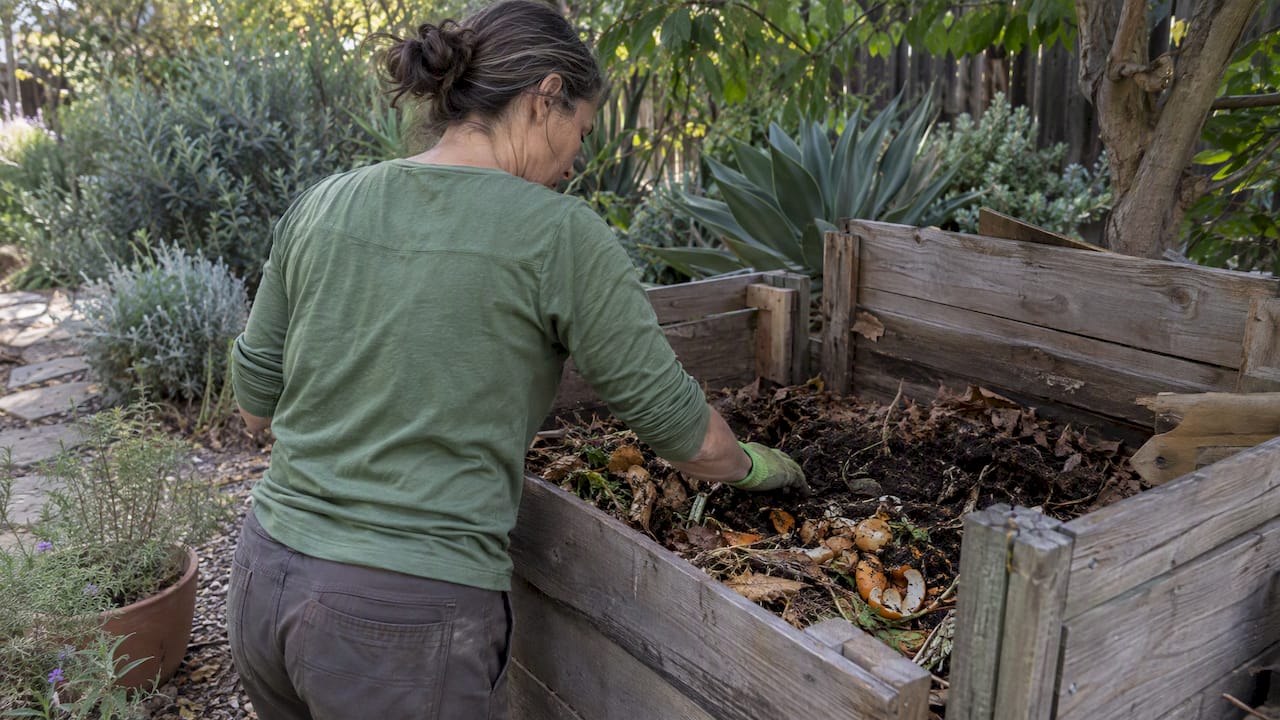
- Finished compost should look dark, crumbly, and earthy with no recognizable food scraps or ammonia smell.
- Raw manure applied to crops touching the soil needs 120 days between application and harvest, while crops not touching the soil need 90 days, a standard tied to organic production rules.
- Processed manure that has been heated and dried can skip the waiting period entirely. Processed manure must meet USDA-defined heat and dryness standards to qualify for this exemption, according to USDA’s compost production guidance.
- Incorporate manure or compost into soil quickly after spreading, since surface application without incorporation loses more nitrogen to the air.
- Sidedress nitrogen-hungry crops like corn or leafy greens in split applications timed to active growth rather than one large dose at planting.
When in doubt about a manure or compost source’s nutrient content, a lab analysis removes the guesswork and lets you credit nutrients accurately instead of over-applying.
Homemade organic fertilizer mixes you can measure and repeat
A reliable garden-scale dry mix combines seed meal, agricultural lime or gypsum, rock phosphate, and kelp meal in proportions tuned to your soil test results, then applied once or twice per season.
- Build a base mix: blend equal parts seed meal and rock phosphate with a smaller portion of kelp meal, adjusting lime or gypsum based on your soil’s pH and calcium needs.
- Make vermicompost by feeding kitchen scraps to red wigglers in a bin; a healthy bin typically produces usable castings within two to three months.
- Brew liquid feeds by diluting fish emulsion per label rates for weekly watering, or steeping finished compost in water for a few days to make compost tea.
Never use uncomposted manure in a liquid feed intended for edible crops since it bypasses the pathogen reduction that composting provides.
Limitations and troubleshooting: imbalances, pH shifts, and salts
Organic fertilizers are forgiving compared to synthetic salts, but repeated misuse still causes problems. The most common mistake is applying manure to meet a crop’s nitrogen need year after year, which quietly builds up phosphorus and potassium to excessive levels over time.
- Wood ash supplies potassium and acts as a liming agent, but it can raise soil pH sharply, so test your soil before applying it regularly.
- Some manure and compost sources carry elevated salts or trace heavy metals depending on the animal feed or industrial inputs involved, which matters most for container plants with limited leaching.
- Yellowing between leaf veins, stunted growth, or crusty white salt deposits on soil surfaces often signal a nutrient or salt imbalance worth testing for.
Pro Tip: When plants look unhealthy despite regular feeding, test the soil before adding more fertilizer. Over-application is a far more common cause than deficiency.
Practical notes on using organics in water-wise landscape projects
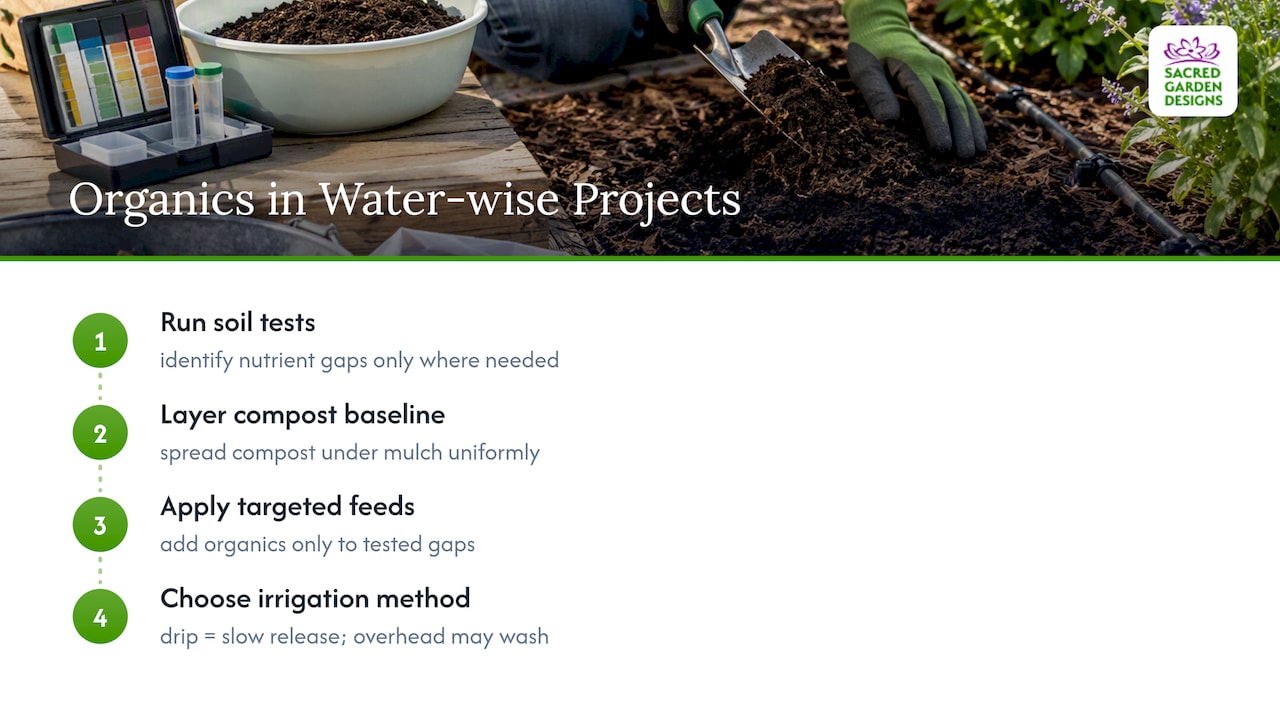
In our work designing drought-tolerant landscapes, we layer a compost baseline under mulch, then add targeted organic feeds only where soil tests show a gap. Irrigation timing matters as much as the fertilizer itself: drip systems release nutrients slowly and evenly, while overhead watering can wash soluble feeds past the root zone. For homeowners who want hands-on practice with these techniques, our Sacred Garden Classes cover composting and feeding schedules in detail.
An integrated approach beats a single favorite product
The gardeners who get the best long-term results aren’t the ones chasing a miracle amendment. They’re the ones who test their soil, build organic matter steadily, and feed crops based on actual deficiencies rather than habit. If you want a professional read on your soil and landscape before committing to a fertilizing plan, a consultation can save years of guesswork.
— Denise Buchanan
Classes for DIYers, design help for everyone else
If you’d rather learn the hands-on skills yourself, our Sacred Garden Classes and Workshops walk through composting, soil building, and organic feeding schedules.

- Prefer to hand off the soil work entirely? Our landscape design services for yards under 5,000 square feet start at $1,500 for a full design.
- Managing a larger property’s maintenance schedule gets easier with dedicated job scheduling tools like Pipeline, built for garden and landscape service businesses.
Either path gets your soil and plants on the same organic foundation we use in our own projects.
FAQ
What is poor man’s fertilizer?
“Poor man’s fertilizer” commonly refers to snow, since melting snow releases small amounts of nitrogen into soil as it seeps in slowly. The term is folk terminology rather than a defined agricultural category, and its nutrient contribution is minor compared to compost or manure.
What is the most effective natural fertilizer?
No single material works best for every situation since effectiveness depends on your soil test results and crop needs. Finished compost is the most broadly useful starting point because it supplies mild, balanced nutrition and improves soil structure, with UConn Extension and other university guidance pointing to manure and compost as reliable nutrient sources when credited correctly against a soil test.
What do Amish communities use for fertilizer?
Amish farming communities commonly rely on composted and raw animal manure from their own livestock, often integrated with crop rotation and cover cropping. This reflects a broader traditional farming pattern of using on-farm organic matter rather than purchased synthetic fertilizer, though practices vary by community and farm.
What is the best source of organic fertilizer?
The best source depends on what your soil test shows you’re missing: compost for general soil health, manure for nitrogen and phosphorus, or mineral amendments like rock phosphate for long-term phosphorus needs. Matching the material’s N-P-K ratio to your crop’s recommendation is more reliable than picking one default product.
How long can I store organic fertilizers before they lose effectiveness?
Dry mineral amendments like rock phosphate and greensand store indefinitely in a dry container since they don’t degrade biologically. Compost and manure-based products are best used within a year or two, kept covered and moist but not waterlogged, since microbial activity can decline in overly dry or overly wet storage conditions.