A good sensory garden starts with the layout, not the plants: wide, level paths, seating where the best scent or sound is, beds you can reach, and plants chosen for the climate so the garden thrives on little water. The University of Illinois Extension defines a sensory garden as an area designed to stimulate one or more of the five senses and to invite visitors to experience plants up close. If you want the layout, planting and irrigation to work together from day one, our design team at Sacred Garden Designs does exactly that for water-wise landscapes.
TL;DR
- Plan paths, seating and bed heights first. Paths should be at least 3 feet wide, and 5 feet lets two people pass or a wheelchair turn.
- Give each sense its own zone or bed, and include a quiet, shaded retreat so the garden calms as well as stimulates.
- In dry climates, choose Mediterranean and native plants such as lavender, rosemary, sage and lamb’s ear, then mulch and use drip irrigation.
- Avoid poisonous, allergenic or pesticide-dependent plants, and call 811 before you dig.
- Our landscape design services start at $1,500 for yards under 5,000 sq. ft.
Table of Contents
- Start with the layout, not the plant list
- Paths, beds and seating: the dimensions that matter
- Sensory garden ideas by sense
- Make it calming as well as stimulating
- Choose plants that suit a dry climate
- Safety checks before you plant
- A small-yard example
- Have us design it with you
- FAQ
- Sources
Start with the layout, not the plant list
Most sensory gardens that disappoint have the right plants in the wrong places. A lavender hedge nobody can reach, a bench in the sun at 3 p.m., a path too narrow for a stroller: the plants are fine, the plan is not.
Begin with how people will move through the space. Temple University’s accessibility guide recommends circular layouts that loop back to a starting point, so no one meets a dead end, and edge guides such as raised borders to help people with low vision follow the route. A loop also gives visitors a sense of control, which matters for children, older adults and anyone who finds new spaces overwhelming.
Then place the senses. The same guide suggests dividing the garden into zones for touch, taste, smell, sound and sight, and using mostly textured greens and cool colors in rest areas, with bright reds and oranges kept out of relaxation zones. In a small yard, you do not need five separate rooms. One planting bed can carry scent, texture and taste at once, and one bench can sit where the fragrance and the sound of water meet.
The National Gardening Association’s universal design article makes a practical point: put sensory features where they can be enjoyed without a difficult route, such as fragrance near a bench, soft foliage within reach and the sound of water close to seating. It also notes that private home gardens are not automatically bound by ADA dimensions, so the numbers below are good targets, not legal requirements, unless you are designing a public or school space.
Paths, beds and seating: the dimensions that matter
Accessible design is mostly numbers. These are the ones university extension services and public agencies agree on.
| Element | Recommended | Source |
|---|---|---|
| Path width | 3 feet minimum, 5 feet for two people side by side | LA County Drought-Tolerant Garden Handbook |
| Wheelchair-friendly path | 36 inches minimum, ideally 60 inches | UF/IFAS Extension |
| Path grade | No more than 5 percent, a 1-foot rise over 20 feet | Chicago Botanic Garden |
| Raised bed width | 4 feet for adults, 3 feet for children | OSU Extension |
| Raised bed height | About 2 feet for seated gardeners, 3 feet for standing | OSU Extension |
A few details save frustration later:
- Surface. OSU Extension recommends smooth, level paths of hard-paved surfaces such as concrete or compacted gravel, kept clear of hoses and tools. The South Carolina school sensory garden guide says to avoid turf, mulch and sand on accessible routes. Joints should be minimal so they do not catch cane tips or wheels.
- Gates and water. Chicago Botanic Garden suggests levers instead of knobs on gates and a spigot 2 to 3 feet off the ground.
- Seating. Place sturdy seating along longer routes, and put it where a scent or sound rewards the stop.
- Test the route. Garden.org advises walking the proposed path with a basket, cart or mobility aid before you build.
Raised beds deserve a note on soil. Los Angeles County’s handbook recommends filling vegetable beds with at least 50 percent organic compost mixed with garden soil and giving them a separate irrigation valve so the edibles do not overwater the drought-tolerant plantings around them. That is exactly the kind of detail that is easy to plan on paper and hard to retrofit.
Sensory garden ideas by sense
Sight
Think contrast, not just color. The University of Illinois Extension recommends contrasting colors, textures, light, shadows and forms, with plants that bloom at different times so something is always happening. Its plant list includes bleeding hearts, butterfly weed, cockscomb, pinks and zinnias. Light-colored pots against dark foliage, or a contrasting path edge, also make the garden easier to read for people with low vision.
Smell
Extension specialists note that smell is the strongest human sense and can trigger memories of special places or people. Roses, honeysuckle, gardenias and peonies release scent on their own, while herbs such as thyme, rosemary and oregano give it up when brushed. Geraniums release scent when rubbed or crushed. OSU Extension adds jasmine, lavender, mint and hyacinth. Plant the fragrant ones beside the path and the seating, not at the back of the bed.
Touch
The classics are fuzzy lamb’s ear, silky wormwood, wooly thyme, succulents, velvety rose petals and Irish moss, along with spiky sea holly for contrast. The US Fish & Wildlife Service guide for the Southwest advises choosing scented plants hardy enough for regular handling, such as coyote mint and sagebrush, and keeping low plants within reach of small explorers. Add rocks and hardscape with interesting surfaces, and multi-material paths that feel different underfoot.
Taste
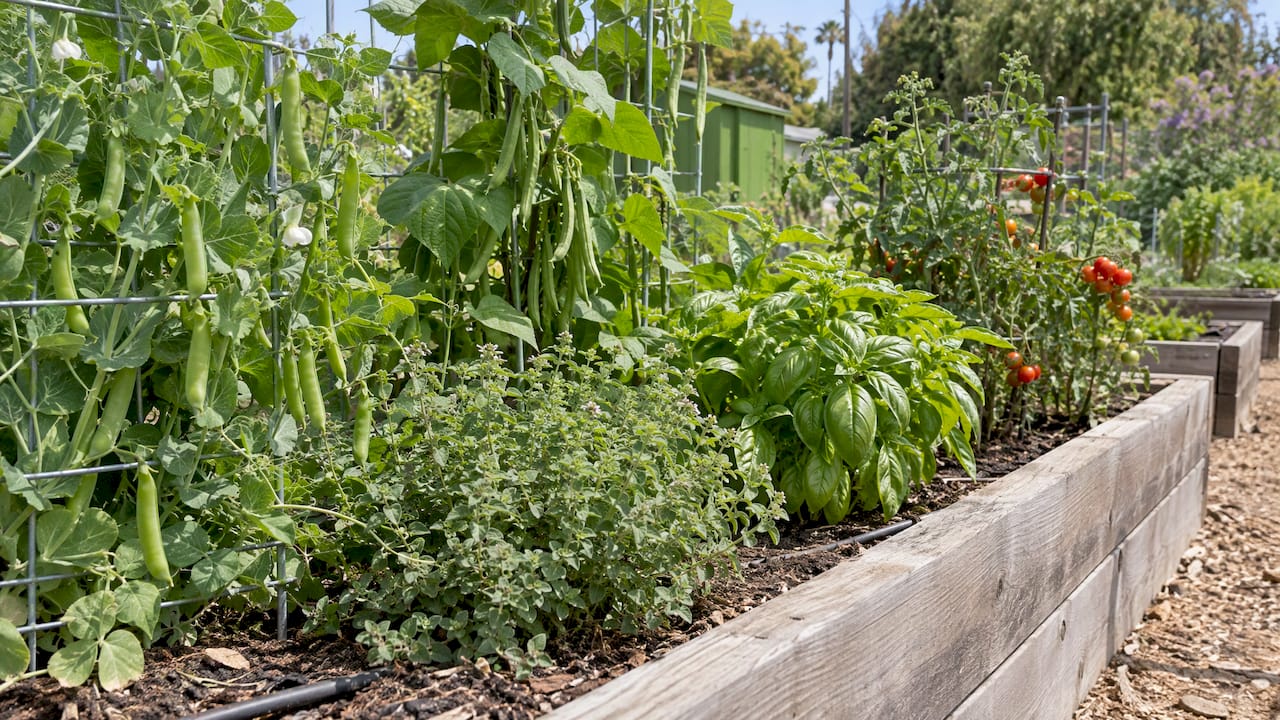
Edibles turn a visit into participation. Good picks include strawberries, thornless blackberries, basil, chives, lemon balm, mint, small fruit trees and edible flowers like nasturtium and pansy. The Bartlett Arboretum’s sensory garden devotes a raised bed to taste, with sugar snap peas, beans, oregano, basil and cherry tomatoes. If edibles are a big part of your plan, our guide to edible landscaping design shows how to scale them from a few beds to most of a yard.
Sound
Ornamental grasses rustle, bamboo clicks in wind, and the seed pods of false indigo and rattlesnake master rattle. Balloon flower pops when squeezed and pigsqueak has squeaky foliage. Add wind chimes, bird feeders, graveled walks and a small water feature. Temple University notes that sounds like water, chimes or textured ground underfoot can also act as wayfinding along a path.
Make it calming as well as stimulating
A sensory garden is not a carnival of stimulation. UF/IFAS Extension notes that well-designed sensory gardens can be simultaneously stimulating and relaxing, and can serve teaching, socializing and healing. Temple University’s guide stresses honoring both hypersensitivity and hyposensitivity: offer a shaded, low-stimulation retreat for people who are overwhelmed, and bold colors, textured plants and hands-on tasks like digging for those who want more input.
That is the practical heart of gardens for stress relief. Give people a choice: a bench in soft green foliage with one scent and the sound of water, and a more active area with herbs to pick and textures to handle.
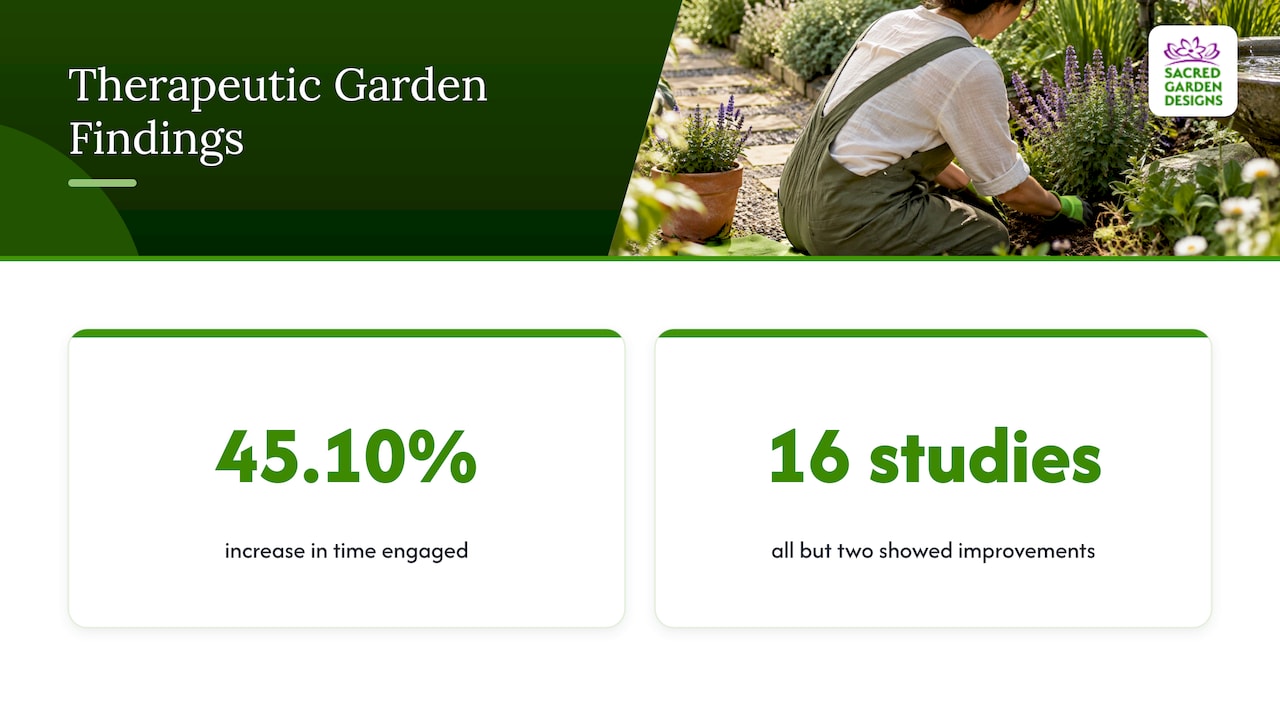
The research behind this is encouraging, especially for older adults. A 2019 meta-analysis of horticultural therapy in people with dementia found a significant reduction in agitation and a 45.10 percent increase in time spent engaged in activity. A 2021 review of therapeutic gardens found psychophysiological improvements in all but two of 16 studies, most strongly in engagement, agitation, mood and stress. These studies concern structured therapeutic programs, so treat them as the case for designing with care, not as a promise for any one yard.
Choose plants that suit a dry climate
Many sensory favorites are already water-wise. Lavender, rosemary, thyme, sage, lamb’s ear and succulents come from Mediterranean or dry climates. The Waterwise handbook for California recommends climate-appropriate plants from Mediterranean climates or Southern California native plant communities, adapted to summer drought, along with 3 inches of organic mulch, compost to build soil, and weather-based smart controllers with drip irrigation.
You can see this working in public gardens. The UC Master Gardener Program’s Quarry Lakes Demonstration Garden in Fremont pairs a sensory garden with a succulent garden and a Mediterranean garden, including fragrant rosemary, lavender and Jerusalem sage.
Outside California, match plants to your region. The South Carolina guide recommends using USDA Plant Hardiness Zones to pick plants that survive local winters, and mixing annuals with perennials for year-round interest. It names echinacea (zones 3 to 9) and curry plant, which wants excellent drainage and full sun, among the drought-tolerant options. Native plants are a good route in any region: the Fish & Wildlife guide shows how scented natives such as coyote mint and sagebrush carry a sensory garden in Idaho.
Soil comes before the plants. Good soil conditioning for drought-resistant landscapes helps roots reach water and keeps beds from drying out between irrigation cycles. For mulch choices, see our guide to mulch types for drought, and for groundcovers that soften paths and give touch interest, see drought-tolerant groundcovers.
Water the garden without a hose in your hand
Garden.org recommends drip irrigation and soaker hoses to cut hand watering, plus mulch and site-suited plants to reduce watering frequency. Chicago Botanic Garden adds that larger beds dry out more slowly than small containers, and that containers should be heavy enough not to tip in wind. For raised beds, our walkthrough of drip irrigation for raised beds covers the setup. In Los Angeles, check the city’s irrigation day and hour rules before you set a timer.
Safety checks before you plant
- Plant choice. UF/IFAS advises avoiding plants that are poisonous, allergenic or likely to need pesticide applications. This matters most when children, people who taste everything, or people with allergies will use the garden.
- Call before you dig. The South Carolina guide reminds builders to call 811, the national call-before-you-dig line, to have underground utilities marked. Do it before you set posts, dig beds or trench for irrigation.
- Fire-prone areas. If your property sits in a wildfire zone, keep woody, resinous plants such as sage and rosemary away from the house and tell your designer about it at the start, so the plan can balance fragrance with defensible space.
A small-yard example
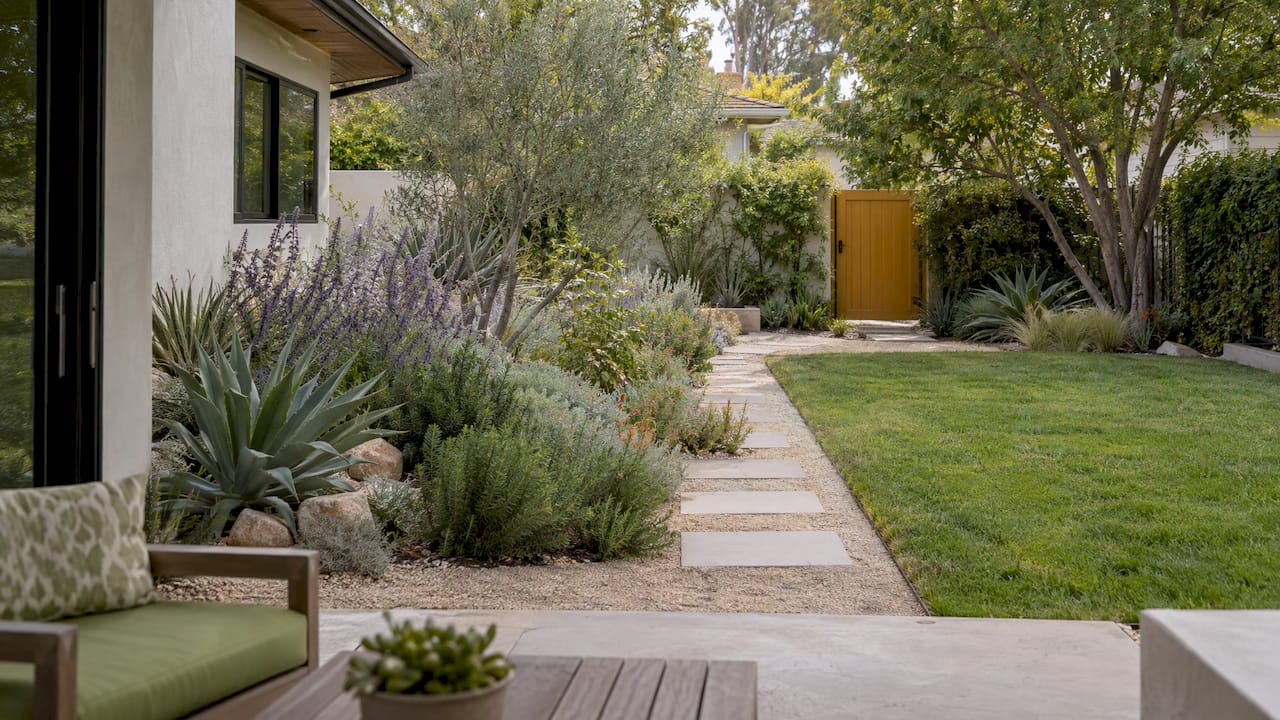
Take a 20 by 25 foot backyard. A 4-foot-wide compacted gravel path loops from the back door past a raised bed and returns along the fence. The raised bed is 2 feet high and 3 feet wide, so a seated gardener can reach across it, and holds basil, chives, strawberries and mint on its own drip line. Lamb’s ear and wooly thyme edge the path where hands will drift. Lavender and rosemary sit beside a shaded bench, and a small bubbler provides sound. Ornamental grasses at the far corner rustle in the evening. Mulch covers every bare inch.
That plan uses scent, touch, taste, sound and sight in a footprint smaller than many lawns, and once established it asks for far less water than turf. If space is tight, our small backyard drought design plan shows how to fit these layers into a compact lot, and our guide to lawn alternatives helps you decide what replaces the grass.
Our view: design for the senses and the climate together
We have worked on water-wise and sustainable landscapes for over 25 years, from residential yards to urban parks, and the lesson that keeps proving itself is that beauty and resilience are not a trade-off. A sensory garden is the clearest case. The same plants that smell and feel wonderful, such as lavender, rosemary, lamb’s ear and grasses, are often the ones that thrive on little water.
What separates a garden people love from one they walk past is the design: where the path turns, where the bench sits, how high the bed stands, how the irrigation reaches it. We approach every project by combining artistry with environmental consciousness, so the space supports well-being and holds up to drought and a changing climate. Our work has been recognized with eight Houzz Awards, and we bring that same care to a backyard retreat, a school courtyard or a community green space.
Whether the goal is stress relief, edible gardening, a calm place for someone you love or a garden children can explore, we start with the person who will use it and build the planting around them.
Denise Buchanan
Have us design it with you
A sensory garden depends on decisions that interlock: path widths, bed heights, plant zones, irrigation and drainage. Our landscape design services cover the plan. Landscape design for yards under 5,000 sq. ft. is $1,500, and a full landscape design is $2,500. If you want the garden built as well, we also offer sustainable landscape design and installation, irrigation design and installation, paving, patios and decks, and ongoing garden maintenance on our services page. To begin with a site review, book a water-wise site analysis consultation.

If you would rather learn to grow and care for the plants yourself, our classes and workshops cover gardening and urban farming topics.
FAQ
What is the difference between a sensory garden and a regular garden?
A regular garden is planned mainly for appearance or yield. A sensory garden is planned so people engage with plants through touch, smell, taste, sound and sight, often with accessible paths, raised beds and seating. The planting is chosen for how it feels, smells and sounds as much as how it looks.
How big does a sensory garden need to be?
It can be any size. University of Illinois Extension notes that sensory gardens can be designed for spaces of all sizes. A single raised bed with scented herbs and a bench works, and a larger yard can hold separate zones for each sense.
What are the easiest plants to start with?
Lamb’s ear for touch, lavender and rosemary for scent, basil, chives and strawberries for taste, and ornamental grasses for sound are widely recommended by extension services. Most are hardy and, once established, tolerate dry conditions in suitable climates. Check your USDA hardiness zone first.
Can a sensory garden help with stress?
It can offer a calm place to slow down. Reviews of therapeutic gardens report improvements in mood, stress and engagement, mostly in structured programs. At home, include a shaded, low-stimulation seat and a few gentle scents and textures.
Do I need to follow ADA dimensions at home?
Private home gardens are not automatically governed by ADA dimensions, according to the National Gardening Association. Still, 3-foot minimum paths, 5-foot passing areas and raised beds of the right height make the garden usable for more people and for longer as needs change.
Sources
- How to create a sensory garden, University of Illinois Extension
- Growing Together: An Accessibility Guide for Pennsylvania Growing Spaces, Temple University
- Universal Garden Design, Garden.org
- Drought-Tolerant Garden Handbook, Los Angeles County
- Sensory Gardens, UF/IFAS Extension
- Garden for Life fact sheet, Chicago Botanic Garden
- Gardens are for everyone, OSU Extension Service
- Native Garden Guide for Homeowners, US Fish & Wildlife Service
- Sensory Garden, Bartlett Arboretum & Gardens
- Horticultural Therapy in Patients With Dementia, meta-analysis (2019)
- Effectiveness of Therapeutic Gardens, systematic review (2021)
- The Waterwise handbook
- 2026 South Carolina School-based Sensory Garden Guide
- Quarry Lakes Demonstration Garden, UC Master Gardener Program of Alameda County