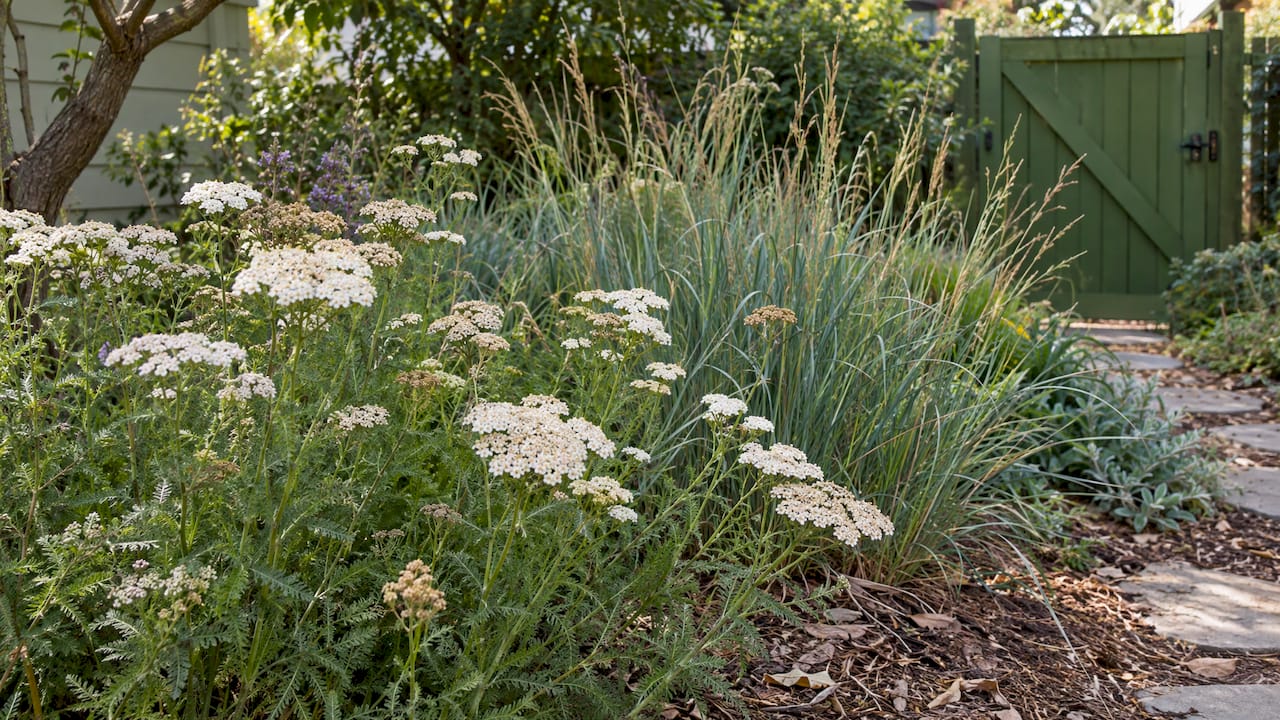
The best shade structure is the one that sits where the afternoon sun actually hits, is anchored to something that can carry it, and works with trees and drought-tolerant plants instead of fighting them. Shade sails, pergolas, awnings, louvered roofs and vine-covered arbors all work. Which one is right depends on your sun path, your budget and how much maintenance you want. At Sacred Garden Designs we have designed water-wise landscapes in Los Angeles for over 25 years, and we plan the shade structure and the planting together, so the structure, the trees and the irrigation each do their share of the cooling.
TL;DR
- Map the sun first: watch where shadows fall from sunrise to sunset, and shade the west and southwest side where the hottest afternoon sun arrives.
- Shade sails are the lighter, faster option. Pergolas are sturdier and more architectural, but an open pergola needs fabric or a solid roof to block midday sun.
- Trees are the longest-term cooling investment. A structure gives you shade this season, and trees take over as they mature.
- Pair any structure with climate-appropriate plants and efficient irrigation so the shade does not come at the cost of a thirsty yard.
- Footings matter more than the canopy. Posts need proper foundations, not brackets screwed into a patio slab.
Table of Contents
- Start with the sun, not the structure
- Shade structure ideas that work in a home landscape
- Modern shade structures: materials and looks
- Shade from living things: trees and plants
- Keep the whole yard water-wise
- Planning for permits, footings and cost
- A simple way to choose
- How Sacred Garden Designs can help
- Our perspective
- FAQ
- Sources
Start with the sun, not the structure
Most disappointing shade projects fail at the first step: the structure goes where it looks good rather than where the sun is. HGTV’s advice is simple and right: track the sun’s path across your yard from sunrise to sunset so you see where shadows fall during the hottest part of the day before you pick a spot or a type.
In the northern hemisphere the problem is usually the low, hard sun from the southwest in the afternoon. That is the side a structure or tree should block. Morning sun from the east is gentler, and many people enjoy it with coffee, so you can often leave that side open or cover it with something light.
Do this over a full day, not a glance at noon:
- Mark the area you actually use: the dining table, the seating group, the kids’ play spot.
- Photograph it every two hours from morning to evening.
- Note where the sun first becomes uncomfortable and which direction it comes from.
- Look for existing anchors: a sturdy house wall, a fence line, a mature tree.
That last point decides cost. A structure that can attach to a solid house frame, or to posts you were going to set anyway, costs far less than one that needs four new footings in awkward spots.
Shade structure ideas that work in a home landscape
Here are the main options, with what each is good at.
Shade sails
A shade sail is a tensioned piece of fabric, usually triangular or rectangular, pulled between anchor points. It is light, modern in look and quick to put up. It suits irregular spaces because you can angle the sail to follow the sun. The catch is that it is only as strong as its anchors: posts need deep footings because the fabric is under constant tension and catches wind.
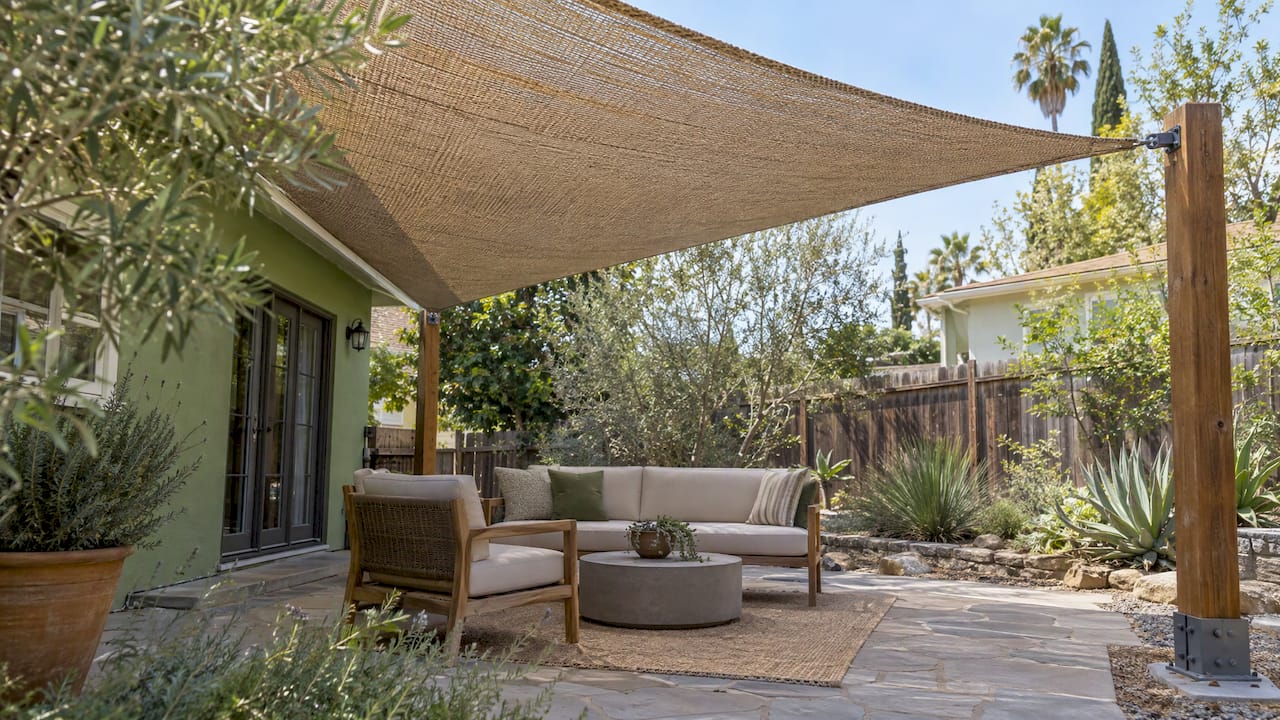
Fabric choice shapes the result. Breathable, knitted fabrics block UV and let hot air rise through, while waterproof fabrics keep rain off but must be hung with enough slope that water runs off instead of pooling. Lighter colors reflect more heat than dark ones.
Pergolas
This Old House describes a basic pergola as posts topped by beams and rafters, built at room scale with ceilings typically 8 to 12 feet high. It gives an outdoor room real definition, and it is a natural frame for climbing plants.
One thing surprises people: an open-rafter pergola throws patterned shade, not full shade. To truly block midday sun, the same source says you need fabric: fixed shade sails, fabric stretched post to post, or retractable shades under the rafters, with curtains, roll-up wood shades or awnings for low early and late sun. A pergola with a fabric layer is often the best of both worlds.
It also warns against a shortcut. A concrete slab or paver patio is not designed for the vertical load of a pergola, and a pergola simply bracketed to it will likely crack the surface. Posts need their own footings.
Shade sails vs pergola: which one fits you
| Shade sail | Pergola (with fabric or roof) | |
|---|---|---|
| Look | Light, sculptural, modern | Architectural, defines an outdoor room |
| Coverage | Wherever you angle the fabric | Whole footprint when covered |
| Rain | Breathable fabric: none. Waterproof: yes, with slope | Depends on the roof you add |
| Flexibility | Easy to re-angle or take down seasonally | Fixed once built |
| Anchoring | Needs strong posts or a solid wall | Needs its own footings |
| Plants | Limited | Excellent frame for vines |
| Best for | Odd shapes, quick fixes, small yards | Patios and dining areas you will use for years |
A sail is the fast answer for a sunny corner. A pergola is the better long-term frame if you want an outdoor room and a place for plants to climb.
Awnings and roof overhangs
An awning attached to the house shades a door, a window or a patio edge, and it keeps the interior cooler too. Retractable ones let the winter sun in. Because they bolt to the house, they are tidy and use no yard space. They suit a patio directly against the building and are less useful for a free-standing seating area in the middle of the yard.
Louvered and solid patio covers
A solid roof gives the most reliable all-day protection and keeps you dry in rain. Adjustable louvered roofs let you choose between sun, dappled light and full cover. They are a bigger build and a bigger investment, and the footings, electrical work for motorized versions and local rules all need planning, so they are best designed along with the patio rather than added later.
Cantilever umbrellas and movable shade
A large offset umbrella needs no footing and moves with the sun. Architectural Digest quotes designer David Charette on this point: a collapsible or nomadic structure that follows the sun adds flexibility and protects from both sun and rain. It is a sensible add-on for a corner where permanent shade is not practical.
Vine-covered arbors
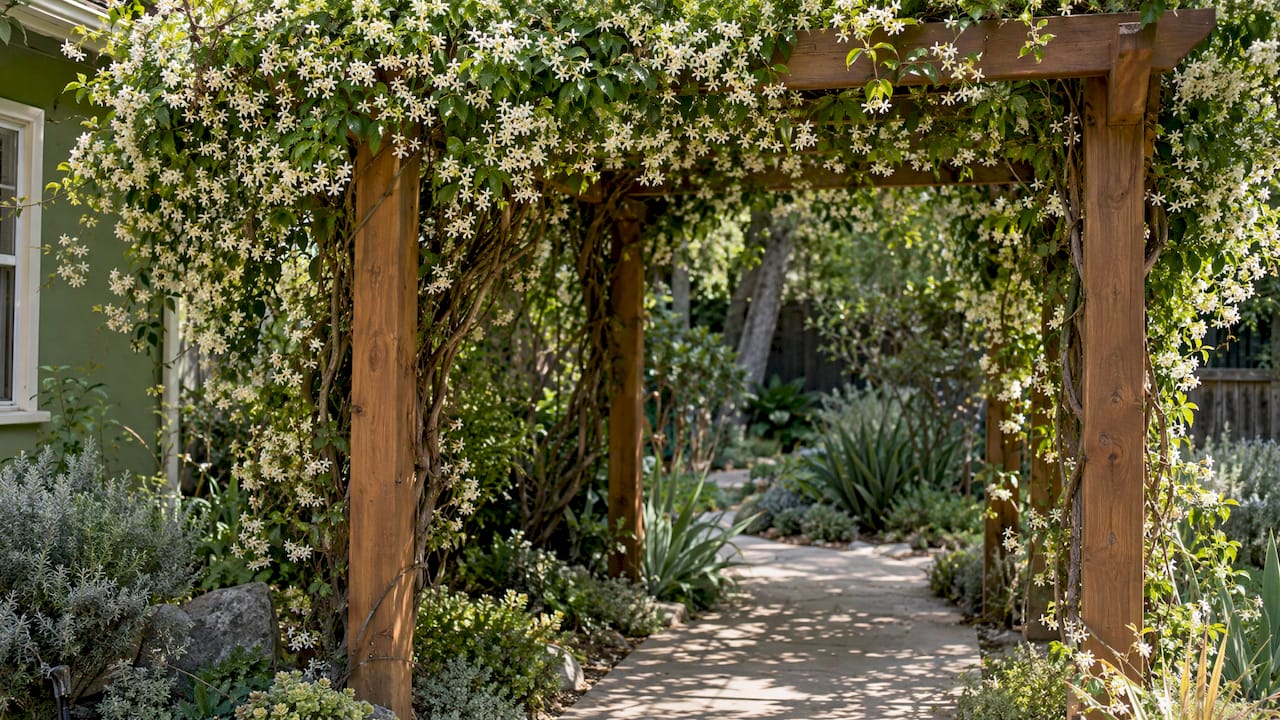
A timber or metal arbor with a climber turns shade into a planting. Architectural Digest notes that covers also give structure to fragrant vines such as wisteria, roses and jasmine. This is the idea that brings you closest to a living, water-wise landscape, as long as you choose vines suited to your climate and water them efficiently.
Modern shade structures: materials and looks
The modern look comes from clean lines and simple materials, not from extra features. This Old House summarizes the main material choices for pergola construction:
- Wood suits styles from rustic to modern and is easy to repair. Options include pressure-treated pine, cedar, redwood, Douglas fir, mahogany and ipe. The advice is to stain rather than paint, using solid stain or a clear penetrating oil reapplied every couple of years.
- Vinyl kits are low-cost and need an annual wash.
- Cellular PVC and composites give a matte, wood-like look.
- Powder-coated aluminum or steel has a crisp modern profile and needs virtually no maintenance.
For a contemporary yard, slim metal posts with a tensioned sail, or a wood pergola in a dark stain with clean, evenly spaced rafters, both read as modern. Keep the palette quiet. Let the plants supply the color.
In a fire-prone region, think about the materials near the house as well as the look. A structure attached to the building connects your landscape to your home, so choose materials and plants with that in mind and follow your local fire department’s guidance for defensible space.
Shade from living things: trees and plants
Structures give instant relief. Trees give shade that lasts for decades and cool the air around them, not just the ground below. The City of Pasadena’s Cool Trees guidebook advises placing trees to the south and west of patios, porches and air conditioning units, noting that east-side trees block morning sun and that west-side shade trees produce the greatest energy savings for a home. It also cautions against planting drought-tolerant trees in areas that receive regular watering, which is a useful reminder to group plants by water need.
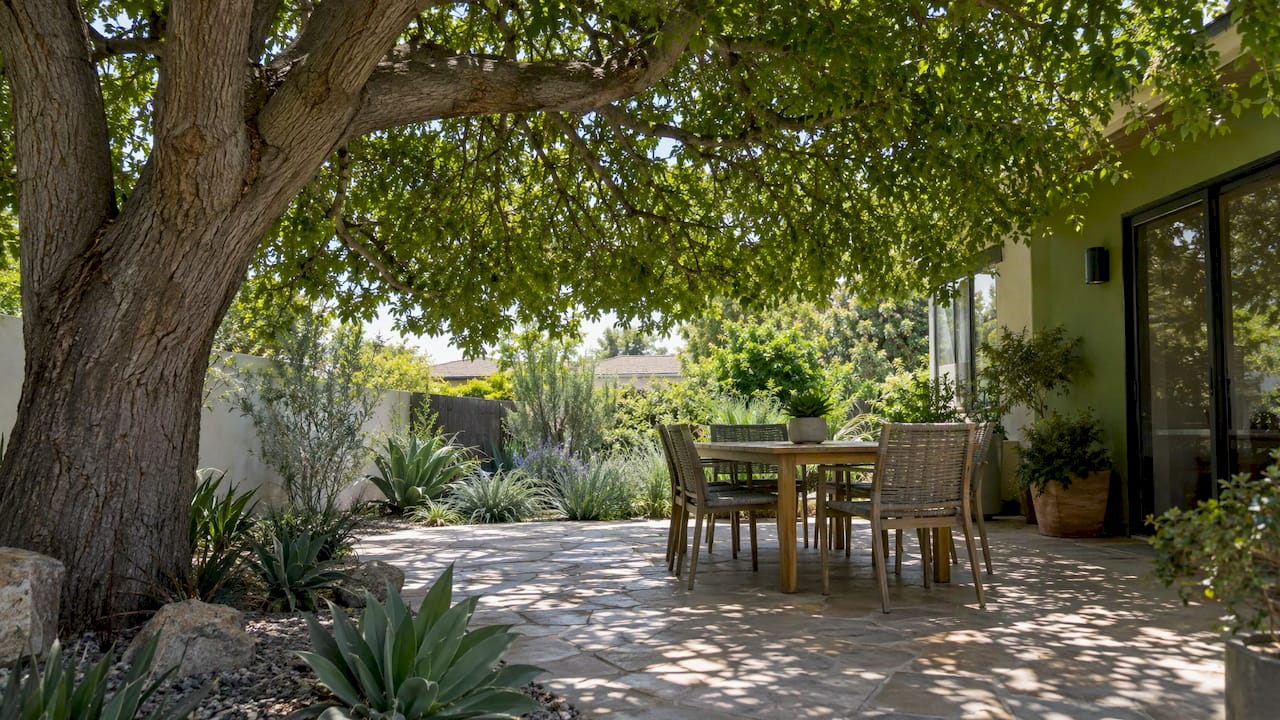
The honest timeline is this: a young tree takes years to give real shade. WSU Extension’s drought-tolerant landscaping guide notes that a new tree may take 2 to 3 years to become fully established, and it recommends planting in fall so roots settle in over winter. That is why we like to pair a structure with trees: the structure covers the gap while the canopy grows.
We compare the two in more detail in artificial shade vs trees. If you are in Southern California and working with a small lot, our guide to shade trees for small yards in Los Angeles covers species that fit, and the evidence on trees and urban heat shows why a canopy is worth the wait.
Under and around the structure, the ground gets less light, so plant for it. Our list of shade plants for Los Angeles covers what grows in dry shade.
Keep the whole yard water-wise
Shade should lower your water use, not raise it. A few rules keep that true:
- Choose regionally appropriate plants. The EPA’s WaterSense program recommends native and low-water plants that need little water beyond normal rainfall once established, and matching plants to sun, shade, wind and soil conditions.
- Group by water need (hydrozoning). WSU Extension recommends putting plants with similar needs together, with low-water species such as trees around the perimeter.
- Treat shade structures as part of the hardscape. The same guide lists shade structures and arbors among the features of a low-water landscape, which means they belong in the plan from the start, not as an afterthought.
- Reduce lawn near the structure. Shaded turf is a poor performer. A mulched bed, decomposed granite or a groundcover under a pergola uses far less water. See our lawn alternatives that cut water 40 to 70 percent and our plan for a small backyard drought design.
For more ideas on how all of this fits together, our outdoor living trends article shows nine water-wise yard ideas.
Planning for permits, footings and cost
Before you buy, sort out the practical questions, because they decide what is possible.
Permits and rules. Attached structures, solid roofs and anything with electrical work often need a building permit, and homeowners’ associations and hillside or fire-zone rules can add requirements. Call your city’s building department and read your HOA rules before you commit to a design. A sail or umbrella may face fewer hurdles than a roofed structure, but it is the local office that decides.
Footings. As noted above, posts need foundations that can carry vertical and wind loads. Planning this at the same time as the patio or paving saves money, because you avoid cutting into finished work. If you are building a patio too, see our notes on a decomposed granite patio and its edging.
Budget. Prices swing widely with size, material and region, so get a written quote that includes footings, electrical and any permit work. Cost guides can help you frame the numbers, and this overview of patio enclosure costs is a reasonable starting point for how scope drives price.
Maintenance. Fabric fades and wears over time, wood needs periodic restaining, and metal needs little beyond rinsing. Choose the material whose upkeep you will actually do.
A simple way to choose
Use your answers to three questions:
- Where does the afternoon sun hit? Shade that side first.
- What do you want it to feel like? A light, flexible corner points to a sail. An outdoor room points to a pergola with fabric or louvers.
- What is your timeline? If you need relief this summer, build the structure now and plant trees alongside it so that shade deepens each year.
Then add the trees that will carry the cooling long term. Planning trees near structures also means thinking about tree care and placement so branches and roots do not clash with posts and roofs later.
How Sacred Garden Designs can help
If you want the shade structure, the trees, the plants and the irrigation planned as one design, that is what our landscape design service is for. A landscape design for yards under 5,000 sq. ft. is $1,500, and a full landscape design is $2,500, both listed on our landscape design services page. We also offer paving, patio and deck installation, sustainable landscape design and installation, irrigation design and installation, and tree trimming, all listed on our services page.
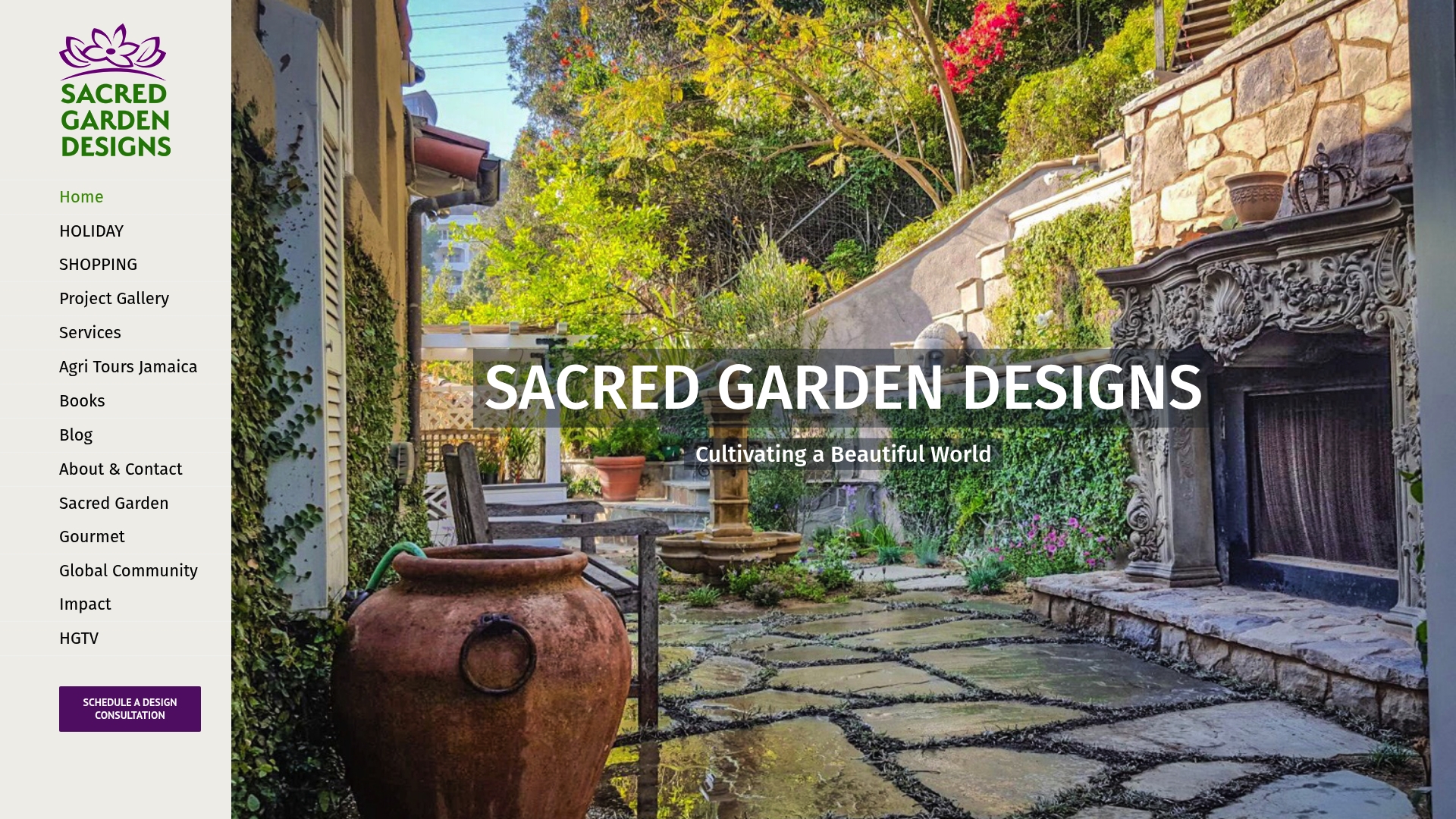
A good first step is an initial landscape consultation, where we look at your sun, your slope and your water situation and help you decide where shade should go.
Our perspective
We have been designing water-wise landscapes for more than 25 years, and the best shade is rarely a single object. It is a layered system. A structure takes the heat out of the hottest corner this season, trees cool the wider yard as they grow, and drought-tolerant planting keeps the whole space comfortable without a heavy water bill.
We start every project from the same belief: a yard should be beautiful and responsible at once. That is why we place a pergola or sail where the sun path says it belongs, then build the planting and irrigation around it so the shaded area becomes a place people want to be, whether for dinner, for stress relief after work or for a child’s garden corner.
If you are weighing options, think of shade as part of the landscape plan rather than a purchase added to it. Done that way, it supports your garden, your comfort and your resilience in a hotter climate.
Denise Buchanan
FAQ
Is a shade sail or a pergola better?
It depends on how you want to use the space. A sail is quicker to install, easy to angle and suits irregular areas. A pergola is a more permanent outdoor room and a strong frame for vines, but an open one needs fabric or a solid roof to fully block midday sun.
What is the cheapest way to add shade to a patio?
A large cantilever umbrella needs no footings and can move with the sun, which makes it the lowest-commitment option. Climbing vines on a simple frame or a young tree are low-cost ways to build shade over time. For a permanent structure, get a quote that includes footings and any permit work.
Can I attach a pergola to my patio slab?
Not safely by bracketing alone. This Old House notes that a concrete slab or paver patio is not designed for the vertical loads of a pergola and will likely crack. The posts should have their own footings.
Should I plant trees or build a structure?
Both. A structure gives shade immediately, and trees take years to mature but cool the yard more broadly and for far longer. Planting trees to the south and west of the area you want to cool gives the best result.
Do shade structures work in a drought-tolerant yard?
Yes. Shade structures and arbors are part of a low-water landscape, and shaded areas lose less moisture. Pair them with native or regionally appropriate plants and efficient irrigation.
Sources
- 29 Stylish Ways to Add Shade to Your Backyard | HGTV
- How to Plan a Pergola | This Old House
- 36 Patio Cover Ideas | Architectural Digest
- Cool Trees Program Guidebook and Tree Selection List | City of Pasadena
- Drought Tolerant Landscaping for Washington State | WSU Extension
- Landscaping Tips | US EPA WaterSense