The best approach isn’t picking one miracle plant. It’s layering fast-establishing groundcovers, erosion-control grasses, and deep-rooting shrubs or trees together, while covering exposed soil with straw, jute, or coir the moment you start. Extension research and the MDPI review on herbaceous vegetation both back this layered approach, and it’s the same method Sacredgardendesigns uses on client slopes. If your soil is bare right now, put down temporary cover today. Everything else can follow.
TL;DR:
- Combining groundcovers, grasses, shrubs, and trees ensures multi-layered soil reinforcement rather than relying on a single species.
- Immediate coverage with temporary mulch and fast-establishing plants is critical to prevent erosion during the seedling phase.
- For slopes over 30%, plant-only solutions are usually insufficient without structural support or professional grading.
- Native species like manzanita, cotoneaster, vetiver, and willow should be regionally adapted to avoid invasive problems.
- Regular monitoring and prompt patching after storms are essential until woody plants fully develop their stabilizing root systems.
Table of Contents
- Best Plants for Slope Stabilization by Function
- How Do You Know If Plants Alone Will Work?
- Planting Patterns That Build a Real Root Matrix
- Bioengineering Tools That Work Alongside Plants
- Step-by-Step: Installing Your Slope Planting Plan
- Maintenance, Monitoring, and When to Call in Help
- Who’s Behind This Guide, and How Sacred Garden Designs Handles Slopes
- What Homeowners Get Wrong About Slope Planting
- Get a Slope Stabilization Plan Built for Your Property
- Where to Go for Deeper Technical Detail
- Sources
- FAQ
Best Plants for Slope Stabilization by Function
No single species holds a hillside together. Different plants attack the problem at different depths and speeds, which is why the strongest results come from combining groups rather than picking a favorite.
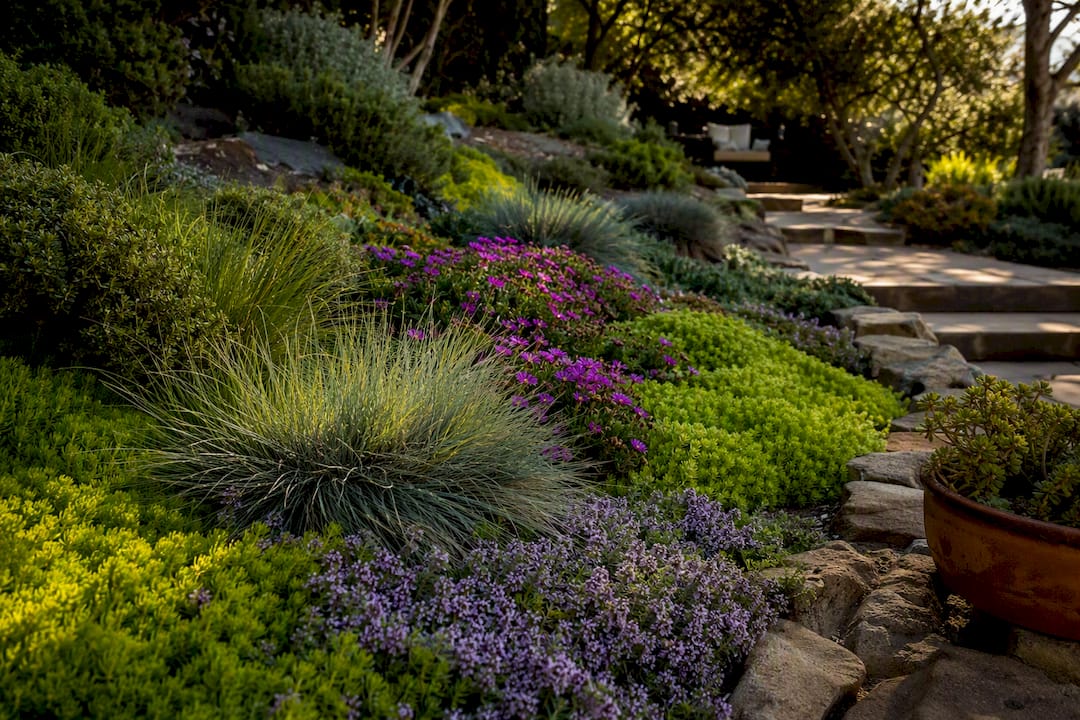
Fast groundcovers for immediate surface protection
Sedum (stonecrop) spreads through shallow, fibrous roots and tolerates drought once established, making it a strong pick for sunny, dry slopes with thin soil. Plant sedum plugs 8 to 12 inches apart in full sun. Creeping phlox works similarly on rocky or sandy banks, forming a dense mat that chokes out weeds while its roots knit the top few inches of soil together.
Erosion-control grasses for the middle layer
Fescue grasses build extensive fibrous root systems that hold soil on moderate slopes and tolerate both sun and partial shade, which is why they show up in nearly every extension planting list. Muhly grass does something fescue cannot: its clumping habit and deep root mass handle heat and poor soil better, and it adds fall color when its pink seed heads emerge. Both grasses reduce sheet and rill erosion fast, since herbaceous root mats reinforce surface soil and boost shear strength almost as soon as they establish.
Shrubs that anchor the slope long-term
Manzanita thrives on dry, sunny slopes and develops a woody root structure that reaches well past what grasses can manage, though it grows slowly at first. Cotoneaster fills a similar role on sun-exposed banks, spreading low and wide with roots that grip loose or sandy soil. Space either shrub 3 to 5 feet apart depending on the mature spread of the cultivar.
Trees where you have the room
On slopes wide enough to support them, trees add the deepest root layer of all, anchoring subsoil that grasses and shrubs never reach. Choose species suited to your regional soil and moisture, and give them several seasons before expecting real structural benefit.
Specialty stabilizers for extreme sites
Vetiver (Chrysopogon zizanioides) planted in contour hedgerows produces an exceptionally dense root system that can reinforce very steep slopes and trap sediment even in high-velocity flow. Willow, planted as live stakes, roots directly from cut branches driven into moist soil and is a go-to for streambanks and wet toes of slopes.
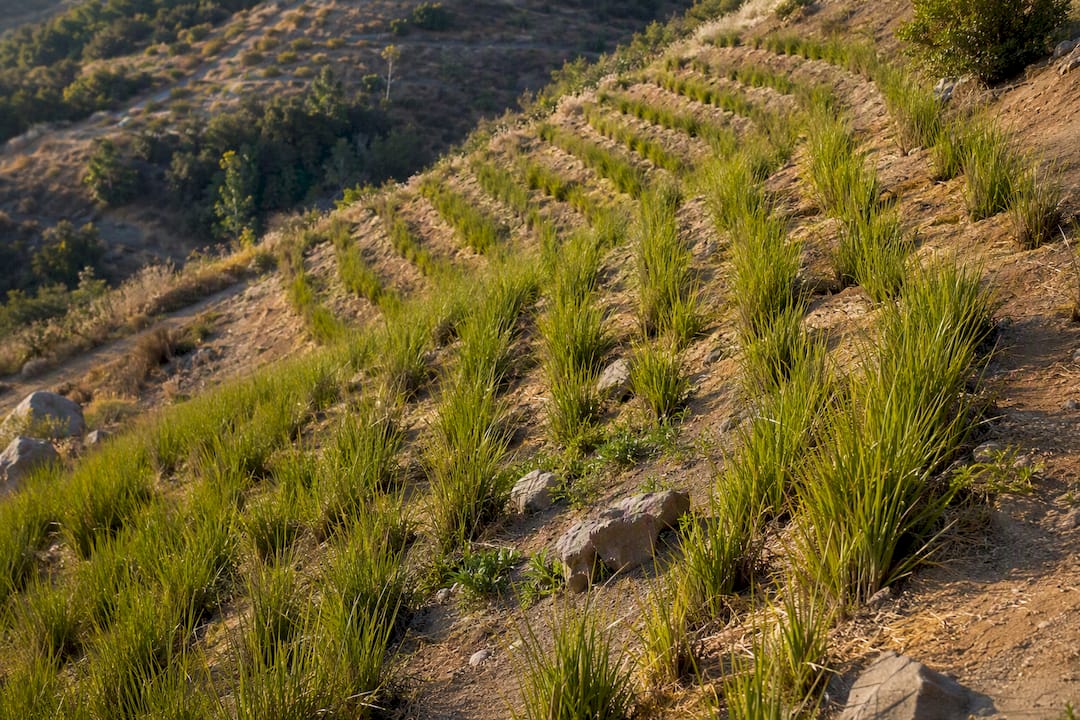
Before you plant any of these, check with a local nursery or your state’s native-plant list. Manzanita and vetiver in particular have region-specific behavior, and a species that stabilizes a slope in one climate can become invasive or simply fail in another.
How Do You Know If Plants Alone Will Work?
Not every slope is a good candidate for a plant-only fix. Run through this before you buy anything:
- Measure the grade. A slope under 15% is gentle and forgiving. Between 15% and 30% is moderate and manageable with the right mix of plants. Above roughly 30%, plant-only stabilization often isn’t enough, and you should talk to a landscape professional about grading or a retaining wall.
- Check the soil. Squeeze a handful when it’s damp. Sandy soil drains fast and erodes easily; clay compacts and sheds water instead of absorbing it. A simple drainage test (dig a hole, fill with water, time how fast it empties) tells you whether you need moisture-loving species at the base or drought-tolerant ones on the crown.
- Map sun and moisture zones. The bottom of a slope usually stays wetter; the top dries out faster. Use willow or moisture-tolerant grasses near the toe, and reserve manzanita or sedum for the drier crown.
- Plan procurement early. Native plants and prevegetated mats are often nursery-grown to order and can take months to arrive, so order well before your planting window.
Planting Patterns That Build a Real Root Matrix
A slope holds together the same way a rope does: individual fibers braided into layers. Trees anchor deep subsoil, shrubs bind the mid layer, herbaceous grasses and groundcovers lock the surface, and each layer picks up where the one above stops reaching.
Contour planting reinforces this. Set shrubs and hedgerows in staggered rows that follow the slope’s horizontal lines rather than running straight down it, since rows planted downhill actually create channels for water to accelerate through. On steeper sections, a terrace or bench breaks the slope into shorter, flatter runs, which slows runoff before it gains speed.
Density depends on your timeline. For quick soil binding, pack groundcover and grass plugs tightly. For long-term stability, wider shrub and tree spacing is fine since their root systems will fill in over a few seasons.
- Groundcovers and grasses: tight spacing for fast surface lock
- Shrubs: moderate spacing, staggered contour rows
- Trees: wide spacing, planned around mature canopy and root spread
Pro Tip: Plant your temporary cover and fast groundcovers first, then stagger shrub and tree planting over the following weeks. Installing everything at once leaves bare soil between plants exposed to washout before roots take hold.
Bioengineering Tools That Work Alongside Plants
Plants do the long-term work, but bioengineering materials buy time while roots establish and handle spots where vegetation alone can’t keep up. Standard techniques include contour wattling, brush layering, coir fascines, prevegetated mats, and live staking, and extension guidance consistently recommends combining rather than choosing just one.
- Coir fascines and wattles: cylindrical bundles staked along the contour that slow water and trap sediment, best suited to wet toes or drainage channels.
- Prevegetated mats: pre-grown vegetation mats installed like sod, useful where you need immediate cover on a visible or high-traffic slope.
- Live staking: cut willow branches driven directly into moist soil, where they root and grow, ideal for streambanks and consistently damp areas.
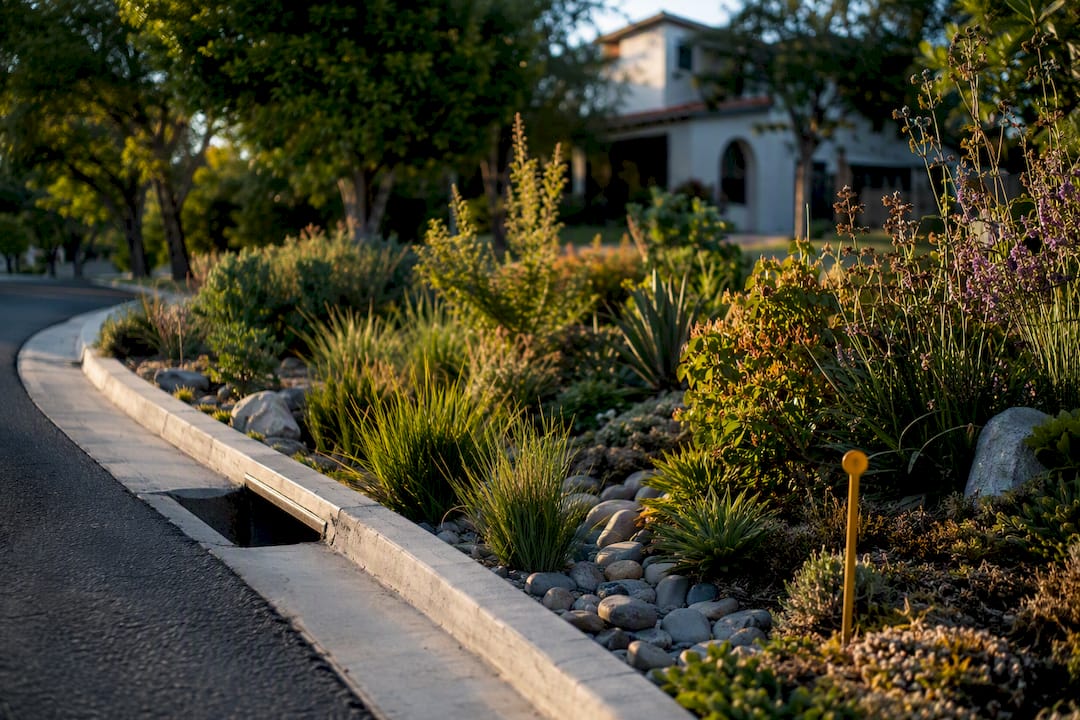
- Riprap with interplanting: rock placed at high-energy outlets (culvert discharge points, for example) with vegetation planted around and between the stones.
None of this replaces structural work on a genuinely unstable slope. If you see active slumping, cracks in the soil, or a slope steeper than roughly 30%, bioengineering and plants are a supplement, not a fix, and you need an engineer’s assessment first.
Step-by-Step: Installing Your Slope Planting Plan
- Prepare the ground. Clear debris, check for underground utilities, and amend compacted soil so roots can penetrate. Order plants and any erosion fabric in advance.
- Lay temporary protection. Spread straw, jute, or coir netting over bare soil, securing it with stakes along the contour. Prepare and amend the soil first, then plant through the netting rather than seeding entirely underneath it, so roots anchor straight into native soil.
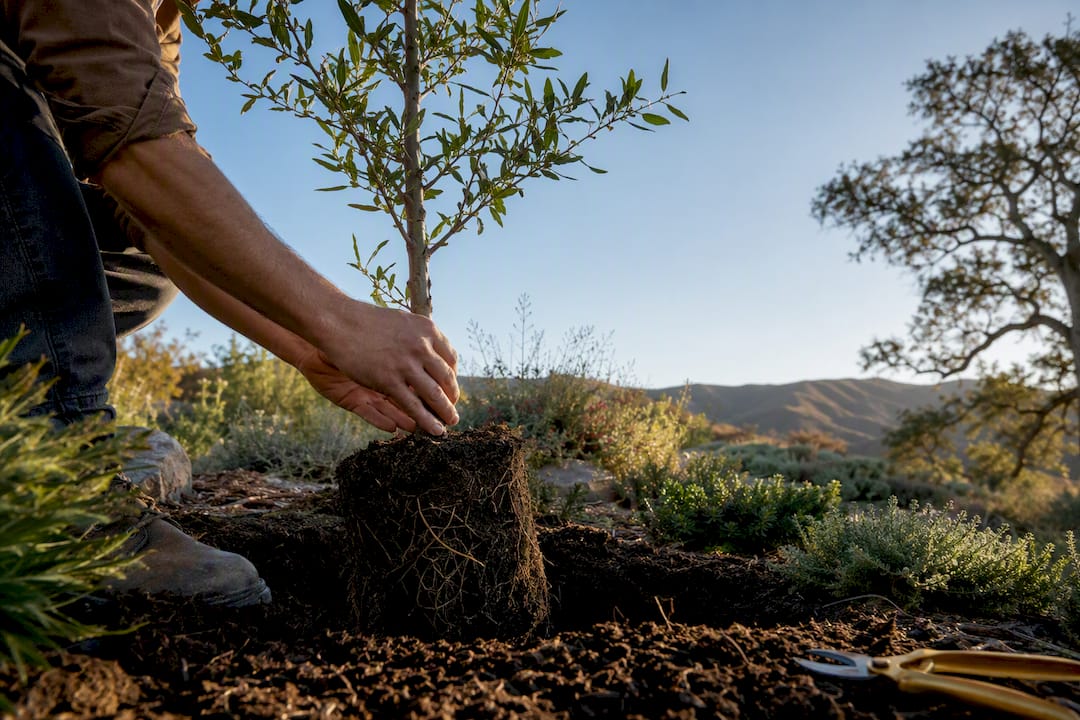
- Plant in order. Groundcovers and grass plugs go in first for fast cover, then anchor shrubs and hedgerows along the contour lines. Mulch around new plants, but keep it a few inches back from stems and crowns.
- Monitor weekly at first. Check after every significant rain for gullies, exposed roots, or shifted netting, and patch small problems immediately before they widen.
Maintenance, Monitoring, and When to Call in Help
Water new plantings consistently through the first one to two seasons. Deep-rooted shrubs and trees need this window to establish before they can do any real structural work, so don’t expect a newly planted slope to look “finished” by fall.
Walk the slope after every heavy storm. Small rills (thin channels cut by runoff) are normal and easy to patch with more mulch or fabric. Slumping, a sudden bare patch, or exposed root plates on a mature shrub are different. Those signal the slope is failing at a depth your plants haven’t reached yet, and that’s a call-a-professional moment, not a weekend fix.
- Quick-cover grasses and groundcovers: noticeable stabilization in 2 to 4 months
- Shrubs: meaningful root development in 1 to 2 years
- Trees: full structural benefit in 3 or more years
Herbaceous vegetation reaches useful root density fastest, which is exactly why the MDPI review found dense root mats significantly reinforce surface soil well before woody plants catch up.
Who’s Behind This Guide, and How Sacred Garden Designs Handles Slopes
This guide is written by Denise Buchanan… A professional landscaping company has spent many years designing water-wise, sustainable landscapes across Los Angeles, earning multiple HOUZZ Awards and coverage on HGTV’s Ground Rules… On slope projects, the design-build process pairs the plant-by-function strategy above with bioengineering materials like coir and contour staking, matched to each site’s grade and soil.
What Homeowners Get Wrong About Slope Planting
Most slope-planting advice treats plant selection like a shopping list: pick a pretty grass, add a few shrubs, done. That’s backward. The research is pretty clear that root architecture across multiple depths, not species charisma, is what actually holds soil in place. A slope planted entirely with shrubs and nothing herbaceous underneath will erode between the shrubs for the two or three years it takes them to fill in.
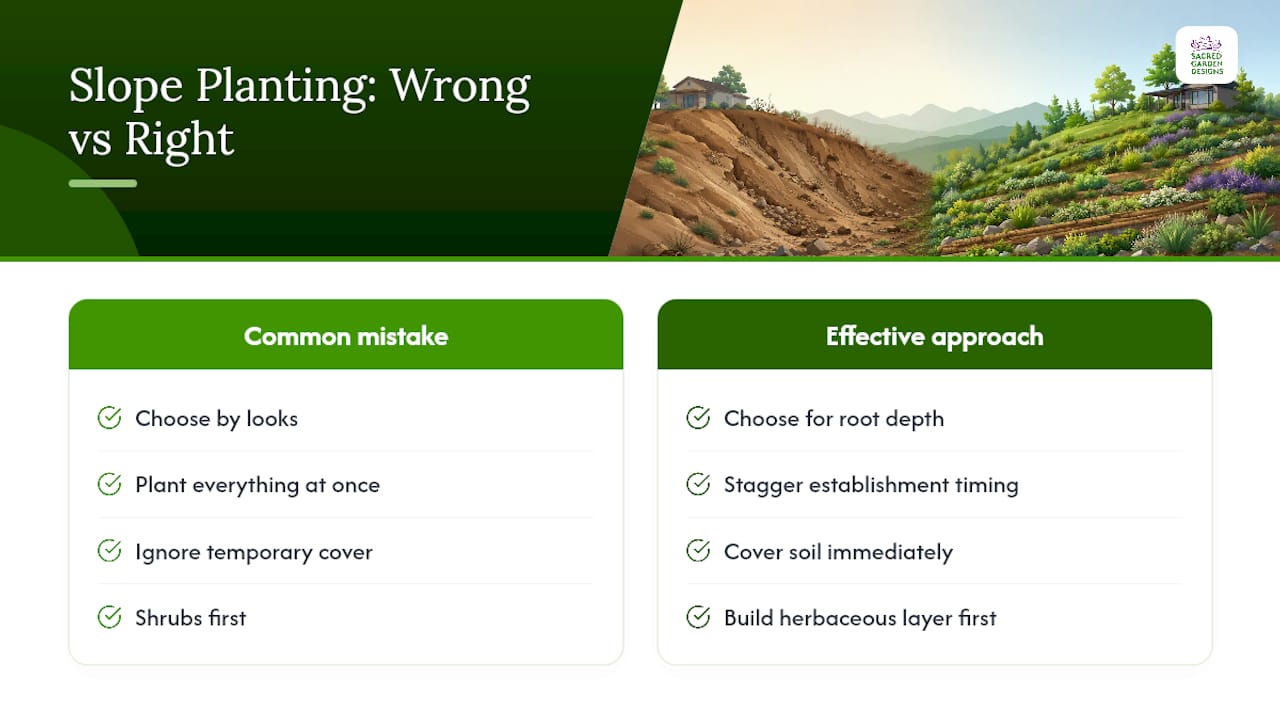
The bigger blind spot is timing. Homeowners tend to plant everything at once and call it finished, when the real risk window is the establishment period itself, those first few months before roots have grabbed hold of anything. Temporary cover isn’t an optional extra step. It’s the thing standing between your topsoil and the next heavy rain.
If there’s one thing to prioritize first, it’s covering bare soil immediately and building the herbaceous layer before worrying about the “impressive” shrubs and trees. Grasses and groundcovers are unglamorous. They’re also doing most of the actual work in year one.
— Denise Buchanan
Get a Slope Stabilization Plan Built for Your Property
Reading plant lists only gets you so far when your slope has its own grade, drainage pattern, and soil quirks that a general guide can’t account for. A landscaping company offers consultations that start with a site walk to measure grade, test drainage, and map sun and moisture zones, then build a layered plant plan combined with the right bioengineering material for specific erosion risks.

Their extensive experience and industry recognition back a process built specifically around drought-prone, erosion-prone Southern California terrain. If your slope needs more than a weekend of DIY planting, schedule a consultation with Sacredgardendesigns and get a plan matched to your exact grade and soil before the next storm season.
Where to Go for Deeper Technical Detail
For homeowners or contractors who want the full technical picture, the UNL Extension bioengineering manual covers installation specifics for wattles, fascines, and live staking. The Vetiver System handbook is the definitive technical reference for vetiver hedgerows. The MDPI herbaceous vegetation review offers the evidence base behind root reinforcement, and Purdue’s extension page on steep-slope plants rounds out regional plant guidance.
Sources
- Herbaceous Vegetation in Slope Stabilization: A Comparative Review of Mechanisms, Advantages, and Practical Applications — MDPI (2024-09-03)
- Bioengineering for Hillslope, Streambank, and Lakeshore Erosion Control — UNL Extension (2013)
- Vetiver System for Slope Stabilization — Vetiver Network (technical handbook)
- Stabilizing slopes — Henderson County Center | N.C. Cooperative Extension (2024-10-24)
FAQ
What is the best low-maintenance hillside landscaping?
A mix of drought-tolerant groundcovers like sedum, erosion-control grasses like fescue or muhly grass, and a few anchoring shrubs such as manzanita or cotoneaster gives you coverage that needs minimal upkeep once established.
What is the best plant to plant on a slope?
There’s no single best plant. Sedum and creeping phlox work fastest for surface cover, fescue and muhly grass handle the middle layer, and vetiver or willow suit extreme or wet conditions.
What types of plants can be used to prevent erosion on slopes?
Groundcovers, erosion-control grasses, deep-rooting shrubs, trees, and specialty species like vetiver and willow each contribute a different root depth, and combining them is what actually reinforces surface soil and improves shear strength.
What are some good hillside planters for slopes?
Terraced beds or raised contour rows work well on moderate slopes, letting you plant shrubs and groundcovers in staggered bands that slow runoff between each level. For steep or unstable sites, professional landscapers can design a terrace-and-planting system matched to your exact grade.