A good online urban farming course teaches you to grow food in small, city-sized spaces: soil, site, crop planning, water, pests and harvest. It should also leave you with a plan you can build in your own yard, balcony or community lot. Pick one by matching its scale and format to your goal. A backyard grower and a market farmer need different courses, and this guide shows how to tell them apart.
TL;DR
- Look for a syllabus that covers site assessment, soil health, crop planning, irrigation, pest management and food safety, not just plant lists.
- Match scale to your goal: home beds and containers, a community garden, or a small commercial plot each call for different content.
- Self-paced courses suit busy schedules. Cohort courses add deadlines and instructor feedback. Hands-on assignments matter more than video hours.
- Check what you get at the end: a certificate, a finished garden plan, or both.
- Start applying lessons in week one, with one raised bed or a few containers, so the learning sticks.
Table of Contents
- What an online urban farming course actually teaches
- Match the course to your goal
- How online courses are delivered and how long they take
- A five-point test for any syllabus
- Turning lessons into a garden
- Our perspective
- Learn with us and build with us
- What courses cost and what you receive
- Common mistakes to avoid
- FAQ
- Sources
What an online urban farming course actually teaches
Urban farming is growing food in and around cities, usually on small plots near homes, schools and businesses. A solid course reflects that. It starts with the site, then moves to soil, plants, water and pests, and ends with harvest and, where relevant, selling.
Public university and agency programs give a good picture of the core curriculum. One state extension certificate runs from farm design through harvest. It covers site design, soil health, crop planning, seeding and transplanting, pest management, season extension and food safety. It also takes in soil contamination risks, raised beds on city soils, zoning and land use agreements. You can see that range in the Purdue Extension urban agriculture program description.
A grant-funded regenerative urban farming course documented on the SARE project page shows a different emphasis. It has nine modules on soil ecology, water systems, plant literacy, heritage crops such as amaranth and Jerusalem artichokes, planting design, garden maintenance, harvesting, preservation and cooperative distribution.
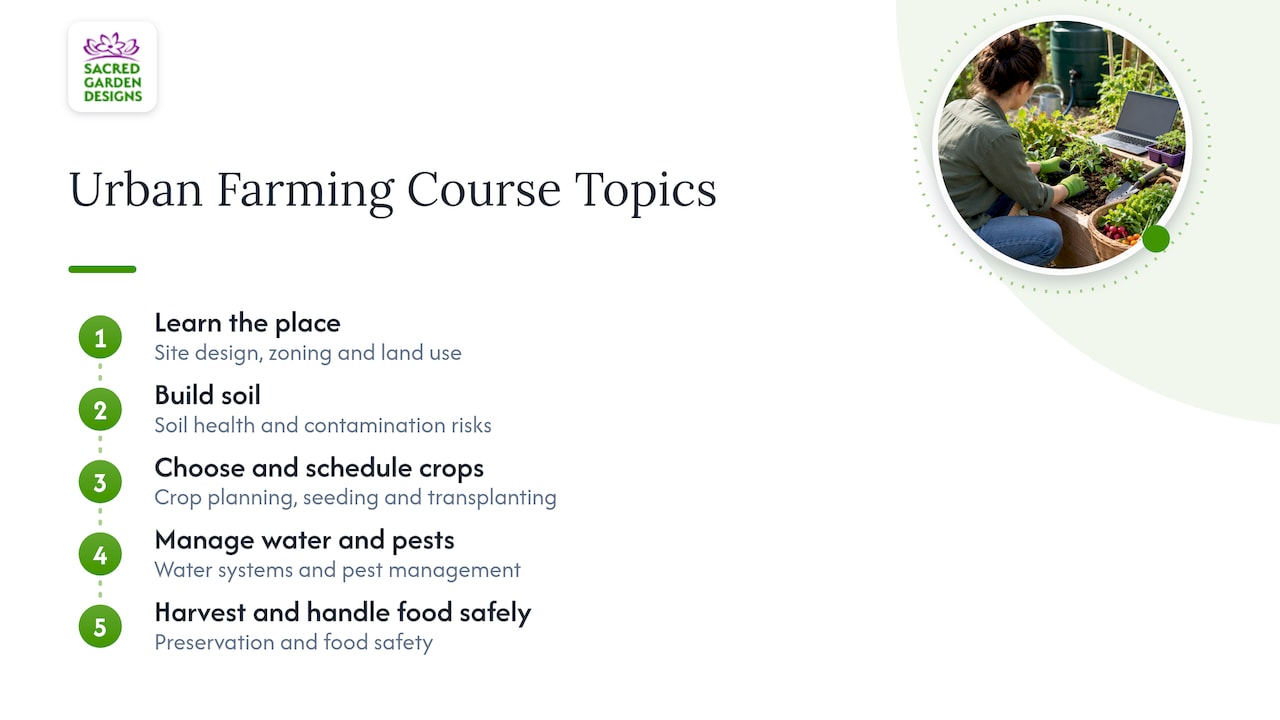
The pattern is the same across programs. Learn the place, build the soil, choose and schedule the crops, manage water and pests, then harvest and handle the food safely.
The topics growers most want to learn
A Purdue Extension needs assessment of urban growers found interest in all 16 topics it listed. More than 60% of respondents wanted to learn more about six of them: plant disease, weeds, soil health, growing techniques such as raised beds and tunnels, insect pests, and nutrient management. The full list is in the Purdue Extension needs assessment.
Use that as a checklist. If a course skips soil, pests or growing structures, it leaves out what real growers say they struggle with most.
Why small-space food growing is worth learning
Oregon State University’s urban agriculture page says urban farms can need 80% less land than traditional farms, use 70% less fertilizer and consume 50% less water. Those figures are on the OSU urban agriculture page. Treat them as a reason to take small plots seriously, not as a promise for your yard. Results depend on your climate, your soil and how well you manage water.
Match the course to your goal
The biggest mistake is buying a course built for the wrong scale. Here is a quick way to sort the options.
| Your goal | What the course should cover | Format that fits |
|---|---|---|
| Grow vegetables at home | Raised beds, containers, soil mix, watering, pests, harvest timing | Self-paced video with garden assignments |
| Start or run a community or school garden | Site assessment, group organizing, funding, shared maintenance, food safety | Cohort course with discussion and a project |
| Sell produce at small scale | Crop planning, markets, labor, regulations, cash flow | Longer, structured course with business modules |
| Design a resilient, water-wise yard | Irrigation, drought-tolerant planting, soil, site planning | Course plus on-site design help |
If you are unsure, start with the home-scale row. Skills like soil building and watering carry over to every other goal, and you can add business and organizing content later.
How online courses are delivered and how long they take
Three formats dominate.
- Self-paced and asynchronous. You start any time and work through modules when it suits you. One extension certificate gives students 60 days per course and lets them finish the full certificate within a year, according to the Purdue program page linked above.
- Instructor-led cohorts. A fixed schedule, weekly deadlines and a discussion forum. One university permaculture course, for example, asks for 10 to 15 hours a week over about six and a half weeks. Expect more feedback and less flexibility.
- Hybrid. Online lessons plus live sessions and hands-on work. The SARE-documented course combined live and recorded sessions, in-person workshops, garden journals and pre- and post-assessments.
Be honest about your time. A course that asks for ten hours a week is a poor fit if you have three. A short self-paced course you finish beats a long one you abandon.
What you need to take part
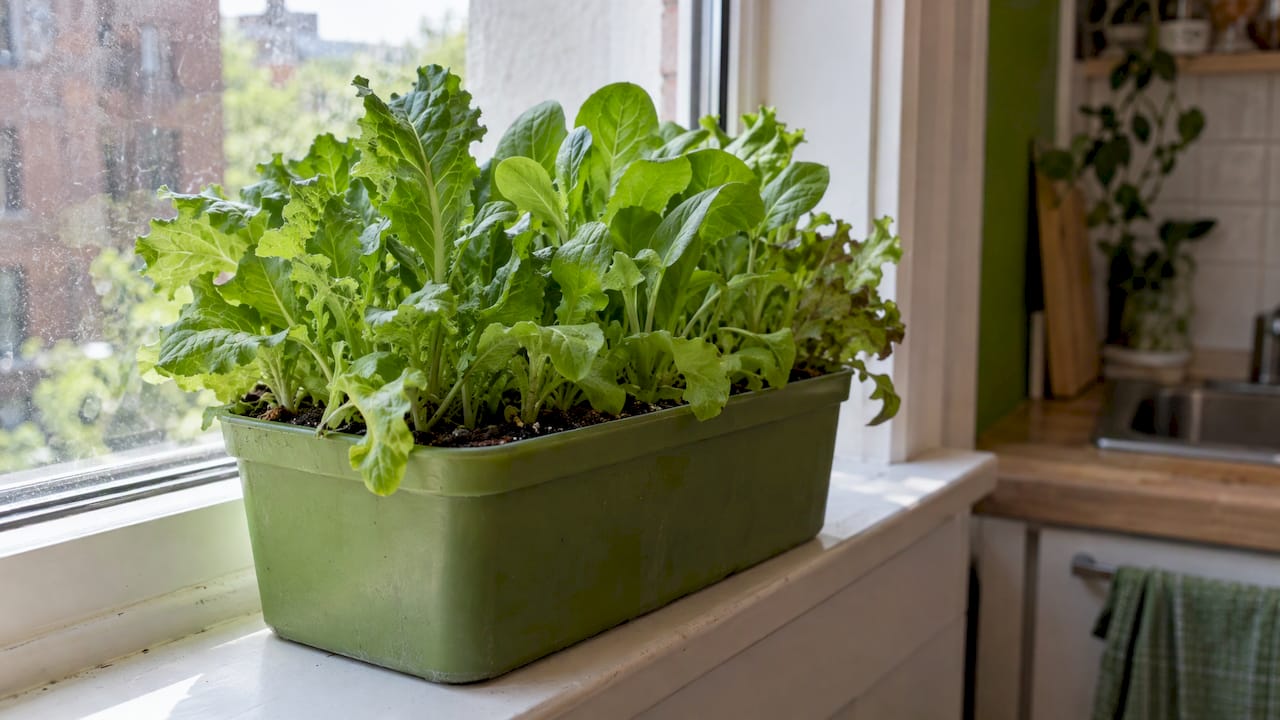
Most home-scale courses ask for little: an internet connection, a computer, tablet or phone, an email address and the ability to upload photos of your garden work. Many have no prerequisites. If you plan to do the assignments, have a spot ready, even a single container by a sunny window or a 4×8 bed.
A five-point test for any syllabus
Before you pay, read the module list and ask these questions.
- Does it start with the site? Sun, wind, slope, water access and soil contamination decide what you can grow. Courses that jump straight to crops skip the step that prevents most failures.
- Does it teach soil, not just plants? Soil health, pH and amendments should have their own lessons.
- Does it cover water? Irrigation design and scheduling matter most in dry climates, but every grower needs a watering plan.
- Are there hands-on assignments? Look for garden journals, photo submissions, quizzes and instructor comments. Watching videos alone rarely changes how your garden grows.
- Is it written for your region? A course built around central U.S. vegetable farming will need adjusting for coastal Southern California or the Pacific Northwest. Frost dates, rainfall and heat shape every planting calendar.
A bonus check: who teaches it? Look for instructors with horticulture, extension or hands-on farming experience, and for material that communicates research-backed practices.
Turning lessons into a garden
Learning sticks when you plant something in the first week. Here is a simple sequence that works alongside most courses.
- Pick one small project. One raised bed, a wall planter or six containers. Our guide to urban farming for beginners shows how to start small and still grow real food.
- Choose a layout. If you want a proven plan, the 4×8 raised bed layouts give you specs you can copy.
- Short on ground? You can turn 20 to 30 square feet of wall into a water-wise small garden.
- Set up watering early. A vegetable bed needs consistent moisture, and our guide to vegetable garden irrigation explains how to deliver about an inch a week. Then see drip irrigation for raised beds for kit, DIY and pro options.
- Extend the season. Season extension is a standard course topic. Structures such as tunnels can help, and the benefits of polytunnels for home gardening are worth a read once your first beds are running.
- Keep a journal. Record planting dates, watering, pests and yields. The most common raised-bed and container practices, which the Purdue survey found 60% of urban growers using, are easy to log and compare over a season.
If you are organizing a group rather than a single yard, community garden design covers how to make progress in about six weeks.
Our perspective
Most people who search for an urban farming course are not trying to become farmers. They want to eat something they grew, waste less water and make a small piece of land do more. Our view, after more than 25 years of designing water-wise and sustainable landscapes, is that the best course is one you can walk outside and use the same day.
That is why we pair teaching with real gardens. A lesson on soil means more after you have dug into your own. A lesson on irrigation makes sense when you have seen a slope shed water or a drip line save a bed in August. Our classes and workshops and our edible garden education are built around that link between the lesson and the ground.
We also believe design comes first. A well-planned yard, with the right plants, efficient irrigation and good drainage, is what lets a course’s lessons succeed. Drought and a changing climate make that more important every year, not less.
Start small, build the soil, plan your water, and let the garden teach you the rest.
Denise Buchanan
Learn with us and build with us
Sacred Garden Designs offers classes and workshops and educational courses on gardening, urban farming and environmental topics. They are designed for homeowners, schools, community groups and anyone who wants to grow food with less water. You can explore the full list on our services page.

If you would rather have your garden designed before you plant, we offer landscape design for yards under 5,000 sq. ft. at $1,500 and full landscape design at $2,500. Details are on our landscape design services page. For a guided start to growing food at home, our edible garden course is built for home gardeners who want a harvest within one season.
What courses cost and what you receive
Prices span a wide range. Short self-paced extension courses can cost little, while instructor-led university certificates run into the hundreds of dollars. Some public programs have offered free introductory access for limited periods, so check the provider’s own page for what is current.
Credentials also vary:
- Certificate of completion. Common for both short and long courses. It shows you finished the material.
- Professional continuing-education credit. Some courses count toward certification maintenance for planners and similar professionals.
- No credential. Some self-paced courses give only access to the material, which is fine if your goal is a better garden.
For a home grower, a certificate rarely matters as much as the finished plan and the first harvest. If you plan to sell produce or work with community organizations, a recognized certificate can help, and so can a course with business and regulatory modules.
Common mistakes to avoid
- Buying for the credential, not the content. Check the module list first.
- Skipping the site assessment. City soil can carry contamination, and raised beds with clean soil are a common answer. Learn how to evaluate your site before you plant food.
- Overplanting in the first season. Ten crops badly tended grow less than four well-tended ones.
- Ignoring local timing. Frost dates and heat waves beat a fixed calendar. Our garden maintenance schedule explains why.
- Watering by guesswork. Set a schedule and, where your city has watering rules, follow them. In Los Angeles, see the irrigation schedule rules.
FAQ
Can I really learn urban farming online?
Yes, for the knowledge side: soil science, crop planning, irrigation, pest management and food safety all translate well to video and assignments. The hands-on side comes from applying each lesson to a real bed or container. Choose a course with photo assignments, a journal or instructor feedback to bridge the gap.
How long does an online urban farming course take?
It depends on the format. Self-paced courses let you finish in a few weeks or spread the work over months. Cohort courses commonly run six to thirteen weeks, with several hours of work each week. Check the weekly time estimate before you enroll.
Do I need experience or special equipment?
Most beginner and home-scale courses require no prior experience. You usually need an internet connection, a device, an email address and a way to upload photos. For the assignments, have a small growing space ready, such as a raised bed or a few containers.
Is an urban farming course worth it if I only have a small yard or balcony?
Yes. Urban agriculture is built around small spaces, and the most common practices among urban growers are raised beds and containers. A course helps you pick the right crops, soil and watering method, so a small space produces more with less waste.
Should I take a course or hire a designer?
They solve different problems. A course builds your skills. A designer plans the whole site, including irrigation, drainage, hardscape and planting. Many gardeners do both: plan the space with a professional, then learn to grow in it.
Sources
- Purdue Extension Urban Agriculture Certificate
- SARE: Regenerative urban farming course
- Purdue Extension urban agriculture needs assessment
- Oregon State University urban agriculture page
- Benefits of polytunnels for home gardening