A small yard is the easiest kind to make water-wise, because every square foot can be planned. The method is the same at any size. Map the sun, wind and drainage first. Group plants by how much water they need. Replace thirsty turf with surfaces that let rain soak in. Then water by zone instead of the whole yard at once.
This guide walks through that process in the order we work through it with homeowners, from the first site walk to what upkeep looks like after planting.
TL;DR
- Plan before you plant: note sun, shade, wind and drainage, then decide what the yard is for.
- Group plants into water zones (hydrozones) and irrigate each zone for what it actually needs.
- In a small space, layers and repetition do more for looks than a long plant list.
- Use permeable paths and patios, and mulch bare soil.
- Budget by surface type: a simple mulch, gravel and groundcover design costs far less per square foot than a full hardscape build.
Table of Contents
- Start with a site map, not a plant list
- Divide the yard into water zones
- Make a small space feel bigger and fuller
- Choose plants for your climate
- Use trees and vines for summer shade
- Keep fire safety in the plan
- Paths, patios and soil that let water in
- What a small drought-tolerant yard costs
- Care after planting
- Our perspective
- Plan your yard with us
- FAQ
- Sources
Start with a site map, not a plant list
The most common mistake in a small yard is shopping first. A plant that thrives in one corner can fail six feet away because of reflected heat or a wet spot after rain. University extension guidance is consistent here: begin by deciding what you want from the garden, then assess sun, shade, warmer and cooler areas, soil and wind, and group plants by their cultural needs. Colorado State University Extension likewise describes a master plan that maps sun, shade, wind and drainage before any plant is chosen.
For a yard under 5,000 square feet, a pencil sketch on graph paper is enough. Mark:
- Sun and shade by time of day. Check at 9 a.m., noon and 4 p.m. Note which walls bake in the afternoon.
- Wind. Is there a corner where leaves always collect or where plants look battered?
- Drainage. Where does water pool after rain or irrigation, and where does it run off to the street?
- Existing assets. Mature trees, usable fences and good soil are worth keeping.
- Views from inside. The Center for the Study of the Built Environment suggests considering how rooms relate to the garden, including how the site looks from indoors. In a small yard, the window view is often the way you use the garden most.
Orientation matters too. A west-facing yard takes the hardest afternoon sun, and this look at a west-facing backyard in Las Vegas shows how much exposure shapes what a desert-climate yard can do.
Decide what the yard has to do
Write down the jobs before you draw anything: a place for morning coffee, a dog run, a few raised beds, a spot for kids. A small drought-tolerant yard that has to host real life needs surfaces that can handle kids, dogs, exercise or temporary furniture. Landscape designers often sort a garden into public, private and service areas, a framework the CSBE planning guidance describes. In a small yard, one patch can serve two roles, but give each job a defined place.
Divide the yard into water zones
Hydrozoning means grouping plants with similar water needs so irrigation is applied efficiently. In a small yard, three zones are usually plenty:
| Zone | What goes here | Watering approach |
|---|---|---|
| Low | Established natives and drought-adapted shrubs, perennials, succulents | Deep, infrequent, mostly after establishment |
| Moderate | Groundcovers, ornamental grasses, accent perennials near paths | Drip lines on a separate valve |
| High (small, intentional) | Herbs, a few vegetables, a container near the door | Hand watering or dedicated drip |
The same extension guidance says to water each hydrozone based on actual need rather than setting a clock to water the entire yard evenly. If your current system runs one valve across lawn, shrubs and a rose, that single change often matters more than any plant swap. The California Department of Water Resources’ Model Water Efficient Landscape Ordinance Guidebook also stresses that well-designed plans with hydrozones and healthy soil save time, money and resources for property owners.
If you want the bigger picture on how plant-forward design reduces irrigation, see our guide to drought-tolerant landscaping.
Make a small space feel bigger and fuller
Dry gardens can look flat or sparse when every plant is a different species. Two habits fix that:
- Repeat. Use the same three or four plants in groups instead of one of everything. Repetition ties the space together.
- Layer. Combine low, medium and tall forms. UC guidance notes that repetition and layering help define edges and keep a dry garden from looking flat.
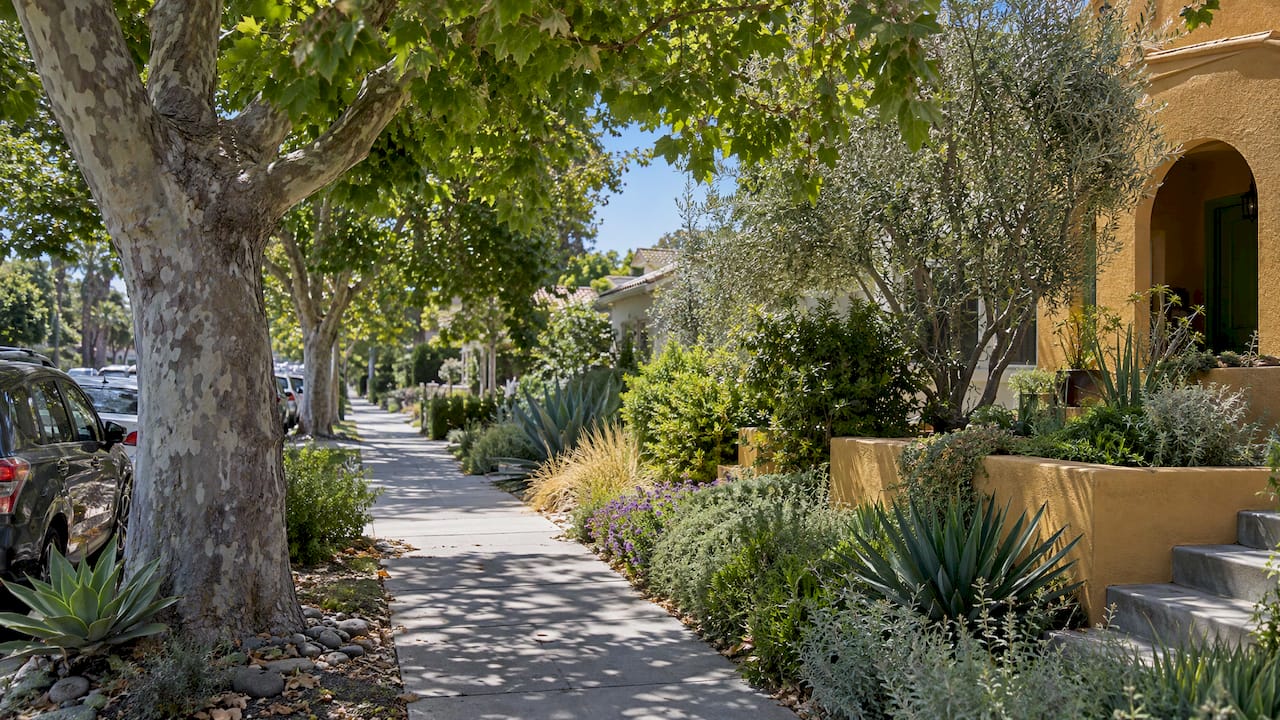
Add contrast in leaf shape and color: silver against deep green, fine grasses against broad succulents. Let each hardscape element earn its place. A bench, a small gravel sitting area or a boulder should have a job, not just fill space. Where lawn once ran edge to edge, groundcovers can give the lush, layered look without the mowing and the water bill.
What to do with the lawn
The University of Nevada, Reno Extension advises keeping turf only where it serves a function. In a small yard, that might mean a modest play patch or none at all. If you have pets or kids, our guide to lawn alternatives matched to play, pets and shade helps you choose the right substitute for each use.
Choose plants for your climate
“Drought-tolerant” depends on where you live. A plant that handles Los Angeles summers may not survive a Colorado winter. A water-efficient landscape can use native and drought-adapted plants, and your regional extension office or native plant society is the best place for a local list. For Southern California specifically, see our list of drought-tolerant plants for Los Angeles.
Some selection rules apply everywhere:
- Match the plant to the zone, not the other way around.
- Favor natives and regionally adapted species, which are already tuned to local rain and soil.
- Choose plants by mature size. In a small yard, a shrub that outgrows its spot means constant pruning.
- Include shade solutions. For dry, shaded corners, our dry shade plant guide covers what to plant and when.
Add edibles without breaking the water budget
Food plants can fit a water-wise yard. Extension guidance notes that fruit trees, berry bushes, herbs and vegetable gardens add value for the water used. In a small yard, put herbs and a few beds in your higher-water zone near the kitchen door, and keep them on their own drip line. Our guide to edible landscaping design shows how to scale the edible share of a yard up or down.
Use trees and vines for summer shade
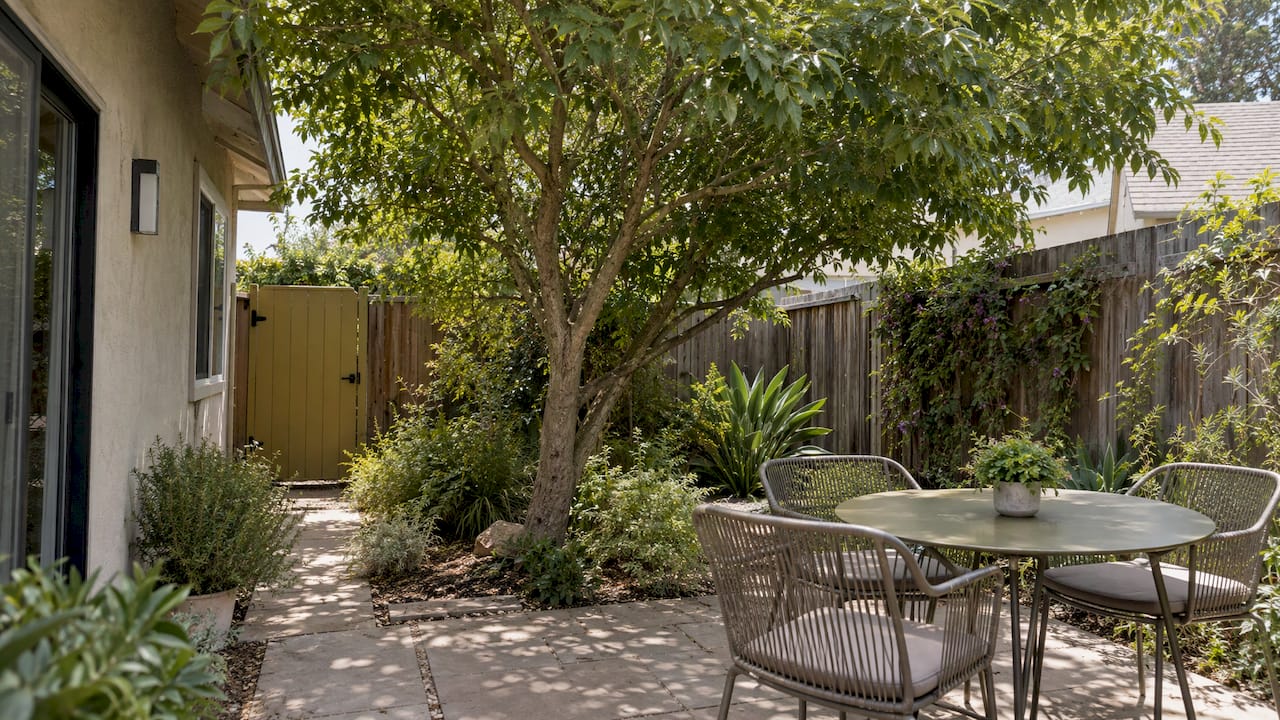
In hot climates, shade is functional, not just pleasant. Extension guidance recommends deciduous vines near south and west walls for summer shade and winter sun, and deciduous trees to shade the house in summer. In a small yard, a vine on a trellis or pergola beside the patio can do the work of a tree that would otherwise take up half the space.
Keep fire safety in the plan
In wildfire regions, plant placement is a safety decision. The Model Water Efficient Landscape Ordinance Guidebook explains that firescaping uses plant selection, placement and maintenance to reduce wildfire vulnerability, and that the first 30 feet around a home is critical defensible space where fuels are kept to a minimum. Because a small yard often sits entirely within that zone, nearly every plant choice counts. Check your local fire authority’s rules for your address, and read our guide to defensible space landscaping for how to combine fire safety with water-wise design.
Paths, patios and soil that let water in
Solid pavement sends rain to the street. Permeable surfaces keep it in your yard, where plants can use it. Good options for a small yard include:
- Decomposed granite paths and patios, edged well so the material stays put. Our guide to a decomposed granite patio covers edging.
- Gravel or stepping stones set in groundcover.
- Pavers with gaps filled with sand or low plants.
If your yard sheds water badly or has slope issues, see our notes on stormwater management landscaping.
Soil and mulch
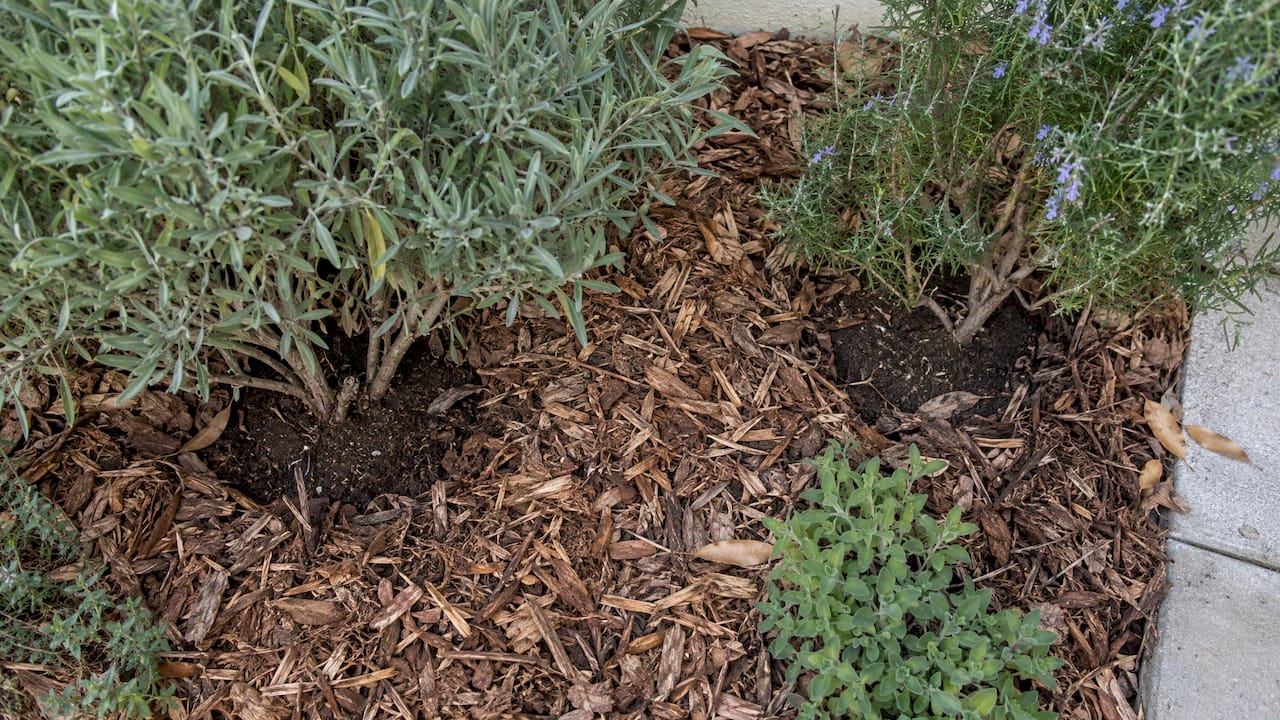
Healthy soil is the cheapest water storage you can build. Loosen compacted ground before planting, mix in compost where the plant calls for it (many natives prefer lean soil), and cover bare soil with mulch. Mulch slows evaporation and suppresses weeds. Keep it a few inches from stems and trunks.
Irrigation that matches the zones
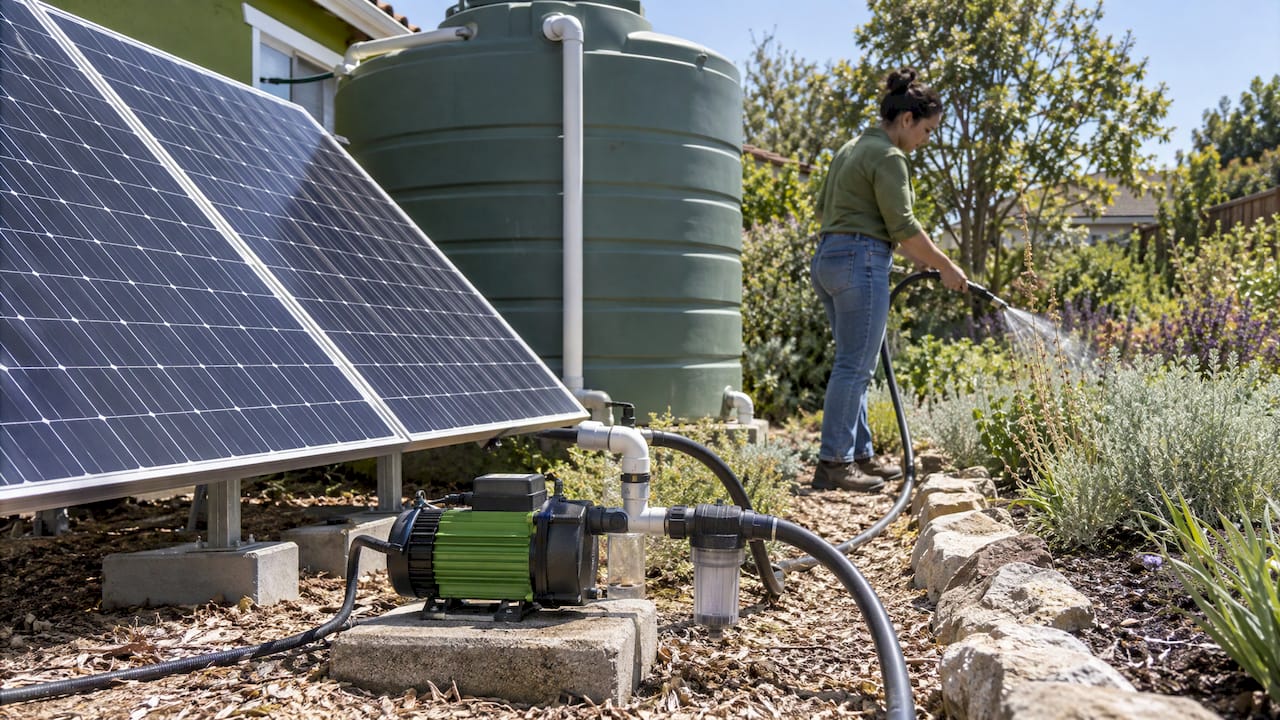
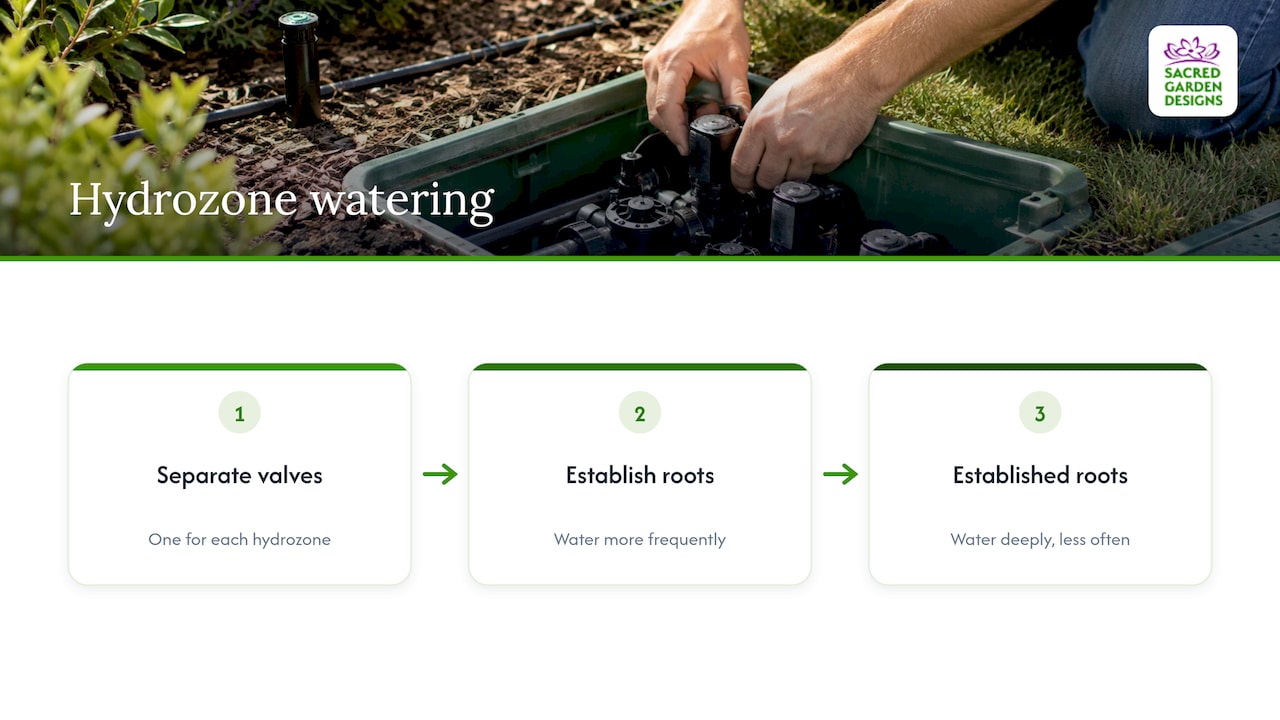
Drip irrigation delivers water at the roots and wastes less than spray. Run separate valves for each hydrozone, and plan to water deeply but less often once plants are established. Many yards also benefit from a temporary period of more frequent watering while roots get established, then a step down. If you want to grow food, our guides to vegetable garden irrigation and drip irrigation for raised beds show how to set it up. In Los Angeles, check the city’s watering day and time rules before you program a controller.
What a small drought-tolerant yard costs
Cost depends on how much hardscape you build and how big the plants are when they go in. LawnStarter’s 2026 estimate puts professional xeriscaping at about $5 to $20 per square foot, with a simple design of mulch, pea gravel paths, affordable groundcovers and small plants near the low end. That gives a rough sense of scale: a 500-square-foot yard could run roughly $2,500 to $10,000 by that range, with patios, walls and large specimen plants pushing toward the top.
Ways to keep the budget in check:
- Phase the project. Do irrigation and the lowest-water zone first, then add accent areas.
- Buy small plants. Smaller nursery sizes cost less and often establish faster.
- Repeat plants. Buying six of one plant is cheaper and looks better than six different ones.
- Use permeable, simple surfaces. Gravel and decomposed granite cost less than poured or paver patios.
- Get the plan right once. Mistakes in zoning or drainage are the expensive ones to correct.
Our Landscape Design Services are priced as a one-off: $1,500 for yards under 5,000 sq. ft. and $2,500 for a full landscape design (prices as published on our site in 2026). A design in hand lets you build in phases or hand the plan to an installer.
Care after planting
A drought-tolerant yard is low-water, not no-care. Plan for these routines:
- First year: check drip lines monthly, water new plants on schedule, and refresh mulch.
- Ongoing: prune at the right season for each plant, clear debris and adjust irrigation as the seasons change.
- Every spring: test each zone for clogged emitters or leaks.
The University of Nevada, Reno Extension notes that low-maintenance yards come from reducing turf to functional areas and using hardy, drought-adapted plants that fit the site. A yard planned this way also makes a calm place to sit: fewer mowers, a consistent palette, textures and scents you chose on purpose.
Our perspective
We have spent more than 25 years designing water-wise landscapes, and the pattern is the same in small yards as in large ones: the projects that last started with a plan. The yards that disappoint were usually planted first and irrigated second.
Small yards also reward restraint. Fewer species, repeated well, with surfaces that serve a purpose, read as intentional. We combine artistry with environmental practice so a yard looks good in a drought year and in a wet one.
Water-wise does not have to mean bare. Edible plants, shade, scent, and a place to sit can all be part of the same plan, as long as each zone is irrigated for what it actually needs.
Denise Buchanan
Plan your yard with us
If you would like a plan made for your yard, our team handles design, irrigation, hardscape and installation in one place. Start with a landscape design for your yard, or see everything we offer on our services page.
Prefer to learn first? Our classes and workshops cover water-wise gardening step by step.
FAQ
How do I start designing a small drought-tolerant yard?
Begin with a site map showing sun, shade, wind and drainage, and list what you want the yard to do. Choose plants only after that. Extension guidance recommends mapping the site before selecting plants.
What is hydrozoning?
It means grouping plants with similar water needs so each group is irrigated on its own. In a small yard, two or three zones are usually enough. It prevents overwatering drought-adapted plants and underwatering thirstier ones.
Can a drought-tolerant yard include vegetables or fruit?
Yes. Herbs, berries, vegetables and fruit trees can fit a water-wise landscape, and extension guidance says they add value for the water used. Put them in their own zone on a dedicated drip line.
How much does it cost?
One national 2026 estimate puts professional xeriscaping at roughly $5 to $20 per square foot. Your cost depends on hardscape, plant sizes and local labor. Phasing the work and repeating plants helps control it.
Sources
- Designing with Drought-Tolerant Plants, UC ANR
- Water-Wise Landscape Design: Steps, CSU Extension
- Water Wise Planning and Design, CSBE
- How to Plan a Waterwise Backyard, Landscapade
- Designing Landscapes for Northern Nevada’s Arid Climate, UNR Extension
- Model Water Efficient Landscape Ordinance Guidebook, California DWR
- How Much Does Xeriscaping Cost in 2026?, LawnStarter