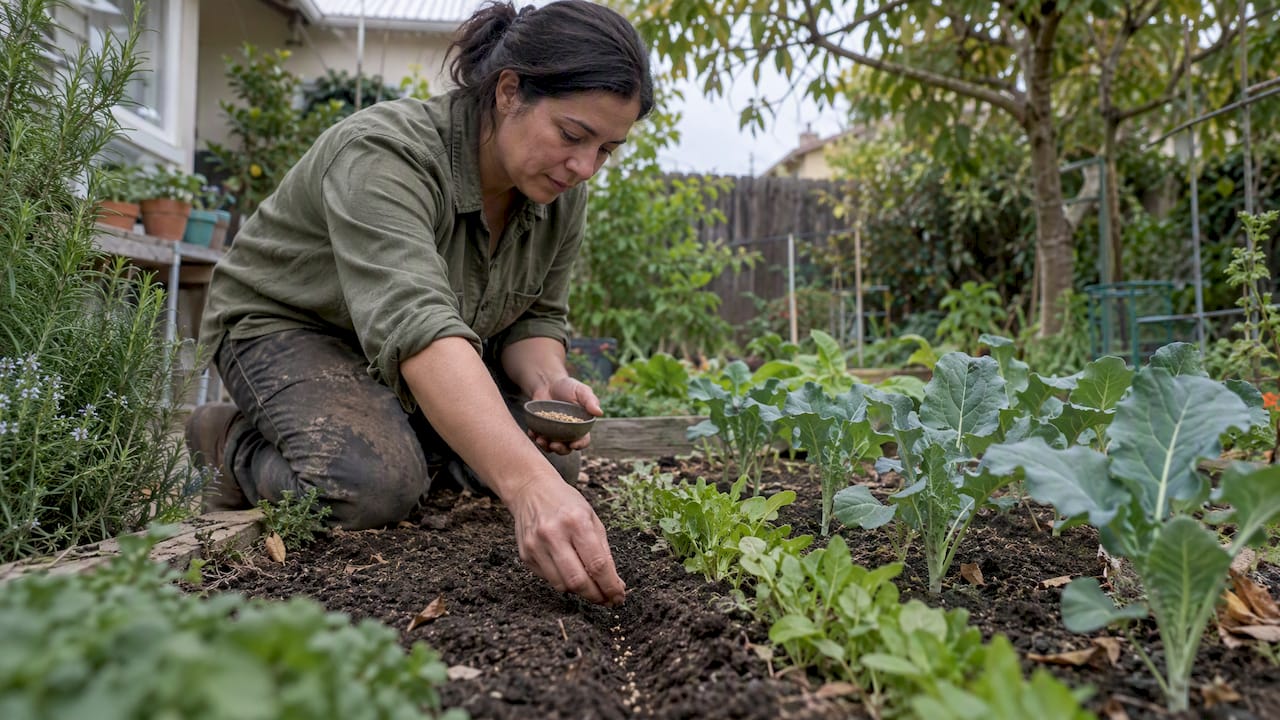
Recycled materials in landscaping are a practical, attractive, and often cost-saving choice for most garden projects, from raised beds to paths. The strongest categories to start with are reclaimed wood, crushed concrete or brick, recycled plastic lumber, rubber, glass, metal, and compost. Each one solves a different problem on a typical property, and most can go into a weekend project.
TL;DR:
- Check your property for pavers, broken concrete, and scrap timber first; nearby salvage yards and municipal compost facilities can fill remaining gaps.
- Use crushed concrete or brick for compacted paths, recycled plastic lumber for rot resistant edging, and keep rubber away from food crops.
- Keep CCA treated wood and tires out of edible beds; test fill of unknown origin and ask salvage yards about treatments and lead paint.
- Reuse saves most when materials stay on site and avoid transport; savings shrink when cleaning, cutting, or treatment removal adds processing.
- For rubble paths, compact larger concrete beneath finer aggregate, then grade the surface to drain water; use thick timbers for raised beds.
Table of Contents
- Which Recycled Materials Work for Which Garden Projects
- How to Choose, Prep, and Install Reclaimed Materials
- What the Research Says About Savings and Sustainability
- How Sacred Garden Designs Builds With Reclaimed Materials
- A Few Honest Thoughts on Reuse
- Let Us Help You Build With What You Already Have
- FAQ
- Sources
Which Recycled Materials Work for Which Garden Projects
Matching the material to the job matters more than chasing every reuse idea at once. Here is how the main categories break down in practice.
- Reclaimed wood (old decking, pallets, barn beams) works well for raised beds, pergolas, and low retaining walls once it is de-nailed and checked for rot.
- Crushed concrete or brick makes a solid base for paths, patios, and dry rubble gardens, and it compacts almost like virgin gravel.
- Recycled plastic lumber suits edging, planter boxes, and benches because it resists rot and does not need sealing.
- Rubber (from tires or rubber mulch) is useful for cushioned path surfaces and playground borders, kept away from food crops.
- Glass (tumbled cullet) adds color to mulch beds, pathway accents, and mosaic features.
- Metal (roofing scraps, rebar, wire) becomes trellises, edging, and gabion frames.
- Compost amends soil structure and feeds beds without synthetic fertilizer.
Before buying anything, check what is already on the property: old pavers, broken concrete, and scrap timber often cover an entire path or bed border for free. For material you do not have on hand, salvage yards, construction and demolition (C&D) recycling centers, and municipal compost facilities are reliable sources, and reuse stores often carry lumber and fixtures at a fraction of retail cost. EPA’s Comprehensive Procurement Guidelines designate landscaping products such as garden edging, timbers, posts, and compost as widely available with substantial recycled content, which means sourcing is rarely the bottleneck.
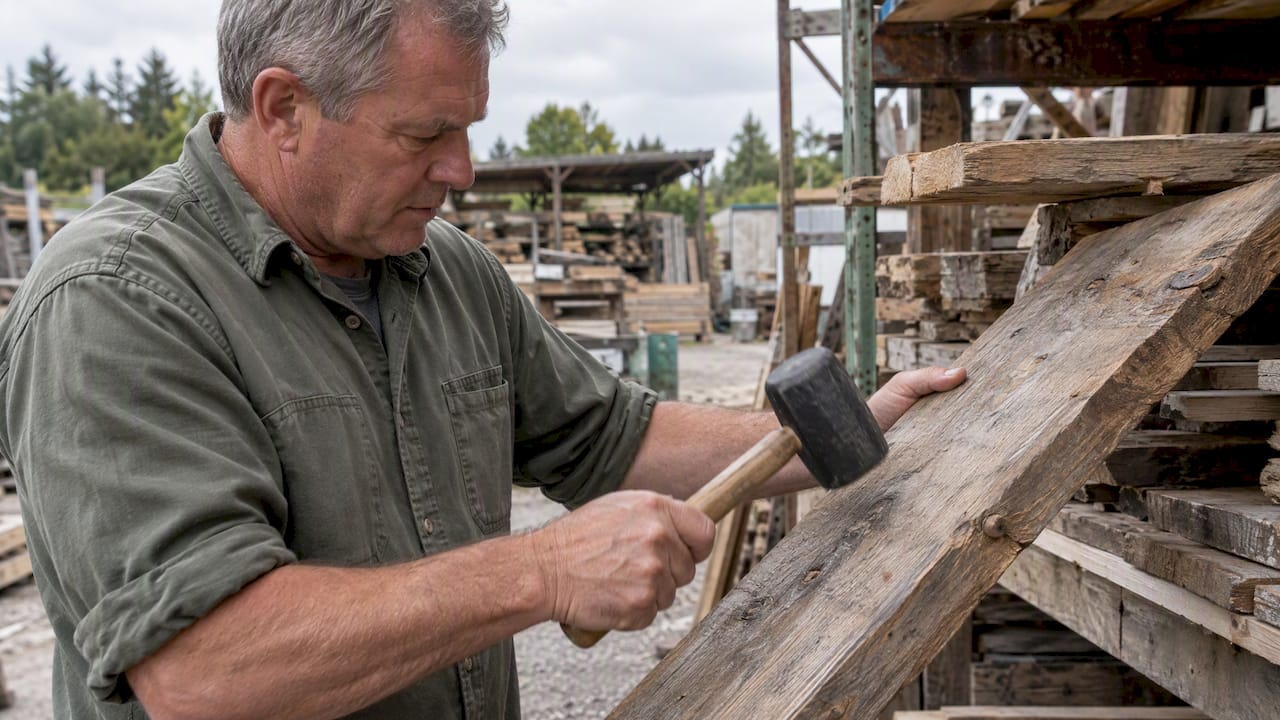
Pro Tip: Tap reclaimed wood with a mallet before buying. A dull thud usually signals rot or insect damage, while a sharp, solid sound means the board still has structural life left.
How to Choose, Prep, and Install Reclaimed Materials
A short audit before you shop saves money and prevents rework later.
- Inventory the site first. Walk the yard and list anything reusable: broken concrete, old fence boards, leftover pavers, or scrap metal.
- Check structural fit. Match each material’s lifespan and load capacity to the job: thick timbers for raised beds, compacted aggregate for paths that will see foot traffic.
- Screen for contamination. Avoid tires and CCA-treated wood near edible beds, and test soil where fill material has an unknown history.
- Prep before installing. De-nail and sand wood, add a liner between treated wood and soil if reuse is unavoidable, and compact and grade crushed aggregate in layers.
- Build in two common formats. For a raised bed, frame reclaimed boards into a box, line the inside, and backfill with amended soil. For a rubble path, lay larger broken concrete as a base, then top with finer crushed material graded toward drainage.
USDA Forest Service research found that spent CCA-treated deck wood can be recycled into useful above-ground products, but it flags market and logistics barriers, so treated wood is better suited to non-edible structures than to food-growing beds.
When visiting a salvage yard, ask about the material’s origin, any chemical treatment history, and whether it has been tested for lead paint or preservatives, especially for older timber.
What the Research Says About Savings and Sustainability
The evidence for reuse goes beyond aesthetics. EPA’s GreenScapes program, which built a reuse cost-calculator for landscape and hardscape waste, shows that reusing and recycling hardscape materials like lumber, brick, concrete, and asphalt can produce measurable savings compared with disposal and new-material purchase, particularly when transport distances stay short and processing stays minimal.
Compost delivers its own case. The EPA’s 2025 report on compost found that it improves soil health, increases water retention, reduces runoff, and supports climate resilience compared with sending organic material to a landfill.
A few rules of thumb hold up across most projects:
- Reuse saves the most when the material stays on-site and skips transport entirely.
- Savings shrink fast once a material needs heavy cleaning, cutting, or chemical treatment removal.
- Local salvage beats mail-order salvage almost every time once shipping weight is factored in.
| Material | Typical reuse savings driver | Best-fit project |
|---|---|---|
| Crushed concrete | Avoided disposal and new aggregate cost | Paths, rubble gardens |
| Reclaimed wood | Avoided lumber cost | Raised beds, pergolas |
| Compost | Reduced fertilizer and water input | Soil amendment |
How Sacred Garden Designs Builds With Reclaimed Materials
Over many years of designing water-wise landscapes, we have paired reclaimed materials with soil-building techniques that help them perform, not just look good.
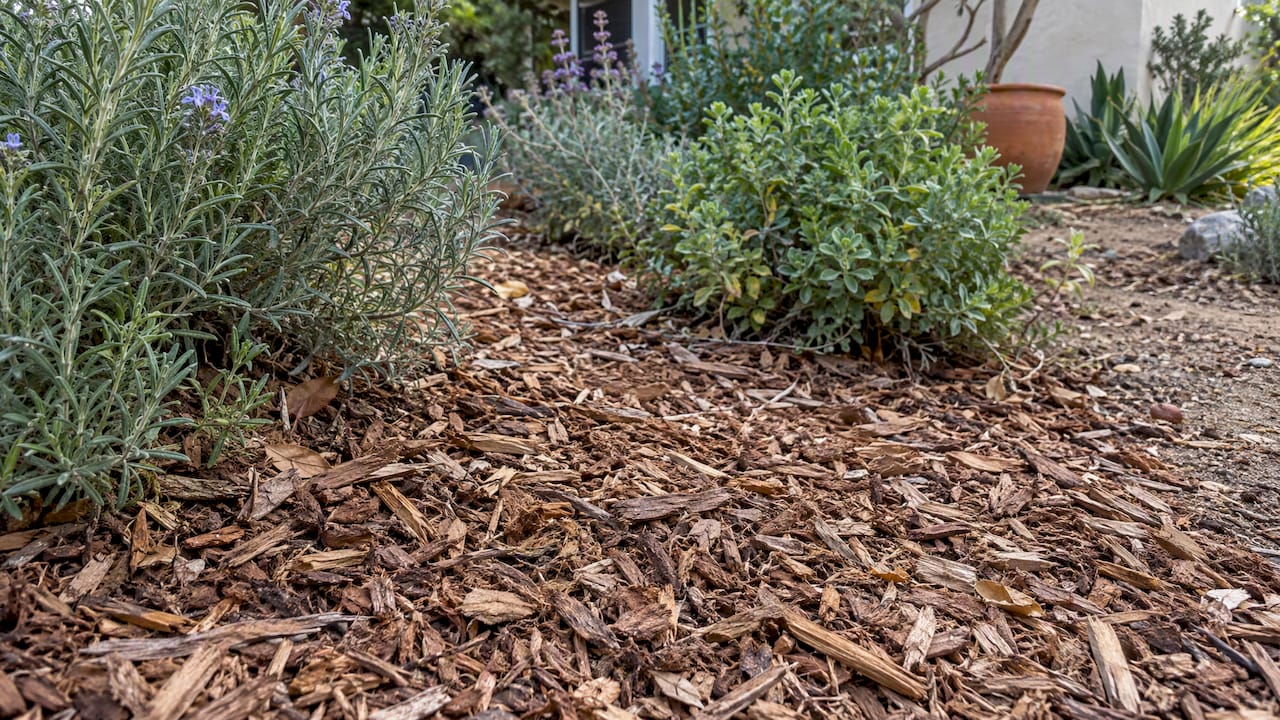
One technique we rely on constantly is sheet mulching, a no-dig method that layers cardboard, compost, and mulch directly over existing turf or bare soil to build healthy beds without excavation. We pair it with a site audit process that catalogs what materials a property already has before any new purchase gets made.
No-dig sheet mulching turns yard waste and cardboard into a living soil base instead of trash.
A Few Honest Thoughts on Reuse
The best reclaimed-material gardens come from treating the site as inventory, not as a blank canvas. Walk your yard before you walk into a store, test small sections before committing a whole project to one material, and let a cracked paver or a weathered beam suggest its own use instead of forcing a Pinterest plan onto it. Call in a professional once a project involves heavy lifting, structural retaining walls, or any material with an uncertain chemical history.
— Denise Buchanan
Let Us Help You Build With What You Already Have
We design and install sustainable landscapes that put reclaimed and recycled materials to work, from raised beds and rubble paths to full yard transformations. When a project involves heavy salvage, contamination checks, or complex grading, our crews handle the parts that are risky to do alone.

- Sustainable Landscape Design and Installation turns your site audit into a finished, plant-forward landscape.
- Clean Up and Haul Away clears old material safely once you decide what to keep and what to retire.
- Sacred Garden Classes and Workshops teach sheet mulching, auditing, and reuse techniques hands-on.
For phased budget planning on a larger backyard reuse project, Ivan’s Landscaping Design offers useful guidance on sequencing work over time. When you are ready for a design built around your site’s own materials, start with our landscape design services for a plan tailored to what you already have on the ground.
FAQ
What are the benefits of using recycled materials?
Recycled materials reduce landfill waste, often cost less than new materials, and add character that new products cannot match. EPA guidance also notes that many recycled-content landscaping products are commercially available and cost-competitive with standard alternatives.
What is the 70/30 rule in gardening?
Definitions vary depending on the source, and no standard “70/30 rule” appears in EPA or USDA landscaping guidance. If you have seen this phrase applied to a specific practice, treat it as informal advice rather than an official standard.
What are recycling plants?
Recycling plants, often called construction and demolition (C&D) recycling centers, process materials like concrete, brick, asphalt, and wood scrap so they can be reused instead of landfilled. Many municipalities also run separate compost facilities that process yard and food waste into usable soil amendment.
What are five things that cannot be recycled?
Common landscaping materials that are difficult or unsafe to recycle include CCA-treated wood near edible beds, whole tires without processing, methyl-bromide-treated pallets, contaminated fill soil, and mixed plastic debris without clear resin identification. Conservation standards for raised beds specifically advise against tires, railroad ties, and treated pallets in food-growing structures.
Sources
- Comprehensive Procurement Guidelines: Landscaping Products — U.S. EPA
- Recycling and Reusing Hardscapes and Landscape Waste (EPA archive)
- Spent CCA treated wood from residential decks can be a resource for reuse and recycling — USDA Forest Service