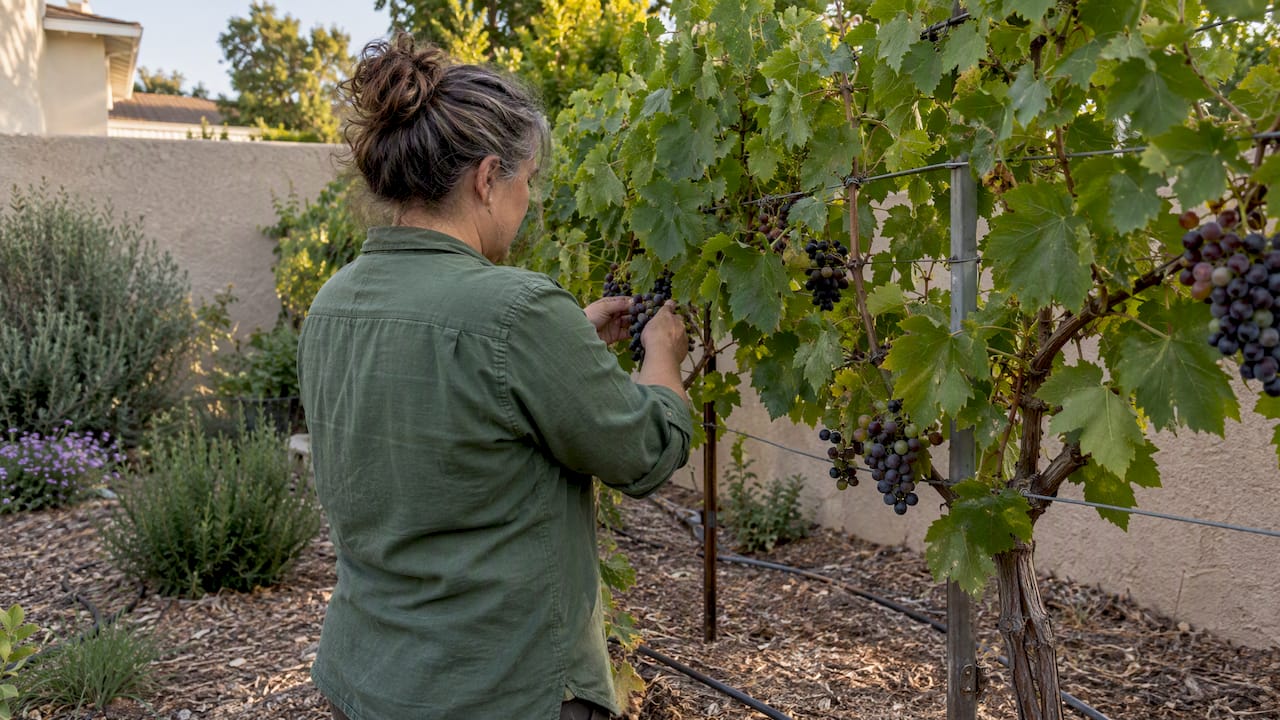
The most reliable approach is coarse organic mulch like wood chips or shredded bark, or small gravel under a half inch, applied at the right depth over soil where you’ve already laid drip or soaker irrigation. Covering soil alone is not enough: the mulch has to sit at the correct thickness, and water needs a path to the roots underneath it. Get those two things right and you can cut irrigation needs by as much as 50%.
TL;DR:
- Use wood chips or shredded bark for shaded perennial beds, but choose straw, clippings, or compost for seasonal vegetable beds that benefit from nutrient cycling.
- Use 3 to 4 inches of wood mulch, 4 to 6 inches of straw or leaves, or 2 to 3 inches of gravel.
- Cover 70% to 90% of soil, keep mulch clear of stems, and place drip or soaker lines beneath the layer so water reaches roots.
- Install irrigation beneath mulch, then check after watering that the soil below is damp; a wet surface can hide dry roots.
- For xeric beds, use gravel smaller than half an inch; larger stones can shed water and add heat, while gravel does not build soil.
Table of Contents
- 1. Types of mulch and how each performs in drought
- 2. How to apply mulch for maximum moisture savings
- 3. Choosing mulch by site conditions
- 4. Applied guidance: case examples and how we use mulch to cut irrigation
- 5. Why consistent mulching is central to drought resilience
- How we help with drought-tolerant mulching and installation
- FAQ
- Sources
1. Types of mulch and how each performs in drought
Not every mulch holds water the same way, and the differences matter more as temperatures climb.
Wood chips and shredded bark are the workhorses of drought gardening. They break down slowly, which means fewer reapplications, and they moderate soil temperature well. Fresh wood chips and green trimmings also supply labile carbon that stimulates soil microbes, something composted mulch does not do to the same degree. The catch: in full sun, wood chips can dry out on the surface and turn hydrophobic, shedding light rain instead of absorbing it. They work best under tree canopy or wherever regular watering keeps the top layer from crusting over.
Pine straw and shredded leaves go down fast and cool the soil surface quickly, which makes them a good fit for new beds that need protection right away. Both are lighter than wood chips, though, so wind can lift and scatter them, especially pine straw on open, exposed sites.
Straw, grass clippings, and compost decompose faster than wood-based mulches and return nutrients to the soil as they break down. That makes them a better match for vegetable beds and annual plantings, where you want some nutrient cycling each season, rather than for permanent perennial borders where you’d rather not refresh mulch every few months.
Gravel and pea gravel behave differently from every organic option. Gravel with particle sizes of half an inch or smaller improves water infiltration during short, intense storms and suppresses weeds, but larger stones do the opposite: they shed water as runoff and transfer more heat into the soil instead of blocking it. Gravel never adds organic matter, so it’s a tool for xeric beds and low-maintenance borders, not for soil building.
A quick match to common situations:
- Shaded perennial beds: wood chips or shredded bark.
- Vegetable gardens and annual beds: straw, grass clippings, or compost.
- Succulent or xeric plantings in full sun: pea gravel under half an inch.
- Newly planted beds needing fast cover: shredded leaves or pine straw.
2. How to apply mulch for maximum moisture savings
Depth and placement decide whether mulch actually saves water or just sits there looking tidy.
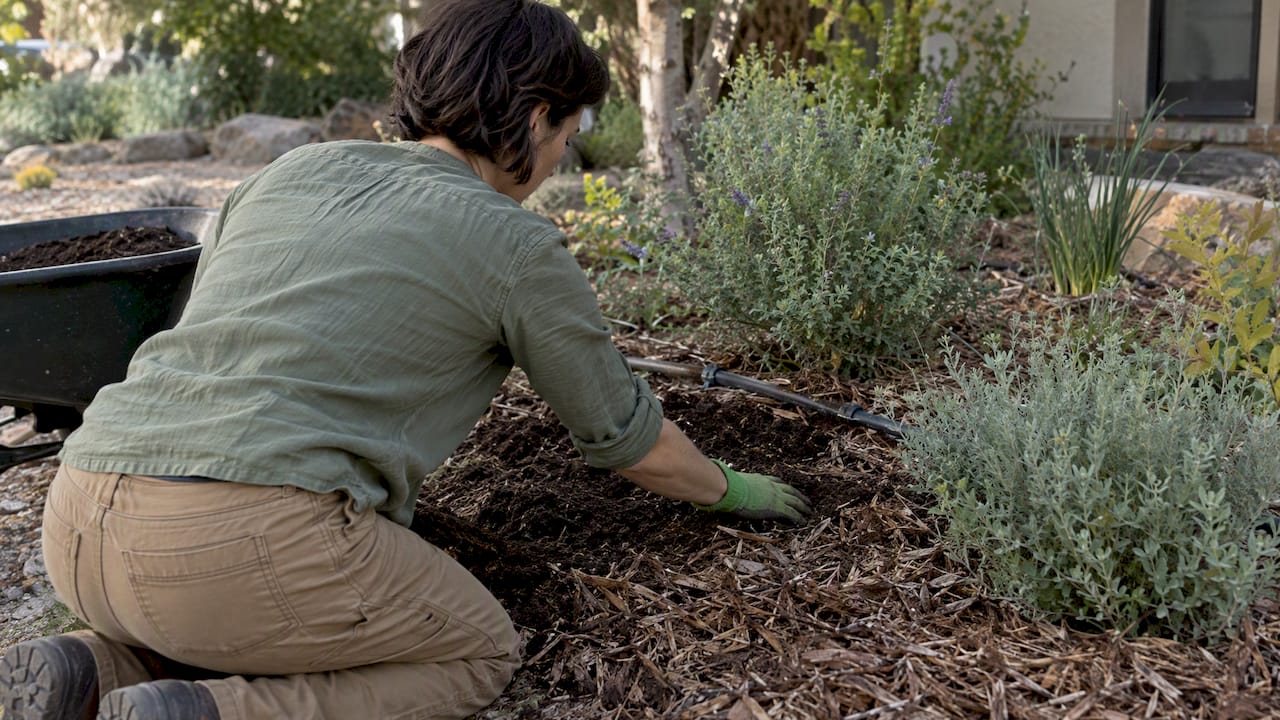
- Wood-based mulch: apply 3 to 4 inches deep over most beds.
- Straw or dried leaves: apply slightly thicker, 4 to 6 inches, since these materials settle and compress faster.
- Gravel: apply 2 to 3 inches, using particles under half an inch where infiltration matters most.
- Coverage: aim to cover 70 to 90% of the soil surface, more on slopes prone to erosion, less where you want water to reach the soil directly between plants.
- Placement: keep mulch a few inches back from tree trunks and plant stems to avoid trapping moisture against bark, and avoid packing any mulch tight enough to block air movement.
Checks matter as much as the initial application. Watch for settling, color fading, or mulch crowding around plant crowns, and refresh before the layer thins below its target depth. Experimental work in arid and semiarid settings found that application rates in the range of a quarter to half a kilogram per square meter, with moderate thickness, can optimize soil water retention and reduce runoff, which lines up closely with the extension depth guidance above.
Before you mulch, get drip or soaker lines in place under the layer, not on top of it. If irrigation is already installed, test infiltration during a light rain to confirm water is reaching soil and not just wetting the mulch surface.
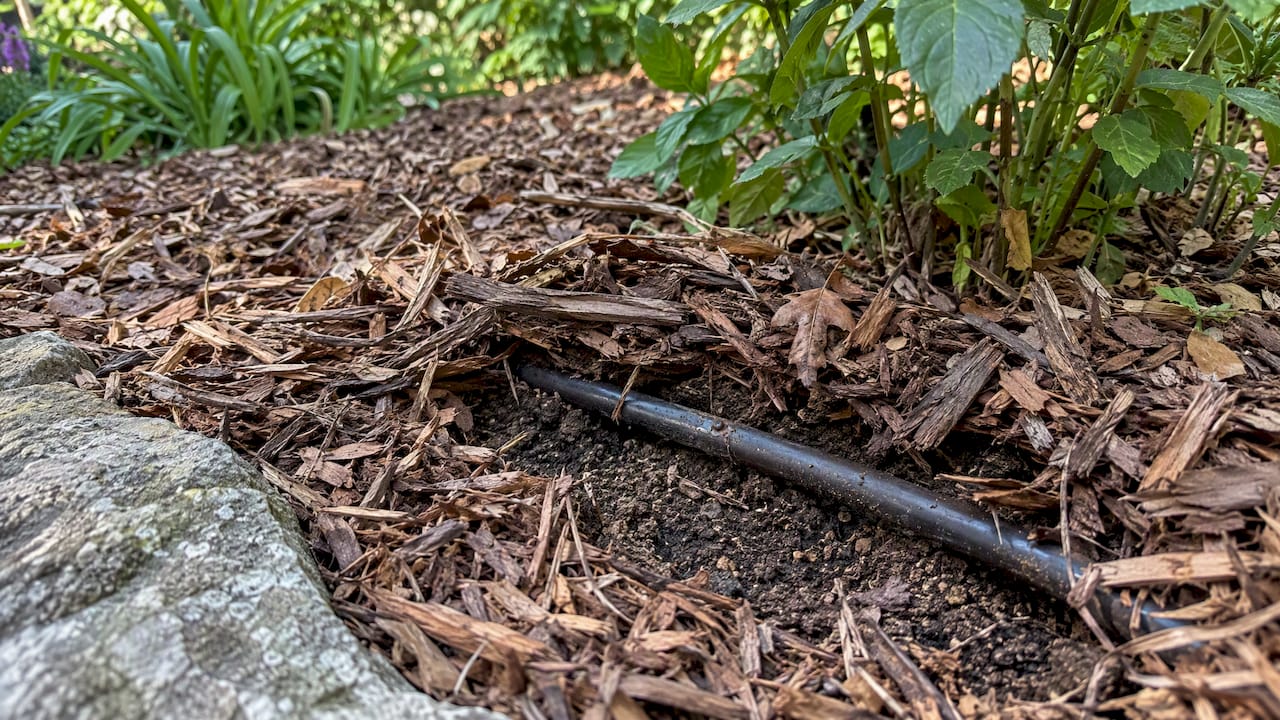
Pro Tip: Push your finger through the mulch after watering: if the soil underneath is still dry, your layer is too thick or too compacted for water to get through.
3. Choosing mulch by site conditions
The best mulch on paper can fail on the wrong site. A few conditions change the calculation.
- Hot, sun-exposed beds: choose coarser wood mulch or gravel for xeric plantings, and watch for hydrophobic crusting on fine wood fines in direct sun.
- Windy or steep slopes: use shredded bark, which tends to interlock and resist sliding, rather than loose straw, which needs netting or staking to stay put.
- Fire-prone areas: favor larger wood chips or inorganic mulch like gravel, and maintain defensible space between mulch beds and structures.
- Soil type: match mulch coarseness to your soil. Mulch that is coarser than the underlying soil conserves more moisture, while fine mulch over fine soil can seal the surface and reduce water movement.
4. Applied guidance: case examples and how we use mulch to cut irrigation
We have extensive experience designing water-wise landscapes, and mulch choice is one of the first decisions we make on every site, because it directly shapes how much irrigation a landscape will need going forward. Our approach pairs the mulch itself with artistry and environmental consciousness.
On a recent small residential project, replacing a thin layer of decorative bark with properly depthed wood mulch, paired with a drip line installed underneath, let the client cut back watering frequency noticeably within the first season while keeping plants healthy through summer heat, demonstrating principles similar to how to prepare vacant land for construction in Florida.
A short checklist we use on every site visit:
- Assess sun exposure, slope, and soil texture before choosing a material.
- Match mulch type to the bed’s purpose: perennial border, vegetable patch, or xeric planting.
- Confirm depth meets the target for that material, not just visual coverage.
- Verify irrigation lines sit under the mulch, not resting on top of it.
Pro Tip: A bed that looks mulched but still dries out fast usually has irrigation on top of the mulch instead of beneath it.
5. Why consistent mulching is central to drought resilience
Mulch works best as part of a system, not a one-time fix. I’ve found that gardeners who pair mulch with ongoing soil improvement and a deliberate irrigation layout get far more durable results than those who treat mulch as a seasonal cosmetic refresh. The trade-off between a tidy look and real water savings is worth weighing honestly before you choose a material.
— Denise Buchanan
How we help with drought-tolerant mulching and installation
We design and install Sustainable Landscape Design and Installation with mulch selection built into the plan from day one, not added as an afterthought once planting is done. A typical engagement starts with a site assessment covering sun, slope, and soil texture, moves into material selection suited to your beds, and finishes with installation at the correct depth alongside irrigation placed under the mulch.

- Full design and installation for yards of any size, including drought-tolerant landscaping built to cut water use.
- Irrigation integration so drip or soaker lines sit under the mulch layer.
- Ongoing Garden Maintenance to keep depth and coverage where they need to be season after season.
If your beds are losing water faster than they should, book an initial landscape consultation and we’ll walk your site with you.
FAQ
What are the different types of mulch?
Mulch falls into two broad categories: organic, including wood chips, bark, straw, pine straw, shredded leaves, and compost, and inorganic, including gravel, pea gravel, and landscape fabric. Organic types break down and feed the soil over time, while inorganic types last longer but add no nutrients.
What can you put on the ground to absorb water?
Coarse organic mulch, like wood chips or shredded bark, slows evaporation and helps soil hold onto moisture longer after watering or rain. Compost and leaf mulch add water-holding organic matter directly to the soil as they break down, which further improves retention over time.
Should I water my garden every day in a drought?
Daily shallow watering usually does more harm than good, since it encourages shallow roots that struggle once the ground dries further. Deeper, less frequent watering combined with a properly depthed mulch layer typically conserves more water and builds stronger root systems.
What does Monty Don use for mulch?
Public gardening guidance attributed to Monty Don emphasizes improving soil organic matter alongside mulching as the real key to drought resilience, rather than relying on any single mulch material. The mulch slows evaporation while the added organic matter improves the soil’s own capacity to hold water.
Sources
- Mulching | CSU Extension
- Mulches for Landscapes | UC ANR
- Conservation Practice Standard Mulching (Code 484)
- Experimental studies on mulch application rates (PMC article)