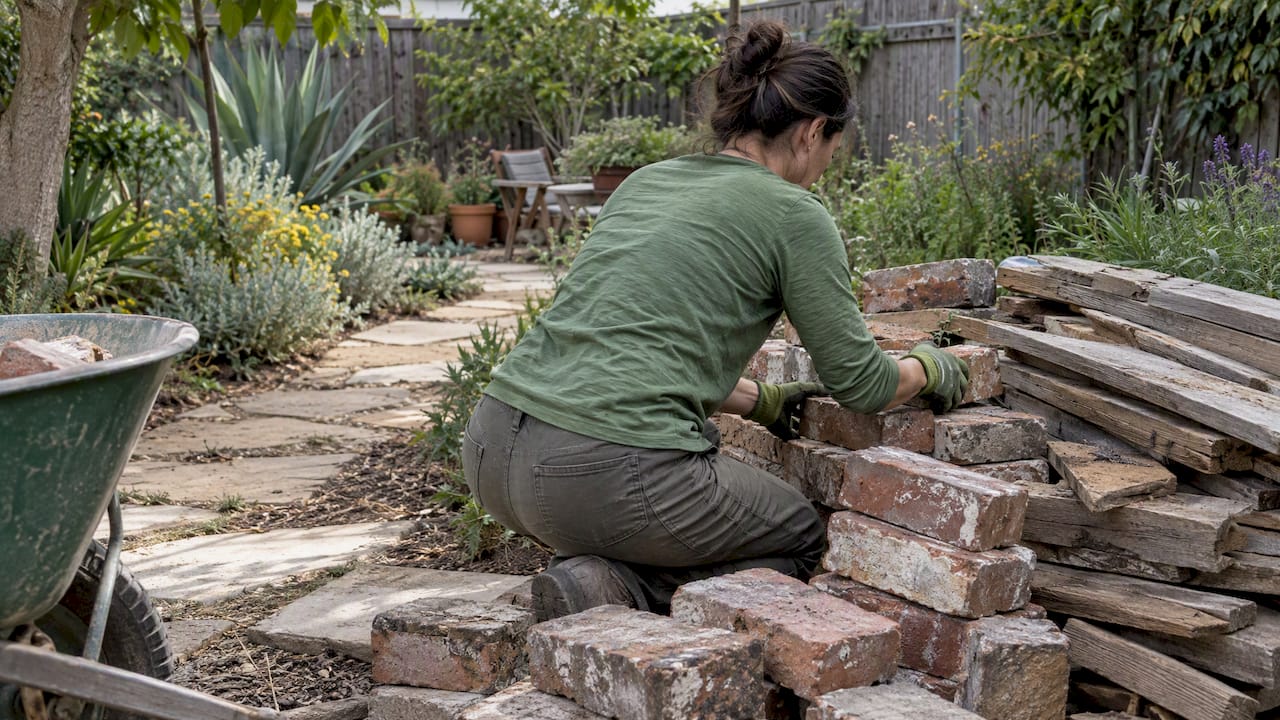
If you live in the City of Los Angeles, most yard waste goes in your green bin every week, and anything extra can go out in a free once-a-year brush pickup that you have to schedule. Bigger jobs, such as a removed tree, a full yard clean-up or fire-zone clearing, need a drop-off trip, a hauler or a landscaper. This guide covers each route, what it costs and when it makes sense. It also covers the rules that catch people out.
One caveat first: the details below apply to City of Los Angeles households served by LA Sanitation & Environment (LASAN). If you live in another city in the county, such as Pasadena, Glendale or Santa Monica, or in an unincorporated area, your hauler and rules differ. Call your own city or hauler before you act.
TL;DR
- Everyday trimmings: use the green bin. It takes grass, leaves, plants, weeds and branches, and food scraps go in the same bin.
- Extra brush: the city offers one free annual brush pickup. Bundle it in pieces no longer than 4 feet and no heavier than 30 pounds, then book it on MyLA311 or call 1-800-773-2489.
- Big jobs: self-haul to a permitted facility or pay a hauler who delivers to a composting site. Do not put green waste in a trash dumpster.
- Fire zones: clearing brush is a legal duty in high-hazard areas, and thinning is often better than stripping the land bare.
Table of Contents
- What goes in the green bin
- The free annual brush pickup
- Drop-off sites and tipping fees
- Hiring a hauler or landscaper
- When debris does not fit the usual routes
- Fire zones: clearing brush is a legal duty
- Keep it on site: mulch and compost
- Perspective: the best yard waste is the waste you never make
- From clean-up to a landscape that needs less
- A simple decision path
- FAQ
- Sources
What goes in the green bin
The city’s primary route is the weekly curbside green bin. LASAN says it accepts organic yard material, including grass clippings, flowers and tree trimmings, whether thick or thin, fresh or dry. The same bin takes food scraps and food-soiled paper, because the program, called OrganicsLA, was created to meet the state’s SB 1383 mandate.
A few practical habits keep the bin from being rejected or turning into a mess:
- Keep the lid closing. Branches sticking out of an overfilled bin are a common reason for missed pickups.
- Cut long branches down so they fit inside. Anything you cannot fit belongs in the brush pickup described below.
- Leave out plastic bags, rocks, soil in bulk, treated lumber and pet waste. These are contaminants that undermine composting.
- Put the bin out on your regular collection day. If it was missed, report it through the city’s Customer Care Center.
The weekly service is the right answer for a typical lawn and a few shrubs. It is not designed for a whole-yard overhaul.
The free annual brush pickup
The City of Los Angeles offers a free, once-a-year collection for extra yard trimmings and brush to households it services. This is the cheapest legal way to clear a pile of pruned branches, and plenty of residents never use it.
How it works, according to LA Sanitation:
- Cut and gather the brush.
- Bundle and tie it so no bundle is longer than 4 feet or heavier than 30 pounds.
- Schedule the pickup through MyLA311 or by calling the 24-hour Customer Care Center at 1-800-773-2489.
- Set the bundles at the curb for the date you were given.
Scheduling is not optional. Unbundled brush left at the curb will not be collected, and it can draw a code enforcement complaint. Treat the 30-pound limit seriously: a bundle of wet oleander or a thick limb gets heavy fast, so weigh the first one on a bathroom scale and judge the rest by it.
Planning your one pickup
Because you only get one, save it for the right moment. The best time is after a big seasonal prune, when you have a lot of material at once. If you are removing a tree, cut it into short lengths first and think about whether the chips can stay on site (see the mulch section below).
Drop-off sites and tipping fees
When you have more than bundles can handle, you can self-haul to a facility permitted to take green waste. Under state rules, residents and businesses must either take part in an organic waste collection program or self-haul to a permitted composting or recycling facility. A transfer station or composting site is the usual choice.
Expect to pay by weight. The Sanitation Districts of Los Angeles County publish tipping fees per ton for their facilities. Segregated, uncontaminated green waste is charged at a lower rate than mixed trash, while contaminated green waste is charged at the higher hard-to-handle rate. Rates differ by site and change over time, so check the current table and call the facility before you load the truck.
To keep the cost down:
- Keep green waste separate from soil, concrete, lumber and household trash in the truck bed.
- Cover the load. Uncovered loads that can produce litter carry a surcharge at county facilities.
- Ask each facility what it accepts. Palm fronds, stumps and large logs are handled differently at different sites.
Hiring a hauler or landscaper
Self-hauling costs time, a vehicle and often a minimum charge. For a large clean-up, a tree removal or an overgrown lot, hiring out is often simpler. Your options by type:
| Option | Best for | Watch for |
|---|---|---|
| Junk or yard-debris hauler | One-time piles, quick turnaround | Ask where the load goes. Green waste should reach a composting facility, not a landfill |
| Arborist or tree service | Tree removal and heavy pruning | Ask whether chips and wood can be left on site as mulch |
| Landscaper with clean-up service | Overgrown yards, redesigns, ongoing care | Get scope and haul-away in writing |
| Roll-off bin rental | Whole-yard demolitions with lots of material | Bin size, weight limits and the rules for green waste |
For businesses, property managers and community organizations, the rule is stricter. Under SB 1383, tossing green waste into a regular trash dumpster is no longer an option. Organizations must subscribe to organic collection or use a hauler that documents delivery to a permitted facility. Small businesses generating 2 cubic yards or more of solid waste per week are covered as well. Ask any hauler for that paperwork.
We offer clean-up and haul-away, tree trimming and garden maintenance as part of our landscape services, so a clean-up can lead straight into replanting if you want it to.
When debris does not fit the usual routes
Some yard debris does not belong in a green bin: pond sludge, aquatic weeds, algae and shoreline muck. If you have a pond or water feature, waterfront cleanup is a specialty job. For a sense of what a full scope includes, look at what pond cleaning and waterfront cleanup providers offer, such as weed control, aeration and seasonal cleanup. That example is a Michigan business, so look for a licensed local contractor in the Los Angeles area. Ask any contractor how they dispose of the removed material.
Pesticides, fertilizers and other garden chemicals are a different category again. They go to a household hazardous waste site, not the curb. The Sanitation Districts’ Household Hazardous and Electronic Waste Program can be reached at (800) 238-0173 or info@lacsd.org.
Fire zones: clearing brush is a legal duty
In high fire hazard areas, handling vegetation is more than tidying. The Los Angeles County Fire Department says property owners are responsible for clearing hazardous vegetation to create defensible space. Annual notices go out, and the department publishes the 2026 defensible space clearance notice, which says hazardous native and ornamental growth must be removed once inspection verifies it.
Two points that save money and soil:
- Do not strip everything. Fire departments typically advise against removing trees and shrubs before an inspection. Corrective pruning and thinning is often enough, and total removal can increase erosion on slopes.
- Plan the cut material. A clearing job produces far more green waste than a weekly bin can take. Budget for hauling or a brush pickup before you start.
Our guides on defensible space landscaping and brush clearance requirements in Los Angeles walk through the zones and distances in detail.
Keep it on site: mulch and compost
The green bin is the fallback, not the best outcome. CalRecycle explains that food scraps and yard waste breaking down with oxygen make compost, while the same material in a landfill releases methane. CalRecycle reports that organic waste makes up 48% of what Californians landfill by weight, and that methane is a super pollutant 84 times more potent than carbon dioxide over 20 years.
For a Los Angeles yard, keeping material on site has a second payoff: water. Organic matter in the soil improves water retention, which matters in a drought-prone city. Ways to do it:
- Chip and spread. Fine trimmings and chipped branches make mulch. Our guide to mulch types for drought explains what to use where.
- Compost leaves and soft clippings. A simple pile or bin works. Keep it moist and turn it.
- Sheet mulch a lawn. If you are removing turf, cardboard and mulch can replace hauling it. See our no-dig sheet mulching steps.
- Ask your tree service for chips. Arborists often have fresh wood chips and may leave them rather than pay to dispose of them.
Perspective: the best yard waste is the waste you never make
After more than 25 years designing water-wise landscapes in Los Angeles, we see the same pattern. Yards that generate the most green waste are usually the ones planted against the climate: thirsty lawns, fast-growing hedges, and plants that outgrow their spots. Every few weeks they need mowing, shearing and hauling, and every season they need irrigation.
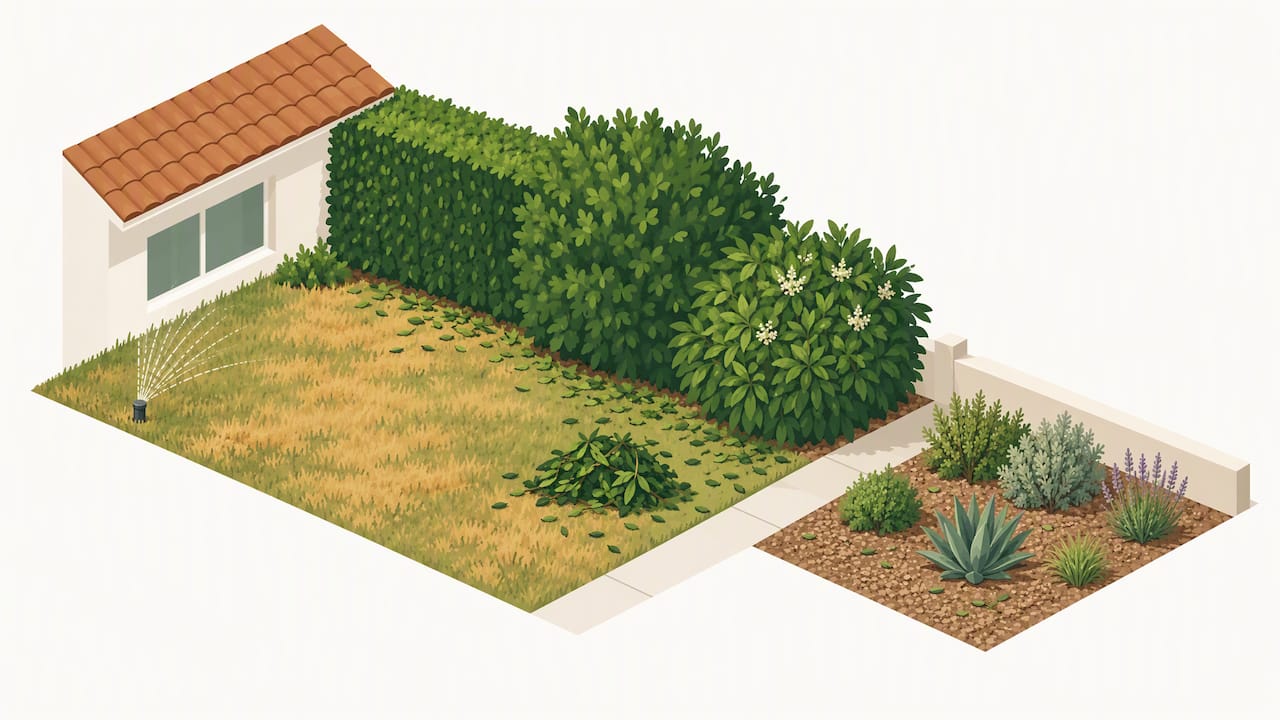
When we redesign a yard, we match plants to the site, size them for their mature form, and leave the prunings in the landscape as mulch wherever it is safe to do so. In fire-prone areas we thin and shape rather than clear-cut, because bare slopes erode. The result is less hauling, less water and a yard that looks intentional in a dry year.
If you are cleaning up anyway, this is the cheapest moment to ask what should come back in its place. Our guides to drought tolerant plants for Los Angeles and lawn alternatives are a good place to start.
— Denise Buchanan
From clean-up to a landscape that needs less
If your clean-up has turned into “we should redo this yard,” we can help. Our design services are published at $1,500 for yards under 5,000 sq. ft. and $2,500 for a full landscape design. We also provide clean-up and haul-away, tree trimming, irrigation design and installation, slope stabilization and garden maintenance, all listed on our services page. Installation and the other services do not have published prices, so we quote them after we see the site.
A simple decision path
- A few bags of weekly trimmings? Use the green bin.
- A seasonal prune that overflows the bin? Bundle it and book the free annual brush pickup.
- More than one pickup’s worth, or heavy wood? Self-haul to a permitted site or hire a hauler who documents where the material goes.
- In a high fire hazard zone? Check your county notice, thin rather than strip, and plan for the volume.
- Tired of doing this every year? Change the landscape so it produces less.
FAQ
How can I get yard waste removed in Los Angeles?
For regular trimmings, use your weekly green bin. For extra brush, schedule the free annual pickup through MyLA311 or at 1-800-773-2489. For larger volumes, self-haul to a permitted facility or hire a hauler or landscaper.
How do I get rid of tree branches for free?
In the City of Los Angeles, bundle them to no more than 4 feet long and 30 pounds each and book the free annual brush pickup. Smaller branches can go in the green bin. You can also chip them and keep the mulch on site.
Can I put yard waste in my black trash bin?
No. State rules under SB 1383 require organic waste to go to an organics collection program or a permitted facility. In Los Angeles that means the green bin, which also takes food scraps.
What if my brush is not bundled?
It will not be collected, and leaving it at the curb may lead to code enforcement problems. Bundle and tie it to the size and weight limits, and schedule the pickup first.
Sources
- LA Sanitation: Annual Brush Pickup
- LA Sanitation: Curbside Organics Recycling Program
- CalRecycle: Organics collection requirements
- CalRecycle: Home composting
- Sanitation Districts of Los Angeles County: Tipping fees
- Sanitation Districts of Los Angeles County
- Los Angeles County Fire Department: Fire hazard reduction programs
- Los Angeles County Fire Department: 2026 defensible space clearance notice