Outdoor living trends 2026 point one way: sustainable, water-wise yards that flow from the house and double as wellness retreats. A 2026 Houzz survey shows homeowners choosing low-maintenance, native and drought-resistant plants, while rain gardens and flexible zones round out the look. Start by auditing your water use and sketching the zones you actually use.
TL;DR:
- Fix drainage and planting before adding patios or decor; bring in a professional when slopes, runoff, or irrigation are uncertain.
- Site rain gardens downslope from roofs or paved areas, away from foundations, and test soil first; they should drain within 6 to 12 hours.
- Houzz found lighting in 66% of renovated outdoor spaces; weather based irrigation controllers and timed low voltage LEDs can reduce routine maintenance.
- Replace unused lawn strips and shady corners first; synthetic turf can overheat in full sun, show seams, and make furniture harder to move.
- Choose plants adapted to local climate, space woody growth to limit fire spread, and keep the area nearest the house sparsely planted.
Table of Contents
- 1. The nine trends shaping outdoor living in 2026
- 2. How to connect indoor and outdoor rooms with clear zones
- 3. Water-wise planting, native species and firescaping
- 4. Rain gardens, permeable pavers and dry creek beds
- 5. Warm materials, curved furniture and portable lighting
- 6. Smart irrigation and lighting that cut maintenance
- 7. Shade, fire and wellness features for year-round use
- 8. Replacing turf: lawn alternatives and trade-offs
- 9. Bringing edible landscaping and kitchen gardens into your outdoor rooms
- 10. Sustainable, durable outdoor furniture is the new standard
- 11. Outdoor lighting trends: ambiance over gadgets
- 12. Outdoor art and decor that complements a sustainable landscape
- 13. Our take: water first, then comfort, then finishes
- 14. How we help you put 2026 trends into practice
- FAQ
- Sources
1. The nine trends shaping outdoor living in 2026
Here is the shortlist, with one reason each matters and one move you can make this month.
- Seamless indoor–outdoor flow and zoning: it makes the yard usable daily. Walk your doorways and note where floors and sightlines break.
- Drought-tolerant and native plantings: they cut water and upkeep. Replace one thirsty bed first.
- Rainscaping and permeable paving: they handle storms gracefully. Trace where runoff pools after rain.
- Multifunctional rooms and cozy nooks: small spaces get used more. Claim one corner for a chair and a plant.
- Natural, durable materials in warm palettes: they age well. Sample stone and finishes in daylight.
- Furniture shaped for gathering: curves and modular pieces invite conversation. Measure before you shop.
- Smart irrigation, lighting and automation: they save effort. Check whether your controller has weather scheduling.
- Year-round comfort: shade, heat and fire extend the season. Map sun and wind first.
- Lawn alternatives: less turf means less mowing. Mark lawn you never walk on.
2. How to connect indoor and outdoor rooms with clear zones
Landscape pros say homeowners now favor multifunctional small spaces and “nooks” over showy layouts, and designers describe resort-style yards with distinct zones for cooking, lounging and wellness. The trick is connection without clutter.
- Match or echo your indoor flooring tones outside so the threshold disappears.
- Install large operable doors, or at least widen the main exit, to open the sightline.
- Cover the transition with a pergola or roof overhang so the zone works in sun and drizzle.
- Separate cooking, dining, lounging and a quiet retreat with planters, level changes or a change in surface, not walls.
Phase it by daily value. Seating and shade come first because you will use them every day. Outdoor kitchens and full hardscape can wait for a later season, once you know how your household really uses the space.
Pro Tip: Set your furniture out on the lawn with painter’s tape or chalk outlines before committing to a patio footprint.
3. Water-wise planting, native species and firescaping
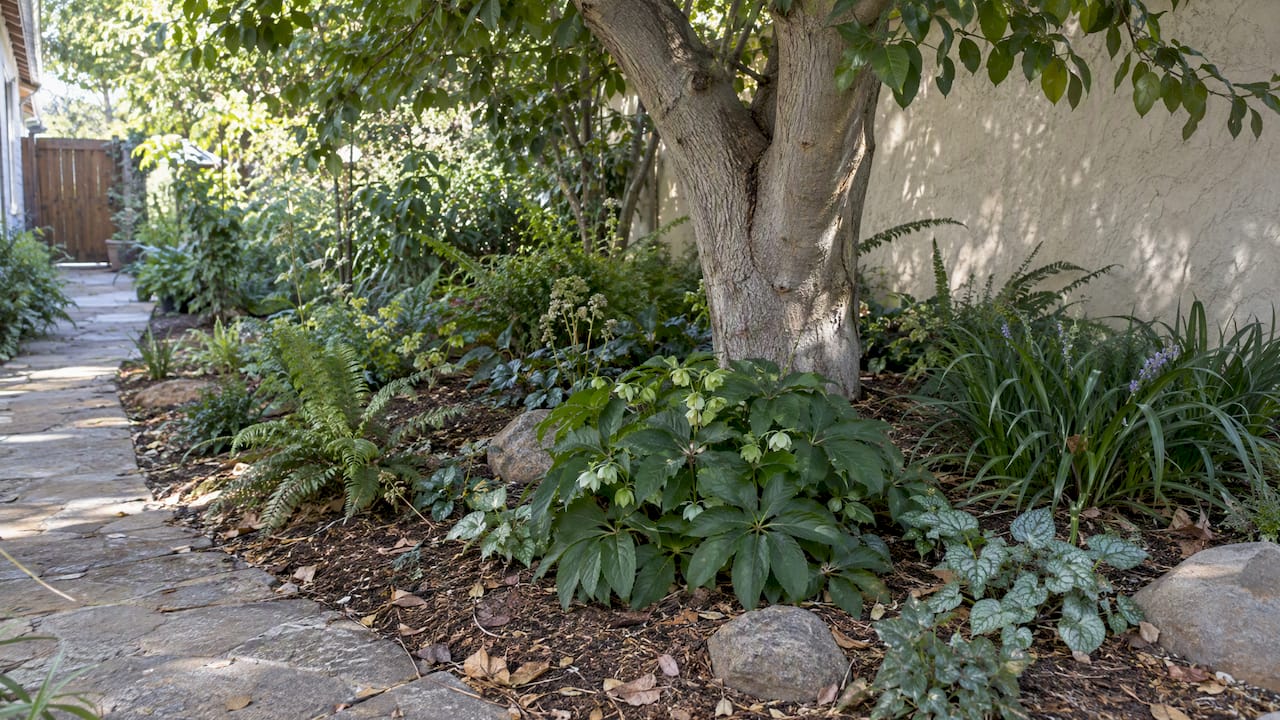
Native and drought-tolerant plants lead 2026 plans because they survive dry spells and need less care. Designers also treat wildfire preparedness as a core design philosophy, favoring defensible zones and less-flammable natives, and the Chicago Botanic Garden notes continued interest in pollinators and firewise planting.
- Choose species adapted to your local climate, not just plants that look drought-ready.
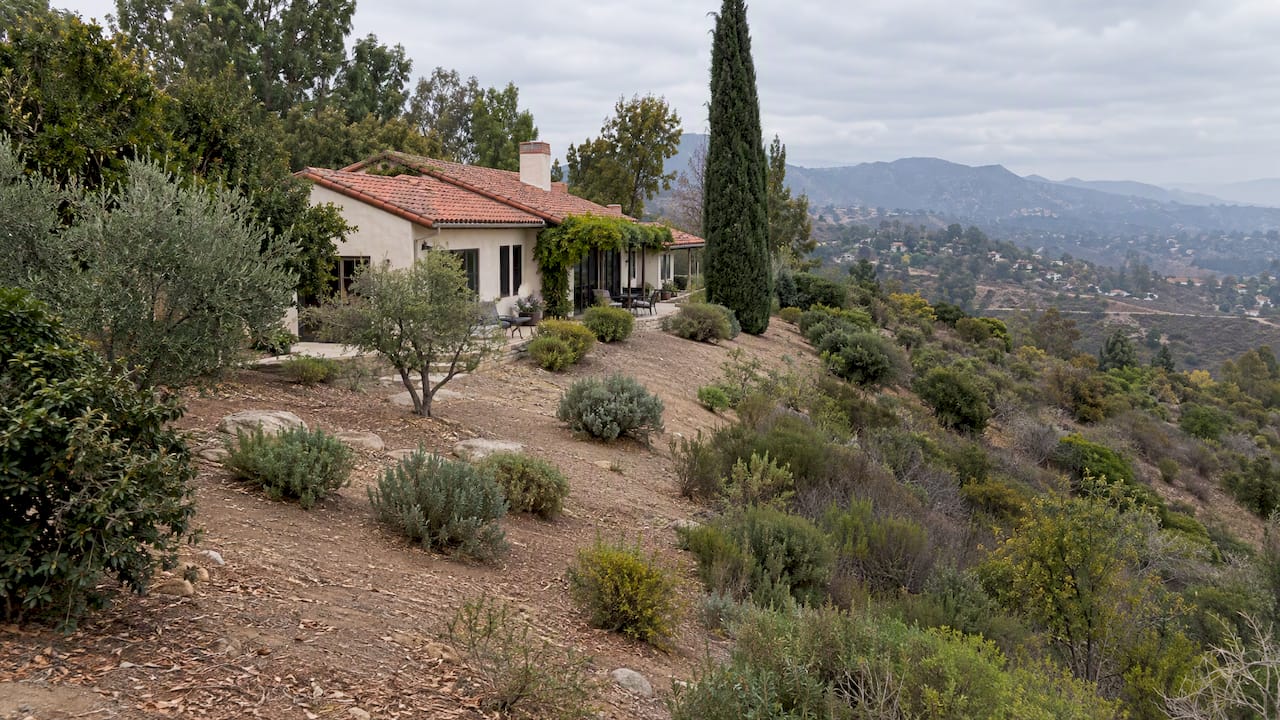
- Space shrubs and trees so fire and heat cannot jump easily from one to the next, and keep the zone nearest the house lean. Our guide to defensible space landscaping walks through it.
- Favor low-maintenance groundcovers over bare soil.
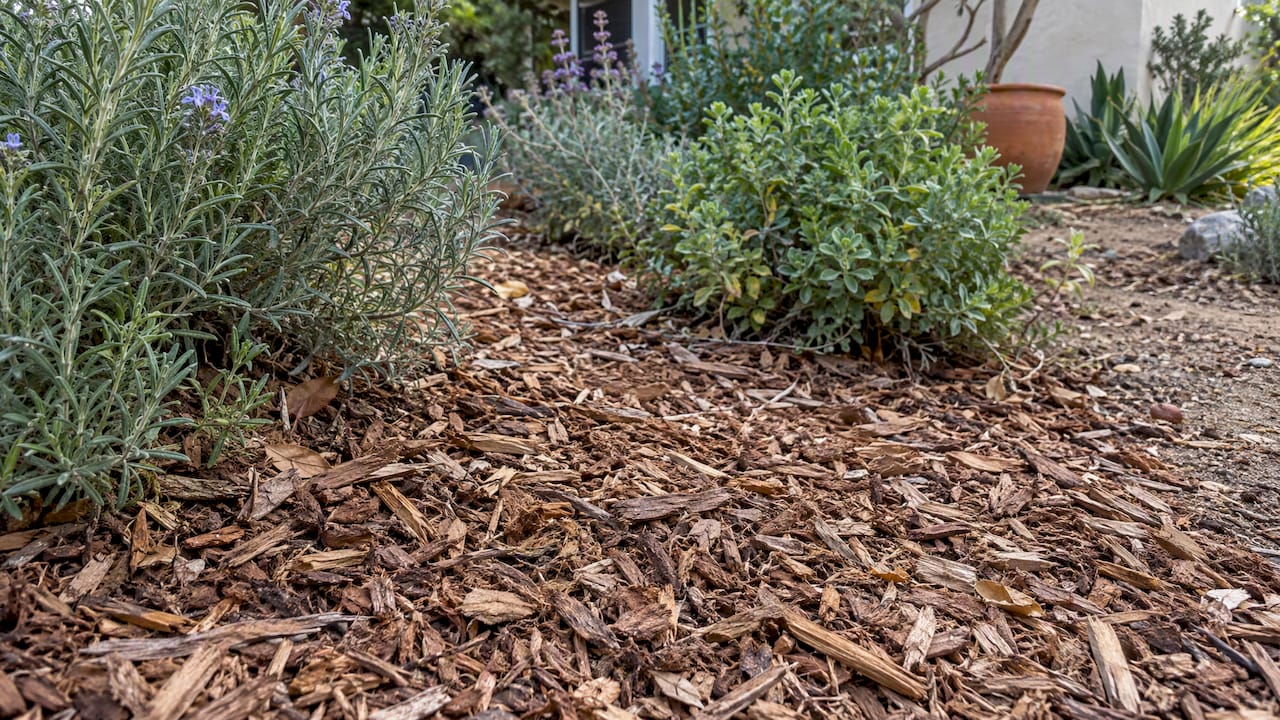
- Refresh mulch yearly and test irrigation each spring and fall.
Houzz survey: Low-maintenance, native and drought-resistant plants are increasingly chosen by U.S. homeowners renovating outdoor spaces. That shift is why plant selection comes before furniture in a smart 2026 plan.
For deeper plant strategies, see our notes on drought-tolerant landscaping.
4. Rain gardens, permeable pavers and dry creek beds
Rainscaping turns runoff into a feature. The EPA describes rain gardens as bioretention areas that filter stormwater through plants and soil and should drain within 6–12 hours, which makes soil infiltration the key to siting. Designers also list dry creek beds and rain gardens among the top backyard upgrades for channeling runoff while adding visual interest.
- Rain gardens: place them downslope of roofs or paved areas, away from foundations, in a spot where water soaks in rather than lingers.
- Permeable pavers: use them for patios and drives where you want a hard surface without sheeting water.
- Dry creek beds: guide water along a stone-lined channel that looks like a garden path when dry.
- Simple fixes: the EPA also suggests redirecting downspouts and using rain barrels.
A small swale or barrel setup is a fair DIY job. Call a pro for soil infiltration testing, slopes near a house, or any complex drainage. Our rain garden design guide covers the basics.
5. Warm materials, curved furniture and portable lighting
Trade fairs set the 2026 look: warm, rusty hues, curved modular seating and portable solar or rechargeable lighting. Pair that with durable surfaces and the yard stays good-looking with little fuss.
- Natural stone and limestone tones give a calm, timeless base.
- Porcelain pavers resist stains and fading.
- Warm powder-coated metals and rust-toned accents add depth without upkeep.
- Modular, curved seating makes conversation easier than rows of straight chairs.
- Quick-dry cushions and rechargeable lanterns handle surprise weather.
Before you buy, check UV resistance, how fast cushions dry, and what cleaning each material expects. If a finish needs yearly sealing and you will not do it, pick another.
6. Smart irrigation and lighting that cut maintenance
Landscape pros say efficient irrigation and low upkeep drive 2026 choices, so tech earns its place by saving effort. Per the Houzz survey, 66% of renovated outdoor spaces include lighting.
- Pick a controller with weather-based scheduling so you stop watering after rain.
- Choose low-voltage LED lighting on timers, plus portable solar lamps for flexible spots.
- Confirm app control works with your existing valves and supports seasonal adjustments.
- Keep the system simple enough that anyone in the household can override it.
Plug-and-play lamps and controllers suit confident DIYers. Hire a pro for new electrical runs or for tying into an existing irrigation manifold. Our solar irrigation setup page shows one off-grid option.
Pro Tip: Run a manual test of every zone after programming any smart controller, and look for dry spots and overspray before you trust the schedule.
7. Shade, fire and wellness features for year-round use
Designers report wellness-focused yards built to work daily, not only for parties. Comfort is what makes that possible in every season.
- Shade: trees, pergolas, umbrellas and sturdy canopies. The U.S. Department of Energy notes that deciduous trees shade in summer and let winter sun through, and our page on trees and urban heat goes deeper.
- Cold-season warmth: heaters, fire pits and screened enclosures.
- Wellness corners: small plunge pools, meditation nooks and quiet garden rooms.
- Safety: keep fire features clear of overhangs, dry plantings and furniture, and follow local fire rules.
Add shade first, since it pays off most days. Fire and water features cost more, so schedule them after your seating and planting are in.
8. Replacing turf: lawn alternatives and trade-offs
Shrinking lawn saves water and weekends. Match the replacement to how you use the ground. Our guide to lawn alternatives covers play, pets and shade.
- Meadow plantings: pollinator-friendly and soft underfoot, but they need patience to establish.
- Decomposed granite: firm, permeable and tidy. It needs solid edging.
- Synthetic turf: green year-round, but it can run hot in full sun, shows seams and can hinder moving furniture.
- Groundcovers: good for low-traffic spots that still want to look lush.
Reduce lawn in stages. Convert unused strips and shady corners first, then protect high-use zones with durable surfaces.
9. Bringing edible landscaping and kitchen gardens into your outdoor rooms
Edible plants are moving out of hidden vegetable corners and into the main design. A kitchen garden near the cooking zone shortens the walk from plant to plate, and herbs and fruiting shrubs can fill beds that once held ornamental filler.
Start by treating food plants like any other design element. Raised beds make clean, geometric edges beside a patio. Rosemary, thyme and lavender work as low borders. Dwarf citrus or blueberries in containers add height and seasonal interest, and climbing beans or grapes can cover a pergola for shade.
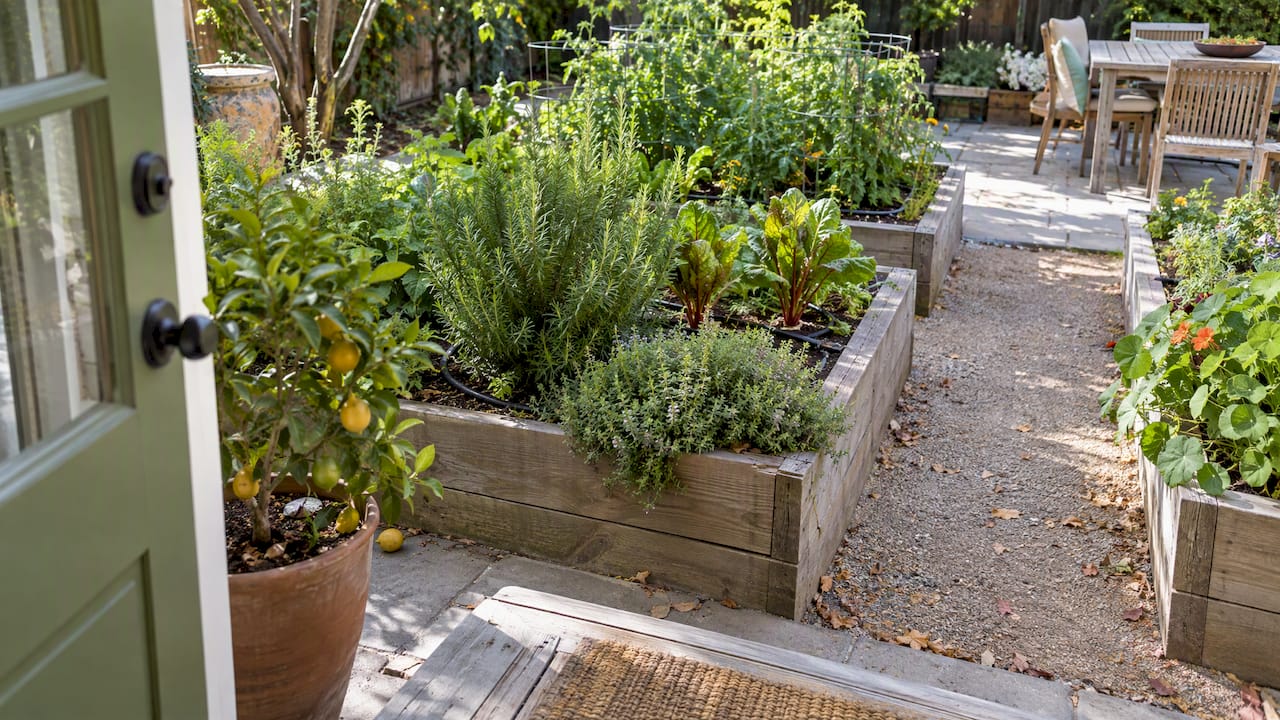
Water is the practical constraint. Group thirsty vegetables together, put them on drip lines, and surround them with tougher, drought-tolerant plants that need little. That keeps the water-wise principle intact while you grow dinner. Our edible landscaping design page explains how to scale from a few herbs to a larger productive yard, and our notes on drip irrigation for raised beds cover the setup.
Place beds where they get strong sun and are easy to reach, ideally near the kitchen door. Keep paths wide enough for a wheelbarrow, and leave room for a small bench so the garden is somewhere to sit, not only somewhere to work. Phase it the same way as everything else: one bed this season, more once you see what you harvest and what you actually eat.
10. Sustainable, durable outdoor furniture is the new standard
Homeowners increasingly want furniture that lasts a decade, not a summer. Trade-fair coverage points to curved modular seating and warm tones, and the same buyers are asking harder questions about what pieces are made of and how long they will hold up.
Look at the frame first. Powder-coated aluminum resists rust, solid hardwoods can be refinished, and heavy steel suits windy yards. Then check how the piece handles weather: cushions that dry fast, covers that zip off for washing, and hardware that will not corrode.
Durability is the most sustainable feature there is. A chair that lasts beats repeated replacements, and repairable pieces keep their value. Buy modular sets you can rearrange or expand rather than a fixed sofa that only fits one layout. Secondhand and restored pieces fit this trend well, and a fresh coat of finish or new cushions can make an older set look current.
Choose a restrained palette so pieces keep working as your plantings mature. Warm neutrals and earthy tones sit comfortably beside native plants and natural stone. Save bold color for cushions and accessories that are cheap to swap.
Before you buy, sit in the piece, lift it, and ask how it will be cleaned and stored in winter. If it needs complicated care, you will probably skip it. Simple, sturdy and easy to maintain is the combination that holds up.
11. Outdoor lighting trends: ambiance over gadgets
Technology gets the headlines, but the 2026 lighting conversation is increasingly about mood. The Houzz survey found 66% of renovated outdoor spaces include lighting, so the real question is how it should feel once it is there.
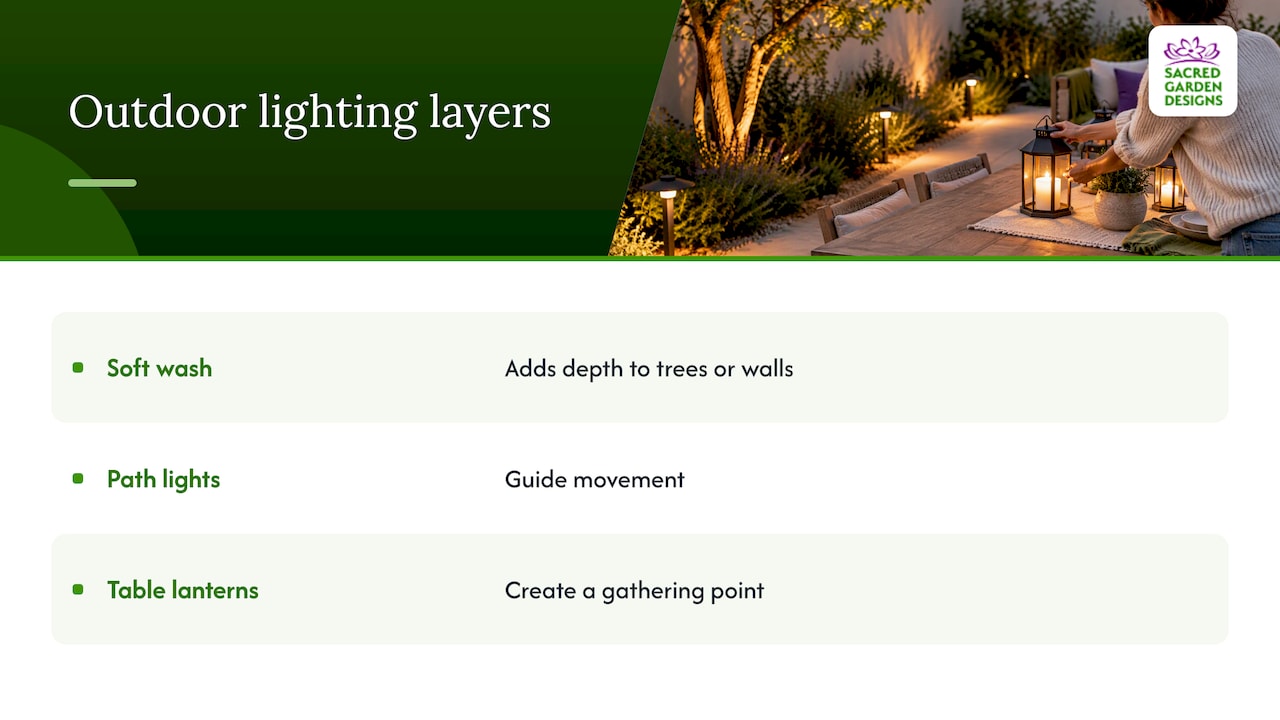
Designers favor low, warm light that pools where people sit rather than floodlighting the whole yard. Think of light in layers. A soft wash on a tree or textured wall gives depth, path lights guide movement, and a few lanterns on a table create a gathering point. Warm white tones flatter stone, wood and foliage far better than cool, harsh bulbs.
Restraint matters. Light a few things well, such as a specimen plant, a stone wall or the dining table, and leave other corners dark. Darkness makes the lit areas feel intimate and keeps glare out of neighbors’ windows and away from night wildlife.
Portable and rechargeable lanterns are popular because they move with you, and trade fairs highlighted portable solar lighting paired with warm, rusty finishes. Fixtures themselves count as decor, so choose shapes and materials, such as woven shades, aged metal or glass, that look good by day too.
Finally, think about shielding. Hooded and downward-facing fixtures keep light where you need it and the sky readable. Combine them with a timer and you get ambiance that runs itself without a complicated system.
12. Outdoor art and decor that complements a sustainable landscape
Good decor in a water-wise yard works with the planting instead of competing with it. The strongest 2026 looks lean on natural textures and handmade character, which suit the warm, earthy palettes trade fairs are showing.
Sculpture is a natural fit. A boulder, a weathered metal piece or a ceramic vessel can anchor a gravel bed or a grouping of drought-tolerant plants, giving the eye somewhere to rest. Gravel and crevice-style gardens, which the Chicago Botanic Garden lists among 2026 garden trends, pair especially well with a few well-chosen objects.
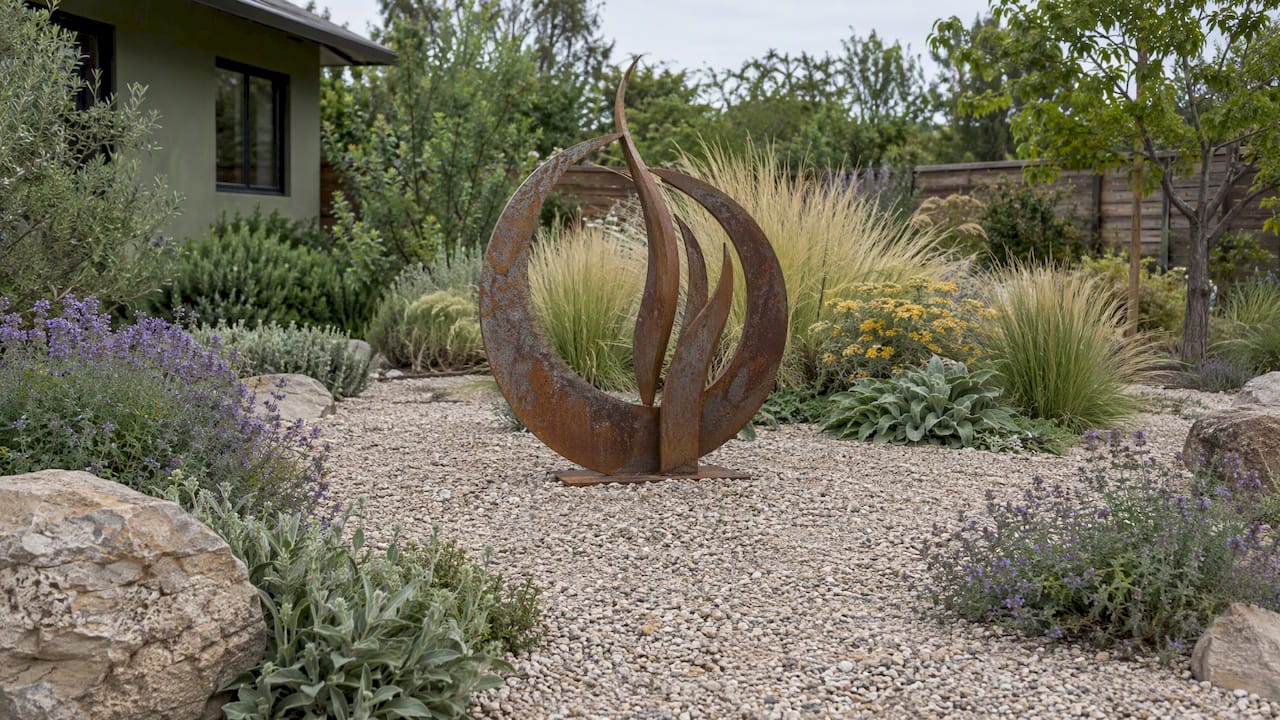
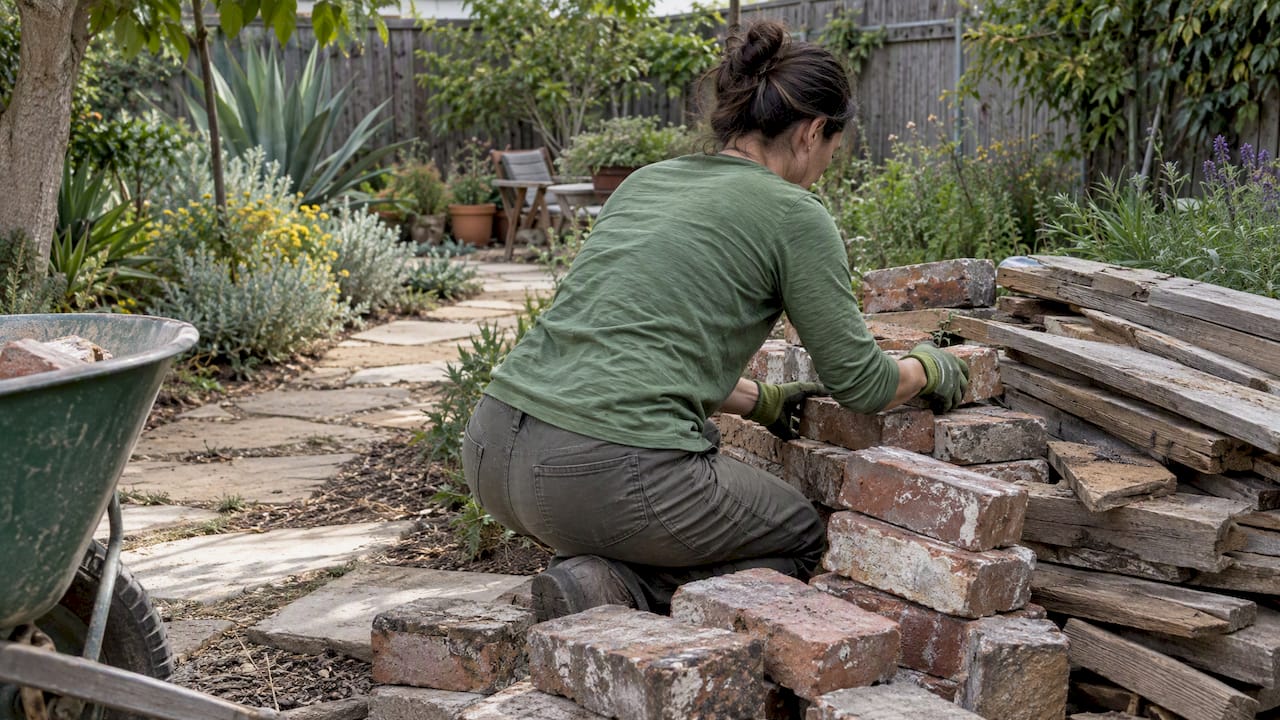
Reuse is part of the appeal. Salvaged stone, reclaimed wood and repurposed metal add history and keep material out of the waste stream. Local artists and makers offer pieces with a sense of place, and a single commissioned work can do more than a dozen mass-produced accents.
Keep scale in mind. One large piece usually reads better than many small ones, and open space around it lets plants and art both show. Choose finishes that age gracefully, since rust, patina and weathering are features here, not flaws.
Do not forget function. Water features, bird baths and bee-friendly planters are decor that also supports wildlife, and they tie the design back to the pollinator focus running through this year’s trends. A few thoughtful touches, placed with care, finish a yard better than any amount of clutter.
13. Our take: water first, then comfort, then finishes
Finishes often show up in photos. We recommend the opposite order: fix water and planting, then build comfort, then choose the pretty details. A yard that wastes water or floods after storms will undercut every beautiful surface you add. Phase the work so each season delivers something usable, and bring in a professional where drainage or irrigation is uncertain. Our team focuses on sustainable, water-wise landscapes, and that experience shapes this advice. If you are unsure about slopes, runoff or irrigation, a site consultation saves expensive guessing.
— Denise Buchanan
14. How we help you put 2026 trends into practice
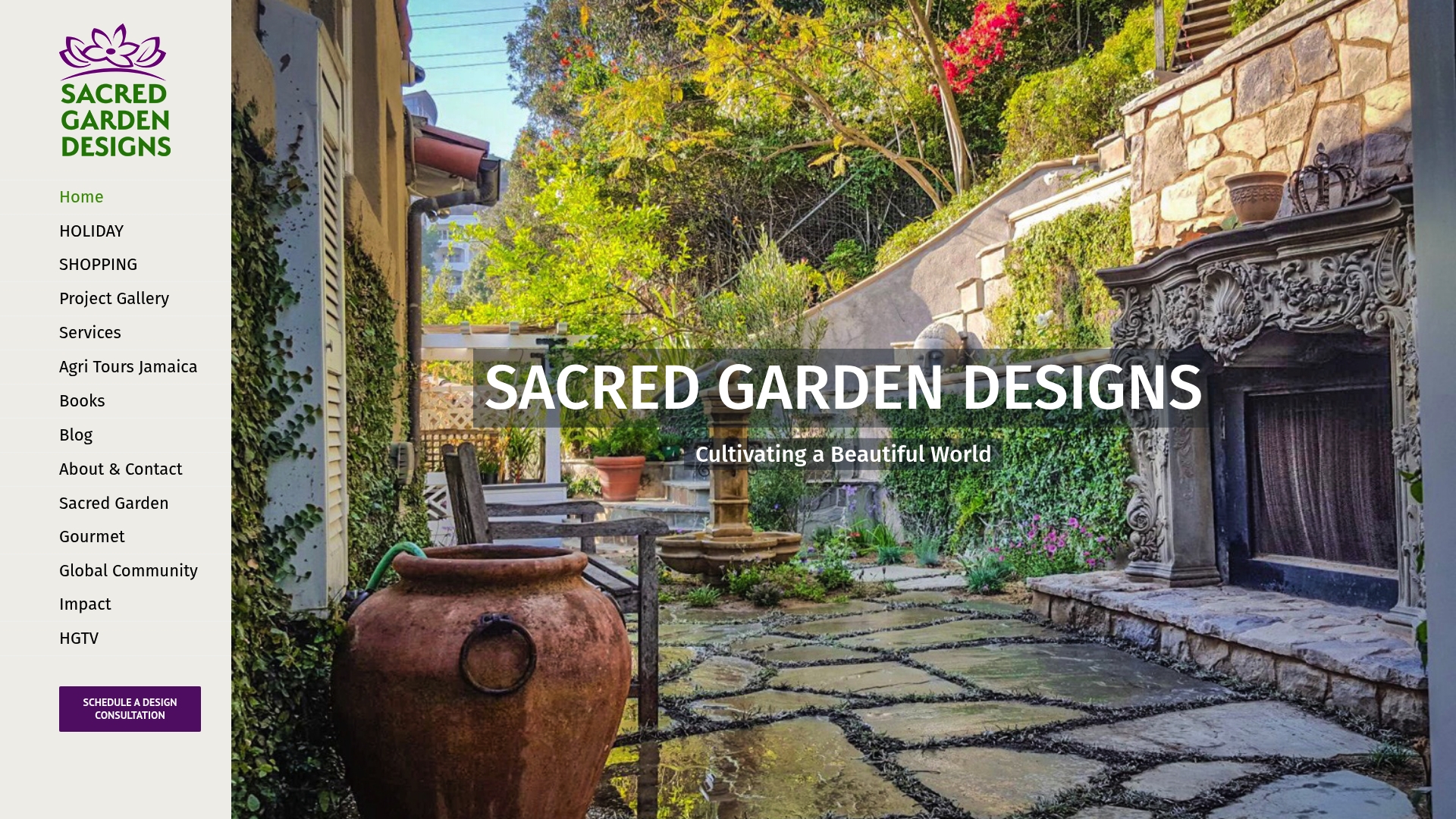
We design and install sustainable landscapes, from drought-tolerant planting and irrigation design to patios, decks and paving; see more about current outdoor living trends homeowners are actually investing in. Whether you are refreshing a small yard or rethinking the whole property, our team can sketch zones, choose resilient plants and phase the work to fit your budget. Our Landscape Design Services for yards under 5,000 square feet are $1,500, while Full Landscape Design is $2,500, both listed on our landscape design services page. An initial consultation can cover drainage, water use and priorities. Book your consultation through our services page and we will help you plan the first phase.
FAQ
What are the biggest outdoor living trends for 2026?
The biggest trends combine sustainability, indoor–outdoor flow and wellness-focused rooms. Expect native and drought-tolerant planting, rainscaping, warm natural materials and flexible zones for cooking, lounging and quiet retreat.
How long should a rain garden take to drain?
A properly sited rain garden should drain within 6–12 hours, according to EPA guidance. Soil infiltration is what makes that possible, so test it before you dig.
Should I replace my lawn with synthetic turf?
It depends on how you use the space. Synthetic turf stays green but can get hot in full sun, shows seams and can complicate moving furniture, so many homeowners reserve it for small high-use areas.
What should I do first in an outdoor refresh?
Start with water and planting, then add seating and shade, then finish with materials and decor. This order protects your investment and delivers daily value from the first phase.
Sources
- Homeowners continue investing in outdoor living spaces, including lighting – Irrigation & Lighting
- Semi-Arid Green Infrastructure Toolbox – Rain gardens
- The Biggest Backyard Trends for 2026, According to Designers
- Five Landscape Design Trends for 2026 – The Edge from the National Association of Landscape Professionals