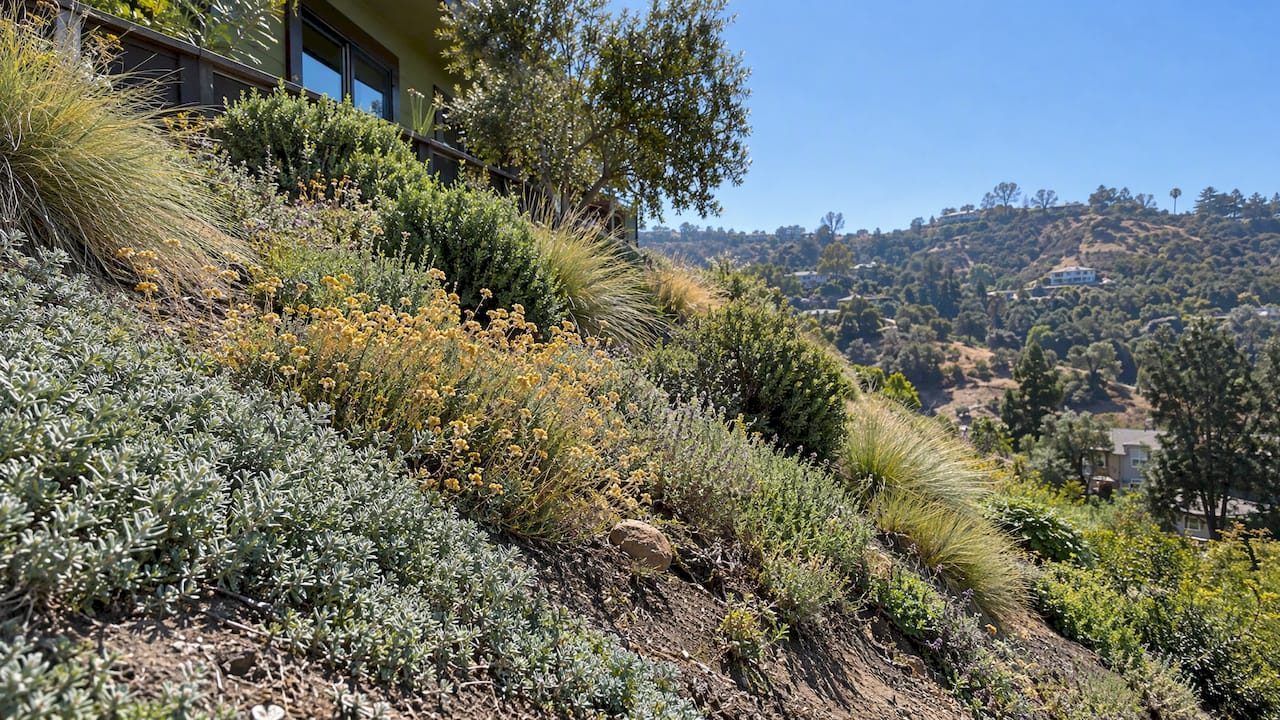
Landscaping reduces urban heat by putting shade and living plants where hard, dark, dry surfaces now soak up the sun. The biggest levers are shade trees on the west and east sides of a building, planted ground in place of bare pavement, and drought-adapted plants that cool through their leaves without a heavy water bill. This guide covers what the evidence says, how to place and choose plants, and how to keep a cool landscape safe in fire country.
TL;DR
- Heat islands form when natural land cover is replaced by pavement, roofs and other surfaces that absorb and hold heat. Trees and vegetation cool by shading and by releasing moisture.
- Shade the west side of a building first, then the east. Plant the south side with care so you do not lose winter sun.
- Water-wise plants, mulch and drip irrigation let you add cooling greenery without raising water use.
- In fire-prone areas, choose and space plants with defensible space in mind, and keep trees away from structures and utilities.
- Neighborhood-scale cooling comes from many small yards, parking lots, school grounds and street edges working together.
Table of Contents
- What an urban heat island is, and why landscaping matters
- How much can plants actually cool?
- The landscape features that do the work
- Where to plant trees for the most cooling
- Choosing plants that cool without raising your water bill
- Cooling and fire safety: plan both together
- Scaling up: yards, campuses and commercial sites
- Our perspective
- Let us plan your cooler landscape
- FAQ
- Sources
What an urban heat island is, and why landscaping matters
A heat island is a built-up area that runs hotter than its surroundings. According to the US EPA, it happens when cities replace natural land cover with dense concentrations of pavement, buildings and other surfaces that absorb and retain heat. The same page links heat islands to higher energy costs, more air pollution and more heat-related illness.
It is not only a big-city problem. The EPA notes that heat islands can form in small or large cities, in suburbs, in northern or southern climates, and in any season. A suburban cul-de-sac with a wide driveway, a south-facing stucco wall and a gravel side yard can behave like a miniature one.
The mechanism is simple. Trees, vegetation and water bodies cool the air by providing shade, moving water out through leaves and evaporating surface water. Hard, dry surfaces such as roofs, sidewalks, roads and parking lots offer less shade and less moisture, so they run hotter. The EPA’s explanation is the clearest short version.
Landscaping is the one heat-island strategy a homeowner controls entirely. You cannot recoat a city street, but you can decide what covers the ground around your house, what shades your walls and what sits next to your driveway.
How much can plants actually cool?
The numbers are larger than most people expect, especially on surfaces you can touch.
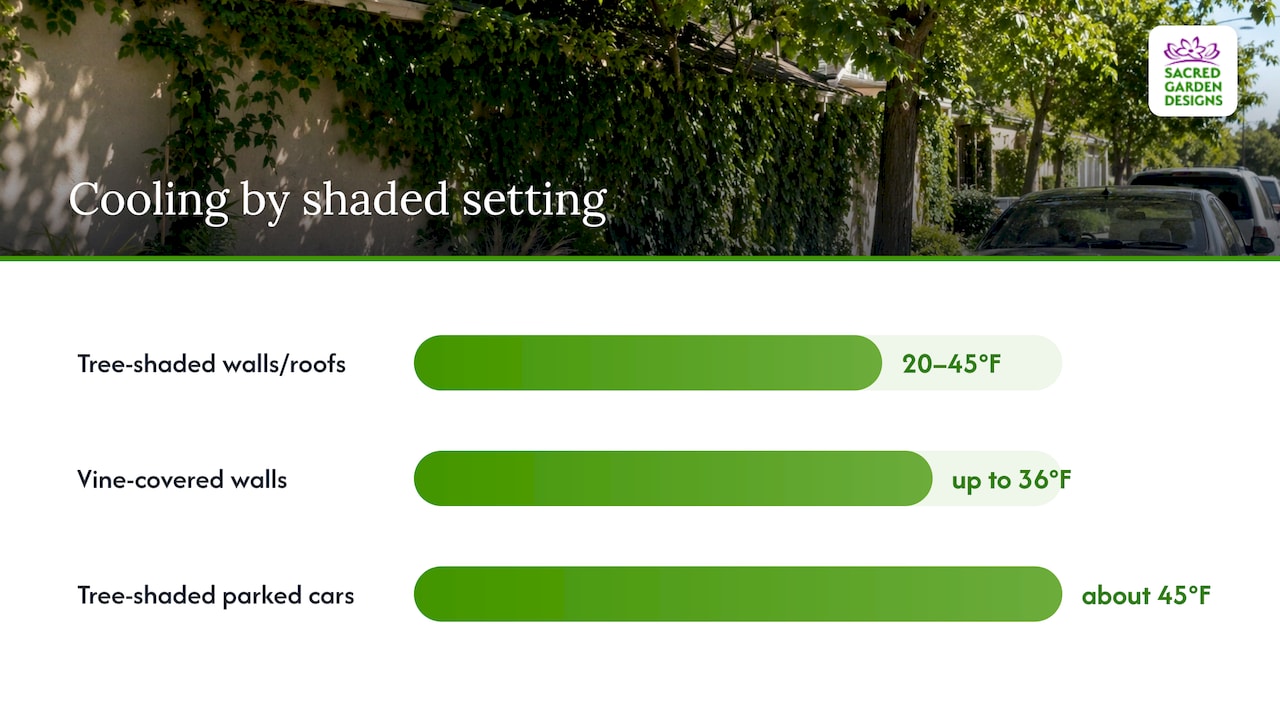
The EPA’s compendium on trees and vegetation reports that a multi-month study measured maximum surface temperature reductions of 20 to 45°F (11 to 25°C) on walls and roofs at two buildings shaded by trees. Another study found vines reduced wall temperatures by up to 36°F (20°C), and a third found tree shade lowered temperatures inside parked cars by about 45°F (25°C). You can read these in the EPA compendium chapter on trees and vegetation.
The same chapter explains why. In summer, generally 10 to 30 percent of the sun’s energy reaches the ground below a tree canopy. The rest is absorbed by leaves for photosynthesis or reflected back to the atmosphere.
Two cautions help you read these figures. They describe surface temperatures and shaded conditions, not the air temperature across a whole city. And a surface that stays cool also radiates less heat onto you, your windows and your cooling system, which is where the household benefit comes from.
For a closer look at tree evidence for both planners and homeowners, see our guide on using trees to cut urban heat.
The landscape features that do the work
Shade trees
Trees are the single most effective feature because they intercept sunlight before it reaches a roof, wall or pavement. The EPA lists trees, green roofs and vegetation as heat-reduction tools that work by shading building surfaces, deflecting solar radiation and releasing moisture, as described on its heat island reduction page.
Trees also pay back beyond comfort. The same EPA page cites a Louisville study finding that the city’s trees provide over $389 million in annual benefits through stormwater interception, temperature moderation, energy savings, higher property values, air quality and carbon mitigation.
Groundcovers, shrubs and grasses
The EPA recommends adding native, drought-tolerant shade trees along with smaller plants such as shrubs, grasses and groundcover, including in and around roadside planters. At home, that translates to replacing bare soil, rock and thirsty turf with layered planting. Our guide to drought-tolerant groundcovers shows how to build that layer so it looks full rather than sparse.
Vines and green walls
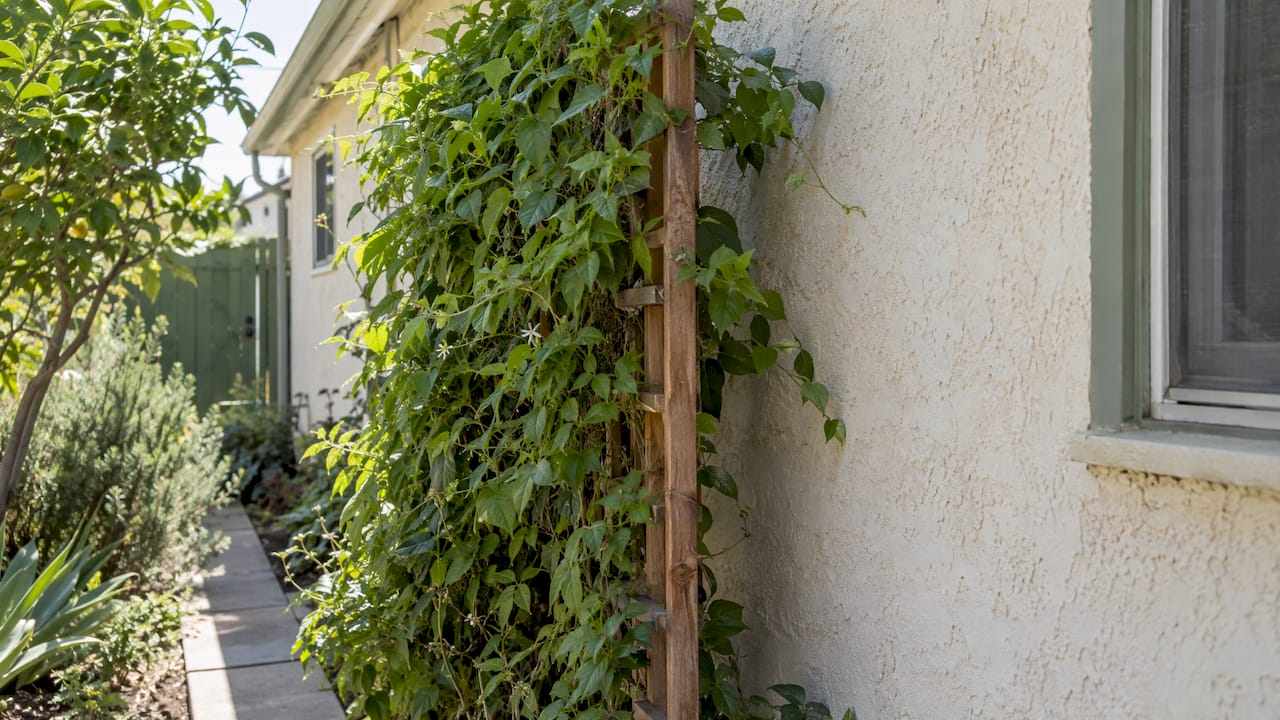
A trellis with a climbing plant on a sun-baked wall is one of the cheapest cooling moves available. The EPA study noted above found vines reduced wall temperatures by up to 36°F (20°C). Place the trellis a short distance off the wall so air can move behind it, and choose a vine suited to your climate and your maintenance appetite.
Green roofs
The EPA calls green roofs an effective heat-island reduction strategy with both direct and ambient cooling effects. It also notes that many communities offer incentives, with the District of Columbia’s RiverSmart Rooftops rebate and Philadelphia’s Green Roof Tax Credit as examples, all described on the EPA heat island page. Check your own city’s programs, since they vary.
Planted surfaces in place of pavement
Every square foot of bare concrete you replace with planting, permeable surfacing or shaded patio changes how that spot behaves at 4 p.m. in August. If you are redoing a patio, consider how much of it needs to be hardscape, and shade the rest. Our decomposed granite patio guide covers one durable option, and our stormwater management landscaping page shows how planted areas can also catch and soak up runoff.
Where to plant trees for the most cooling
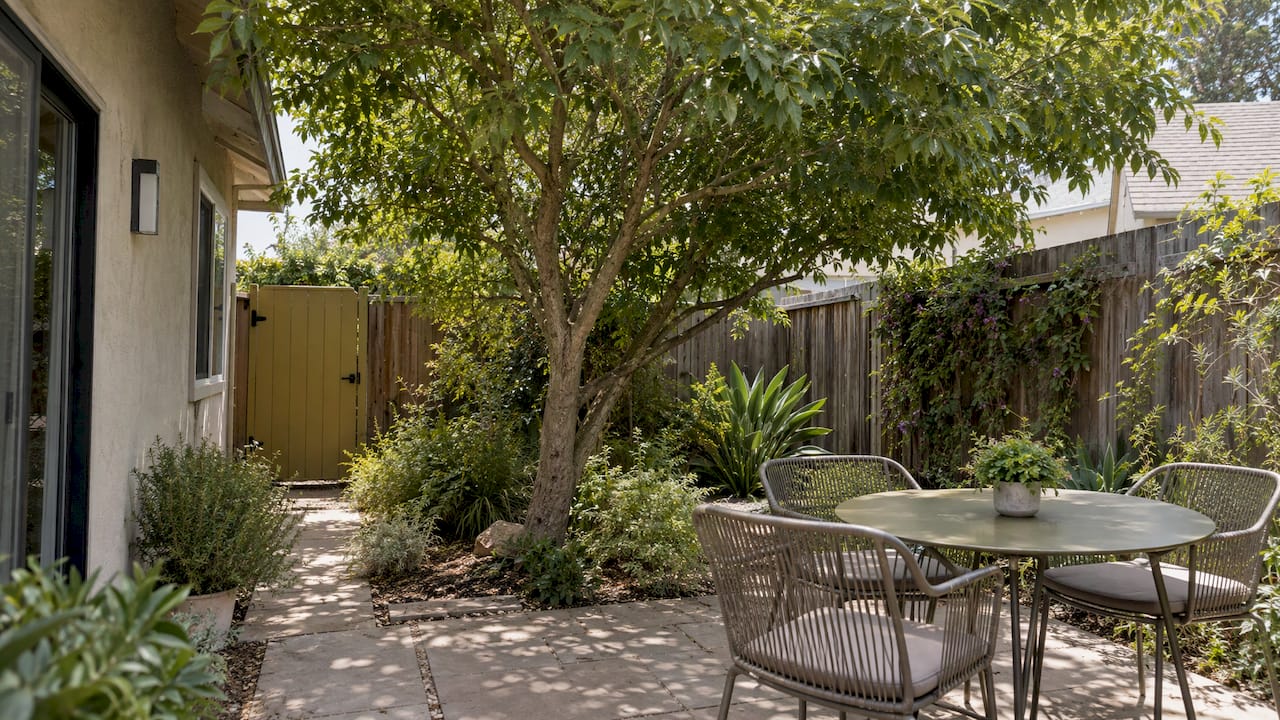
Placement matters as much as the species. The EPA’s compendium reports that researchers have found planting deciduous trees to the west is typically the most effective for cooling a building, especially when they shade windows and part of the roof. Shading the east side also reduces air-conditioning demand.
The south side takes more thought. Trees to the south generally lower summer energy demand, but they can work against an efficiency plan if they block useful winter sun without providing much summer shade. Deciduous trees that drop their leaves are the usual answer, because they let low winter light through.
A quick placement checklist:
- West wall and west windows: the first priority. Afternoon sun is the hardest to cool.
- East wall: the second priority, and often easier to fit.
- Paved areas: driveways, patios and walkways that bake in the afternoon. Shade them so they stop reradiating heat.
- Outdoor air conditioning equipment: shade helps, but give it room to breathe. One HVAC guide covers keeping plantings clear of AC units so airflow is not blocked.
- Roof and solar panels: a tree that shades a roof can also shade solar panels. Read about solar panel shading issues before you plant on the sunny side of a roof with panels.
If you have a small lot in Southern California, our guide to the best shade trees for small yards in Los Angeles narrows the list by size and root behavior.
Choosing plants that cool without raising your water bill
The common objection is fair: more plants should mean more water. It does not have to, if you choose and arrange them well.
The EPA advises considering native species, projected height and canopy spread, root size and growth habit, sun, soil, water and temperature needs, and allergens and emissions that can contribute to ground-level ozone. Read that as a checklist for any planting plan, drawn from the EPA compendium.
Here is how we apply it in water-wise design:
- Match the plant to the place. A plant adapted to your rainfall and soil needs far less help once established. Our drought-tolerant plants for Los Angeles list is a starting point for that region.
- Layer the planting. A tree, a mid-height shrub layer and a groundcover shade each other and the soil. Shaded soil loses less moisture.
- Mulch every bare patch. Mulch protects soil and keeps roots cooler. Our guide to dry shade plants and mulch timing explains when to lay it down before summer.
- Swap the lawn where it does not earn its place. Use turf only where people actually play or sit. See how to match lawn alternatives to play, pets and shade.
- Water at the root. Drip irrigation delivers water to the plant rather than the pavement. Our drip irrigation for raised beds article shows how one is set up, and the same logic applies to trees and shrubs.
Our plant-forward drought-tolerant landscaping guide walks through the design approach in more detail.
Give new trees a good start
Trees need adequate soil volume and access to water, and the EPA notes that maintenance requirements and costs generally decline once a tree is established. The first two or three seasons are when care counts most. In dry years, drought tree care keeps the investment alive, and a well-timed prune keeps the canopy healthy. Our pruning guide for water-wise gardens explains timing.
Cooling and fire safety: plan both together
If you live in or near wildfire country, a cooler landscape must also be a safer one. The EPA states that trees and vegetation around buildings can increase fire risk. It points communities in fire-prone areas to the National Interagency Fire Center and the USDA Forest Service for guidance on tree selection and placement, per the EPA compendium.
Practical habits that follow from this:
- Keep canopies and dense shrubs from touching the structure.
- Space plantings so fire cannot move easily from one to the next, and remove dead material.
- Choose well-watered, less flammable plants close to the house and put larger trees farther out.
- Follow your local fire authority’s clearance rules. In Los Angeles, see our summary of brush clearance requirements.
The same principle applies to green roofs. The EPA says dry plants can be a fire hazard and lists ways to reduce the risk: avoid grasses and plants that dry out in summer, use fire-resistant plants such as sedums, use a growing medium low in organic material, and build 2-foot (0.6 m) fire breaks of concrete or gravel at 130-foot (40 m) intervals. Those details are in the EPA green roofs chapter. The chapter adds that some green roofs need irrigation, sometimes to cut fire risk or boost evaporative cooling, and that almost all intensive green roofs need irrigation systems.
Also keep trees clear of utilities, sidewalks and other infrastructure when you choose a planting spot. A tree that has to be cut back hard in ten years is a poor shade tree.
Scaling up: yards, campuses and commercial sites
One shaded yard helps the household. Many shaded yards, lots and schoolyards change a neighborhood.
The EPA suggests that communities integrate small green infrastructure into grassy or barren areas, vacant lots and street rights-of-way. It also says shading pavement in parking lots and on streets can be an effective way to cool a community, and that shade trees can benefit playgrounds, schoolyards, ball fields and similar open spaces.
For property managers, the parking lot and building perimeter are usually the largest heat-holding areas. Our commercial drought landscaping guide covers how to plan these with lower irrigation demand, and our campus landscaping ideas apply the same logic to schools and institutions.
A simple order of work for a site of any size:
- Map the hottest hard surfaces and the walls that face west and east.
- Decide where trees can go without hitting utilities or blocking needed sun.
- Replace the least useful pavement or turf with planting and mulch.
- Set up efficient irrigation before the first plant goes in.
- Schedule maintenance for the first seasons, when plants are establishing.
Our perspective
We have designed water-wise and climate-resilient landscapes for more than 25 years, and the same lesson keeps returning: cooling and water saving are not opposing goals. They are the same design done well.
The yards that heat up most are rarely the ones with too many plants. They are the ones with exposed walls, bare paving and a lawn doing a job a shaded groundcover could do better. When we start with shade, soil cover and efficient irrigation, a property gets cooler and uses less water at the same time.
We also treat fire safety as part of the design, not an afterthought. In Los Angeles and similar regions, we place and space plants with defensible space in mind, so a cooling landscape does not become a liability.
Finally, we think a cool landscape should be a place people want to be. Shade you can sit under, plants you can touch and a garden that feels calm are what keep a landscape cared for for decades.
Denise Buchanan
Let us plan your cooler landscape
If you would rather not map sun, shade, soil and irrigation yourself, our design team can do it with you. Our published landscape design services start at $1,500 for yards under 5,000 square feet, and a full landscape design is $2,500. We also offer an initial landscape consultation, and a water-wise site analysis is a good place to begin if you want to understand your site before committing to a plan.

From tree selection and irrigation design to patios, slope stabilization and ongoing garden maintenance, you can see everything we build and care for on our services page.
FAQ
Can a small yard really help with the urban heat island effect?
Yes, at the scale of your own property. Shade on west and east walls, planted ground and fewer exposed hard surfaces lower local surface temperatures, as the EPA’s measurements on shaded walls and roofs show. Across a neighborhood, many small yards add up.
Which side of the house should I shade first?
Start with the west, especially windows and part of the roof, using deciduous trees. The east side is next. On the south, plant carefully so you do not block winter sun you want.
Will adding plants increase my water use?
Not if you choose plants adapted to your climate, mulch bare soil, layer plantings and water at the root with drip irrigation. Trees also need less maintenance once established. Replacing thirsty turf that nobody uses is often the first step.
Are cooling landscapes a fire risk?
They can be if planted too close to buildings or left dry and cluttered. The EPA points fire-prone communities to the National Interagency Fire Center and the USDA Forest Service for guidance. Follow your local fire authority’s clearance rules, and keep canopies off the structure.
Do green roofs and green walls work for homes?
The EPA calls green roofs an effective strategy, and vines have cooled walls in studies. Roofs need structural, irrigation and fire-safety planning, so involve a qualified professional. A trellis with a climbing plant is a simpler place to begin.
Sources
- Reduce Heat Islands, US EPA
- What Are Heat Islands? US EPA
- Reducing Urban Heat Islands: Compendium of Strategies, Trees and Vegetation, US EPA
- Reducing Urban Heat Islands: Compendium of Strategies, Green Roofs, US EPA
- Keep 5 to 10 ft clearance around AC units
- Solar panel shading issues