Aromatic herbs are fragrant, oil-rich plants grown for their scent and flavor, and eight stand out as reliable starting points: basil, rosemary, thyme, mint, lavender, oregano, sage, and lemon balm. Each brings something different to the table, from finishing a pasta dish to filling a garden path with scent. Together they cover the three reasons most people grow them: cooking, aromatherapy, and garden design.
TL;DR:
- Only hardy herbs like rosemary, lavender, sage, and thyme can often survive outdoors year-round with minimal protection, unlike tender herbs such as basil and lemon balm.
- Water needs differ: woody herbs prefer dry, well-drained soil and infrequent watering, while tender leafy herbs require consistent moisture and more frequent watering.
- Harvesting should occur just before flowering for maximum aroma, and drying or freezing herbs preserves their scent and flavor effectively.
- Incorporating herbs into a water-wise garden design involves planting drought-tolerant herbs in low-water zones and grouping plants by water needs for better care.
- Homemade herb-infused oils require refrigeration or acidification to prevent botulism risk and should be used within days, not stored at room temperature.
Table of Contents
- Top Aromatic Herbs to Grow by Use and Hardiness
- How to Grow and Care for Aromatic Herbs Season to Season
- Harvesting and Preserving Aromatic Herbs Safely
- Everyday Uses: Cooking, Aromatherapy, and Simple Crafts
- Designing an Aromatic Herb Garden with Water-Wise Principles
- Why Sensory Gardening Rewards Patience
- Bring Your Aromatic Herb Garden to Life
- Sources
- FAQ
Top Aromatic Herbs to Grow by Use and Hardiness
Aromatic culinary herbs come from leafy or soft-stemmed plant parts, distinct from spices, which come from seeds, bark, or roots, according to a UNLV faculty overview of herbs and spices. Knowing which category an herb falls into helps explain why some wilt in a hot pan while others thrive there.
Finishing herbs work best added at the end of cooking, since heat destroys their delicate oils quickly. Long-cook herbs hold their flavor through braises and roasts. Aromatic perennials return year after year with sturdy, woody stems, while tender annuals need replanting each season.
- Basil: A tender annual prized for pesto and Italian dishes, it wants full sun, rich soil, and regular pinching to stay bushy; it dies at first frost and cannot overwinter outdoors.
- Rosemary: A woody Mediterranean perennial suited to roasts and long braises, it prefers sandy, well-drained soil and tolerates drought once established.
- Thyme: A low, spreading perennial that works as a groundcover and a seasoning for stews, it needs full sun and lean soil to avoid rot.
- Mint: A vigorous, spreading perennial best confined to containers, since it will overrun garden beds; it tolerates partial shade and consistent moisture.
- Lavender: A woody perennial grown for scent, crafts, and pollinator gardens, it demands sharp drainage and struggles in humid or soggy soil.
- Oregano: A hardy, spreading perennial central to Mediterranean cooking, it grows well in poor soil and full sun with minimal fuss.
- Sage: A shrubby perennial with a savory, slightly bitter flavor, it favors dry soil and benefits from a hard pruning each spring.
- Lemon balm: A fast-spreading perennial with a citrusy scent, useful in teas and sachets, it can become invasive if not contained.
Tender annuals like basil need indoor cuttings or fresh seed each year in colder climates, while the woody perennials, rosemary, lavender, sage, and thyme, can often overwinter outdoors with mulch protection in milder zones or move indoors as potted plants where winters run harsh.
How to Grow and Care for Aromatic Herbs Season to Season
Most aromatic herbs split into two camps: Mediterranean woody types that want dry, lean soil and hours of direct sun, and tender leafy annuals that prefer richer soil and consistent moisture. Mixing the two in the same bed usually ends badly, since one group will always be overwatered or underfed.
- Choose a site with at least six hours of sun for woody herbs like rosemary and lavender; leafy herbs such as basil and mint tolerate a bit more shade.
- Use containers with drainage holes and a well-draining potting mix rather than garden soil, which compacts and holds too much water.
- Water woody perennials only when the top inch of soil dries out, and water tender annuals more frequently to prevent wilting.
- Pinch growing tips regularly to encourage bushier growth and delay flowering, which shifts energy away from leaf and oil production.
- Take stem cuttings from rosemary, sage, or mint in spring or early summer to propagate new plants without buying seed.
- Watch for aphids, spider mites, and powdery mildew, and manage them early with pruning for airflow and, when needed, insecticidal soap.
- Bring tender potted herbs indoors before the first frost, and mulch woody perennials left outdoors to protect their roots through winter.
Pro Tip: Group herbs by water needs, not just by size, so a thirsty basil plant never shares a pot with a drought-tolerant rosemary.
Harvesting and Preserving Aromatic Herbs Safely
Timing matters as much as technique. Harvesting in the late morning, after dew has dried but before the heat of the day sets in, preserves more of the essential oils that give herbs their scent and flavor, according to NC State Extension’s guide to harvesting and preserving herbs. Aromatic intensity peaks just before flower buds open, so harvesting at that stage yields the strongest flavor.
- Air-dry bundled stems in a warm, dark, well-ventilated space for one to two weeks, or use a low oven or dehydrator for faster results.
- Freeze chopped herbs in oil or water inside ice cube trays for portioned, long-lasting storage.
- Store dried herbs in airtight containers away from light and heat, and substitute one part dried herb for three parts fresh in recipes.
Approximately three thousand essential oils are recognized, with a subset considered safe by regulatory authorities for food use, per the UNLV herbs and spices overview, illustrating how only a fraction of these oils are used in food products.
Infused oils deserve their own caution. University testing shows that herb-in-oil mixtures left at room temperature can support the growth of Clostridium botulinum, according to Clemson Extension’s factsheet on herb-infused oils. Safe infusions require acidification or refrigeration, and any homemade version should be refrigerated and used within days rather than stored on a shelf.
Everyday Uses: Cooking, Aromatherapy, and Simple Crafts
Delicate herbs like basil and mint lose flavor fast under heat, so add them in the final minutes of cooking; hardy herbs like rosemary, thyme, and sage hold up well through long simmers and roasts. For cold dishes, extension guidance recommends mixing fresh herbs in several hours ahead so flavors have time to develop.
Aromatherapy uses are more mixed. A review of clinical evidence found some moderate-confidence benefits for stress and pain in specific settings, but essential oils are not regulated as drugs, so dosing and quality vary widely. Diluting oils before topical use, avoiding ingestion, and checking with a doctor for hormone-sensitive conditions are reasonable precautions before diffusing or applying anything concentrated.
- Pair basil with tomato and garlic, rosemary with roasted potatoes, and sage with butter-based sauces.
- Dry lavender and lemon balm for sachets, potpourri, or simple herb wreaths.
- Plant a scent path near a walkway using thyme, mint, or lavender so footsteps release fragrance.
Designing an Aromatic Herb Garden with Water-Wise Principles
Placement changes how much benefit a garden gives back. Herbs planted near doors, windows, or seating areas release their scent every time someone brushes past, turning a walkway into a sensory experience rather than just a planting bed.
- Layer low-growing thyme as a groundcover beneath taller lavender and rosemary for structure that holds up through most of the year.
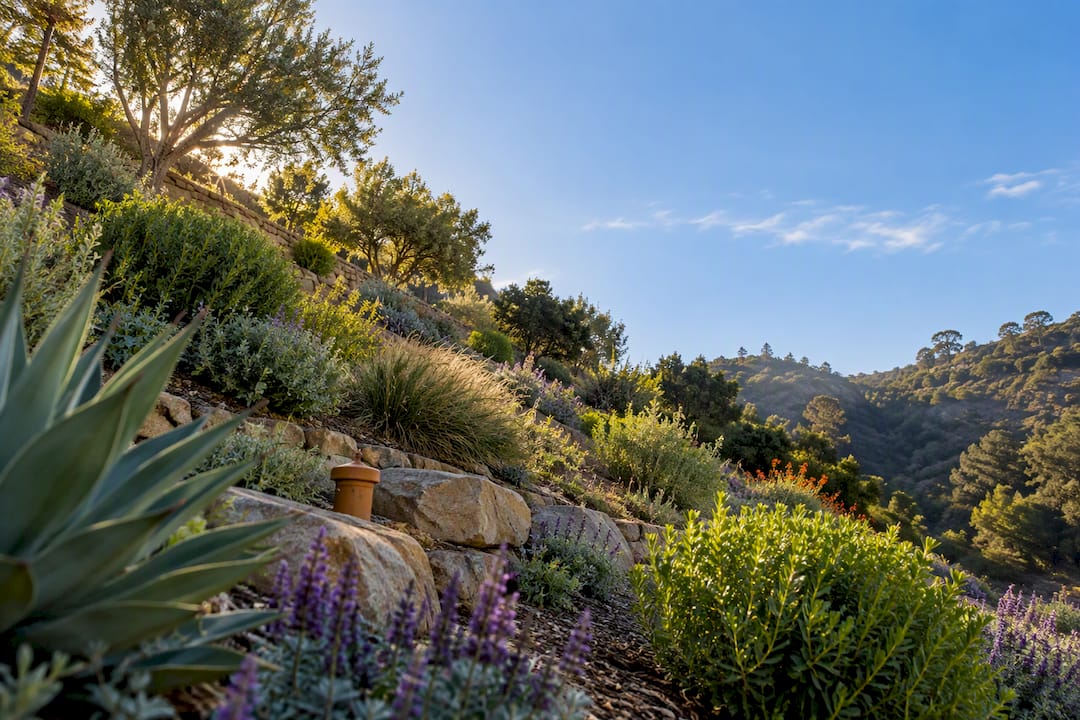
- Use drought-tolerant perennials like lavender, rosemary, sage, and oregano in dry, low-water zones instead of thirstier ornamentals.
- Keep spreading herbs like mint in containers set within the border so their roots stay contained.
A company with extensive experience in water-wise landscaping offers aromatic perennials that fit naturally into sustainable garden designs. Readers who want ideas for pairing herbs with other low-maintenance perennials can also look at guidance on perennial planting design for longer-term layout strategies, or browse the Sacred Garden Designs blog for more examples of edible and sensory landscaping.
Why Sensory Gardening Rewards Patience
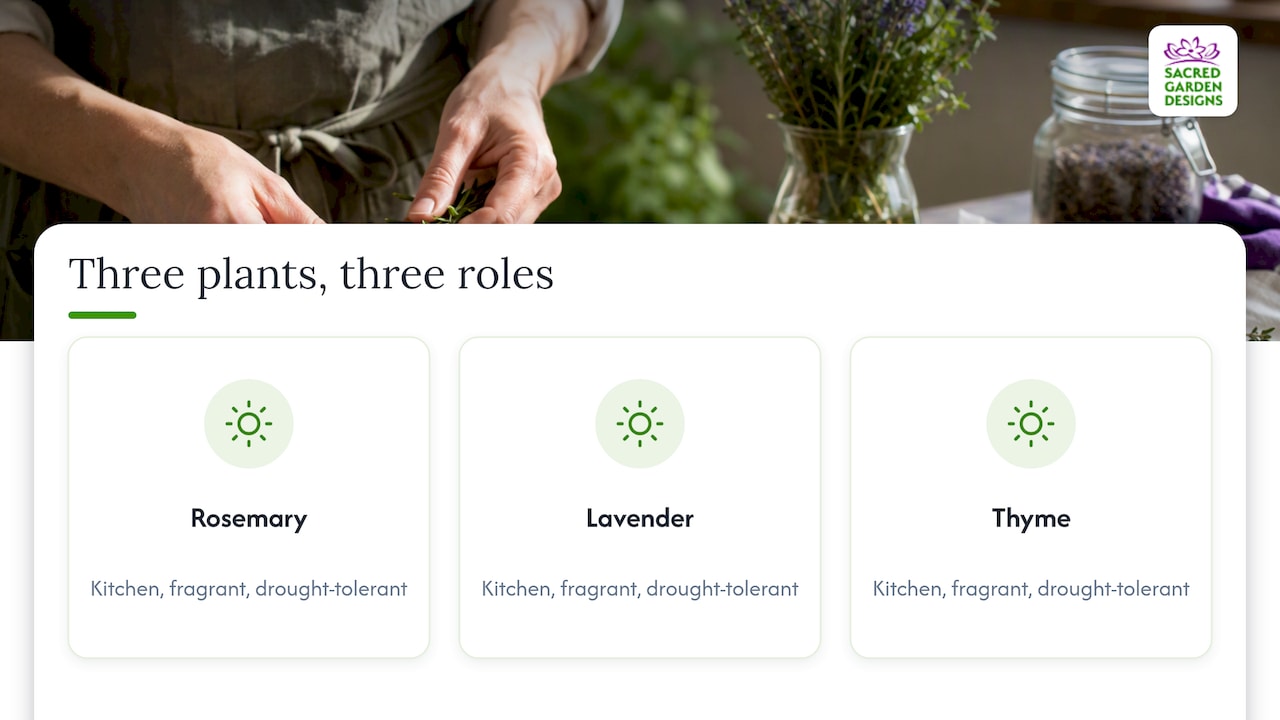
Most people overthink starting an herb garden, when the real trick is picking three plants that cover different jobs: one for the kitchen, one for scent, and one that survives drought without complaint. Rosemary, lavender, and thyme cover all three, and none of them demand much once established.
A garden built for scent changes how a space feels, not just how it looks, and that shift is easy to underestimate until you have walked past lavender in bloom.
— Denise Buchanan
Bring Your Aromatic Herb Garden to Life
Turning a handful of pots into a full sensory garden takes planning, especially when water use matters. Sacred Garden Designs offers sustainable landscape design and installation, along with hands-on classes and workshops for readers who want to learn the process themselves.

For a full design built around your yard, start with landscape design services tailored to spaces under 5,000 square feet or larger properties alike.
Sources
- Harvesting and preserving herbs for the home gardener (NC State Extension)
- Herb-infused oils safety (Clemson Extension HGIC factsheet)
This article is general information, not a substitute for advice from a qualified doctor. Consult a qualified healthcare professional about your own circumstances before acting on anything here.
FAQ
Which herbs are aromatic?
Basil, rosemary, thyme, mint, lavender, oregano, sage, and lemon balm all count as aromatic herbs, since their leaves and stems carry concentrated essential oils. These oils give each herb its distinct scent and flavor, whether used fresh in cooking or dried for crafts.
What are 20 common herbs?
Beyond the eight highlighted here, other widely grown herbs include parsley, cilantro, dill, chives, tarragon, marjoram, fennel, bay laurel, chervil, savory, and lemongrass. Home gardeners often mix a handful of these with staples like basil and thyme to cover a broader range of dishes.
What spices are aromatics?
Spices differ from herbs because they come from seeds, bark, roots, or dried berries rather than leaves, according to the UNLV overview of herbs and spices. Common aromatic spices include cinnamon, cloves, cumin, and cardamom, all valued for concentrated scent compounds similar to those found in leafy herbs.
What are the strongest smelling herbs?
Lavender, rosemary, mint, and sage tend to have some of the most noticeable scents among common garden herbs, largely due to their essential oil content. Chemotype and growing conditions can shift how strong that scent is, since factors like drought stress can intensify oil concentration in woody Mediterranean herbs.
Is it safe to make herb-infused oils at home?
Homemade herb-infused oils carry a real botulism risk if left at room temperature, since unrefrigerated oil can allow Clostridium botulinum to grow, according to Clemson Extension’s herb-infused oil guidance. Safe preparation requires acidification or refrigeration, with any homemade batch used within a few days.