Ten groundcovers earn their keep in dry landscapes: creeping thyme, ice plant, Angelina sedum, and moss phlox for full sun, and periwinkle, bearberry cotoneaster, and shade-tolerant fescues where the light is dimmer. Every one of them still needs regular watering for the first one to two years while roots establish. Once rooted in, they cut supplemental watering dramatically, choke out weeds, and hold soil on slopes that used to wash out every winter.
TL;DR:
- Drought-tolerant groundcovers still require regular watering for the first one to two years to establish deep roots and prevent failure.
- Plants like creeping thyme, ice plant, and Angelina sedum excel in full sun, while bearberry cotoneaster and periwinkle thrive in shaded or dry shade conditions.
- Proper site assessment, including sun exposure, soil type, slope, and foot traffic, is crucial for choosing the right plant and ensuring long-term success.
- Deep, targeted irrigation such as drip systems combined with hydrozoning significantly reduces water waste and improves groundcover health.
- Avoid planting at full mature spacing immediately; slightly tighter spacing accelerates coverage and reduces weed invasion during establishment.
Table of Contents
- What Makes a Groundcover Drought Tolerant
- Best Drought Tolerant Groundcovers by Sun Exposure
- How to Choose the Right Groundcover for Your Site
- Planting and Establishing Groundcovers the Right Way
- Keeping Low-Water Groundcovers Healthy Long Term
- Design Patterns That Make Drought-Smart Yards Look Lush
- What 25 Years of Installations Have Taught Us About Lush, Dry Gardens
- Consider professional design services for your water-wise yard
- Sources
- FAQ
What Makes a Groundcover Drought Tolerant
A groundcover earns the label “drought tolerant” by having physical traits such as a root system built to chase deep or widespread moisture, foliage that resists water loss, and a growth habit that spreads instead of clumping. Succulent leaves like those on ice plant store water directly in the tissue. Fine, needle-like foliage like thyme or fescue reduces surface area exposed to sun and wind. Rhizomes and stolons let a plant colonize ground horizontally rather than fighting for a single deep taproot, which is exactly why these species double as erosion control on slopes.
Most plants that fill this role stay under 24 inches tall and spread readily across medians, slopes, and parking strips once they take hold, according to Colorado State University Extension. That low profile matters for two reasons: it keeps the plant’s own water demand down, and it creates a living mat that shades soil and suppresses weed seeds before they germinate.
Here’s the distinction most homeowners miss: “drought tolerant” is not the same as “drought resistant.” Drought-tolerant plants can survive extended dry periods without irrigation, but they still require occasional deep watering during prolonged dry stretches, per Gardenia’s guide to low-water groundcovers. Nothing in this category is a “plant it and forget it forever” solution. It’s a “plant it, water it right for two years, then mostly walk away” solution.
Best Drought Tolerant Groundcovers by Sun Exposure
The right groundcover depends entirely on how much sun a spot gets and what job you need it to do, whether that’s replacing a strip of thirsty lawn, holding a slope together, or filling dry shade under a tree canopy.
Full sun picks
Creeping thyme (Thymus spp.) forms a fragrant, fine-textured mat 2 to 4 inches tall that spreads 12 to 18 inches wide. It tolerates foot traffic, blooms in shades of purple and pink that pollinators love, and thrives in lean, fast-draining soil. Once established, it needs only occasional deep watering. Use it between pavers, as a lawn substitute in low-traffic zones, or cascading over rock garden edges.
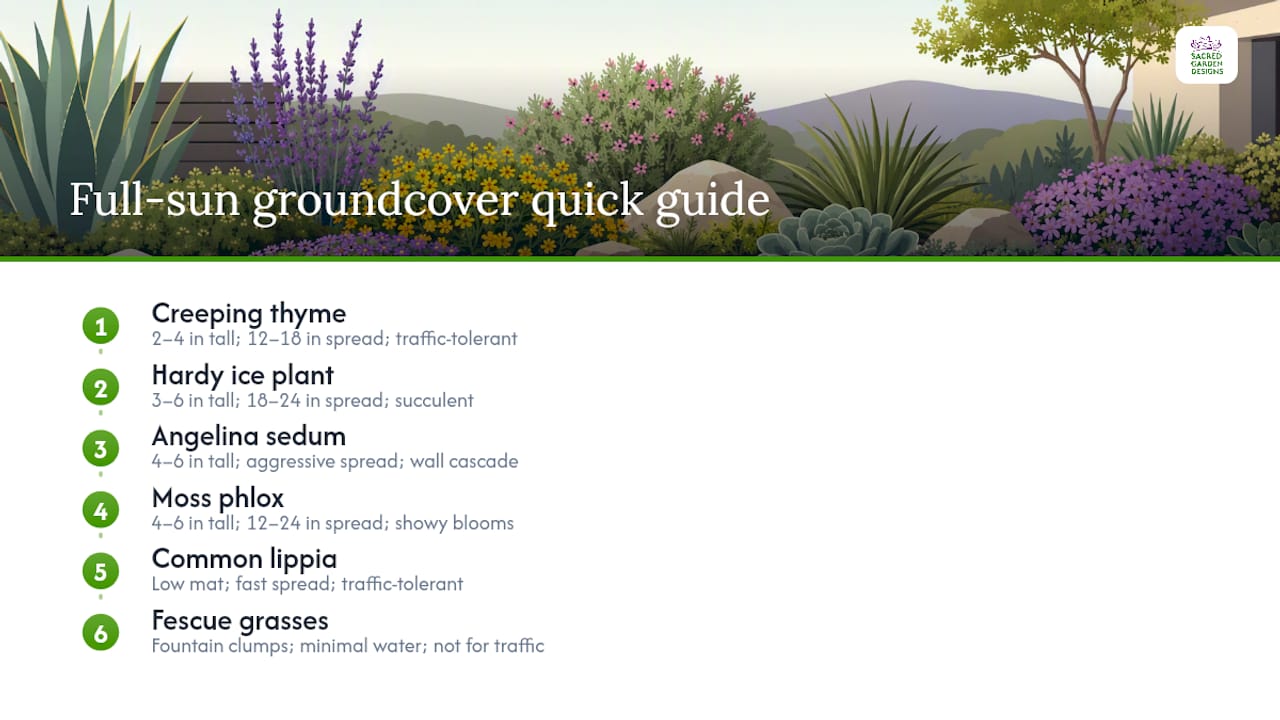
Hardy ice plant (Delosperma cooperi) is one of the toughest sun performers on this list. It grows 3 to 6 inches tall, spreads 18 to 24 inches, and produces magenta daisy-like flowers from late spring through fall. Its succulent leaves store water for extended dry spells, and it prefers gritty, well-drained soil over rich garden loam. This is a rock garden and slope staple that asks for almost nothing after year two.
Angelina sedum (Sedum rupestre ‘Angelina’) brings chartreuse, needle-like foliage that turns amber orange in cold weather, adding four-season color most drought plants can’t match. It stays low, around 4 to 6 inches, and spreads aggressively by trailing stems, making it excellent for cascading over walls or filling gaps in a rock garden. Established plants tolerate very low water and neglect equally well.
Moss phlox (Phlox subulata) puts on one of the showiest spring displays of any groundcover, smothering itself in pink, purple, or white blooms for several weeks. It forms a dense, needle-leaved mat 4 to 6 inches tall and spreads 12 to 24 inches. It wants well-drained soil and full sun, and it’s a strong pollinator draw when little else is blooming.
Common lippia (Phyla nodiflora, also called carpetweed) is an underused option for hot, dry regions. It handles foot traffic well, tolerates poor soil, and produces small lavender flower clusters that bring in bees. It spreads fast by rooting stems, which makes it a legitimate lawn substitute where a truly walkable, mowable surface matters more than ornamental flair.
Fescue grasses (Festuca spp.) deserve a mention here too, since fine ornamental fescues like blue fescue handle both full sun and part shade with minimal water once rooted. They form neat, fountain-like clumps rather than a flat mat, which makes them better for texture and structure than for foot traffic.
Part shade picks
Bearberry cotoneaster (Cotoneaster dammeri) is a woody, evergreen groundcover that spreads 6 to 8 feet wide while staying under a foot tall, arching over slopes and retaining walls. Small white flowers in spring give way to bright red berries that persist into winter and feed birds. It adapts to both full sun and part shade, tolerates poor soil, and needs very little water once its roots are down. This is one of the best choices for large-scale slope stabilization where you want serious spread from a handful of plants.
Prostrate ceanothus (Ceanothus spp., creeping cultivars) is a California native shrub trained low and wide by breeders into a genuine groundcover. It produces clouds of blue flowers in spring that pollinators swarm, tolerates poor and rocky soil, and needs almost no water once mature. It does best with part sun to full sun and sharp drainage, and it resents regular irrigation more than almost anything else on this list.
Dry shade picks
Periwinkle (Vinca minor) is the classic answer for dry shade under trees where grass gives up. It forms a glossy, evergreen carpet 4 to 6 inches tall, spreads by rooting stems, and produces lavender blue flowers in spring. It tolerates root competition from mature trees and needs only occasional water once established, though it can spread aggressively enough to need edging.
Low-growing coyote brush (Baccharis pilularis cultivars) is a California native shrub bred into flat, spreading forms that handle part shade, coastal fog, and dry, poor soil with equal ease. It grows 1 to 2 feet tall and spreads widely, making it a workhorse for large native or naturalized plantings where a tidy, formal look isn’t the goal.
Widely used taxa like these appear again and again across regional groundcover recommendations because they perform reliably across a range of U.S. climates, not just in one narrow zone.
How to Choose the Right Groundcover for Your Site
Picking a plant off a list without checking your own yard is the single most common way these projects fail. Match the plant to the site with these steps.
- Track your sun exposure honestly. Watch a spot for a full day, not just a quick glance at noon. “Part shade” for six hours of morning sun behaves very differently than six hours of harsh afternoon sun.
- Dig into your soil texture. Squeeze a handful of moist soil. If it holds a ball and feels sticky, you have clay, which drains slowly and needs less frequent watering. If it crumbles and drains fast, you have sand, which needs more frequent, lighter watering, according to CSU Extension’s water-wise design guidance.
- Assess slope and erosion risk. Anything steeper than a gentle grade needs a rhizome or stolon spreader like bearberry cotoneaster or creeping thyme, not a clumping plant that leaves bare soil between crowns.
- Decide how much foot traffic the area gets. Thyme and lippia tolerate occasional footsteps; ice plant and moss phlox do not.
- Confirm your hardiness zone. A plant rated for zone 7 will struggle or die in a zone 4 winter, no matter how drought tolerant it is on paper.
- Group plants by water need, a practice called hydrozoning. Put your lowest-water plants (ice plant, sedum, ceanothus) on one irrigation zone and anything needing more frequent water on a separate line, so a single sprinkler schedule doesn’t overwater the toughest plants or starve the thirstier ones.
That last point is worth dwelling on. The EPA’s WaterSense program names hydrozoning and turf reduction as two of the most effective strategies for cutting outdoor water use, and it’s the step most DIY plantings skip entirely. You can buy every plant on this list and still waste water if they’re all sharing one sprinkler valve with your lawn; for professional outdoor lighting that complements your landscaping and irrigation setup, consider experts in permanent lighting.
Planting and Establishing Groundcovers the Right Way
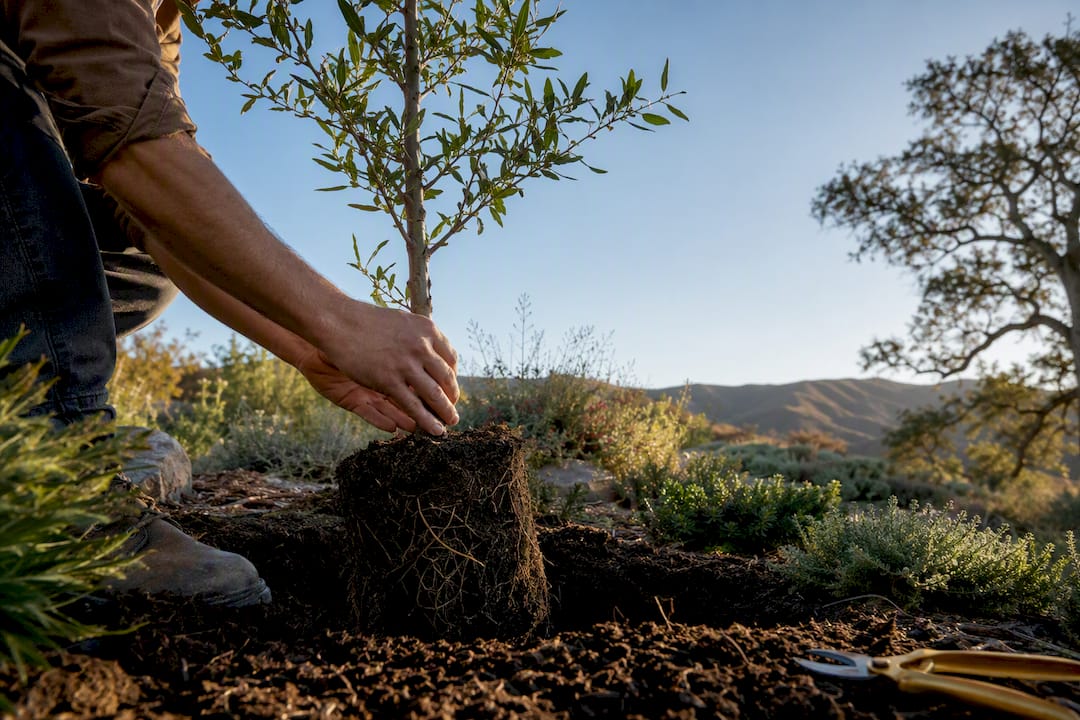
Timing and technique in the first season decide whether a groundcover thrives or dies before it ever gets to be drought tolerant. Plant in spring or fall in most climates, when temperatures are mild and rain does some of the work for you. Summer planting in hot regions puts unnecessary stress on new roots before they’ve spread far enough to find moisture on their own.
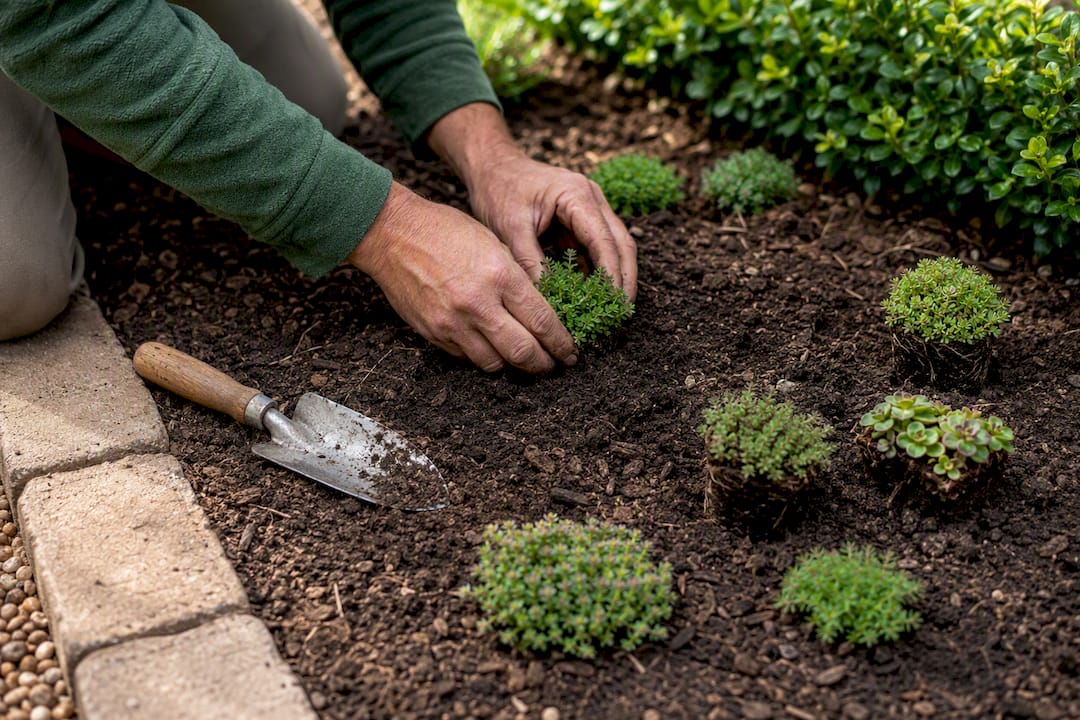
Resist the urge to heavily amend the planting hole with rich compost for true drought-adapted species. Lean, fast-draining soil is what plants like ice plant, sedum, and thyme evolved for, and rich, water-retentive soil can actually encourage rot at the crown. Space plants according to their mature spread, not their nursery pot size. Crowding them tighter “for faster coverage” usually just means more plants competing for the same limited root zone.
Water new plantings deeply and consistently for the first several weeks, approximating about an inch of water per week, tapering the frequency (not necessarily the depth) over the next seasons as roots establish, following the general establishment guidance from CSU Extension. Check soil moisture two inches down before watering again rather than watering on a fixed calendar. Wilted or dull-looking foliage in the morning, before the day heats up, is a real sign of drought stress worth acting on.
- Apply 2 to 3 inches of organic mulch around new plantings to hold moisture and block weed seeds.
- Hand-pull weeds during the first year rather than reaching for herbicide near young roots.
- Taper supplemental watering only after you see active new growth, not just survival.
- Expect full establishment, and the low-water payoff that comes with it, to take one to two full growing seasons.
Pro Tip: Test soil moisture with a simple screwdriver. If it slides in easily two inches deep, hold off watering. If it meets resistance, it’s time.
Keeping Low-Water Groundcovers Healthy Long Term
Drip irrigation beats spray heads for almost every groundcover on this list, since it delivers water at the root zone with far less evaporation loss. Micro-spray heads work for denser mats like thyme or lippia that cover ground completely, while individual drip emitters suit woodier spreaders like cotoneaster and ceanothus. Set your irrigation controller to adjust seasonally: full establishment watering in the first year, then a sharp taper heading into year two, then occasional deep watering during heat waves only.
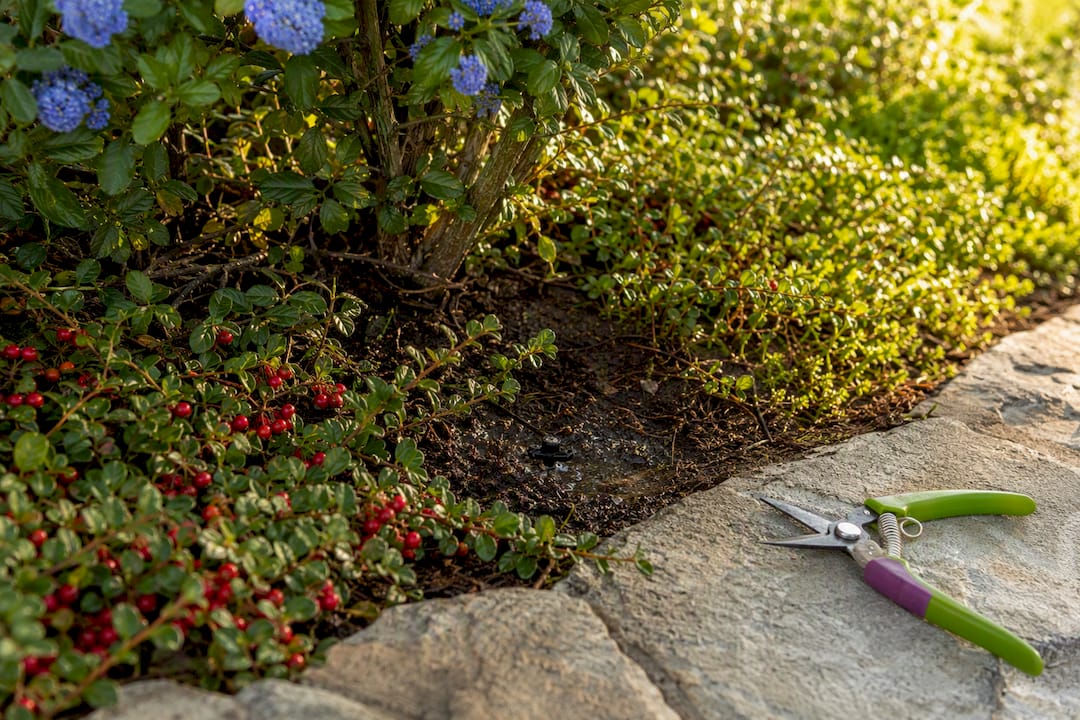
Fertilizer needs stay minimal for true drought-adapted groundcovers. A light application of compost or slow-release fertilizer once a year, in spring, is usually plenty. Overfeeding pushes soft, water-hungry growth that defeats the entire point of choosing these species. Prune or thin dense growers like periwinkle and cotoneaster every year or two to prevent thatch buildup and keep air moving through the foliage.
Patchy coverage almost always traces back to one of three causes: poor drainage drowning roots, a shadier microclimate than the plant tolerates, or spacing that was too wide to begin with. Weed invasion typically shows up in the gaps before a groundcover has fully knitted together, which is exactly why mulch matters so much in year one. Pest outbreaks on stressed groundcovers, like spider mites on drought-stressed sedum, usually signal underwatering rather than an actual pest problem, so check soil moisture before reaching for any treatment.
- Switch to drip irrigation wherever spray heads currently blast bare soil between plants.
- Fertilize lightly once a year, if at all.
- Prune yearly to prevent woody groundcovers from building up dead thatch underneath.
- Investigate soil moisture before treating what looks like a pest problem.
Design Patterns That Make Drought-Smart Yards Look Lush
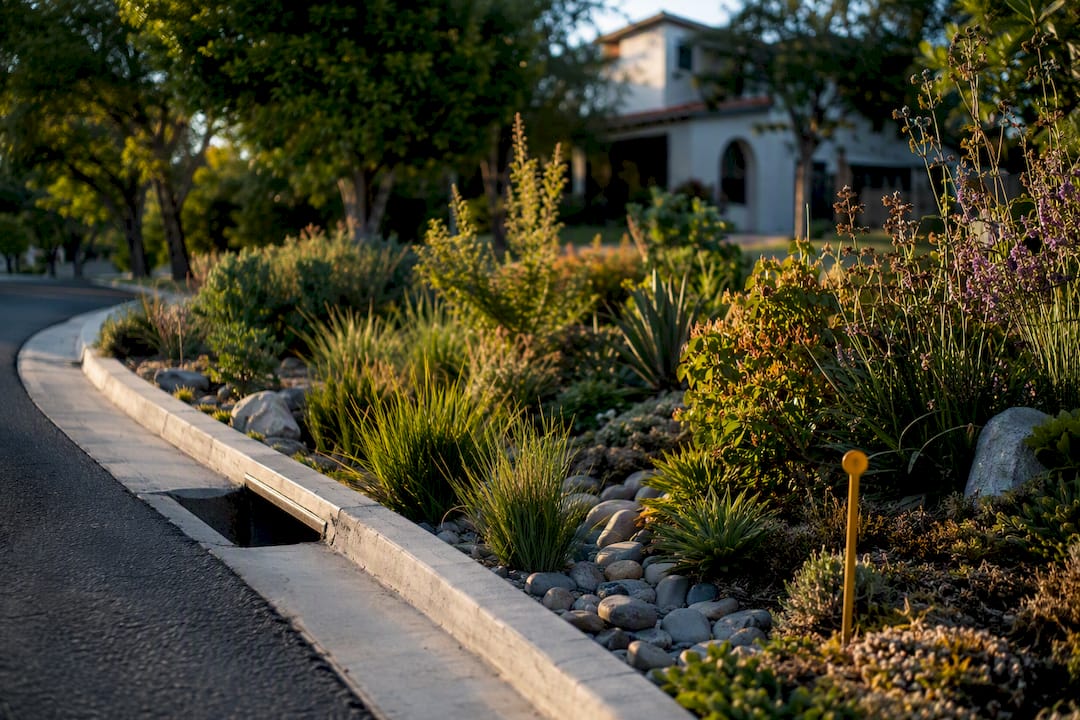
Replacing turf works best where grass isn’t earning its water budget: parkways, side yards, slopes, and anywhere nobody actually plays or lounges. Keep a small patch of real turf, or a tough sedge alternative, only where kids or pets genuinely use it. EPA guidance points to turf reduction as one of the highest-impact moves in any water-wise landscape, since lawn typically drinks more irrigation than anything else on the property.
For slopes, plant spreading species like bearberry cotoneaster or creeping ceanothus in a diagonal, overlapping pattern rather than straight rows, so roots knit together across the grade faster and bare soil never sits exposed to rain.
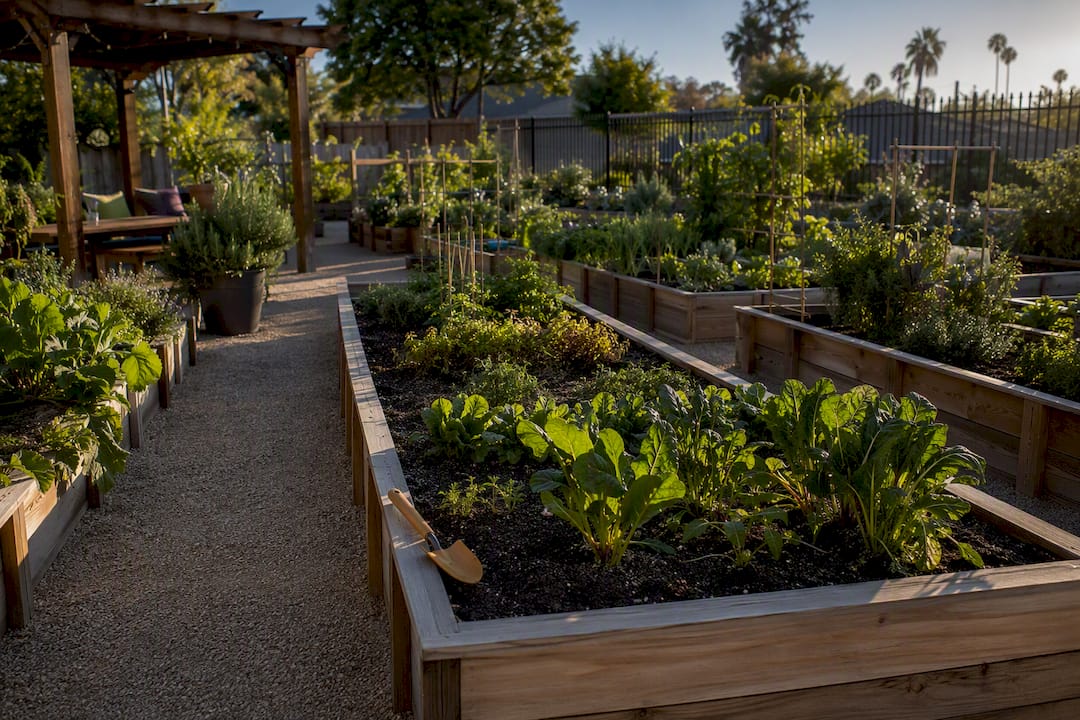
The biggest design mistake in dry gardens is treating “low water” as a mandate for “sparse.” Layer heights and textures instead: a fine-textured mat like thyme at ground level, a mounding sedum or ice plant at 6 inches, and a woody accent like low ceanothus behind it. Stagger bloom times so something is flowering from spring through fall, which keeps pollinators fed and the bed visually full even when nothing is blooming at peak volume. Designers behind Sunset’s lush drought-tolerant garden approach build these gardens around exactly this kind of layering rather than adding more irrigation to fake abundance.
- Replace turf only where it isn’t functionally necessary; keep it where people actually walk or play.
- Plant slope stabilizers in overlapping diagonal drifts, not single rows.
- Layer three height tiers, ground mat, mounding mid-layer, woody accent, for year-round texture.
- Stagger bloom seasons across species to keep pollinator activity going longer.
What 25 Years of Installations Have Taught Us About Lush, Dry Gardens
A leading sustainable landscape design company has spent more than 25 years turning thirsty lawns into water-wise landscapes, work that’s earned industry recognition and featured on popular home improvement shows. The biggest lesson from those projects: the sparse, gravel-and-three-succulents look isn’t drought tolerance, it’s just a design shortcut. Real water savings come from density done right.
That ratio reads as full and intentional within one growing season, not three.
The mistake we see most often in DIY installs is planting everything at full mature spacing on day one, leaving bare, weed-prone soil for two years while plants slowly fill in. We space slightly tighter than the tag suggests and thin later if needed, which cuts the “ugly gap” phase dramatically and gets a bed looking established in about half the time.
— Denise Buchanan
Consider professional design services for your water-wise yard
You’ve got the plant list. What’s harder to DIY is the part that actually determines whether it thrives: matching species to your specific soil, slope, and sun exposure, then wiring the irrigation so it waters each zone correctly instead of drowning your ice plant while starving your shade fescue. That’s the gap professional designers close for homeowners who want the design expertise without the trial-and-error.

A typical engagement starts with an on-site visit to map your sun patterns, soil type, and drainage, followed by a hydrozone plan that groups plants by real water need rather than guesswork. From there, you get a curated plant palette, a phased installation estimate, and an irrigation layout built around drip lines instead of blanket spray coverage. If you’re staring at a thirsty lawn or an eroding slope and want a plan built for your actual yard, start with a consultation through Sacredgardendesigns and see what a properly hydrozoned, texture-layered planting can look like on your property.
Sources
- 66 Drought-Tolerant Ground Covers for Low-Water Landscapes
- Xeriscaping: Ground Cover Plants (CSU Extension)
- Water‑Wise Landscape Design: Steps | EPA WaterSense
- The Drought-Tolerant Garden That Actually Looks Lush | Sunset
Local conditions vary block to block, so cross-check any regional plant list with your own county or state extension office before you commit to a full planting plan.
FAQ
What is the most drought-resistant ground cover?
Hardy ice plant and prostrate ceanothus rank among the toughest, since their succulent leaves or deep, woody roots let them survive weeks without water once established. No groundcover is fully drought-proof, though; all of them need consistent watering during their first one to two years.
What is the lowest maintenance ground cover?
Bearberry cotoneaster and Angelina sedum need the least ongoing attention, since both spread aggressively, choke out weeds on their own, and require only occasional pruning once mature. Creeping thyme comes close but benefits from an annual light trim to stay dense.
What ground cover plants require minimal water?
Ice plant, Angelina sedum, and creeping ceanothus need the least supplemental water once established, thanks to succulent foliage or deep root systems adapted to lean, dry soil. All three still need regular watering during their first couple of growing seasons.
What are some good heat-resistant groundcovers for hot, dry areas?
Creeping thyme, hardy ice plant, and common lippia hold up well in intense heat because their fine or succulent foliage limits water loss even in full, unrelenting sun. Fescue grasses also tolerate heat well in part-sun conditions where a grassy texture fits the design.