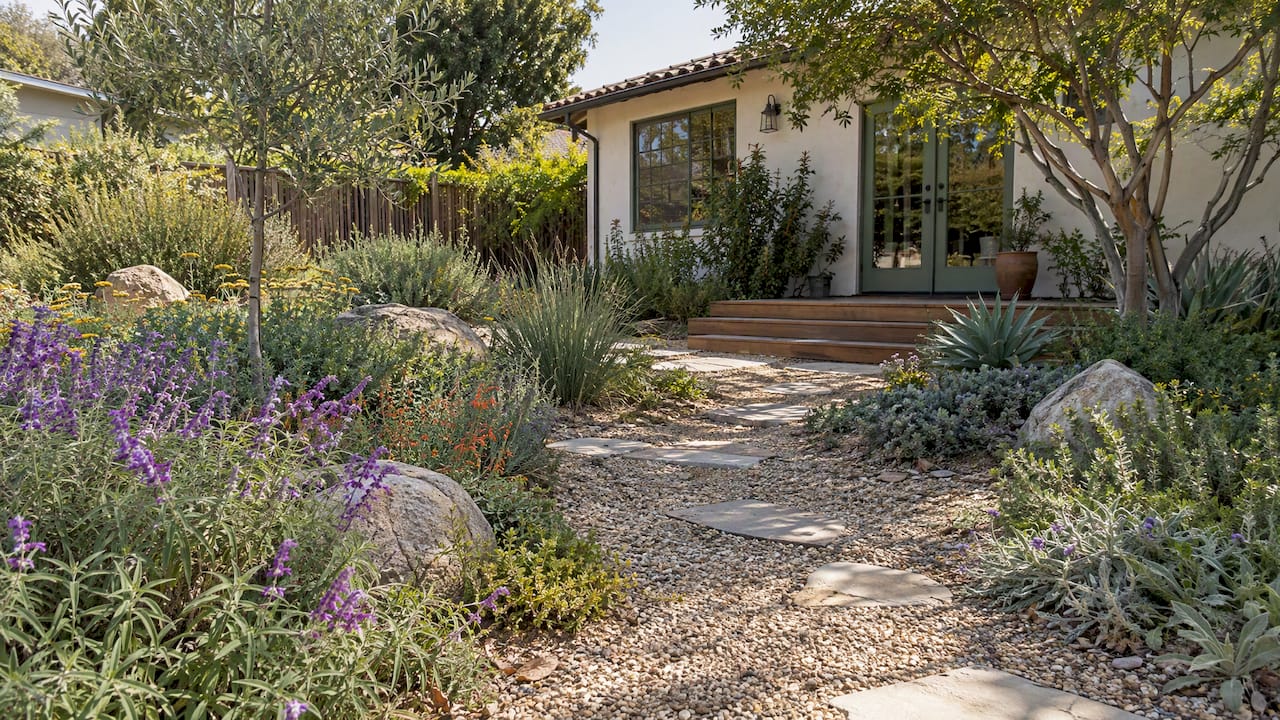
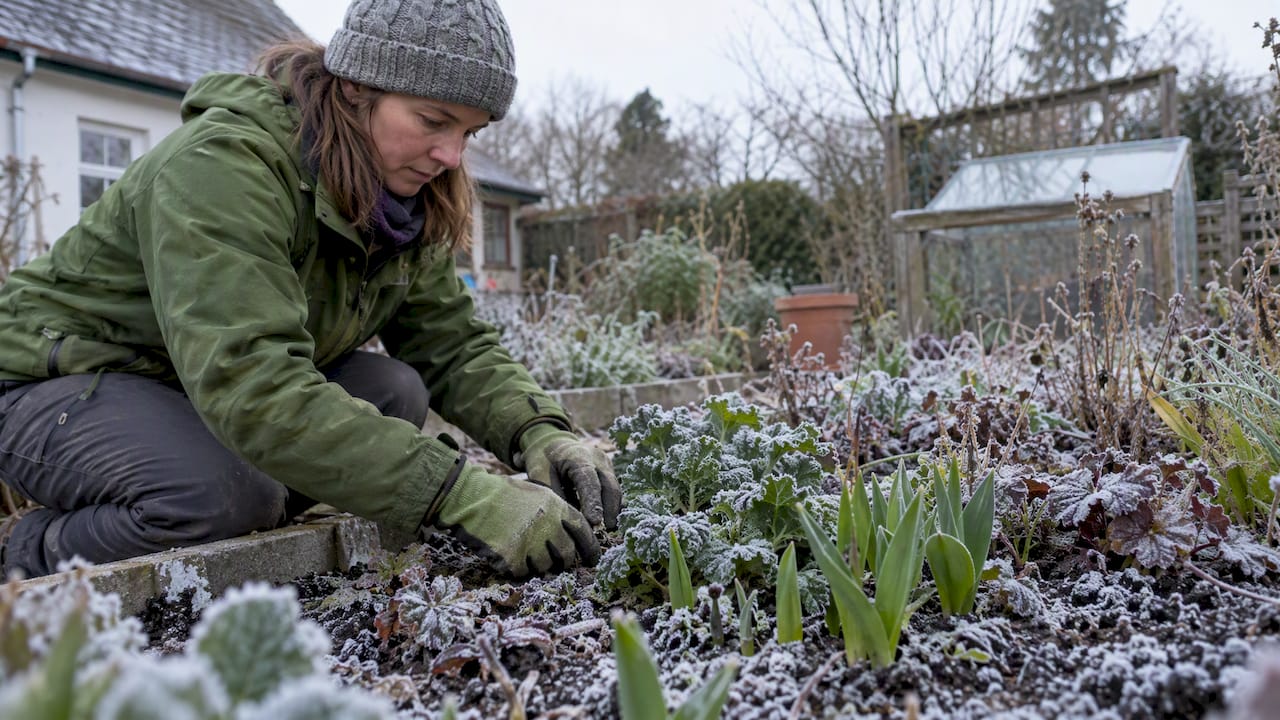
Start with California natives, low-water perennials, drought-adapted succulents, and native grasses. That combination handles LA’s dry summers and mild winters better than almost anything else on the market. Before you buy a single plant, walk your yard and map its sun, shade, and slope. That site read, paired with a hydro-zone plan, decides which of these plants actually survive.
TL;DR:
- Native California plants like ceanothus, hummingbird sage, and deer grass provide pollinator support, low maintenance, and structural screening in drought conditions.
- Proper site assessment, including sun, soil, and drainage, is crucial for selecting plants suited to microclimates and avoiding watering in unsuitable spots.
- Newly planted natives require consistent irrigation for one to two years, with deep watering scheduled according to growth stage and soil type.
- Replacing turf with native fescue blends or drought-tolerant groundcovers can significantly reduce water use while maintaining yard usability.
- Phased conversions and professional site assessments help prevent plant loss and improve long-term success in water-wise Los Angeles landscapes.
Table of Contents
- Drought Tolerant Plants Los Angeles Homeowners Actually Use
- Matching Plants to Your Yard’s Sun, Soil, and Microclimates
- Getting New Plants Established Without Losing Them
- Better Lawn Alternatives Than a Traditional Turf Lawn
- Where to Find Plants, Rebates, and Expert Guidance
- What Years of Los Angeles Installs Have Taught Us
- The Real Payoff of Going Native in Los Angeles
- Turn Your Yard Into a Water-Wise Landscape That Works
- Sources
Drought Tolerant Plants Los Angeles Homeowners Actually Use
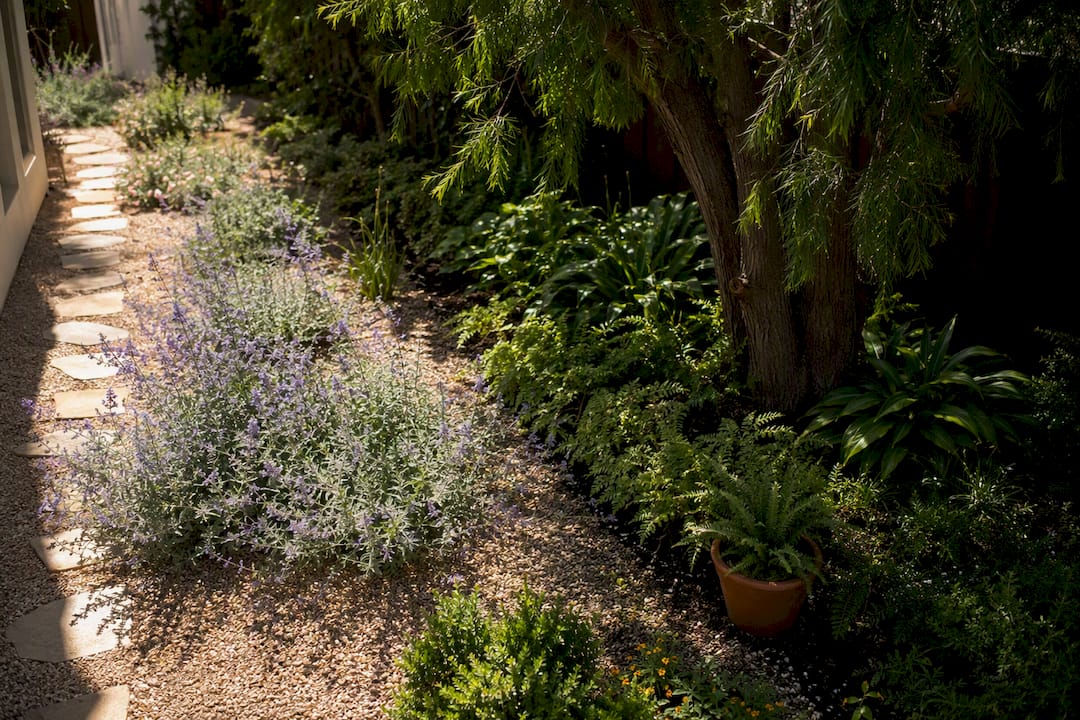
You don’t need exotic imports. The plants that hold up best in Los Angeles yards mostly come from California’s own chaparral and coastal sage scrub, supplemented by a handful of Mediterranean transplants adapted to the same climate pattern: dry summers, wet winters. Here’s a working shortlist by category.
Trees
- Western redbud (Cercis occidentalis): full sun, 15 to 20 feet, spring color, great for small lots.
- California sycamore (Platanus racemosa): full sun, large shade tree for bigger properties.
- Desert willow (Chilopsis linearis): full sun, 15 feet, pollinator magnet with a long bloom season.
Shrubs
- Ceanothus species (California lilac): full sun to part shade, 3 to 12 feet depending on cultivar, spectacular for pollinators and screening.
- Toyon (Heteromeles arbutifolia): full sun to part shade, 8 to 15 feet, berries feed birds all winter.
- Manzanita (Arctostaphylos spp.): full sun, low to 6 feet, drought tolerance once mature is exceptional.
Perennials
- Hummingbird sage (Salvia spathacea): part shade, 1 to 2 feet, spreads as groundcover and pulls in hummingbirds.
- California fuchsia (Epilobium canum): full sun, low mounding, blooms into fall when little else does.
- Yarrow (Achillea millefolium): full sun, low maintenance, works in massing.
Grasses
- Deer grass (Muhlenbergia rigens): full sun to part shade, 3 to 4 feet, the workhorse for structure and low maintenance.
- Purple needlegrass (Stipa pulchra): full sun, California’s state grass, excellent for meadow effects.
Succulents
- Dudleya (multiple species): full sun to part shade, low rosettes, striking on slopes and in rock gardens.
- Agave attenuata: part shade, 3 to 5 feet, architectural focal point with almost no water need once settled.
Groundcovers
- Ceanothus ‘Yankee Point’: full sun, spreading, doubles as erosion control on slopes.
- Dymondia margaretae: full sun, walkable, a real turf substitute for small areas.
Ceanothus, hummingbird sage, and deer grass earn repeat mentions for good reason. They cover pollinator habitat, low maintenance, and structural screening all in one native package.
Matching Plants to Your Yard’s Sun, Soil, and Microclimates
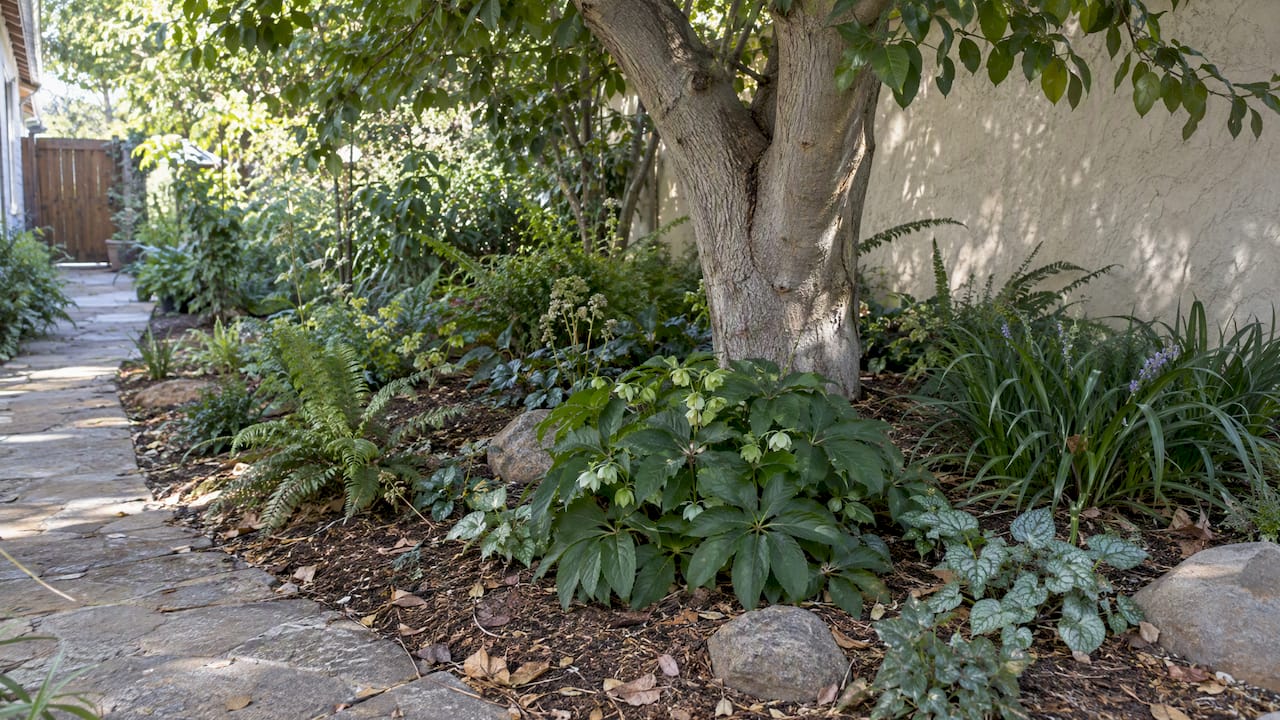
A single Los Angeles lot can hold three or four distinct microclimates. The south-facing wall radiates heat well past sunset, the north side of the house stays shaded and cool, and a low spot near the driveway collects runoff after every rain. Treat each one as its own planting zone rather than forcing one plant palette across the whole yard.
- Walk the yard at 10 a.m., 1 p.m., and 4 p.m. to log which spots get full sun versus part shade.
- Check drainage by digging a 12 inch hole, filling it with water, and timing how long it takes to drain. Under an hour is fast-draining; several hours signals clay you’ll need to amend.
- Test soil pH with an inexpensive probe kit. Most LA natives tolerate the region’s typically alkaline soil, but heavy clay benefits from compost worked into the top 6 inches.
- Group plants into high, medium, and low water zones, and run separate irrigation lines or drip circuits for each. This hydro-zoning approach is the single most overlooked step in a successful conversion, and it prevents thirsty plants from drowning low-water neighbors on the same valve.
Before buying anything, ask the nursery staff four questions: What’s this plant’s mature size? What’s its water need after year two? Does it tolerate our clay or decomposed granite soil? And how does it handle full afternoon sun in August?
Pro Tip: Take photos of your yard at different times of day before you plant anything. You’ll spot shade patterns you’d otherwise miss, and it saves you from planting a shade lover in a spot that bakes by noon.
Getting New Plants Established Without Losing Them
Drought tolerant doesn’t mean no water. CalScape frames this correctly: these plants need an adapted-water strategy, not a no-water one. New plantings require consistent irrigation for the first one to two years to build the deep root systems that eventually let them coast through summer on little or nothing, according to University of Nebraska horticultural guidance.
A workable schedule looks like this:
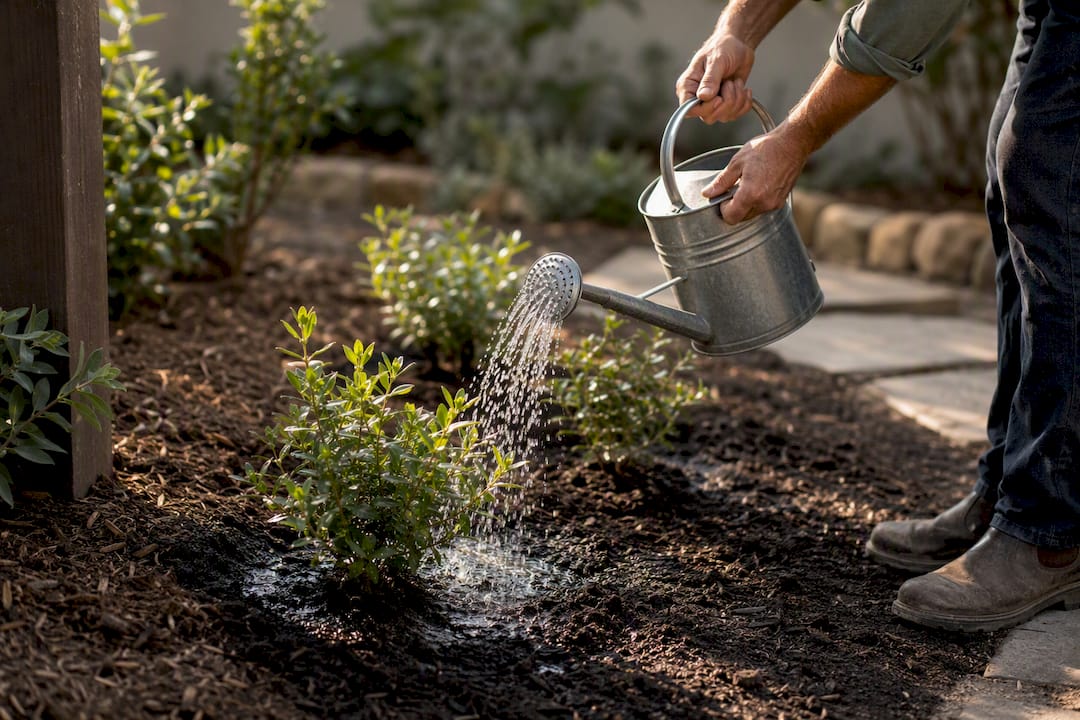
- Months 1 to 3: Water two to three times a week, soaking the root zone deeply each time.
- Months 4 to 12: Taper to once a week as roots extend outward.
- Year 2: Cut back to every 10 to 14 days, watching for wilt as your signal to adjust.
- Year 3 and beyond: Most natives need only occasional deep watering during extended dry spells.
Since outdoor irrigation accounts for roughly half of residential water use, the hardware matters as much as the schedule. Drip lines or soaker hoses beat overhead spray for efficiency, and a weather-based irrigation controller adjusts automatically when it rains. Mulch 2 to 3 inches deep to slow evaporation and suppress weeds.
The most common failure isn’t drought. It’s skipping establishment watering because the plant tag says “low water” on day one, or crowding too many plants into one zone with no hydro-zoning plan at all.
Better Lawn Alternatives Than a Traditional Turf Lawn
Ripping out turf doesn’t mean giving up a green, usable yard. Native fescue blends, including cultivars like ‘Molate’ red fescue, mimic a traditional lawn’s texture and are available through regional turf providers as a direct swap for thirsty sod. Here’s how the main options stack up:
- Native fescue lawns: moderate foot traffic tolerance, some summer dormancy, closest look to conventional turf.
- Deer grass massing: near-zero traffic tolerance but dramatic texture for non-walkable areas.
- Carex praegracilis (dune sedge): handles light foot traffic and clay soil, stays greener longer than fescue.
- Dymondia margaretae: walkable, mat-forming, ideal for small front yards and between pavers.
- Lippia (Phyla nodiflora): spreads fast, tolerates some traffic, better suited to slopes than high-use zones.
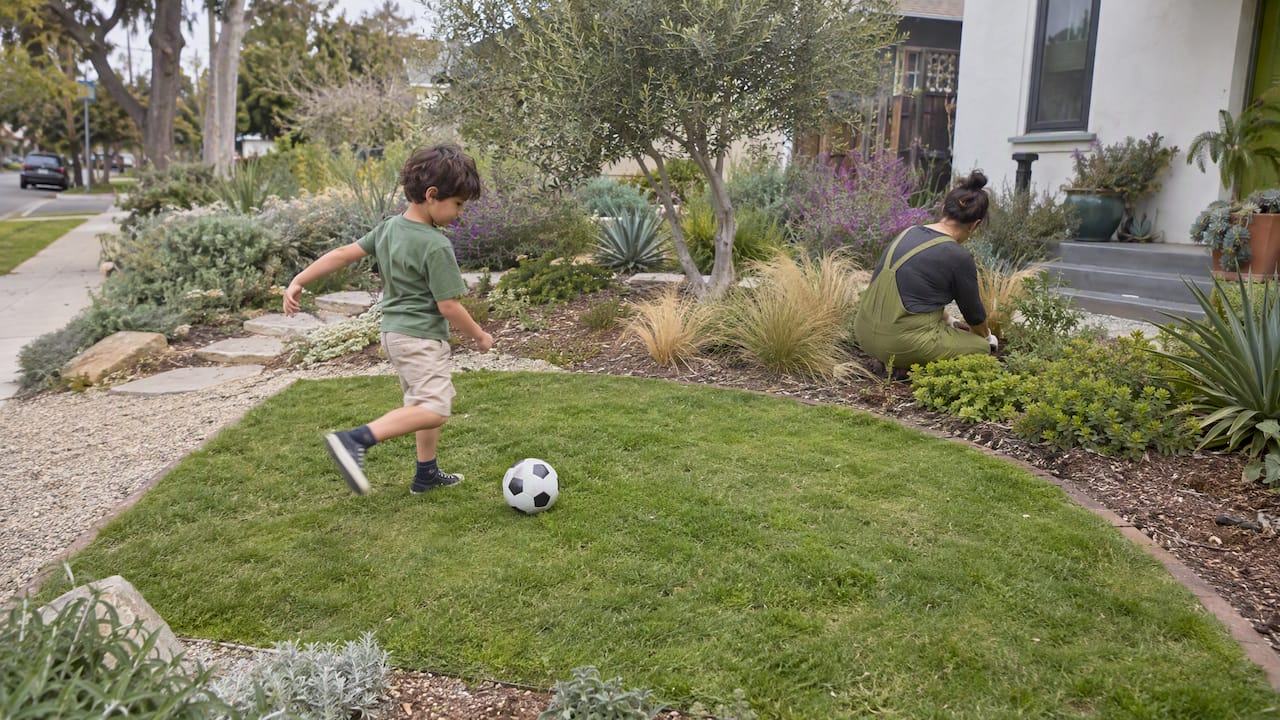
Keep a small patch of usable lawn if your family actually needs it for play, and convert the rest. That hybrid approach cuts water use substantially without sacrificing the yard’s function.
Where to Find Plants, Rebates, and Expert Guidance
The LADWP turf-replacement program can install pre-approved water-efficient landscaping and drip conversion for eligible customers, which removes much of the upfront cost barrier to going native.
- Use CalScape’s Garden Planner to search plants by your exact zip code and soil type.
- Consult the California Native Plant Society’s grass alternatives guide for meadow and lawn-substitute options.
- Reference the LA County drought-tolerant garden handbook for regional plant lists.
- Buy from native-plant specialty nurseries rather than big-box stores, which rarely stock straight species or give accurate water guidance.
What Years of Los Angeles Installs Have Taught Us
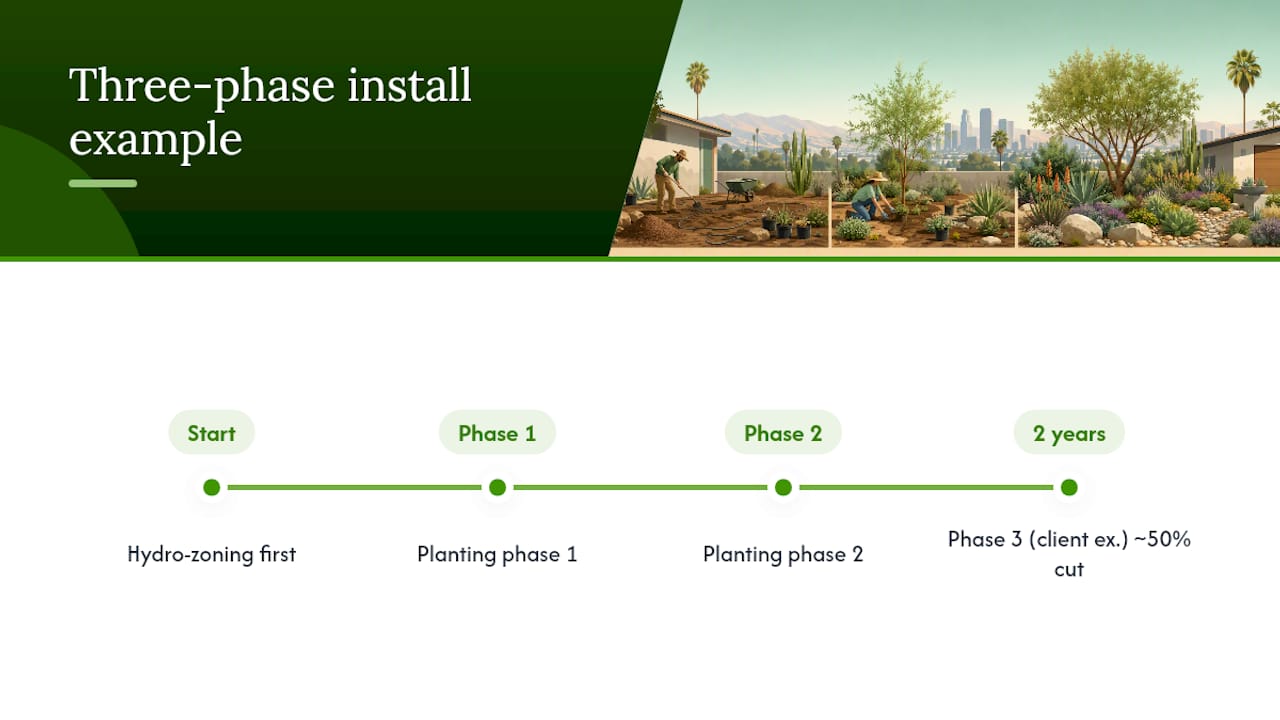
Convert a portion of your turf each year instead of all at once. Phased installs spread cost and let you correct plant choices before committing the whole yard. Expect a dormant-looking patch some summers, that’s normal, not failure. One recent client cut irrigation use by roughly half within two years by hydro-zoning first and planting in three phases. Sacred Garden Designs has built water-wise landscapes across Los Angeles for over 25 years, earning six HOUZZ Awards along the way.
The Real Payoff of Going Native in Los Angeles
Lower water bills are the easy sell. The bigger win is a yard that keeps functioning through the droughts California cycles through instead of browning out or costing a fortune to keep alive. Native plantings also bring back the pollinators and birds that a turf lawn simply can’t support.
Convert in phases, use the rebate programs while they exist, and get a professional site assessment if your yard has more than one microclimate; a consultation now saves you from expensive plant losses later.
— Denise
Turn Your Yard Into a Water-Wise Landscape That Works
Sacred Garden Designs is the direct route to a finished, functioning drought-tolerant yard instead of months of trial-and-error plant shopping. Where a DIY conversion means guessing at hydro-zones and losing a few plants along the way, our team handles the site assessment, planting plan, irrigation conversion, and install in one coordinated project.
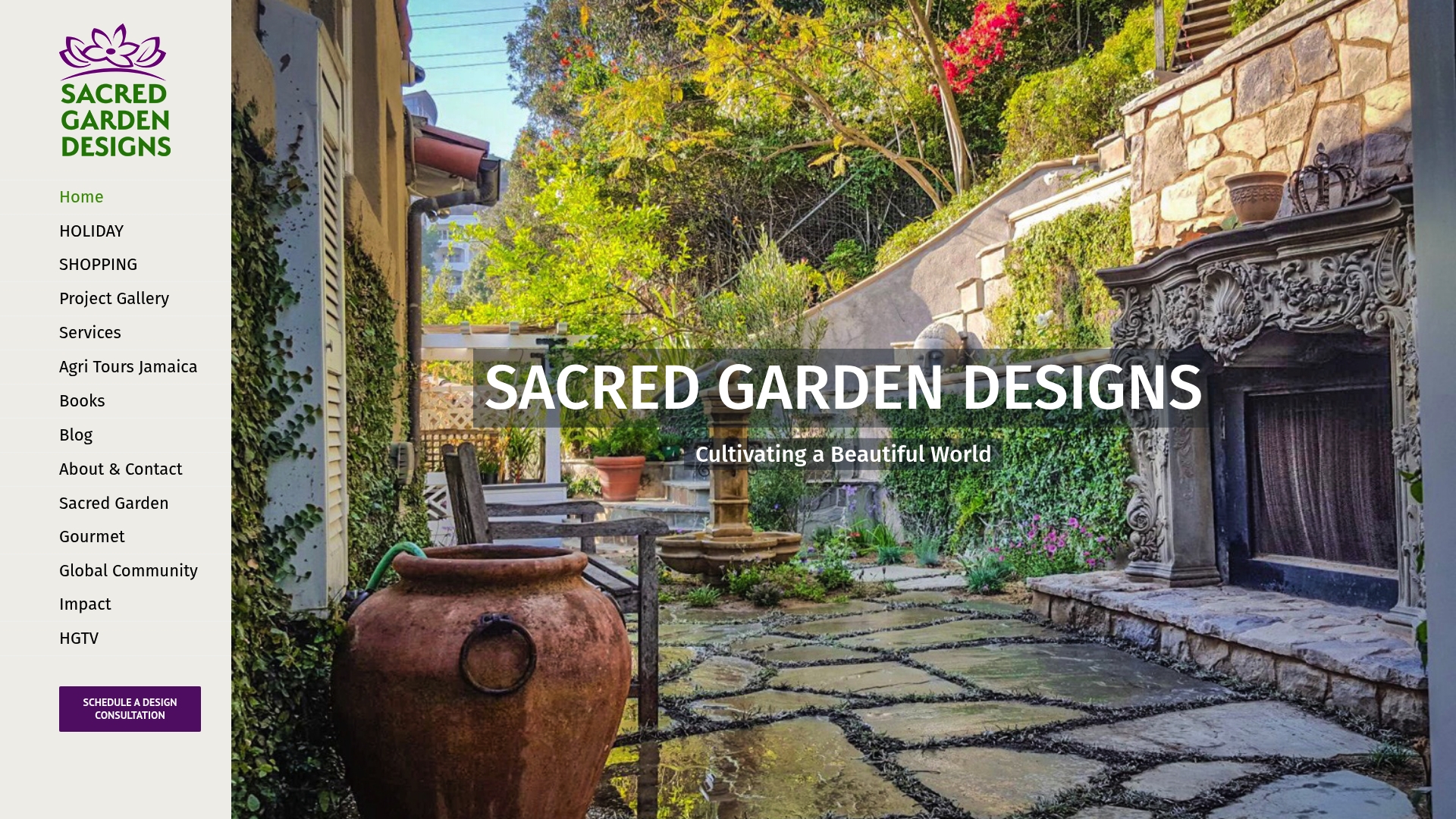
A typical first visit covers your yard’s sun and soil conditions, a phased conversion plan if you want to spread out cost, and a straight answer on which of the plants covered above fit your specific lot. We’ve applied this process across Los Angeles for more than 25 years, with six HOUZZ Awards and features on HGTV’s Ground Rules along the way. If you’re ready to stop losing plants to guesswork, book a consultation with Sacred Garden Designs and get a plan built around your actual yard.