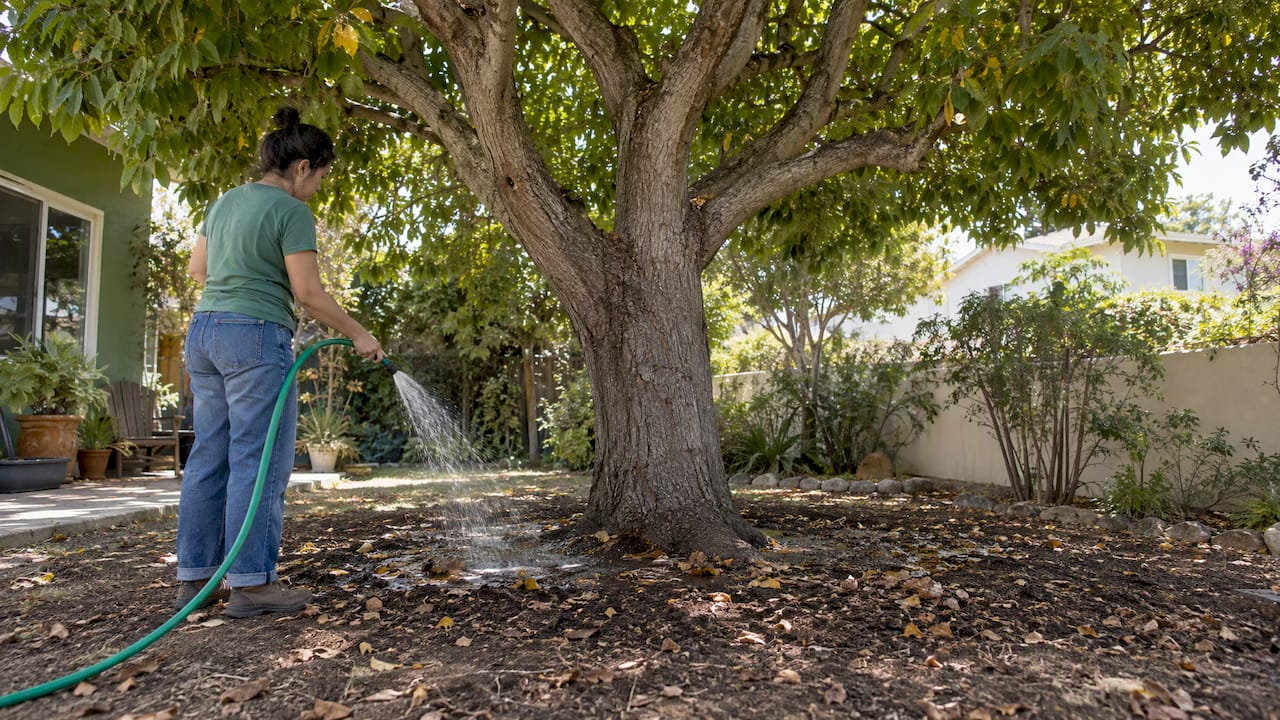
A landscape design consultation is an onsite visit, usually 60 to 90 minutes, where a designer assesses your yard’s sun, soil, drainage, and structural conditions, then gives you a written summary with a realistic budget range. Schedule one before signing any contract if you’re unsure how much your project will cost or how it should be phased.
TL;DR:
- A landscape design consultation typically lasts 60 to 90 minutes and includes measuring, photographing, and observing your yard’s conditions and usage patterns.
- Preparation with seasonal photos, inspiration images, property surveys, and a clear budget helps maximize the consultation’s usefulness and accuracy.
- Costs usually consist of a flat fee or hourly rate, with the consultation providing a scope, budget estimate, and next steps within a few days.
- Designers assess site factors such as sun exposure, soil pH, drainage, underground utilities, existing vegetation, and microclimates to inform planting and structural decisions.
- After the consultation, a detailed scaled plan, plant palette, and phased budget are created to guide construction and prevent scope creep.
Table of Contents
- What Happens During a Landscape Design Consultation
- How Do You Prepare for a Landscape Consultation?
- What Does a Landscape Design Consultation Cost?
- What Site Factors Do Landscape Designers Assess?
- How Do You Choose the Right Landscape Consultant?
- What Happens After the Consultation?
- Why Preparation Beats Perfection Before You Hire
- Book a Consultation With Sacred Garden Designs
- Sources
What Happens During a Landscape Design Consultation
The designer walks your property first. That means measuring key dimensions, photographing existing conditions, and watching how your family actually moves through the yard, where the dog runs, where the kids play, which patio door gets used daily. None of this is guesswork; it’s the same site-inventory approach landscape architecture research recommends: log the buildings, vegetation, drainage patterns, and microclimates before anyone sketches a plan.
Most consultations run for a typical duration of about an hour to an hour and a half onsite, and a well-run session ends with a written summary delivered within a few days, not a verbal promise made on the driveway.
Here’s the typical flow:
- Walk-through and observation (20 to 30 minutes) covering sun patterns, soil condition, and how the space is used.
- Conversation about goals, budget, and timeline (20 to 30 minutes).
- Preliminary notes on constraints like slope, drainage, or utility conflicts.
- Follow-up written summary with scope, an honest budget range, and recommended next steps.
If a consultant skips the written follow-up, that’s worth questioning before you hire them.
How Do You Prepare for a Landscape Consultation?
Good prep turns a 90-minute visit into a genuinely useful one. Bring the following:
- Photos of the yard in different seasons, especially if you’re consulting in winter but planting in spring.
- Inspiration images (Pinterest boards, magazine tears, neighbor’s yard you admire) so the designer understands your taste, not just your needs.
- Your property survey, if you have one, plus any utility locate records or notes from previous contractors.
- A real budget number, even a range, rather than a vague “whatever it takes.”
- A short list of who needs to be there. Decision makers should attend; young kids and pets are better off elsewhere during the walk-through.
Honest budgets matter more than homeowners think. Designers often discover the number in someone’s head is a fraction of what the vision requires, which is exactly the gap a good consultation is built to catch before you’ve spent money on drawings you can’t afford to build.
Pro Tip: Write your budget number down and hand it over. Saying it out loud feels harder than it is, but a vague answer just means the designer has to guess, and guesses rarely work in your favor.
What Does a Landscape Design Consultation Cost?
Fee structures vary, but two patterns dominate: a flat consultation fee, or an hourly rate for the designer’s time onsite. Many firms credit that fee toward the design phase if you move forward, so the consultation isn’t sunk cost if you decide to hire them.
Expect the consultation itself to take one to two hours. What varies far more is everything after it:
- A full design phase for a residential yard typically takes 4 to 8 weeks, longer for complex properties with slopes, drainage issues, or specialty irrigation.
- Property size, site complexity, and travel distance all push consultation and design fees higher.
- Specialty systems, like solar-powered irrigation or slope stabilization, add design time because they require more technical coordination upfront.
- Phased implementation, tackling the front yard this year and the backyard next, is common and often recommended rather than trying to build everything at once.
Aligning budget and buildability early on prevents the mid-project scope changes that blow past both timeline and cost.
What Site Factors Do Landscape Designers Assess?
Every serious consultation includes a technical read of your property, not just a conversation about style. This is where a consultation earns its cost.
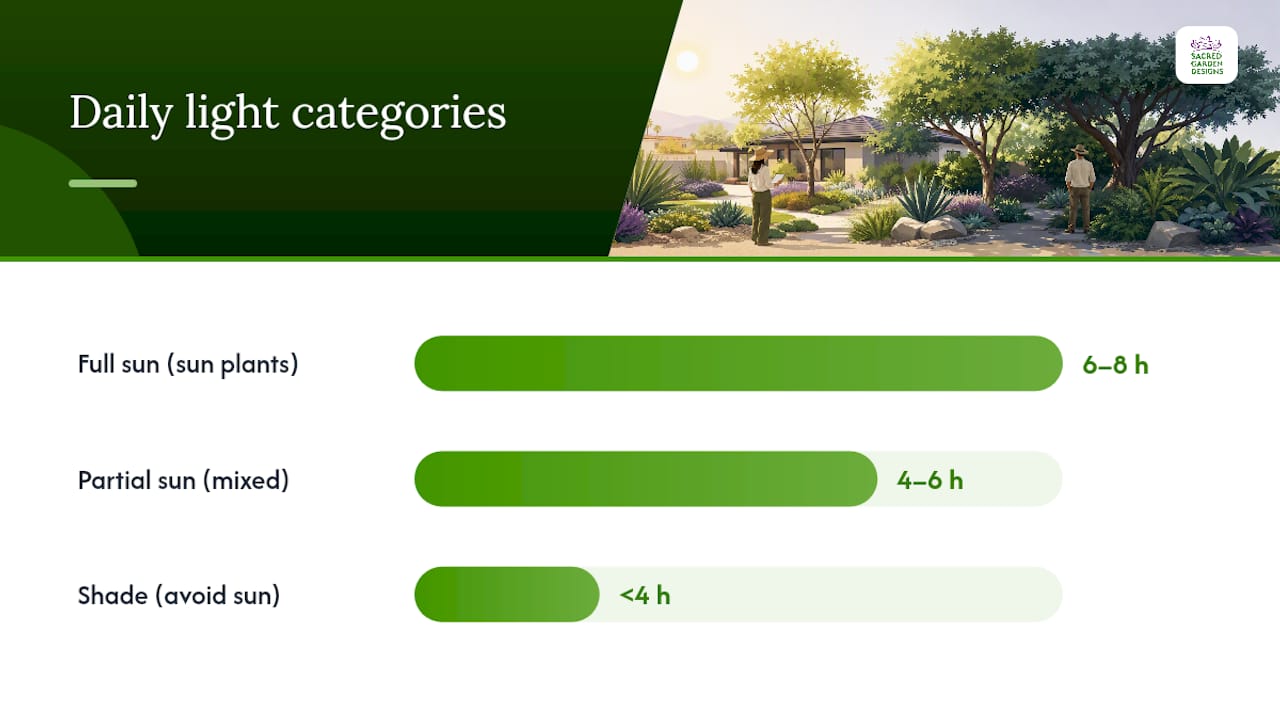
Sun exposure gets categorized because it dictates plant selection. Full sun areas receive roughly 6 to 8 hours of direct light daily, partial sun runs 4 to 6 hours, and shade means under 4 hours. Put a sun-loving plant in a shade zone and it won’t just underperform, it will slowly die, no matter how good the soil is.
Soil gets tested for texture, drainage, and pH. A pH near 6.5 is generally ideal for nutrient availability; soils below 5.5 can lock out nutrients many ornamental plants need, which is why a soil test before large planting decisions saves money later.
Other factors on the checklist:
- Topography and drainage, which determine where retaining walls, patios, or French drains need to go.
- Underground utilities, which must be located before any digging to avoid hitting service lines and to respect municipal setbacks.
- Existing vegetation, particularly trees over 4 inches in diameter, which often anchor the whole design rather than getting removed.
- Microclimates created by fences, walls, or nearby structures that trap heat or funnel wind.
For larger or steeply sloped properties, a formal topographic survey can give designers more precise elevation data than a visual walk-through alone, which is where a dedicated topographic survey sometimes earns its cost on complex sites. Curious what a full vegetation and site condition assessment looks like in practice? Sacredgardendesigns covers real examples on its design blog.
How Do You Choose the Right Landscape Consultant?
Judge a consultant on what they show you and how they answer hard questions, not on how polished their sales pitch sounds.
- Ask to see a portfolio of completed projects similar in scale to yours, and request at least one reference you can actually call.
- Look for credentials that mean something: professional affiliations, industry awards, or a track record with sustainability-focused work if that matters to you.
- Watch for red flags: no written follow-up, vague answers when you ask about cost, or pressure to sign before you’ve had time to think.
- Ask directly: What’s the design timeline? Can this be phased? Who handles construction, you or a subcontractor? Are you insured, and who pulls permits?
A consultant who answers all four clearly, in writing, is worth far more than one who just talks a good game onsite.
What Happens After the Consultation?
If you move forward, the design phase turns the consultation notes into something buildable. Expect these deliverables:
- Precise site measurements and a scaled plan showing hardscape, planting beds, and key features.
- A plant palette suited to your actual sun, soil, and water conditions, not a generic list.
- A phased budget estimate, so you can see what phase one costs versus the full vision.
Many firms credit part or all of the original consultation fee toward this design work, which softens the upfront cost. Once you have a finished design package, you can solicit bids from installers using the same drawings and specs, which keeps quotes apples to apples instead of comparing vague verbal estimates against each other.
Why Preparation Beats Perfection Before You Hire
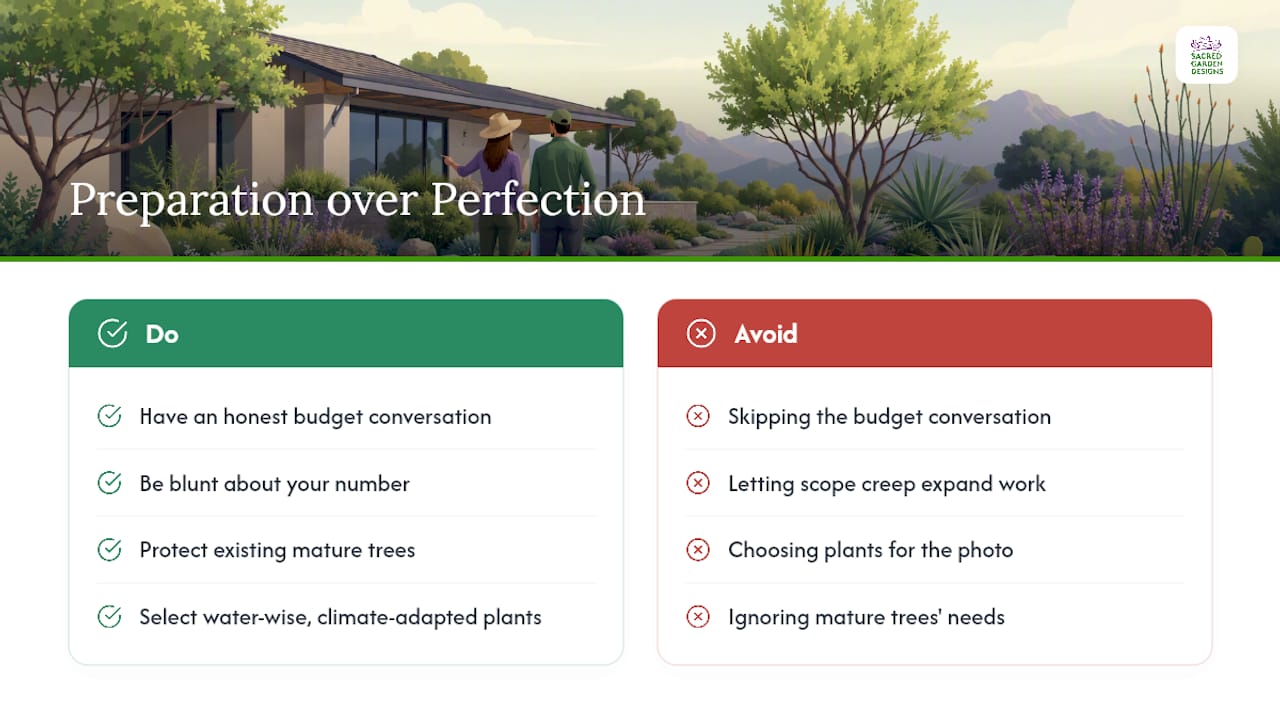
Most homeowners lose money not by picking the wrong plants, but by skipping the honest budget conversation. The biggest mistake I see is scope creep: a modest patio project quietly grows into a full backyard renovation because nobody stopped to ask what the budget actually supports.
Protect your mature trees, be blunt about your number, and choose water-wise plants built for your climate, not the catalog photo.
— Denise Buchanan
Book a Consultation With Sacred Garden Designs
Sacredgardendesigns runs consultations the way this article describes them: an onsite visit, a written summary, an honest budget range, and a phased plan if your vision outpaces your number. What sets the process apart after 25 years of water-wise design work in drought-prone regions is that sustainability isn’t an add-on suggestion, it’s built into the plant palette and irrigation approach from the first walk-through.
The consultation fee is often credited toward your design phase if you move forward, so booking one costs you information, not a sunk expense. If your yard’s sun, soil, or drainage situation feels uncertain, or your budget number needs a reality check before you commit to anything, schedule a consultation and get a written scope you can actually plan around.
Sources
For deeper technical grounding beyond this guide, the CAES site analysis field report breaks down sun mapping in detail, while the New York Botanical Garden’s site inventory guide covers soil and vegetation assessment thoroughly. Both are worth a read if you want to understand the reasoning behind a designer’s recommendations, not just the recommendations themselves.