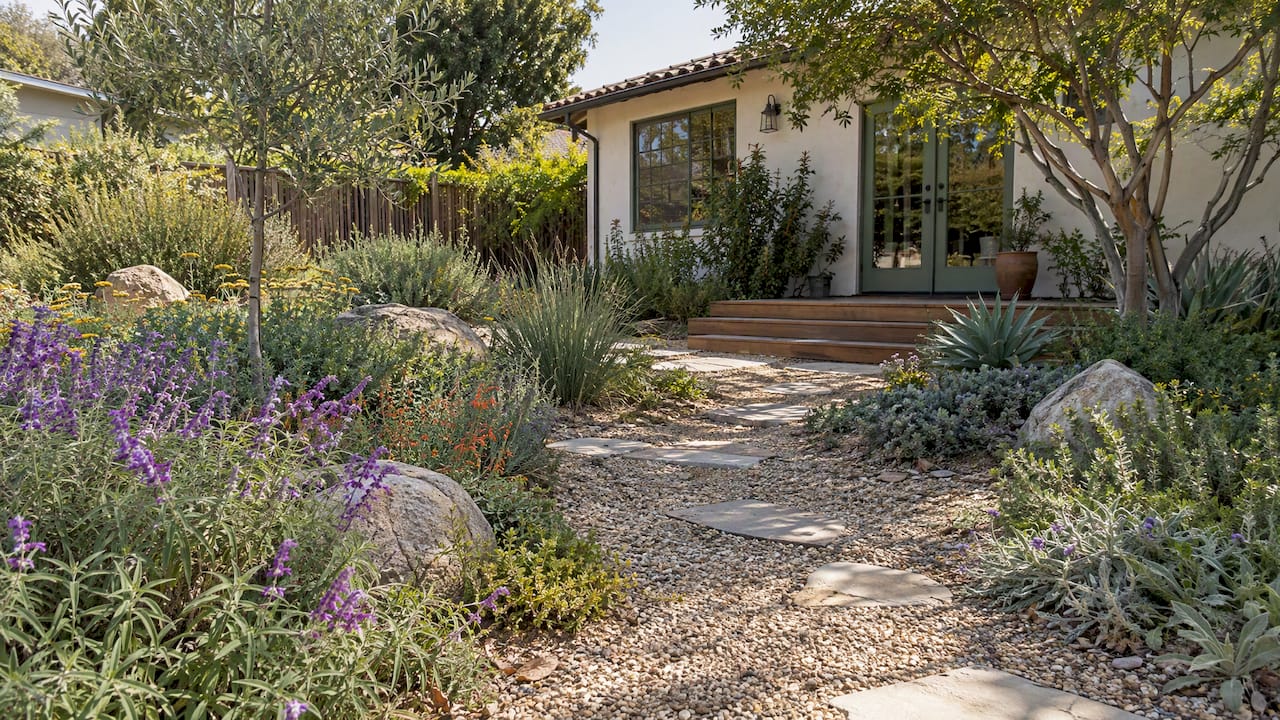
You can cut outdoor water use dramatically by trading some or all of your turf for native plants, groundcovers, low-water grasses, meadow plantings, or permeable hardscape. Which one wins depends on how you actually use that patch of ground. Expect roughly 40 to 70 percent less outdoor water use once everything is established, but budget real irrigation for the first season no matter which option you pick.
TL;DR:
- Drought-tolerant plants can establish with only 40 to 70 percent less water after the first year, but require nonnegotiable irrigation during the initial season.
- Native meadows and layered plantings typically need minimal irrigation once roots are developed, providing significant maintenance and biodiversity benefits.
- Groundcovers like microclover or creeping thyme reduce mowing and tolerate pet urine, offering a sustainable lawn alternative for low-traffic, full-sun zones.
- Hardscape surfaces like permeable pavers, gravel, or synthetic turf suit high-traffic areas, with synthetic options costing more upfront and having environmental trade-offs.
- Successful yard conversions depend on proper planning, soil preparation, and consistent first-year watering; professional guidance can prevent costly mistakes.
Table of Contents
- Drought-Tolerant vs. Drought-Resistant: Matching the Alternative to Your Yard
- Native Plants and Meadow-Style Plantings
- Groundcovers and Low-Mow Living Lawns
- Ornamental and Low-Water Grasses
- Hardscape and Synthetic Turf: Where Nonliving Surfaces Make Sense
- How to Convert Your Lawn: Steps, Timeline, and Cost
- Getting the Establishment Phase Right
- Pests and Diseases in Drought-Tolerant Alternatives
- Choosing by Regional Climate and Soil Type
- Environmental Payoffs Beyond the Water Bill
- What 25 Years of Water-Wise Design Has Taught Us
- Ready to Make the Switch Without the Trial and Error
- Sources
Drought-Tolerant vs. Drought-Resistant: Matching the Alternative to Your Yard
These two terms get used interchangeably, and that mix-up causes a lot of dead plants. A drought-resistant plant can survive extended dry spells with minimal damage, often by shutting down growth or dropping leaves. A drought-tolerant plant handles reduced water and keeps growing, just more slowly. Buffalograss is drought-tolerant. A mature California sagebrush is closer to drought-resistant, since it can look rough during a dry summer and bounce back fine.
Picking the right one starts with an honest look at how you actually use each part of your yard, not how you wish you used it.
- Sun exposure: full sun opens up meadow and grass options; shade narrows you toward moss, certain sedums, or shade-tolerant groundcovers.
- Traffic level: daily foot traffic and dog runs favor microclover, buffalograss, or hardscape over delicate wildflowers.
- Desired look: a formal front yard usually calls for a tidier grass or groundcover than a wild backyard meadow would.
- Slope and erosion risk: steep grades often do better with deep-rooted native plantings than with turf substitutes that need regular mowing access.
- Pets: urine tolerance varies a lot between species, and some groundcovers scorch fast under repeated dog traffic.
- HOA rules: some associations restrict meadow height or require a “maintained” appearance, so check the covenant before you rip out turf.
A front yard that needs to look neat for resale probably points toward fine fescue or microclover. A fenced backyard used mainly for weekend lounging is a great candidate for a native meadow. A side yard that gets zero foot traffic and blasting afternoon sun might be your best spot for sedum or gravel.
Pro Tip: Walk your property at different times of day for a week before deciding anything. Most people misjudge how much shade a “sunny” yard actually gets once trees leaf out.
Native Plants and Meadow-Style Plantings
A well-designed native meadow can need near-zero supplemental irrigation once its root systems are established, and mowing drops to about once a year instead of weekly. That is the biggest single maintenance win of any option on this list. Meadows also pull in pollinators and add seasonal color that a flat green lawn never will.
Design matters more than plant selection here. Landscape professionals recommend building meadows in layers rather than scattering seed and hoping:
- Bunching grasses as the backbone — species like blue grama or little bluestem hold soil and give structure through winter.
- Wildflowers woven through, not clustered — mixing bloom times keeps color going from spring through fall instead of one big flush that fades.
- Avoid monoculture — a single wildflower species looks great for three weeks and bare for nine months.
Regional native plant nurseries and your local extension office are better sources than generic seed mixes sold at big box stores, since they know what actually survives your specific rainfall pattern and soil pH. A meadow works best in a low-traffic, full-sun zone. It is the wrong call for a yard that doubles as a soccer field.
Groundcovers and Low-Mow Living Lawns
Clover and creeping thyme function as low-water turf substitutes that need a fraction of the mowing a traditional lawn demands, and clover has the added trick of fixing its own nitrogen while staying green through mild drought. Different groundcover species solve different problems:
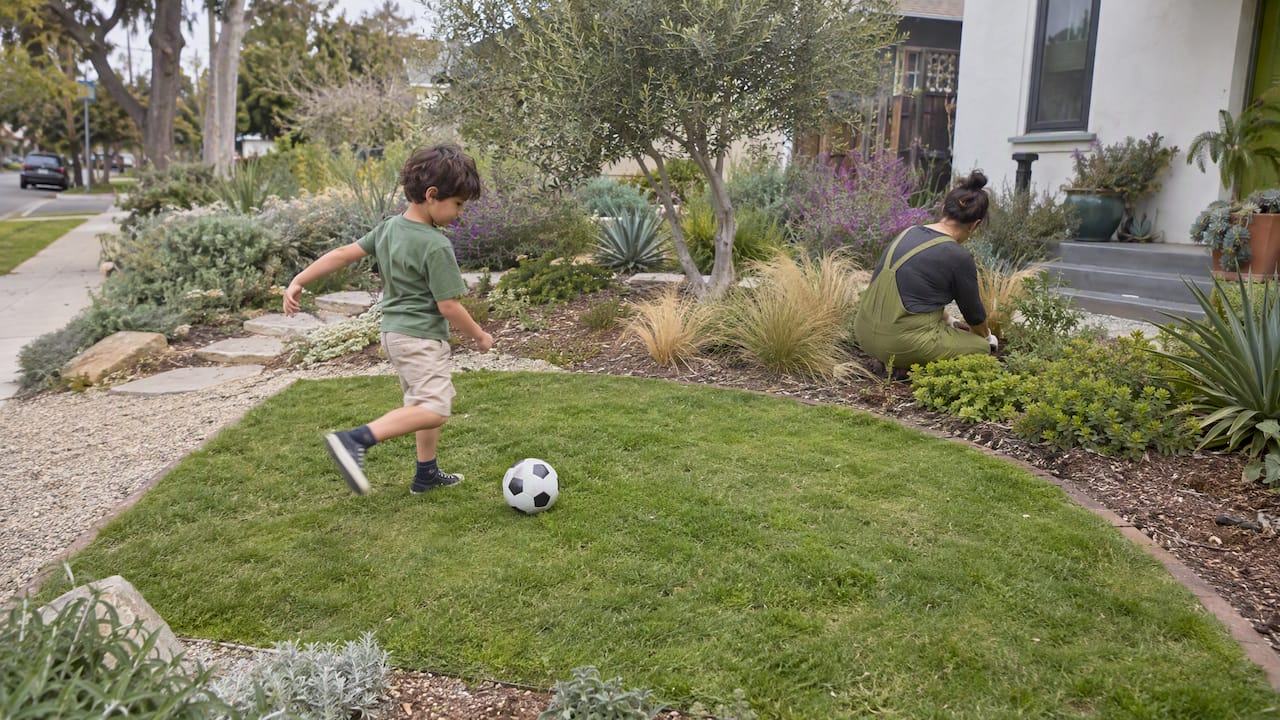
- Microclover tolerates moderate foot traffic and kids or dogs playing on it regularly.
- Creeping thyme adds fragrance and light traffic tolerance, plus a purple bloom carpet in early summer.
- Sedum thrives in hot, dry, rocky spots where almost nothing else survives.
- Moss covers shaded, damp areas where grass has always struggled anyway.
Mowing frequency drops from weekly to a handful of times per year for most of these. Pet urine tolerance varies, though: clover handles it better than fine turfgrass, but repeated hits in the same spot still cause scorching.
You do not have to rip out your whole lawn at once. Overseeding microclover into existing turf is a common middle step, while full replacement makes more sense once the existing grass is already struggling.
Outdoor watering eats up more than 30 percent of total household water use in a typical American home, which is exactly the number groundcover conversions are designed to attack.
Ornamental and Low-Water Grasses
If you want something that still looks and feels like a lawn, fine fescue, tall fescue, and buffalograss are the usual recommendations. Buffalograss in particular uses very little water but only performs well in open, sunny, low-traffic sites, since it thins out fast under shade or heavy foot traffic.
- Fine fescue tolerates part shade and light traffic, making it a solid front yard pick.
- Tall fescue handles more traffic than fine fescue but drinks more water to stay green.
- Buffalograss is the most drought-tolerant of the three, goes dormant and tan in cooler months, and needs full sun to thrive.
Sod establishes faster and gives you an instant lawn, but costs more and offers fewer low-water species choices. Seed is cheaper and opens up buffalograss and fescue blends, but takes weeks longer to fill in and needs more careful watering during germination. If your yard function calls for a lawn look with heavy use, grass beats groundcover or meadow. If low traffic and low mowing matter more than a classic lawn look, groundcover usually wins on water savings.
Hardscape and Synthetic Turf: Where Nonliving Surfaces Make Sense
Some parts of a yard just do not need to be planted. High-traffic zones, dog runs, and patios used daily for entertaining are exactly where permeable pavers, gravel, decomposed granite, or artificial turf earn their keep.
- Permeable pavers and decomposed granite handle heavy foot traffic and let rainwater soak through instead of running off.
- Gravel is the cheapest option per square foot and works well for pathways and low-use side yards.
- Synthetic turf eliminates irrigation entirely but comes with real trade-offs: significant upfront cost, heat retention in direct sun, and microplastic shedding that concerns a growing number of homeowners and landscapers.
A hybrid approach often beats an all-or-nothing choice. Permeable hardscape with planting pockets cut into it gives you a durable surface for furniture and foot traffic while keeping small pockets open for drought-tolerant plants, which helps with both drainage and visual softness. If you are specifically weighing synthetic turf for a play area or pet run, a specialized turf installation service can walk you through drainage prep and heat-mitigating infill options before you commit.
Pro Tip: If you go synthetic, ask about infill options rated for lower surface temperatures. Standard rubber infill can get uncomfortably hot on bare feet by mid-afternoon in a sunny yard.
How to Convert Your Lawn: Steps, Timeline, and Cost
Converting an entire yard at once is rarely necessary, and honestly rarely a good idea. A phased approach spreads out cost and lets you learn what works in your specific microclimate before committing everything.
- Assess your yard by zone, noting sun, slope, traffic, and existing soil condition in each area.
- Prioritize zones starting with the thirstiest, highest-visibility turf, usually the front yard strip that gets full sun and daily sprinkler runs.
- Remove the existing turf using sheet mulching (cardboard plus mulch layered over grass, left to smother it over 2 to 3 months) or physical sod removal with a sod cutter for faster results.
- Prep the soil by testing it and working in compost to improve structure and moisture retention.
- Plant or install your chosen alternative, whether that is seed, plugs, sod, or hardscape material.
- Commit to first-season care, which is nonnegotiable regardless of how drought-tolerant the mature plant will eventually be.
Sheet mulching costs less and avoids chemical herbicides, but takes months and looks messy while it works. Sod cutting or renting a sod cutter clears turf in a weekend but costs more in labor or rental fees and generates green waste you have to haul away.
Expect roots to establish over one full growing season for most groundcovers and meadow plantings, with weekly watering tapering down as roots deepen. Cost ranges vary widely by region and labor market, but DIY groundcover conversions using seed or plugs typically run cheaper per square foot than sod, while synthetic turf and hardscape installations sit at the higher end due to material and labor costs. Some water utilities and municipalities offer turf removal rebates, so check with your local water district before you start. Those programs can meaningfully offset material costs.
Getting the Establishment Phase Right
This is where most conversions fail, and it has nothing to do with plant selection. A groundcover or meadow that is drought-tolerant at maturity still needs consistent water while its roots are developing. Skip that phase and you are replanting next spring.
- Seed needs light, frequent watering, often daily for the first two to three weeks, to keep the top inch of soil consistently damp until germination.
- Plugs and small plants need deep watering two to three times a week for the first month, then a gradual taper over the following months.
- Sod needs daily watering for the first one to two weeks, then a step down to two or three times weekly through the rest of the first season.
Before planting anything, test your soil and work in a 1 to 2 inch layer of compost, which meaningfully improves both drainage and moisture retention. Fix obvious grading issues now, since a low spot that pools water will drown a drought-tolerant plant just as easily as it drowns turf.
Long term, plan on mowing meadows once a year, groundcovers a handful of times, and low-water grasses on a reduced but still regular cadence. Overseed thin patches in early fall when soil is still warm but air temperatures have cooled. Hand-pull weeds in year one before they set seed, since that single habit prevents most of the weed pressure you would otherwise fight for years.
Pro Tip: Mark your calendar for a soil test every two to three years, not just before the initial planting. Soil chemistry drifts as compost breaks down and as new plants pull nutrients differently than turf did.
Pests and Diseases in Drought-Tolerant Alternatives
Trading turf for a low-water alternative does not mean trading away pest problems, it just changes which ones show up. Clover and thyme groundcovers can attract aphids and spider mites during hot, dry stretches, since stressed plant tissue is easier for sap-feeding insects to exploit. Buffalograss and fine fescue are generally less disease-prone than traditional bluegrass lawns, but chinch bugs can still move in during extended heat, especially in thin or newly established patches.
Native meadow plantings tend to be the most resilient of the bunch, since regionally adapted species come with some natural resistance to local insect pressure built in over generations. That resistance is not universal, though. Powdery mildew can hit ornamental grasses in humid microclimates even when the surrounding area is dry, particularly where air circulation is poor along fences or walls.
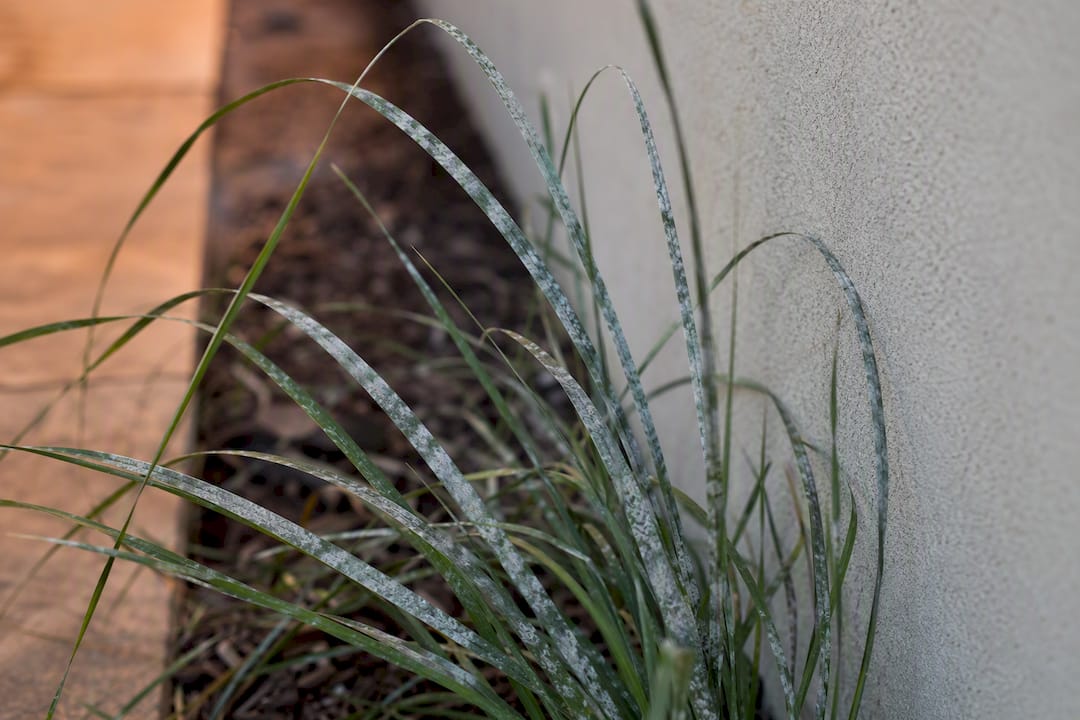
The best defense across every alternative on this list is the same: healthy, well-draining soil and appropriate spacing. Overcrowded plantings trap humidity at the base of the plant, which is where most fungal problems start. Avoid overhead watering late in the day, since wet foliage overnight is a bigger disease driver than the amount of water itself. If you spot a pest problem isolated to one section, resist the urge to treat the whole yard. Spot treatment keeps beneficial insects like ladybugs and native bees intact elsewhere in the planting, which matters more in a meadow or groundcover planting than it ever did in a monoculture lawn.
Choosing by Regional Climate and Soil Type
Climate and dirt decide more of this decision than personal taste does. Clay-heavy soil common in many inland valleys drains slowly, which actually favors deep-rooted native bunchgrasses and meadow plantings over shallow-rooted groundcovers that can sit in soggy conditions after rain. Sandy soil drains fast and dries out quickly between waterings, which makes sedum and other succulent groundcovers a natural fit since they are built to handle rapid moisture swings.
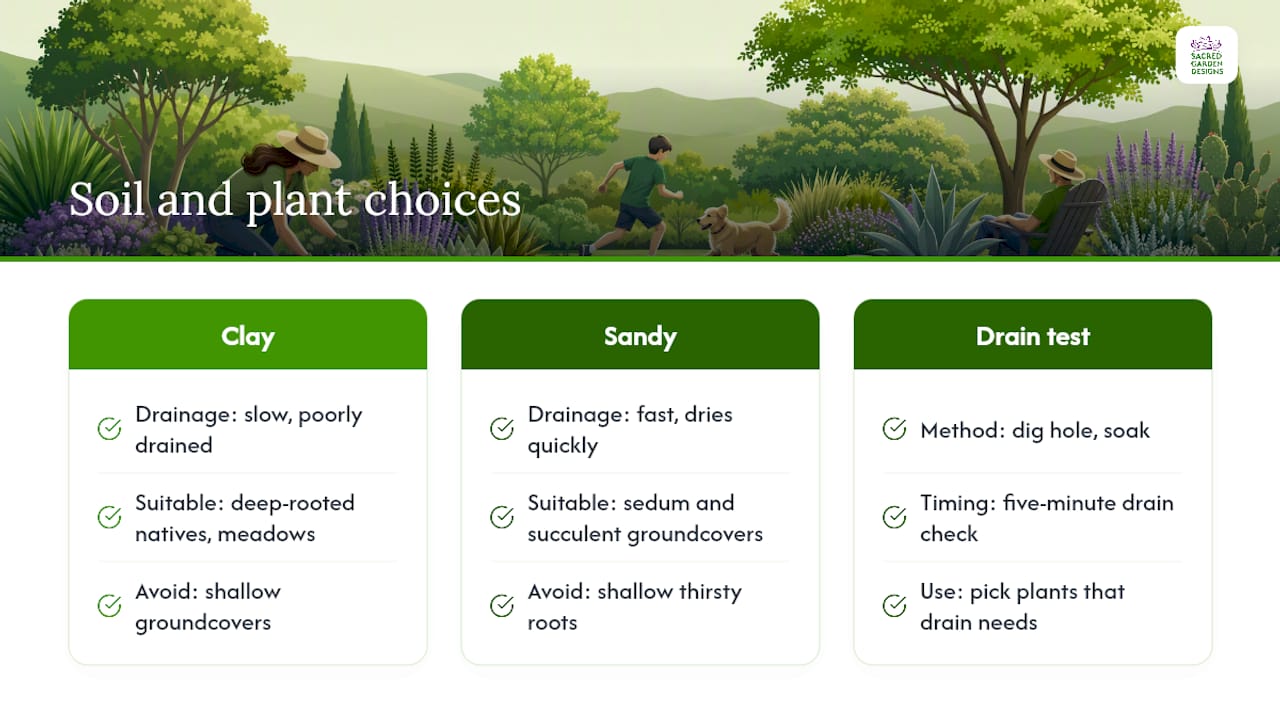
Coastal climates with mild, foggy summers can support a wider range of options, including fescue blends that would struggle in a hot interior valley. Hot, dry inland climates narrow the field toward buffalograss, native meadow species, and hardscape, since anything with shallow, thirsty roots will struggle through a 100 degree stretch without heavy irrigation.
Before finalizing a plan, dig a small hole and check how quickly water drains after a good soak. That five-minute test tells you more about which alternative will actually survive than any general climate map. Local extension offices and native plant societies usually publish region-specific plant lists, and those lists are worth cross-referencing against whatever a nursery tries to upsell you, since not every “drought-tolerant” plant sold locally is actually suited to your specific soil.
Environmental Payoffs Beyond the Water Bill
Cutting water use is the headline benefit, but it is not the only one. A native meadow supports a far wider range of pollinators and beneficial insects than a mowed turf lawn ever could, since flowering plants at different bloom times feed bees and butterflies across a longer season. Groundcovers like clover add nitrogen back into the soil naturally, cutting the need for synthetic fertilizer that would otherwise run off into storm drains.
Mowing frequency drops sharply across nearly every alternative on this list, and that matters more than most homeowners realize. Fewer mowing sessions means less gas-powered equipment use and a smaller carbon footprint tied directly to lawn care. Meadows mowed once a year versus turf mowed weekly is a dramatic difference in fuel burned over a single season.
Synthetic turf is the outlier here. It saves water completely but offers none of the biodiversity or soil benefits that living alternatives provide, and it carries its own environmental costs in manufacturing and eventual disposal. For homeowners weighing pure water savings against ecological benefit, living alternatives generally offer the better long-term trade, while synthetic turf remains the practical choice for specific high-wear zones where nothing living would survive anyway.
What 25 Years of Water-Wise Design Has Taught Us
Most drought conversions fail not because the plants were wrong, but because the first season was rushed. For over 25 years, experience in water-wise landscapes shows that layered plantings, matched to actual sun and soil conditions, outperform anything picked off a generic plant list.
The firm’s approach leans on three habits worth stealing for your own yard. Build in layers, pairing structural bunchgrasses with seasonal color, rather than relying on a single species. Set a real establishment irrigation schedule and stick to it for the full first season, even when the plant tag says “drought-tolerant.” And always start with the soil, working in compost before anything goes in the ground rather than treating soil prep as an afterthought.
— Denise Buchanan
Ready to Make the Switch Without the Trial and Error
There are DIY paths through all of this, and plenty of homeowners handle a groundcover patch or a small meadow bed themselves with good results. But full-yard conversions involving grading, irrigation redesign, and matching plant layers to microclimates get complicated fast, and a wrong turn in the first season can set you back a full year of growth. An experienced water-wise design service can prevent guesswork in turf conversion by assessing sun, soil, and slope conditions before planting, rather than reacting after plant failure.
Professional services can cover the entire conversion process, including sustainable landscape design, turf removal, irrigation planning, and ongoing maintenance, so homeowners are supported through the first season’s watering schedule. Starting with a consultation and site visit is advisable if your yard has challenging features such as slope, heavy clay, or mixed sun and shade zones that complicate plant selection. Browse the planning and conversion advice on the blog for a sense of the approach, then get in touch through Sacredgardendesigns to schedule a site assessment and find out which combination of grasses, groundcovers, meadow, or hardscape actually fits your yard.