The best plant-based travel snacks are shelf-stable, portable and built on protein, fiber and healthy fat: roasted chickpeas, nuts and seeds, whole-grain crackers, dried fruit with no added sugar, fruit with a protective peel, and single-serve nut butter. Pack them in a way that fits your route. Planes mean TSA liquid rules. Cars mean heat. Camping means a cooler you can trust. This guide covers all three, with a packing list you can copy.
TL;DR
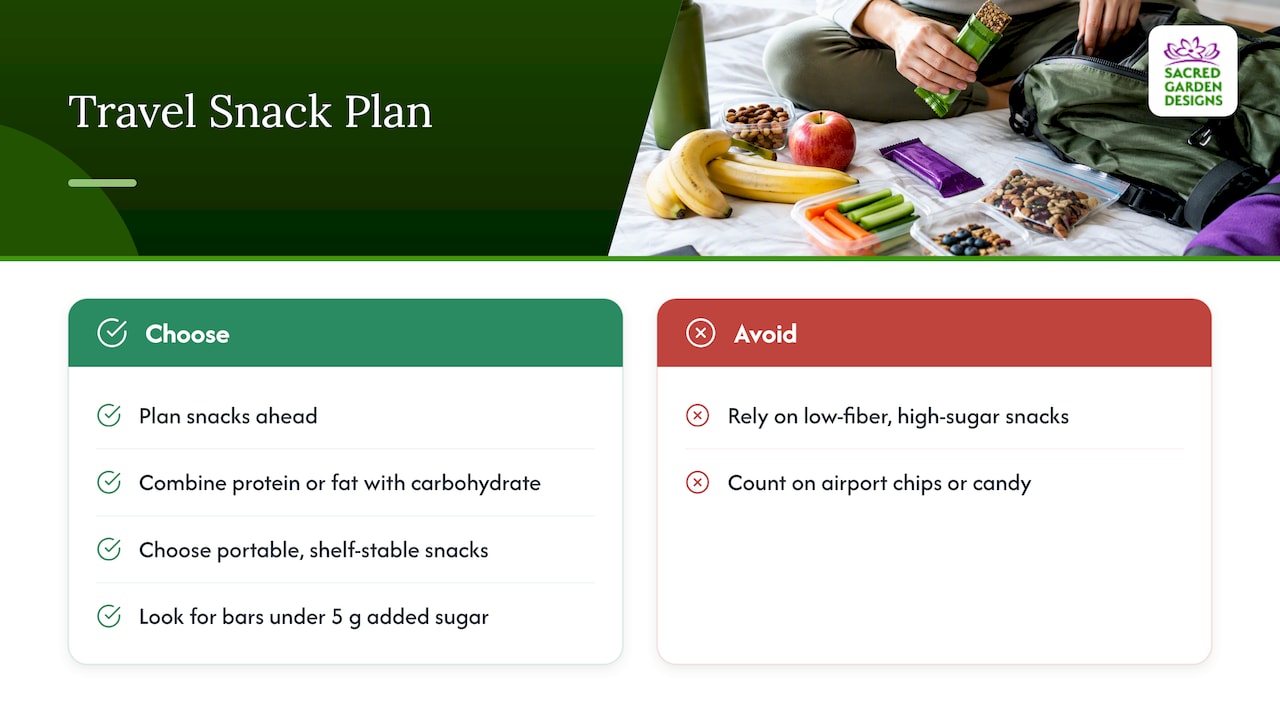
- Build every snack around protein or fat plus a complex carbohydrate. That pairing keeps you full and your energy steady, which a bag of plain chips will not do.
- On a plane, solid snacks are fine. Nut butter, hummus and applesauce count as liquids or gels, so they must be in containers of 3.4 ounces (100 ml) or less.
- In a car, favor shelf-stable foods. Anything perishable needs a cooler at 40°F or below, and it should not sit out more than 2 hours (1 hour above 90°F).
- Plan the snacks before you leave. Airport and gas station options skew toward chips and candy.
Table of Contents
- Why a plant-based traveler needs a snack plan
- The shelf-stable core: what to pack for any trip
- Flying: snacks that clear TSA
- Road trips: heat is the enemy
- Camping, hiking and days away from a fridge
- A week-long packing list by trip type
- Our perspective: snacks start in the soil
- Grow your own travel pantry
- Common mistakes to avoid
- FAQ
- Sources
Why a plant-based traveler needs a snack plan
Finding vegan food on the road is rarely the real problem. The real problem is what you end up eating when you did not plan. Registered dietitians point out that highly processed, low-fiber, high-sugar convenience snacks cause the sluggish, hungry feeling many people blame on “travel fatigue.”
The American Heart Association quotes a registered dietitian who also works as a travel agent. She notes that the cheapest airport options tend to be chips or candy, and that snacks should bridge gaps in fiber and plant protein on longer trips. Two qualities matter most: portability and shelf stability.
A useful rule of thumb from a plant-based dietitian: combine a protein or fat with a carbohydrate to increase satiety and stabilize energy, and look for bars with under 5 g of added sugar.
The shelf-stable core: what to pack for any trip
These foods do not need refrigeration, tolerate heat and rarely get crushed beyond use. Shelf-stable options such as fruit with rinds, dried fruit, roasted chickpeas, nuts, seeds, whole-grain crackers and single-serve popcorn hold up far better than dips and cut produce on long journeys.
| Snack | Why it works | Watch out for |
|---|---|---|
| Roasted chickpeas | Crunchy, fiber and plant protein, no refrigeration | Salt levels vary by brand |
| Almonds, pistachios, pumpkin seeds | Healthy fat and protein, dense calories | Portion size adds up fast |
| Trail mix with low-sugar dried fruit | Sweet and salty in one bag | Candy-heavy mixes spike blood sugar |
| Whole-grain crackers | Pair with nut butter packs | Crumble in a bag, use a hard container |
| Bananas, oranges, apples | Natural packaging, no prep | Bananas bruise, so keep them out of the bottom of the bag |
| Single-serve popcorn | Light, cheap, whole grain | Low in protein on its own |
| Protein bars | Compact and predictable | Check added sugar and ingredient lists |
| Single-serve nut butter packs | Protein and fat that pair with fruit or bread | Must be 3.4 oz or less for flights |
Pair, do not just nibble
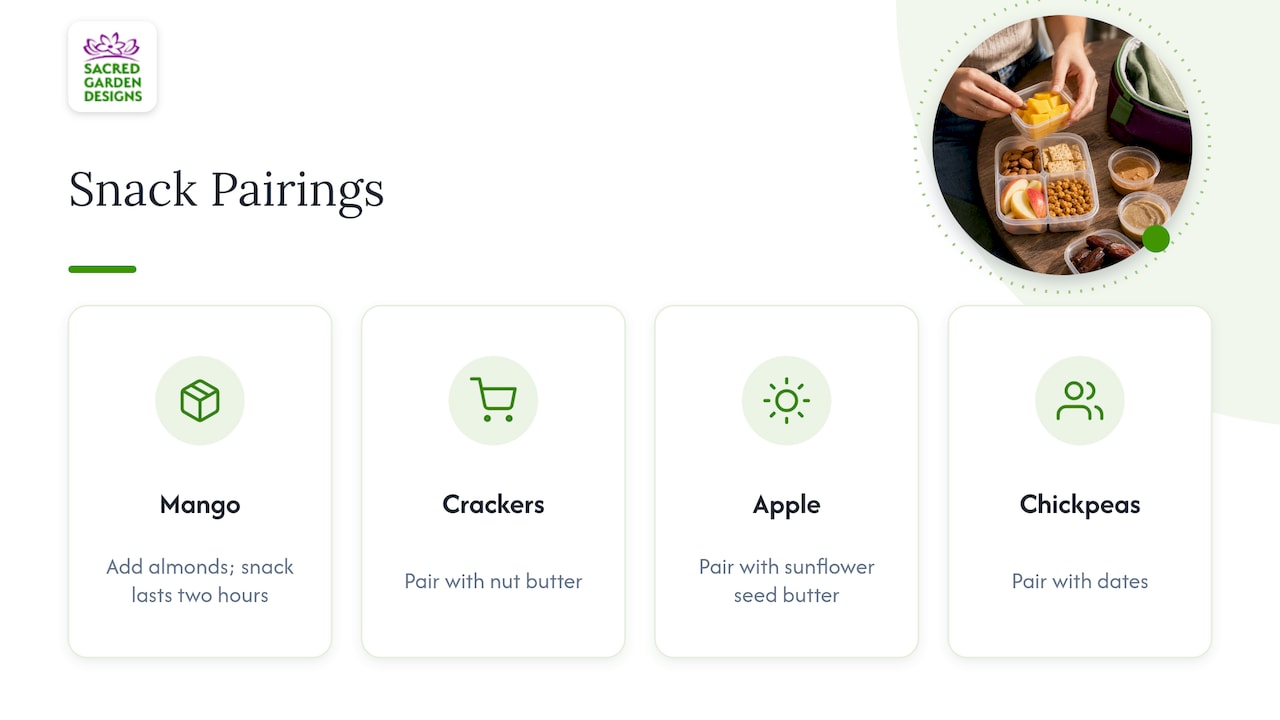
A handful of dried mango alone is mostly sugar. Add almonds and it becomes a snack that lasts two hours. Crackers with a nut butter squeeze pack, an apple with a small pouch of sunflower seed butter, or chickpeas with a few dates all follow the same logic.
Flying: snacks that clear TSA
The TSA rule most travelers misread is about what counts as a liquid. According to the TSA’s guidance as summarized by NerdWallet, solid food can go in carry-on or checked bags, while liquid and gel items in a carry-on must follow the 3-1-1 rule, with each container at 3.4 ounces (100 ml) or less.
In practice, nut butter, hummus, applesauce and yogurt are treated as liquids or gels. A full jar of almond butter will not make it through the checkpoint in your carry-on.
Easy through security
- Roasted chickpeas, nuts, seeds and trail mix
- Whole-grain crackers, rice cakes, pretzels
- Dried fruit and fruit leather
- Bars and individually wrapped plant-based chips
- Whole fruit such as apples, oranges and bananas
- Single-serve popcorn
Must be 3.4 oz or less in a carry-on
- Nut and seed butter packets
- Hummus cups
- Applesauce pouches
- Plant-based yogurt
A plant-based dietitian who writes about airline snacking has a TSA-focused snack list and admits that a smoothie slightly over the limit was tossed at the checkpoint. Rules and screening practices can change, so check the TSA’s own page for the latest before you fly. If you are unsure about a specific item, put it in your checked bag or leave it home.
A carry-on snack kit for a long flight
- One bag of roasted chickpeas or a savory seed mix
- One bag of mixed nuts
- Two or three whole fruits
- Two single-serve nut butter packs and a sleeve of whole-grain crackers
- One bar with under 5 g of added sugar
- An empty reusable bottle to fill after security
That is roughly enough to cover a cross-country flight plus a delayed connection without touching the terminal food court.
Road trips: heat is the enemy
In a parked car, the interior gets far hotter than the air outside. The practical answer is to choose foods that do not care, and to treat everything else as perishable.
The USDA says perishable food should not sit out more than 2 hours, or 1 hour when it is 90°F or hotter. That applies to plant-based items too: cut melon, deli-style wraps, hummus, tofu salads and cooked grain bowls. Bacteria multiply fastest between 40°F and 140°F, a range the USDA calls the danger zone.
Cooler rules that actually matter
- Keep it at 40°F or below. Use frozen gel packs or frozen bottles, as the FDA advises for transporting food.
- Pack it full. A full cooler stays cold significantly longer than a half-empty one. Add an appliance thermometer to check.
- Use two coolers if you can. One for drinks, which get opened constantly, and one for perishable food that stays shut. The USDA recommends this separation.
- Wash produce before packing, including fruit with peels or rinds, as the Academy of Nutrition and Dietetics advises.
- Toss it if the ice is gone. If a cooler no longer has ice or frozen gel packs, the perishable food inside is not safe to keep eating.
If you have a health condition that affects food safety, such as pregnancy, diabetes or a weakened immune system, ask your doctor or a registered dietitian how strictly to follow these limits. The ADA’s food site offers vacation eating ideas that include bite-size raw vegetables and nuts.
A fresher road-trip box
Performance nutritionist Cynthia Sass suggests thinking of travel snacks as a fresh change of pace: sliced cucumber or red bell pepper, a good dip, and oven-roasted legumes, rather than relying only on packaged bars. In a cooler, that is easy. Pack:
- Sliced cucumber, bell pepper strips and carrots in a hard container
- A small tub of hummus, kept cold
- Roasted chickpeas in a separate bag so they stay crisp
- Whole fruit and a bag of nuts in the cabin, not the trunk
Camping, hiking and days away from a fridge
For trips longer than a day, leave the cooler for the first 24 hours of perishables and rely on shelf-stable food after that. Peanut butter on tortillas, dried fruit and nut mixes, instant oats, shelf-stable plant milk boxes and dehydrated bean soups are all light, cheap and forgiving. Keep hands and surfaces clean, and store the food in a sealed container away from wildlife.
A week-long packing list by trip type
| Trip | Core snacks | Add if you have a cooler |
|---|---|---|
| Short flight (under 3 hours) | Nuts, bar, whole fruit | None needed |
| Long-haul flight | Chickpeas, crackers, nut butter packets, dried fruit, bar | Skip, TSA and time limits make it impractical |
| Road trip, one day | Popcorn, trail mix, fruit, crackers | Veggie sticks, hummus, cut fruit |
| Road trip, multi-day | Nuts, seeds, chickpeas, rice cakes, nut butter | Wraps, tofu salad, cooked grains for day one |
| Camping | Dried fruit, oats, nut butter, tortillas | Fresh produce for the first night |
Our perspective: snacks start in the soil
We are a landscape design firm, and this might seem like an odd topic for us. It is not. For more than 25 years we have designed water-wise, edible and climate-resilient gardens in Los Angeles and beyond, and we have watched what people do when they grow some of their own food. They snack differently. A cherry tomato picked on the way to the car, a handful of almonds from the tree you planted, herbs dried for a tea flask: these become the foundation of better travel food.
That is also why we make plant-based snack products for travel retail, including Trinity Chips. We built them around the same belief that guides our gardens: food should be simple, plant-forward and made to survive real conditions, in this case a hot car or a bag at the bottom of a carry-on.
Our advice is the same in the garden and the suitcase. Plan ahead, choose things that tolerate stress, and do not ask a single ingredient to do everything. If you want to grow part of your own pantry, a 64 sq ft kitchen garden plan is a manageable first step, and our guide to aromatic herbs for cooking and safe infusions covers what to grow for flavor. We also keep a shorter checklist on healthy travel snacks that survive TSA and hot cars.
— Denise Buchanan
Grow your own travel pantry
If this guide made you want fresh snacks closer to your kitchen door, we can help. We design and install water-wise gardens with edible plantings, from small raised beds to yards where a large share of the planting is edible. Our edible landscaping design guide explains the 15%, 50% and 90% approaches. When you are ready to plan your own yard, see our landscape design services: yards under 5,000 sq. ft. start at $1,500 and a full landscape design is $2,500, both one-off prices.
Common mistakes to avoid
- Packing only sugar. Fruit snacks, candy-coated trail mix and sweetened granola bars will leave you hungry within an hour.
- Forgetting the 3.4 oz limit. Full-size jars of nut butter or hummus are the most common confiscations.
- Leaving perishables in the car. A cooler in the trunk on a 90°F day does not buy you extra time if it is opened constantly.
- Over-relying on bars. They are handy, but whole foods provide more vitamins, minerals and fiber for the same weight.
- Skipping the plan for the return trip. The leftovers in your bag on day five are usually the least interesting. Restock before you head home.
FAQ
What are good plant-based snacks for a plane?
Choose solid, shelf-stable foods: roasted chickpeas, nuts, seeds, whole-grain crackers, dried fruit, whole fruit and protein bars with little added sugar. Nut butter, hummus and applesauce are allowed only in containers of 3.4 ounces or less in your carry-on.
What can I eat on a road trip without a cooler?
Stick with nuts, seeds, roasted chickpeas, whole-grain crackers, popcorn, dried fruit and fruit with a peel, such as bananas and oranges. These tolerate heat far better than cut produce or dips, which should not be left out more than 2 hours, or 1 hour above 90°F.
What are good protein snacks for travel?
Roasted chickpeas, almonds, pistachios, pumpkin seeds, single-serve nut butter and plant-based jerky or protein bars all work. Pair them with a carbohydrate such as fruit or whole-grain crackers to keep you full longer.
How do I keep hummus and cut vegetables safe while traveling?
Keep them in a cooler with frozen gel packs at 40°F or below, and fill the cooler as full as you can. Use a thermometer to check it. If the ice has melted, do not eat the contents.
Sources
- Best Plane Snacks (TSA Approved), Phoenix Vegan Dietitian
- A Nutritionist’s Tips for Healthy Travel, Plant-Based with Amy
- Eat well and enjoy your travels, American Heart Association
- Best Road Trip Snacks, Women’s Health
- Can You Bring Food Through TSA? NerdWallet
- Food Safety While Hiking, Camping & Boating, USDA FSIS
- Serve Summer Safe with Food Safety Tips, USDA
- Handling Food Safely While Eating Outdoors, FDA
- Tips to Chill Food, FDA
- Quick Guide to Eating Right While Traveling in the U.S., Academy of Nutrition and Dietetics
- 7 Tips for Healthy Eating While on Vacation, American Diabetes Association
- Healthy travel snacks, NBC News Select