The most effective organic weed control is an integrated prevention-first program that builds dense, healthy turf and combines cultural, mechanical, and targeted organic treatments. The three highest-impact moves are growing thicker turf through correct mowing and overseeding, removing weeds by hand or hoe before they set seed, and layering mulch over bare soil. No single product delivers an instant fix. Real control takes a season or two of consistent maintenance and correctly timed applications.
TL;DR:
- Thickening turf through proper mowing at 3 to 4 inches and overseeding in fall greatly reduces weed seed germination by limiting light exposure.
- Mechanical removal, timely mowing, and mulching are essential practices; neglecting these allows weeds to establish deeply and rapidly.
- Organic pre-emergents like corn gluten meal only work before weed seeds germinate and must be timed precisely, avoiding application during overseeding.
- Homemade vinegar and salt weed killers are non-selective and can damage soil and desirable plants, so they are best limited to cracks and gravel paths.
- Long-term weed suppression depends on dense plantings, proper irrigation, and soil improvements, rather than relying solely on spot treatments or chemical controls.
Table of Contents
- What Is Integrated Weed Management, and Why Does It Beat a Single Product?
- What Are the Best Cultural and Mechanical Weed-Control Steps?
- Which Organic Herbicides and Pre-Emergents Actually Work?
- Are Homemade Vinegar and Salt Weed Killers Safe to Use?
- How Do You Get Rid of Deep-Rooted Perennial Weeds?
- When Should You Do Each Organic Weed Task During the Year?
- How Do Professional Landscapers Reduce Weed Pressure Long-Term?
- Why the Standard Weed-Control Advice Misses the Point
- Ready for a Weed-Resistant Landscape? Here’s Where to Start
- Sources
What Is Integrated Weed Management, and Why Does It Beat a Single Product?
Weed scientists call this approach “many little hammers.” Instead of hunting for one organic product to replace a chemical herbicide, you stack several weaker tactics that each chip away at weed survival, and together they outperform any single treatment. The N.C. Cooperative Extension’s guidance on organic farms describes this directly: mechanical removal, crop rotation, competitive plant selection, and biological controls work together because weeds adapt quickly to a single pressure and rarely adapt to five at once.
Prevention does the heavy lifting. A dense, healthy lawn or garden bed simply leaves weeds nowhere to land.
- Keep cool-season turf mowed at 3 to 4 inches. Taller grass shades the soil surface and blocks the sunlight most weed seeds need to germinate, according to Colorado State’s Pueblo County Extension.
- Overseed thin patches every fall so bare soil never sits open and inviting.
- Water deeply and infrequently to favor deep-rooted turf over shallow-rooted weeds.
- Feed the soil with compost rather than fast-release synthetic fertilizer.
Statistic Callout: Raising your mower deck from 2 inches to 3 to 4 inches is one of the single cheapest weed-prevention moves you can make. It costs nothing but a settings change, and it directly reduces the light reaching weed seeds waiting in the top inch of soil.
What Are the Best Cultural and Mechanical Weed-Control Steps?
Hand tools and timing matter more than most gardeners assume. A weed pulled at the two-leaf stage takes ten seconds. The same weed at flowering stage can take five minutes and still leave root fragments behind.
- Mow on schedule, never by the calendar. Cut when grass reaches 4 to 4.5 inches, removing no more than a third of the blade in one pass.
- Aerate compacted soil in early fall. A core aerator relieves compaction so water and roots go down instead of weeds moving in.
- Overseed immediately after aerating. The holes give grass seed direct soil contact, which speeds germination and crowds out fall weed germination.
- Hand-pull or hoe weekly during active growth. A stirrup hoe or a stand-up weed puller with a claw grip removes tap-rooted weeds like dandelion without excessive bending.
- Reserve flame weeders and boiling water for cracks and gravel. These tools work well on driveways and patio joints but will scorch surrounding turf and ornamental roots, so keep them off lawns and planting beds entirely.
Mulch handles the rest. In garden beds, 2 to 3 inches of shredded bark, straw, or compost blocks light from reaching weed seeds and holds soil moisture. Wood chips work well around trees and shrubs; straw suits vegetable rows. Overlapping cardboard sheets laid before mulch add a temporary light barrier that breaks down over a season, which is a solid budget alternative to landscape fabric.
Pro Tip: Pull weeds the day after rain or irrigation, when soil is soft. You’ll get the whole root system, not just the top growth, and that single habit cuts regrowth rates dramatically.
Which Organic Herbicides and Pre-Emergents Actually Work?
Organic products fall into two functional categories, and confusing them wastes a season. Pre-emergents stop seeds from germinating. Contact herbicides kill what’s already growing above ground.
Corn gluten meal is the best-known organic pre-emergent. It works only when applied before weed seeds germinate, tied to soil temperature rather than the calendar. The Ohio State University Extension recommends applying it before soil hits the low-to-mid 50s°F, and notes results build cumulatively over multiple years rather than delivering an immediate knockdown. One catch that trips up a lot of gardeners: corn gluten meal also blocks grass seed germination, so never apply it in the same window as overseeding.
Contact herbicides work faster but more narrowly. According to Oregon State University’s pesticide program, acetic acid (vinegar-based), fatty-acid soaps, and citrus-oil formulas break down leaf cuticles and cause rapid foliar burn. They’re strongest on young annual weeds and generally don’t translocate to roots, so established perennials regrow and need repeat treatment. Iron chelate products offer a selective option for broadleaf weeds in turf without harming grass.
- Corn gluten meal: apply at labeled rate before germination; skip if overseeding.
- Vinegar/acetic acid (typically 10 to 20% concentration): best on seedlings, reapply as needed.
- Fatty-acid soaps and citrus oil: fast burn-down, no soil residual.
- Seed-meal amendments (mustard, corn byproducts): show promise in trials but vary by species and rate, per research published in MDPI’s horticulture journal.
Even “natural” products carry EPA registration and label instructions for a reason. Wear gloves and eye protection with concentrated acetic acid, and always read the label rate rather than eyeballing it.
Are Homemade Vinegar and Salt Weed Killers Safe to Use?
The classic homemade formula, one gallon of vinegar, a cup of salt, and a tablespoon of dish soap, does kill weeds on contact. It also kills everything else it touches.
- This mix is completely non-selective. It will damage grass, ornamentals, and any plant it drifts onto.
- Salt is the real problem. It doesn’t break down, and repeated use can leave lasting soil salinity that stunts future plantings in that spot for years.
- Boiling water, bleach, or petroleum-based “recipes” circulating online pose burn risks to skin and can contaminate soil or nearby waterways. Skip these entirely.
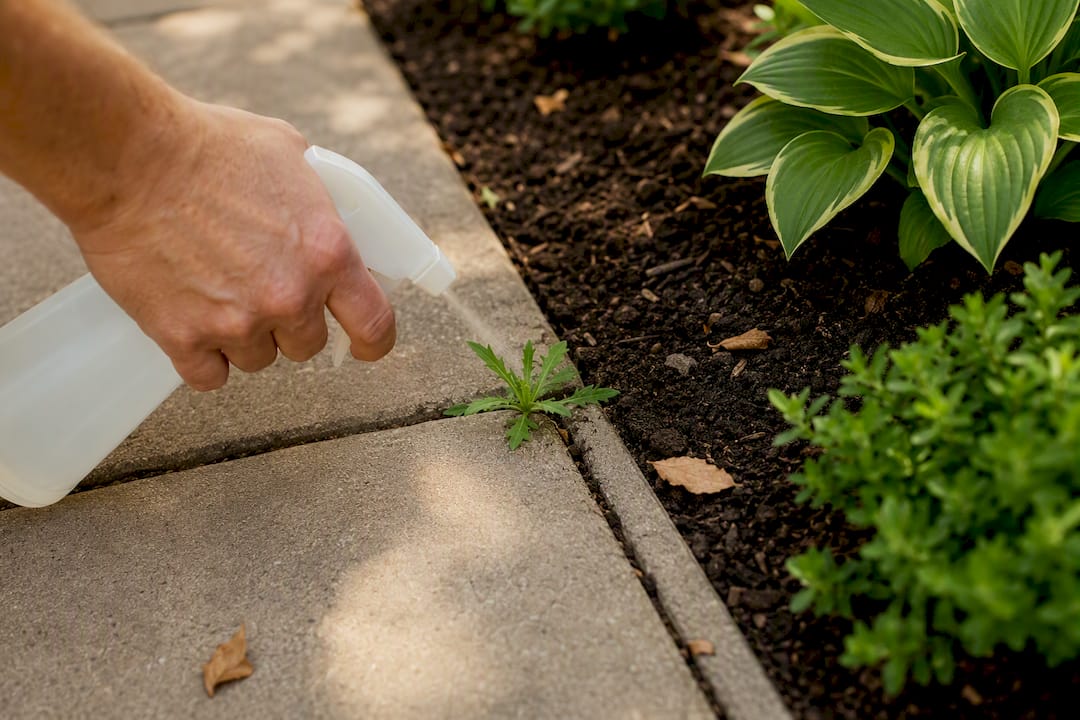
Save salt-and-vinegar mixes for driveway cracks and gravel paths where nothing else is growing. In beds and lawns, mechanical removal or a labeled fatty-acid product is the safer call.
Pro Tip: If a weed is growing in a crack between pavers, a salt-based spray is fine there. The moment it’s within a foot of soil you care about, switch to hand-pulling.
How Do You Get Rid of Deep-Rooted Perennial Weeds?
Perennial weeds like bindweed, dandelion, and Canada thistle store energy in rhizomes and taproots, which is why pulling the visible growth once rarely finishes the job. Every removal forces the plant to burn stored carbohydrates to regrow, and repetition is what eventually exhausts the root system.
Cornell’s weed science program recommends a defined schedule rather than sporadic pulling:
- Remove all top growth at first green-up in spring.
- Repeat every 10 to 14 days through the growing season, roughly 6 to 8 sessions the first year.
- Cut the frequency by half in year two as root reserves decline.
- Smother persistent patches with cardboard and mulch for a full season if pulling alone stalls.
- If a bed is still overrun after two seasons, dig out the root zone and replace the soil rather than fighting it indefinitely.
Combine cutting with targeted spot treatment on regrowth, and treat any patch that hasn’t improved after two seasons as a renovation project, not a maintenance task.
When Should You Do Each Organic Weed Task During the Year?
Timing separates gardeners who get ahead of weeds from gardeners who chase them all summer.
- Spring: Apply corn gluten meal before soil temperature climbs into the low-to-mid 50s°F, and hold off overseeding until after that window closes.
- Early summer: Hand-pull emerging annuals weekly; raise your mowing height if drought stress sets in rather than cutting short.
- Peak summer: Skip broadcast organic herbicide applications during hot, dry stretches. Stick to spot treatment.
- Fall: Aerate, overseed, and topdress with compost. This is the highest-leverage season for thickening turf before next year’s weed pressure builds.
Extension research consistently points to spring and fall as the windows where timing decisions produce the largest, most durable drop in weed pressure. If your lawn is thin going into fall, that’s the season worth prioritizing, and the spring lawn prep checklist from YardWoo Lawncare covers aeration and overseeding timing in more regional detail.
How Do Professional Landscapers Reduce Weed Pressure Long-Term?
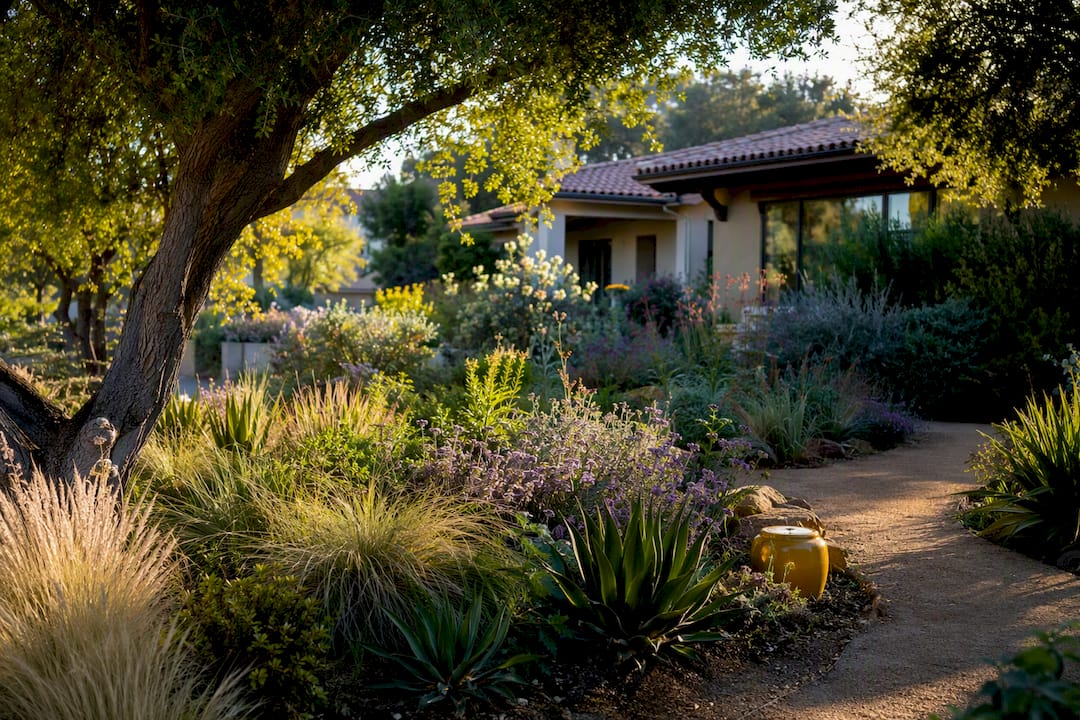
Sacredgardendesigns has spent more than 25 years designing water-wise landscapes across Los Angeles, work recognized with six HOUZZ Awards and a feature on HGTV’s Ground Rules. That project history points to three installation-level moves that outlast any spot treatment.
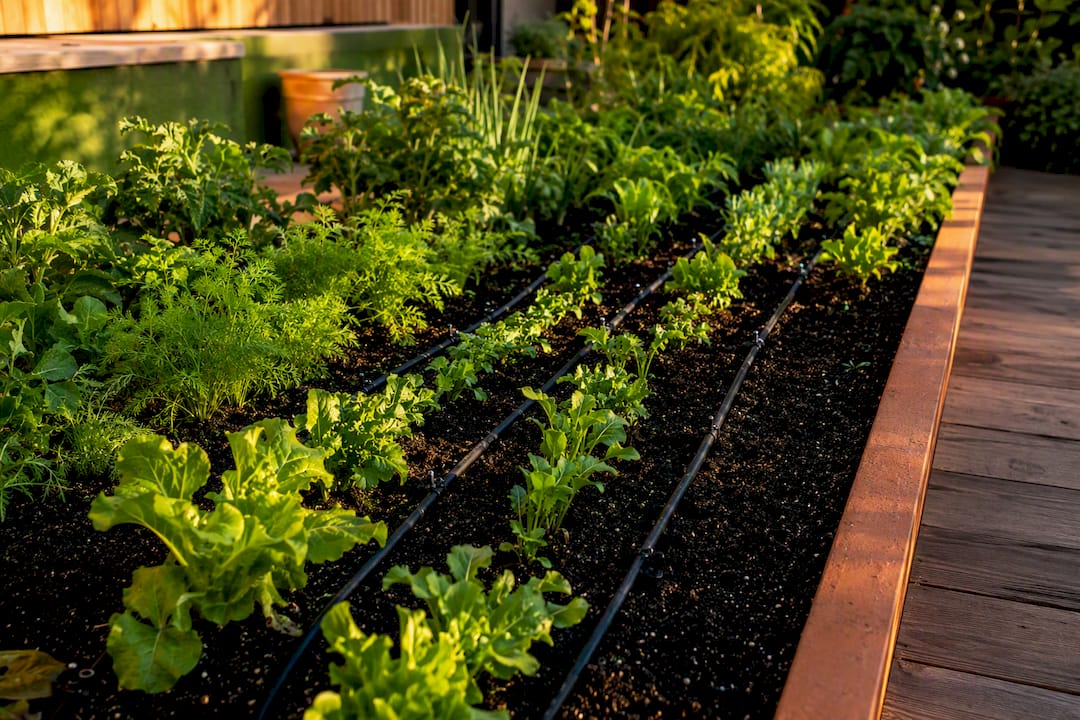
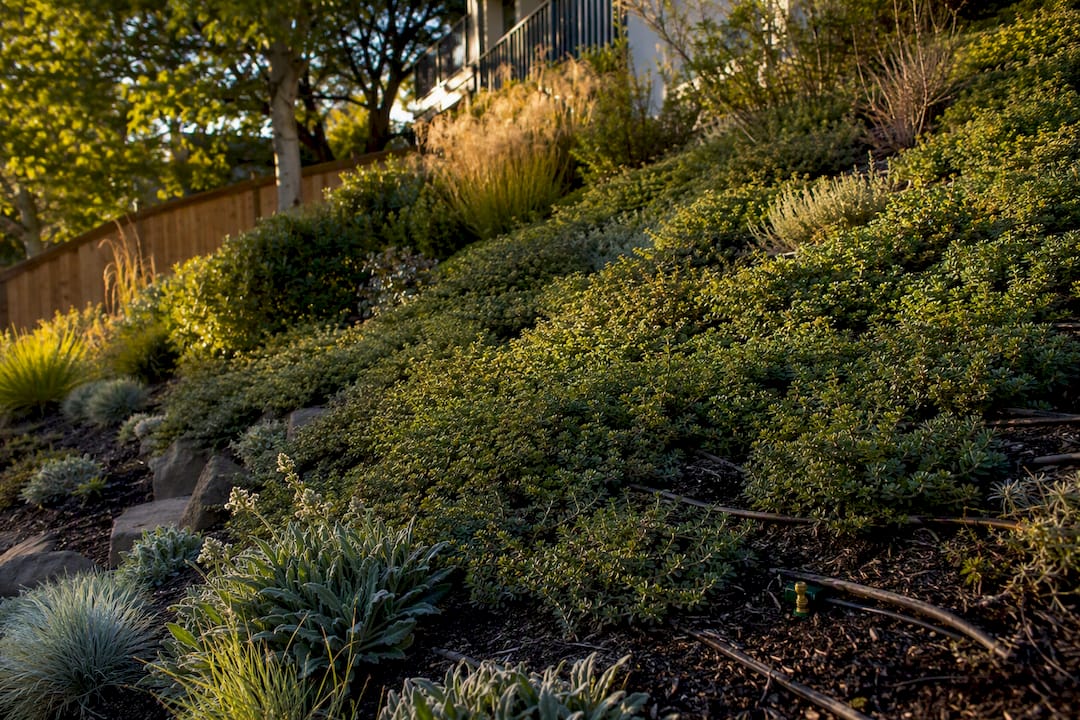
First, plant selection: dense, climate-appropriate groundcovers close the gaps weeds need to establish. Second, irrigation design: drip systems deliver water to root zones instead of broadcasting it across open soil where weed seeds germinate. Third, mulch and groundcover strategy applied at installation, not as an afterthought, so beds start weed-resistant rather than getting treated after the fact.
Picture a sloped backyard where turf struggles and bare soil erodes every winter. Regrading with drought-tolerant groundcover and drip lines removes both the erosion problem and the open soil weeds depend on.
Why the Standard Weed-Control Advice Misses the Point
Most weed-control content treats the topic like a shopping decision: which spray, which brand, which recipe. That framing sets gardeners up to fail, because it skips the one variable that actually predicts results, which is turf and soil density going into the season. A thin, stressed lawn will grow weeds no matter what you spray on it. A dense, well-fed lawn resists them even with minimal intervention.
The other blind spot is timing precision. Corn gluten meal applied two weeks late is close to worthless; applied correctly against soil temperature, it compounds over several seasons. Most gardeners either skip the timing math entirely or treat every organic product like it works the way glyphosate does, instantly and universally. It doesn’t, and expecting that is where frustration and product-hopping start.
If you take one thing from this, prioritize soil and turf density before you buy a single product. Everything else, mulch, contact herbicides, hand tools, works better once that foundation is in place, and worse without it.
— Denise
Ready for a Weed-Resistant Landscape? Here’s Where to Start
Sacredgardendesigns builds the soil health, irrigation design, and mulch strategy into a landscape from day one, so you’re not fighting weeds every weekend for the next decade. That’s the real difference between a DIY patch job and a designed landscape: the prevention work happens once, during installation, instead of every spring.

A consultation starts with a site visit where the team assesses your soil, drainage, and existing turf density, then maps out a plan that might include drip irrigation, groundcover selection, or a mulch renovation depending on where your weed pressure is coming from. If you’d rather handle it yourself first, the Sacred Garden Designs blog has project notes and maintenance tips worth reading before you commit to a bigger overhaul. When you’re ready to talk through options for your own yard, schedule a consultation with Sacredgardendesigns to get a plan built around your specific soil and sun conditions.