The best time to prune citrus is late winter into early spring, roughly February through April, once the danger of frost has passed, but before the tree pushes its main flush of new growth. Small maintenance cuts, like snipping suckers or a stray twig, can happen almost any time of year. What you want to avoid is heavy pruning during a hard freeze window or in the peak of summer sun, since both can leave your tree exposed to damage it doesn’t need.
TL;DR:
- Prune citrus between February and April, avoiding heavy cuts during early spring frost or peak summer heat, especially in areas prone to temperature extremes.
- Young trees mainly require removal of suckers below the graft union, while mature trees need thinning, deadwood removal, and canopy shaping for optimal health.
- Use proper tools for each branch size, disinfect equipment regularly, and protect large exposed cuts from sunscald with diluted latex paint or temporary shading.
- Never remove more than a third of the canopy at once, and avoid shearing or sealing wounds, as these practices hinder healing and increase disease risk.
- Professional pruning is recommended for large limbs, complex reshaping, or when safety and climate conditions demand expert handling.
Table of Contents
- When Should You Prune Citrus Based on Your Climate?
- When Should You Avoid Pruning Citrus Trees?
- How Should Pruning Priorities Change as Citrus Trees Age?
- How Do You Prune a Citrus Tree Step by Step?
- What Tools Do You Need to Prune Citrus Safely?
- How Do You Protect Exposed Wood After Pruning?
- What Should You Do for Citrus Aftercare Following Pruning?
- What Are the Most Common Citrus Pruning Mistakes?
- What Do Landscape Professionals Prioritize When Pruning Citrus?
- A Few Final Thoughts on Pruning Citrus Well
- Let Sacred Garden Designs Handle the Pruning You’d Rather Not Risk
- Where to Read More on Citrus Pruning
- Sources
- FAQ
When Should You Prune Citrus Based on Your Climate?
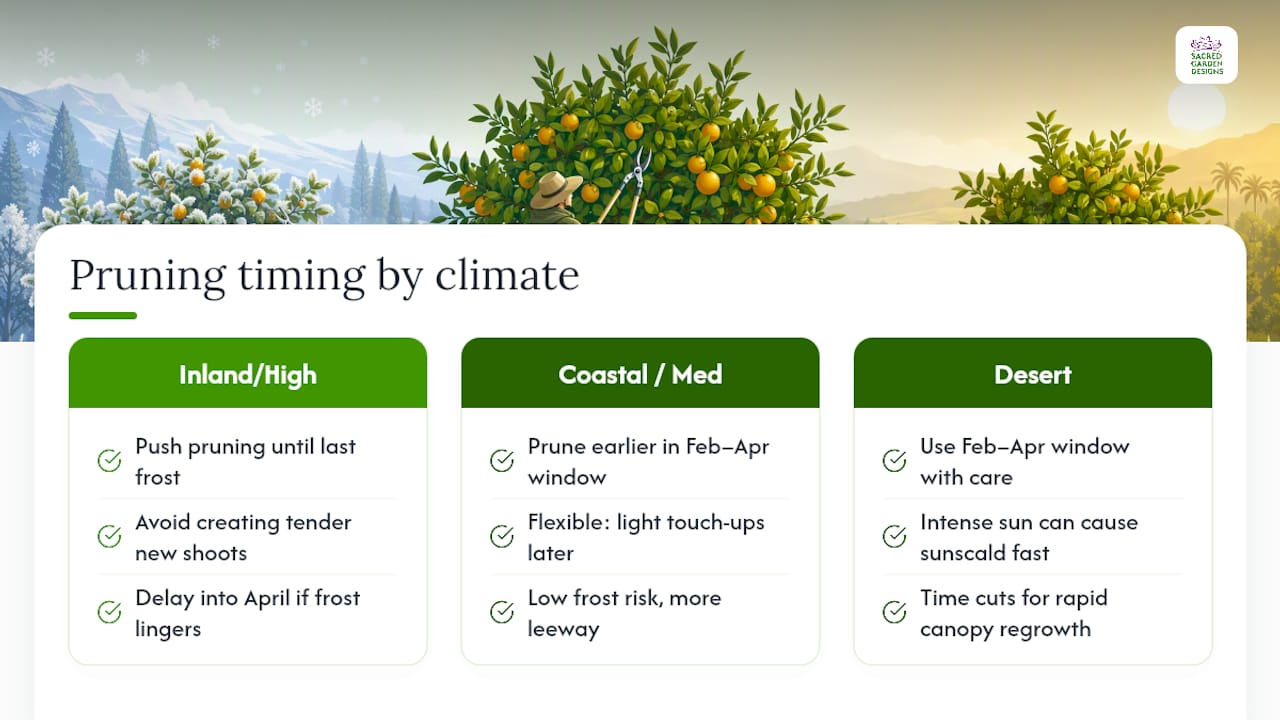
Most home gardeners do best sticking to the February through April window, and there’s a real reason behind that range beyond tradition. Pruning in early spring gives the tree time to grow fresh leaves that shade any newly exposed bark before the harsh summer sun arrives. Cut too late, and you’re left with bare wood baking under July heat with no canopy cover to protect it.
If you garden in a freeze-prone inland valley or a higher elevation spot where frost lingers into March, push your pruning schedule back until you’re confident the last frost has passed. Pruning encourages tender new shoots, and tender new shoots are exactly what a late cold snap will kill first. Wait for warmer, more stable nights before you make your cuts, even if that means pruning in April instead of February.
Gardeners in mild coastal or Mediterranean-type climates often have more flexibility. With little to no frost risk, you can prune earlier in the window and, in some cases, follow up with lighter touch-up pruning later in spring or even early summer without much worry. Warm, humid, or subtropical areas follow a similar logic. Since there’s rarely a true winter dormancy to work around, the priority shifts to avoiding the hottest, most intense sun months rather than avoiding frost.
Desert climates come with their own math. Arizona’s Cooperative Extension recommends the same general February to April window, but desert gardeners need to pay closer attention to sun exposure once cuts are made. Intense, dry desert sun on newly exposed bark can cause sunscald within days, not weeks, so timing pruning to let leaf cover regrow quickly matters even more here than in milder regions.
It’s also worth knowing that pruning timing isn’t one-size-fits-all across citrus varieties. A pruning strategy review published in Plants found that optimal pruning periods shift depending on cultivar and regional growing conditions, often tied to when a variety blooms and fruits. Early-ripening varieties and late-ripening ones don’t necessarily want the same calendar. If you’re growing a less common citrus variety, a quick check with your local extension office can save you from pruning at exactly the wrong moment for that specific tree.
When Should You Avoid Pruning Citrus Trees?
Bad timing causes more citrus problems than bad technique. Here’s what to steer clear of:
- Skip heavy pruning from November through January in freeze-prone areas. Cutting during this window pushes out tender new growth that frost will damage or kill, undoing whatever shaping work you just did.
- Avoid major pruning from May through mid-October in regions with intense summer sun. Freshly cut, sun-exposed wood scalds fast in high heat, and that damage can invite disease.
- Don’t prune right after a freeze, even if the tree looks rough. Wait until new growth appears, often by early summer, so you can see which wood actually survived before you start cutting away branches that might recover on their own.
- Don’t shear citrus like a hedge. Shearing cuts indiscriminately across the outer canopy, which encourages a dense shell of growth on the surface while starving the interior of light and air.
- Skip the wound dressing or pruning paint on cuts. Older advice recommended sealing pruning wounds, but current guidance advises against it because sealants trap moisture against the cut surface, which raises the risk of rot rather than preventing it. A clean cut left to air dry heals better on its own.
The common thread here is patience. Citrus recovers well from pruning done at the right moment, but the same cut made three weeks earlier or later can turn into a genuine setback for the tree.
How Should Pruning Priorities Change as Citrus Trees Age?
A three-year-old lemon tree and a fifteen-year-old orange tree need completely different things from you at pruning time, and treating them the same is one of the more common mistakes home growers make.
Young trees need very little pruning, and less is genuinely more here. Your main job is removing suckers that sprout below the graft union, since those shoots come from rootstock and will never produce the fruit you actually want. Beyond that, limit your cuts to correcting obviously awkward growth. Some growers also remove early fruit set on very young trees so the plant puts its energy into building strong branch structure instead of ripening a handful of lemons in year two. It feels counterintuitive to pull off fruit on purpose, but a tree with solid scaffold branches will out-produce a rushed one for years afterward.
As a tree moves into its maturing years, roughly years three through seven depending on the variety, pruning shifts toward establishing the scaffold branches that will carry the tree’s shape for the rest of its life. This is when you’re working toward that classic open, vase-shaped canopy extension guidance recommends, with three or four main limbs spreading outward rather than a single dominant leader crowding everything else out.
Mature trees need a different kind of attention. At this stage, pruning is mostly about removing dead or diseased wood, thinning crowded interior growth to let light and air reach the center, and controlling the skirt (the lower branches that droop and touch the ground). Ground-touching branches invite pests like ants and provide easy access for soil-borne disease, so lifting the skirt a foot or two off the ground is one of the more valuable things you can do for a mature tree’s long-term health. Mature trees also tolerate less frequent pruning overall. A once-a-year check for problem wood, rather than an aggressive annual reshaping, usually serves the tree better.
How Do You Prune a Citrus Tree Step by Step?
Once you know your window and your tree’s stage, the actual cutting process comes down to a handful of repeatable steps.
Before you start:
- Check your tools are clean and sharp. Dull blades crush stems instead of cutting cleanly, which slows healing and invites disease.
- Walk the entire tree first and mentally map which branches need to go before you make a single cut. Cutting reactively, branch by branch, tends to lead to over-pruning.
- Confirm there’s no frost in the immediate forecast and that you’re not in the middle of a summer heat spike.
The pruning sequence:
- Remove dead and diseased wood first. This is non-negotiable and should happen every time you prune, regardless of season or tree age. Dead wood contributes nothing and can harbor pests.
- Remove suckers, especially any growing from below the graft union or straight up from the base of the trunk.
- Thin crossing or rubbing branches. Where two limbs cross and rub against each other, pick the stronger, better-positioned one and remove the other at its point of origin.
- Shorten or remove watersprouts, the fast-growing vertical shoots that shoot straight up from interior branches and add nothing to the tree’s shape or fruiting potential.
- Step back and assess the canopy shape before making any further cosmetic cuts. Aim for that open, vase-like form with light reaching the interior.
For small to medium branches, make a single clean cut just above an outward-facing bud, angled slightly downward and away from the bud. This directs new growth outward rather than back into the center of the tree, which is exactly what extension guidance recommends for keeping the canopy open.
Large limbs need a different approach entirely: the three-part cut. First, make an undercut a short distance out from the branch collar (the slightly swollen area where the branch meets the trunk). Second, make a top cut a little farther out than the undercut to remove the bulk of the limb’s weight. Third, finish with a clean final cut just outside the branch collar. Skipping straight to a single cut on a heavy limb almost always tears the bark down the trunk as the branch falls, leaving a much bigger wound than necessary.
When to stop: the general rule for many trees is to never remove more than a third of the live canopy in a single session. Citrus is more forgiving of a light touch than most, and in practice, most healthy citrus trees need noticeably less than that one third figure to stay in good shape. If you’re eyeing a cut that would take you anywhere close to that limit, it’s worth stopping and finishing the rest next season instead.
Pro Tip: Photograph your tree before you start pruning. It’s remarkably easy to lose track of how much you’ve already cut once you’re a dozen branches in, and a “before” photo gives you an honest reference point to check yourself against midway through.
What Tools Do You Need to Prune Citrus Safely?
Matching the tool to the branch size isn’t just about efficiency. It’s about the quality of the cut you leave behind.
- Bypass hand pruners handle anything up to about three-quarters of an inch in diameter, and their scissor-action blades leave a cleaner cut than anvil-style pruners, which tend to crush stems.
- Loppers extend your reach and cutting power for branches roughly three-quarters of an inch up to two inches thick.
- A pruning saw takes over for anything larger than two inches, and it’s the right tool for executing the three-part cut on major limbs.
- A pole saw or pole pruner helps you reach higher growth without a ladder, which matters more than people think given how many pruning injuries involve falls.
- Call a professional once you’re dealing with limbs that require a chainsaw, any cut near power lines, or structural work on a tree taller than you can safely reach from a sturdy ladder.
Sanitation matters more with citrus than a lot of home gardeners realize, since several citrus diseases spread easily on contaminated blades. Wipe or dip your pruning tools in a disinfecting solution between trees, particularly if you’re working on multiple citrus plants in one session or if you’ve cut any wood showing signs of disease. A quick wipe with rubbing alcohol between trees is a fast, low-cost habit that can prevent you from spreading a problem from one plant to your entire yard.
On the safety side, wear gloves and eye protection, especially with citrus, since the thorns on many varieties are sharp enough to draw blood through a thin shirt sleeve. If you need a ladder, make sure it’s on level ground and have someone nearby, and never overreach past the ladder’s rails to make one more cut.
How Do You Protect Exposed Wood After Pruning?
Bark that’s spent its whole life shaded by leaves is not built for direct sun exposure. Cut away the canopy that was protecting a trunk or major limb, and that suddenly exposed bark can develop sunscald within days, especially in hot, dry climates. Sunscald isn’t just cosmetic. It cracks the bark and creates an entry point for disease.
The standard fix is a diluted latex paint wash. Mix interior latex paint with water at roughly a 50:50 ratio and brush it directly onto any large limb or trunk section that’s now exposed to direct sun. The white color reflects sunlight the way natural bark cover once did, buying the tree time to regrow enough leaf canopy for lasting shade. Skipping this step on a major cut leaves exposed wood vulnerable to Hendersonula bark rot, a disease serious enough that removing the infected wood is currently the only real fix once it takes hold.
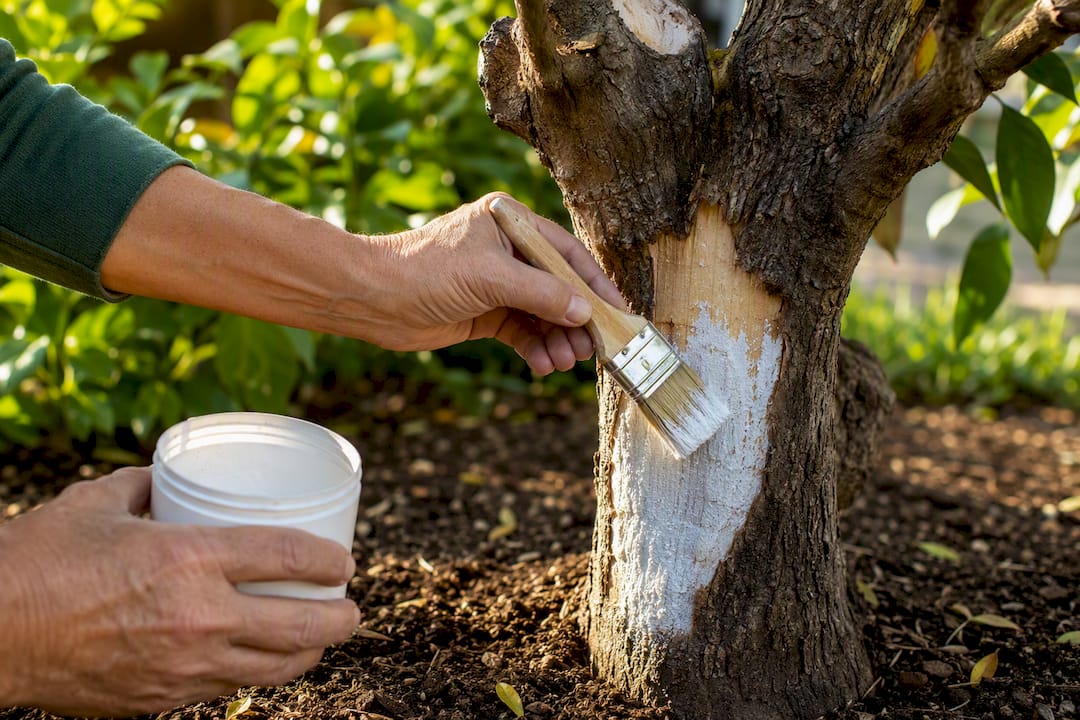
If you don’t have paint on hand immediately after a big cut, a temporary shade cloth or an old sheet propped up on stakes can buy you a day or two, but treat that as a stopgap, not a solution. For pruning jobs involving significant limb removal on a large or older tree, this is also a reasonable point to bring in a professional who handles this kind of exposure protection routinely.
What Should You Do for Citrus Aftercare Following Pruning?
Pruning is really the start of a short recovery period, not the end of the job. What you do in the following weeks affects how well the tree bounces back.
Hold off on fertilizing right at the moment of pruning. Most regional extension guidance points toward beginning fertilizer applications in spring, timed with the tree’s natural growth flush rather than immediately after a pruning session. Feeding too early or too heavily right after a hard prune can push weak, leggy growth before the tree has rebuilt enough leaf area to support it.
Watering needs a light adjustment too. Freshly pruned trees, especially ones that lost a meaningful portion of canopy, need slightly less water in the short term since there’s less foliage transpiring moisture. Overwatering a recently pruned tree is a more common mistake than underwatering it, so check soil moisture before you assume the tree needs a deep soak.
In the weeks after pruning, keep an eye out for a few specific warning signs. Watch for pest flushes, since aphids and other soft-bodied insects are drawn to the tender new growth that follows a prune. Check any painted or exposed wood for early sunscald signs like cracking or discoloration. And if pruning followed a cold snap, monitor for delayed freeze damage that sometimes doesn’t show up until weeks later, as wood that looked alive initially can still die back.
What Are the Most Common Citrus Pruning Mistakes?
Even well-intentioned gardeners fall into a handful of predictable traps:
- Treating the one-third rule as a target instead of a ceiling. That figure is a maximum limit for many trees, not a goal to hit every season. Citrus, in particular, tends to need far less removed than that to stay healthy and productive.
- Shearing the outer canopy instead of thinning it. Shearing creates a dense green shell with a dead, shaded interior, the opposite of the open structure citrus needs to fruit well.
- Pruning before you can assess freeze damage. Cutting away branches that look damaged right after a cold snap sometimes means removing wood that was going to recover fine on its own.
- Applying wound sealant or dressing to fresh cuts. It feels protective, but it traps moisture against the wound and raises rot risk instead of lowering it.
- Ignoring seasonal sun intensity. A cut made in February heals under mild spring sun. The same cut in August, on newly bare bark, can scald within days in hot climates.
What Do Landscape Professionals Prioritize When Pruning Citrus?
Working in water-wise landscapes across drought-prone regions changes how you think about pruning priorities, and Sacredgardendesigns approaches citrus pruning with that lens front and center. Canopy shade isn’t just about the tree’s own comfort in a hot climate. It’s doing real work protecting soil moisture and shielding trunk bark from sun exposure that gets more intense every summer. Over-pruning a citrus tree in a drought-prone yard doesn’t just risk sunscald on the trunk. It also strips away shade that was helping keep the root zone cooler and reducing water loss from surrounding soil.
That’s a different calculation than pruning purely for shape or aesthetics, and it’s one reason a lighter touch tends to serve drought-region gardeners better than an aggressive reshaping session.
There’s also a clear line between what’s reasonable to handle yourself and what calls for professional help. Large limb removal, any work requiring a ladder above a comfortable reach, and complex reshaping on a mature tree that’s gotten away from its owners for a few seasons are all good reasons to bring in a professional crew rather than tackle it solo. A typical professional pruning visit includes an assessment of the tree’s structure and health, a plan built around the specific climate and water conditions of the property, the actual pruning work with proper sanitation between trees, and guidance on aftercare like watering adjustments and monitoring for stress. For homeowners managing multiple citrus trees or a broader drought-tolerant landscape, that kind of visit often catches issues, like early pest pressure or a graft union buried too deep, that go unnoticed until they’ve become bigger problems.
A Few Final Thoughts on Pruning Citrus Well
If you take one thing from all of this, let it be a short mental checklist: confirm you’re in your climate’s safe pruning window, remove dead and diseased wood first, protect any large exposed cuts with diluted latex paint right away, and don’t touch a frost-damaged tree until new growth tells you what actually survived.
Beyond that, resist the urge to over-manage. Citrus trees have grown and fruited for centuries without a gardener obsessing over perfect symmetry. Prune to solve a real problem: dead wood, poor airflow, a branch dragging on the ground, not to chase an ideal shape that exists mostly in your head. A tree pruned with restraint recovers faster and fruits better than one reshaped every season out of habit.
— Denise Buchanan
Let Sacred Garden Designs Handle the Pruning You’d Rather Not Risk
Professional landscaping services offer a practical alternative to guessing your way through a ladder job on a mature citrus tree: crews that know how to time cuts around specific microclimates, protect exposed wood correctly, and keep a drought-wise yard’s water use in check while performing the work. For homeowners managing broader yards, the same water-wise thinking is important across irrigation design, slope stabilization, and general garden maintenance.

If your citrus tree has gotten ahead of you, with large limbs that need the three-part cut, a canopy that hasn’t been thinned in years, or sunscald risk on a trunk that’s already lost too much shade, that’s exactly the kind of job worth handing off. Professional tree trimming and maintenance services cover this type of work, alongside sustainable landscape design projects carried out with long-term expertise. Visit the Sacred Garden Designs site to see current services and request a site visit for your citrus trees or your wider landscape.
Where to Read More on Citrus Pruning
A few primary sources back most of the timing and technique guidance in this article, and they’re worth bookmarking if you want to go deeper on a specific point.
- UA Cooperative Extension’s citrus pruning guide covers timing windows, the three-part cut, and sunscald prevention in detail, and is especially useful for desert and arid-climate gardeners.
- UF/IFAS Extension Nassau County explains the vase-shaped canopy goal and proper bud-facing cut technique.
- UC ANR’s citrus growing guide breaks down pruning needs by tree age, from young trees to mature, established ones.
- The pruning strategy review in Plants offers useful nuance on how cultivar and regional bloom timing shift the ideal pruning calendar.
Sources
- Pruning Citrus | UA Cooperative Extension
- Q: When do I fertilize and prune citrus? – UF/IFAS Extension Nassau County
- Growing Fabulous Citrus (UC ANR)
- Pruning strategy review (MDPI Plants, 2023)
FAQ
When should you not prune citrus trees?
Avoid heavy pruning from November through January in freeze-prone areas, since cutting stimulates tender new growth that frost easily damages. Also skip major pruning during the hottest summer stretch, and never prune immediately after a freeze until new growth reveals which wood survived.
What month should you trim a lemon tree?
Late February through April is the general target for most climates, timed to happen after frost risk passes but before summer heat sets in. Gardeners in freeze-prone or high-elevation areas should push this later into March or April to stay safely past the last frost date.
What is the one third pruning rule, and does it apply to citrus?
The one third rule caps how much live canopy you remove in a single pruning session at roughly a third of the tree’s total growth. For citrus specifically, that figure is a ceiling rather than a target. Most healthy citrus trees need considerably less removed to maintain good structure and fruiting.
What are the most common mistakes people make pruning citrus?
The biggest ones are shearing the canopy like a hedge instead of thinning it, pruning before assessing freeze damage, and applying wound sealant to fresh cuts, which traps moisture and raises rot risk instead of preventing it. Skipping trunk protection like diluted latex paint after removing a large limb is another frequent oversight that leads to sunscald.