The best campus landscaping ideas share one trait: they give people a reason to stay outside. That means shade to sit under, flexible places to study or meet, planting that survives your climate on a modest water budget, and paths everyone can use. Below are the ideas that matter most, with real campus projects behind them, plus notes for commercial courtyards and corporate grounds.
TL;DR
- Design for many uses at once: seating for outdoor classes, a lawn for events, quiet corners for recovery.
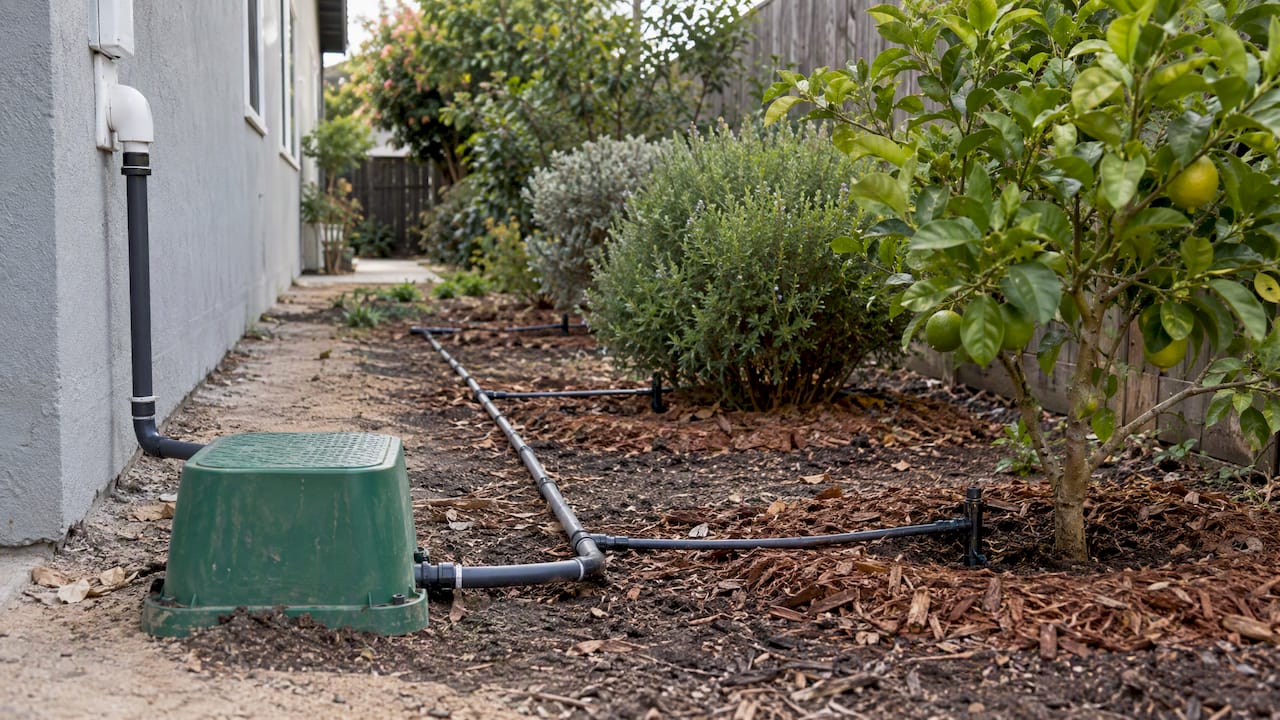
- Treat water as a design material: capture stormwater, reuse condensate, and plant low-water natives with drip irrigation.
- Shade comes first in hot climates. Mature or instant-shade trees and a mix of sun and shade make a space usable.
- Restorative planting, pollinator habitat and edible beds give a campus a purpose beyond curb appeal.
- Plan accessibility, lighting and maintenance on day one, not after the plants are in.
Table of Contents
- Start with how people actually use the space
- Build multifunctional outdoor spaces
- Make water part of the design
- Use trees and hardscape to beat the heat
- Add gardens for pollinators, food and stress relief
- Commercial courtyard design: small footprint, big return
- Plan for accessibility, safety and upkeep
- Campus beautification: identity and character
- Our perspective
- Plan your campus or courtyard with us
- FAQ
- Sources
Start with how people actually use the space
Before choosing plants or paving, watch where people walk, wait, eat and linger. One 2025 study of campus landscapes found that more sky openness, more grass and people, and fewer buildings, cars and bare earth were associated with a stronger sense of safety, comfort and belonging. In plain terms: open, green, active places feel better than hard, empty, car-dominated ones.
A useful first pass is to mark three things on a site plan:
- Desire lines: the shortcuts people already wear into the turf. Pave or plant to match them rather than fight them.
- Dead zones: leftover strips and corners nobody uses. These are your cheapest places to add seating, planting beds or a small garden.
- Heat and glare spots: where sun hits hardscape all afternoon. These are the first candidates for trees or shade structures.
Build multifunctional outdoor spaces
Campuses rarely have room for a separate space for every activity, so the strongest designs stack uses. At the University of Texas at Austin, the Belo Center courtyard combines seating for outdoor classrooms, gathering areas, a performance lawn and cafe space. One well-organized footprint serves class, lunch and events.
Research from Cal Poly students reviewing the literature points to the same thing: lawns and trees offer versatility, letting students decide for themselves whether to read, talk or do yoga. A 2025 paper argues that universities should prioritize spatial efficiency and multifunctionality to resolve the competing demands of study, socializing and recreation.
Ideas you can copy
- Outdoor classroom nodes: movable or fixed seating in a circle under a tree canopy, with a durable surface underfoot.
- A flexible lawn: sized for a small concert or a pickup game, edged with a seat wall so people can watch.
- Mixed seating: benches, steps, ledges and loose chairs, so individuals and groups both find a spot.
- Edge cafe space: a patio zone next to a food service door, shaded and screened with planting.
Make water part of the design
In dry regions, irrigation is the line item that haunts a campus budget. The better answer is to design the landscape to catch, clean and reuse water.
Stormwater that doubles as scenery
Arizona State University’s Orange Mall, completed in August 2018, uses a connected system of biodetention basins, terraced steps, steel bridges and a rain garden to manage runoff. It also uses building air-conditioning condensate as supplemental irrigation, with native or desert-adapted plants on drip.
At Belo Center, 11,797 square feet of permeable pavers and a 12-foot-by-120-foot bioswale handle infiltration and runoff. The courtyard’s centerpiece is a recirculating biofiltration fountain, and it irrigates with condensate and harvested rainwater.
Low-water planting that still looks designed
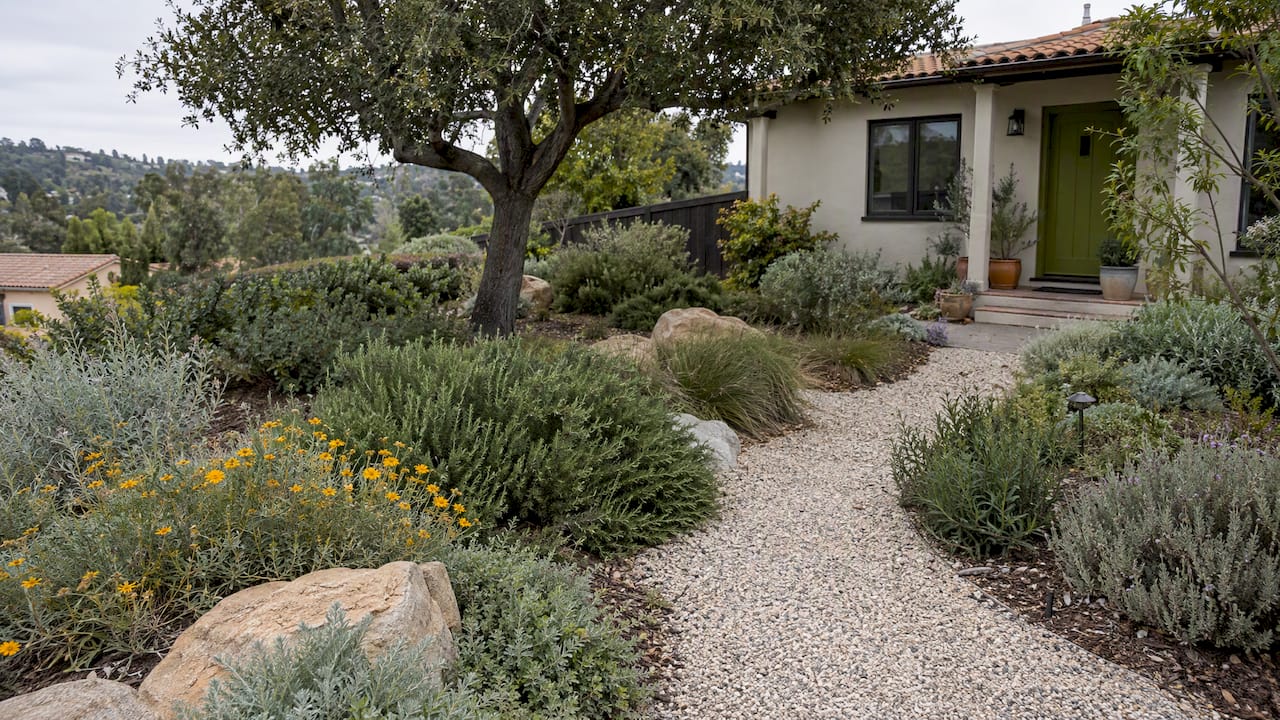
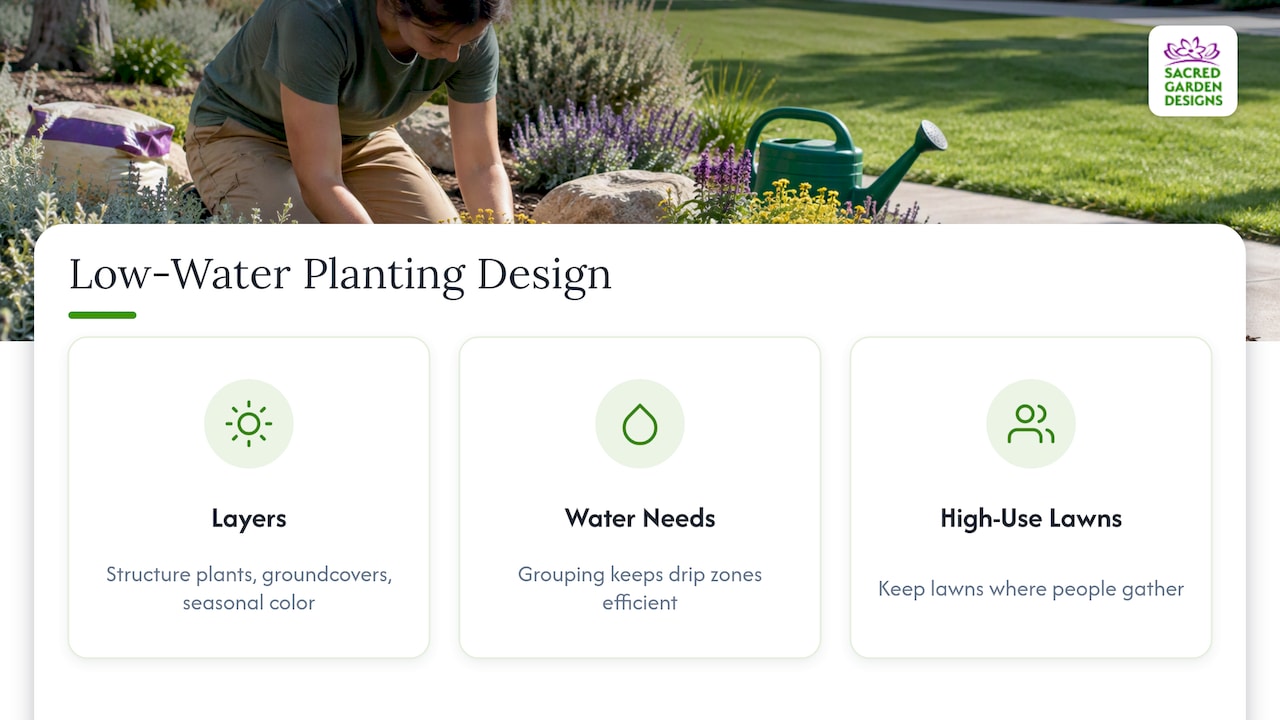
Low-water does not mean bare gravel. Layer structure plants, groundcovers and seasonal color, and group plants by water need so drip zones stay efficient. If you are replacing turf in part of a campus, our guide to matching lawn alternatives to play, pets, shade and water savings shows how to decide what stays green and what does not. For plant palettes and irrigation savings, see plant-forward drought tolerant landscaping and our notes on lush drought tolerant groundcovers.
Keep a few high-use lawns where people really gather. Everything else is a candidate for something that needs less water.
Use trees and hardscape to beat the heat
Shade is the single most valuable amenity on a hot campus. ASU’s Orange Mall uses a date palm grove to give instant shade while younger trees establish. Native species such as aloe vera and deergrass support pollinators and need little water. The project also uses suspended pavement to support large tree growth, so roots have room under the walkway.
Three practical lessons:
- Plant trees for the long game, but buy some shade now. Pair fast shade (mature specimens, structures) with slower, longer-lived trees.
- Give roots room. Trees under paving fail without enough soil volume. Plan it before paving goes in.
- Choose paving for heat and upkeep. ASU used high solar reflectance index (SRI) concrete in modular, replaceable sections, which keeps repairs simple.
For the evidence on cooling with canopy, see our article on trees for climate modification. If shade is deep under buildings, dry shade plants cover the planting side.
Add gardens for pollinators, food and stress relief
Biodiversity
The Belo Center courtyard uses native plants, 20 species of which attract pollinators, and some serve as butterfly larval hosts. At UC Davis, the Savageau Courtyard (completed 2022) uses decomposed granite for teaching patios and low-water sculptural plants with year-round interest and pollinator habitat. It also upcycles discarded campus furniture, uses repurposed street signs as tables and shows natural cooling with 3D-printed terra cotta towers.
Restorative corners
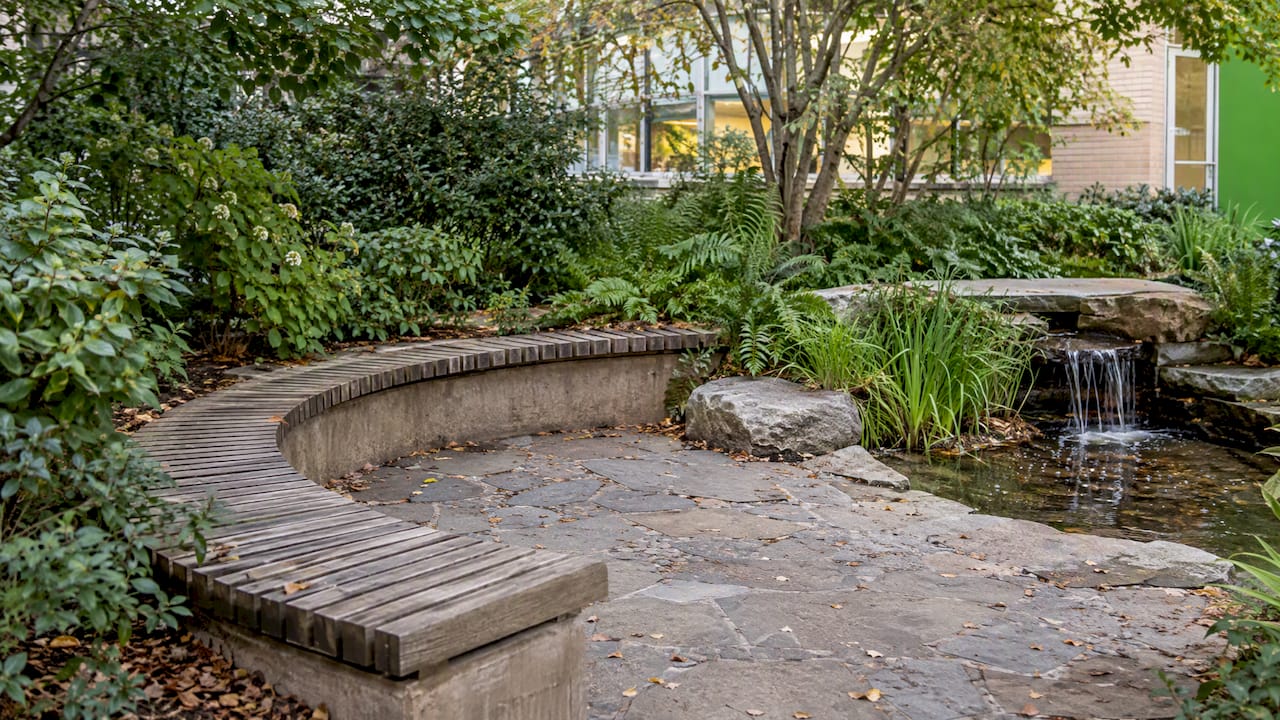
Carleton University’s outdoor master plan describes “Relax and Recharge” nodes, planting native trees and shrubs densely to simulate a forest and reduce stress through nature exposure. Researchers have also noted that lawns and ponds can aid attention recovery through “soft fascination”. On compact urban campuses, small open spaces can offer close contact with restorative elements and more controllable microclimates.
A small version: a bench ring inside a dense native shrub border, with a sound-softening water feature and no screens.
Edible beds
A teaching garden turns landscaping into curriculum: herbs, fruit shrubs and raised vegetable beds next to a dining hall or science building. Our guide to edible landscaping design explains how much of a space to give over to food, and drip irrigation for raised beds keeps the water use sensible.
Commercial courtyard design: small footprint, big return
Corporate and commercial courtyards face the same problem as campuses in miniature: little space, many uses. The ideas scale down well.
- One centerpiece. A fountain, a specimen tree or a sculptural planting gives the space an identity. Belo Center’s biofiltration fountain is a good model.
- Zones, not clutter. A shaded lunch edge, a small meeting corner and a planted buffer are usually enough.
- Containers and clean lines. Potted trees and a simple palette suit coffee breaks and small meetings where in-ground planting is impossible, such as over a parking structure.
- Water-wise by default. Drip lines, mulch and native or desert-adapted plants keep the courtyard green without a big utility bill. Local rules matter: in Los Angeles, see our summary of irrigation schedule rules.
- Texture underfoot. Decomposed granite, as at UC Davis, is a soft, permeable surface. Edging is what makes it last, which we cover in fixing weak edging for a decomposed granite patio.
Plan for accessibility, safety and upkeep
Beautiful landscapes that people cannot reach or do not feel safe in will sit empty.
- Accessibility and wayfinding. Carleton’s plan calls for universal accessibility, clear wayfinding and safe, well-lit pathways. Campus planning guides likewise say pedestrian routes should have clear sightlines, adequate lighting and consistent signage.
- Inclusion. Cal Poly’s guidelines say inclusive spaces need a mix of sun and shade and flexible seating for individuals and groups.
- Fire-prone regions. If your campus sits near wildland, choose plants and mulch placement with your local fire authority’s defensible-space guidance in hand, and keep trees pruned and debris cleared on a schedule.
- Maintenance. Write the maintenance plan during design: who prunes, who checks drip lines, who clears basins. Our garden maintenance schedule and irrigation leak troubleshooting guides are a good starting checklist.
Campus beautification: identity and character
Beautification is more than flowers at the entrance. The UNSW planning guide recommends natural and paved landscapes that strengthen identity, legibility and attractiveness, with consistent furniture, lighting, signage and paving, and public art. Carleton’s plan goes local, recommending locally quarried stone and large boulders to reflect the region’s geology. Use materials and plants from your own region and the campus starts to look like it could only be yours.
Our perspective
We have spent more than 25 years designing water-wise, sustainable landscapes in Los Angeles and beyond, and the pattern holds across yards, parks and larger sites: the landscapes people love are the ones that work hard. A courtyard that cools the air, cleans runoff, hosts pollinators and gives people a calm place to sit is not a luxury. It is the practical answer to drought and heat.
Our advice to anyone planning a campus or commercial grounds: begin with water and shade, then add beauty and meaning on top. Choose plants that suit the climate, design so the irrigation can shrink over time, and let the people who use the space shape what goes in it. Artistry and sustainability are not in tension. The best projects are the ones where you cannot tell which decision was which.
— Denise Buchanan
Plan your campus or courtyard with us
If you are weighing a courtyard, quad edge or commercial grounds, a conversation about site conditions, water and shade is the best first step. We offer an initial landscape consultation, and you can see everything from design to installation, irrigation, hardscape, tree trimming and ongoing maintenance on our services page. Our landscape design services page covers how design projects are scoped.
FAQ
What is campus beautification?
It is the work of improving how a campus looks and feels through landscape, paving, lighting, furniture, signage and art. Good beautification also builds identity and makes places easier to navigate, as planning guides such as UNSW’s recommend. It works best when it is tied to how people use the space.
What is the 3-5-7 rule in landscaping?
It is a common design rule of thumb that groups plants in odd numbers, such as three, five or seven, because odd groupings look more natural than pairs or even rows. It is a guideline, not a regulation. On a large campus, apply it to plant masses and trees rather than single shrubs.
How do I make a campus courtyard feel welcoming on a small budget?
Start with shade, seating and a single focal element, then add planting in layers over time. Containers, mulch and drip irrigation are inexpensive ways to add green quickly. Fix the traffic flow and lighting first, since those decide whether people stay.
Which plants suit a drought-prone campus?
Native and regionally adapted plants on drip irrigation are the most reliable base, as ASU’s and UC Davis’s projects show. Group them by water need and use mulch to keep soil cool. Ask a local landscape professional which species suit your soil, microclimate and fire risk.
Sources
- Identification and Configuration Optimization of Key Campus Landscape Elements (MDPI, 2025)
- Belo Center for New Media, Landscape Performance Series
- Arizona State University Orange Mall Green Infrastructure, Landscape Performance Series
- Savageau Courtyard at Cruess Hall, UC Davis Arboretum and Public Garden
- Design Guidelines for Activating Outdoor Spaces, Cal Poly
- Resilience and Liveability as Drivers of Sustainability, Sepe (2025)
- Healthy campus by open space design
- Carleton University Outdoor Space Master Plan, 2020
- UNSW Campus Planning and Design Guide