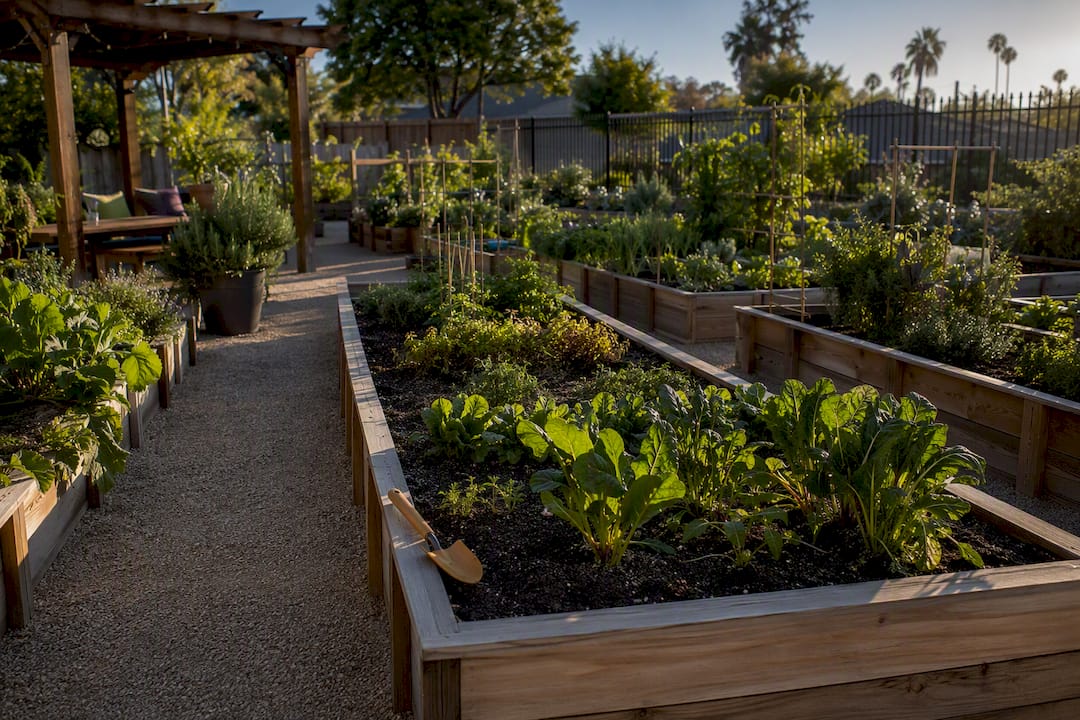
For most home gardeners, a short hands-on workshop or a multi-week guided online course is the fastest path from bare dirt to a full harvest basket. A four-session local workshop or a self-paced online program typically runs six weeks to a few months, costs somewhere between $45 and $499 depending on depth, and should leave you able to read your site, plan a planting calendar, build healthy soil, water efficiently, and manage pests without synthetic sprays. Programs from university extension offices and design-focused academies offering edible garden courses both fit this mold, just with different levels of polish and design emphasis.
TL;DR:
- Structured courses, whether in-person or online, teach essential gardening skills like site analysis, soil health, and pest management that help prevent common beginner mistakes.
- Courses ending with a garden design project prove more effective, with practical application surpassing memorization through quizzes.
- Prices generally range from $45 to $499 depending on format and scope, with additional costs for seeds, amendments, and site assessments.
- Opt for courses with clear syllabi, experienced instructors, and real deliverables to ensure practical learning and support post-course application.
- Lessons that incorporate drought-resistant and water-wise design principles prepare gardeners to build resilient, sustainable edible landscapes.
Table of Contents
- Which Course Format Actually Fits How You Learn?
- What Should the Syllabus Actually Cover?
- How Do You Choose the Right Course?
- What Does an Edible Garden Course Actually Cost?
- Why some edible garden academies stand out
- A Practitioner’s Take on Why Structure Beats Trial and Error
- Where to Verify Syllabus Details and Schedules
- Learn Edible Gardening the Sustainable, Design-First Way
- Sources
- FAQ
Which Course Format Actually Fits How You Learn?
Three formats dominate the field, and each one solves a different problem.
In-person workshops run as short series, often four sessions over a month, with real dirt under your fingernails by the second class. They suit people who learn by doing and want an instructor correcting their technique in real time.
Live online cohorts meet on a schedule, usually once a week for several weeks, and keep the structure of a classroom without the drive. You get scheduled accountability and direct access to an instructor, minus the commute.
Self-paced online courses hand you the material and let you move through it on your own clock, sometimes with lifetime access. Online edible gardening courses commonly range from $75 to $499 depending on scope and access length.
Where to look:
- University extension programs and land-grant colleges
- Community college continuing-education catalogs
- Adult-education vendors in your city or county
- Permaculture-focused course platforms
- Design-led academies, including vendor-hosted programs similar to Sacredgardendesigns’s
Registration windows tend to cluster around spring and fall planting seasons, and class sizes for hands-on sessions generally have participant limits to keep sessions engaging, so book early if the timing matters to you.
What Should the Syllabus Actually Cover?
A course worth your money teaches the same core skill set regardless of format. Standard programs cover site analysis, seasonal crop planning, soil health, irrigation, and pest management as the backbone of any serious curriculum.
Here’s what that breaks down to in practice:
- Site analysis: mapping sun exposure, microclimates, drainage patterns, and a basic soil test
- Soil health and fertility: composting, no-dig methods, amendments, and cover cropping
- Seasonal planning and succession planting: calendars and staggered sowing to avoid harvest gaps
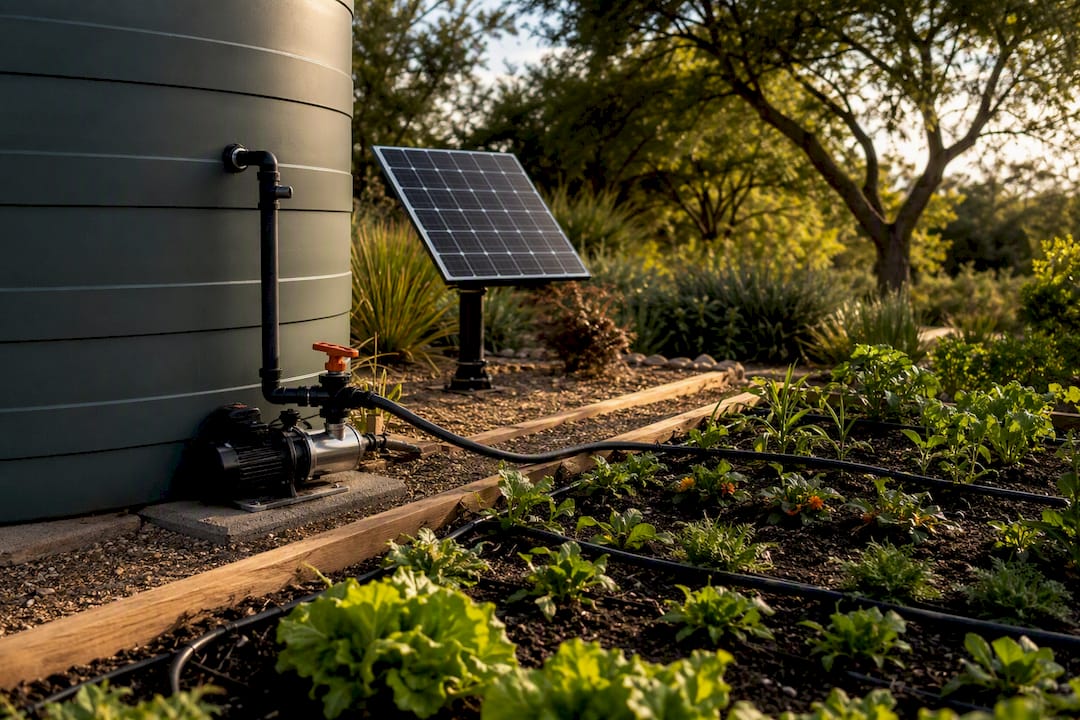
- Irrigation and water-wise practices: drip systems, watering timing, and reading soil moisture
- Pest and disease management: integrated pest management and non-chemical tactics
- Propagation and plant selection: seed starting, transplants, and container-friendly varieties
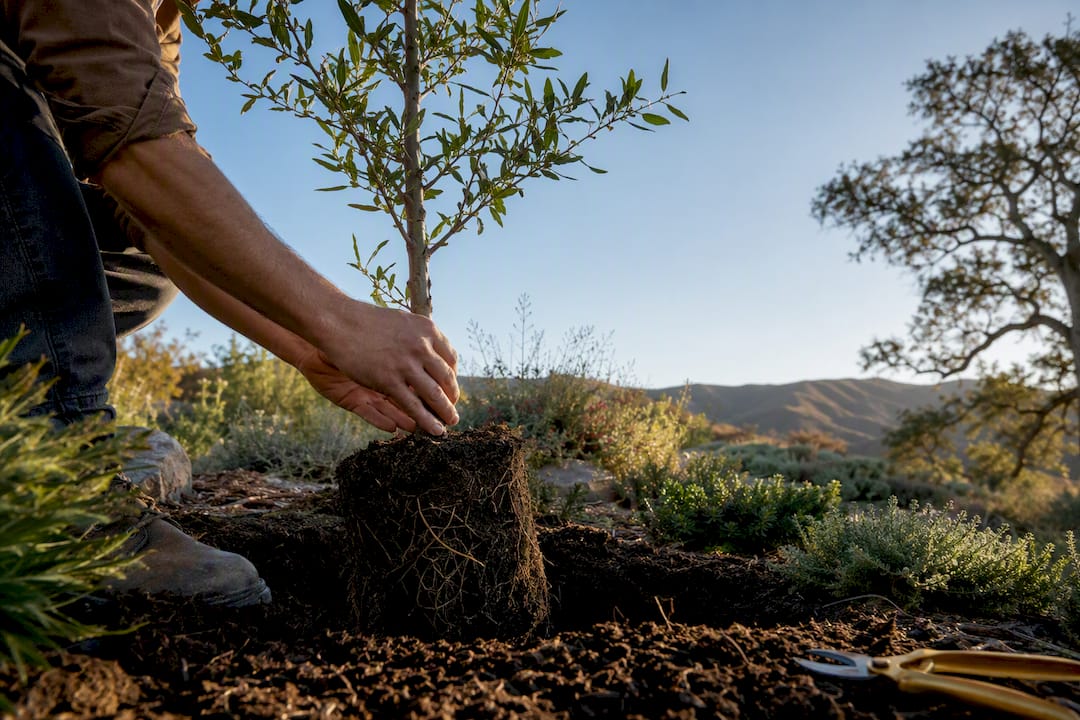
- Hands-on deliverables: a garden plan, live planting demonstrations, and troubleshooting sessions
The strongest courses end with an actual garden design project, not just quizzes. University-run programs like UC’s From Seed to Harvest course build in a final project precisely because applying the material beats memorizing it.
Pro Tip: Skipping site analysis is the single most common beginner mistake, according to gardening research on succession planting fundamentals. Map your sun, drainage, and soil before you buy a single seed packet, and you’ll avoid the failure that trips up most first-year gardeners.
How Do You Choose the Right Course?
Run any course you’re considering through this checklist before you pay:
- Does the syllabus list specific topics, or just vague promises?
- What format is it (in-person, live cohort, self-paced), and does that match your schedule?
- What are the instructor’s credentials or affiliations?
- How many hours are hands-on versus lecture?
- How long is your access (fixed term or lifetime)?
- What’s the total cost, including any materials fee?
- Is there a refund policy if the course isn’t what you expected?
- Is there post-course support, a forum, or a mentorship option?
- Does the course end in a real deliverable, like a garden plan?
- Is this aimed at hobby skills, or is it a step toward Master Gardener certification?
Red flags to walk away from: no syllabus available before purchase, no instructor bio anywhere, zero hands-on component, or vague language around refunds and access length.
Your goal shapes the answer. A hobby gardener wants practical skills fast. A community program lead wants a curriculum they can adapt for a group. Someone eyeing volunteer work should know that extension programs draw a clear line between consumer workshops and full Master Gardener certification, which takes far longer and usually requires a volunteer commitment in return.
What Does an Edible Garden Course Actually Cost?
Pricing tracks pretty closely with format and depth.
- Local workshop series: four weekly evening or weekend sessions, often around $45 to $75, with hands-on activity built into most classes.
- Self-paced single-topic course: three to six modules, lifetime or limited access, typically $75 to $149.
- Multi-course extension bundle: stacked modules across several weeks, usually $150 to $499 depending on scope.
Across extension programs and independent platforms, online edible gardening courses commonly land between $75 and $499, while self-paced permaculture-style courses often sit lower, between $50 and $200, depending on access length and instructor reputation.
Budget beyond tuition too. Seeds, soil amendments, a soil test kit, and an optional site visit can add another $30 to $150 depending on how much you already own. A course platform like Facet Cloud illustrates how providers structure cohort versus self-paced access, which is worth understanding before you compare prices across programs.
Why some edible garden academies stand out
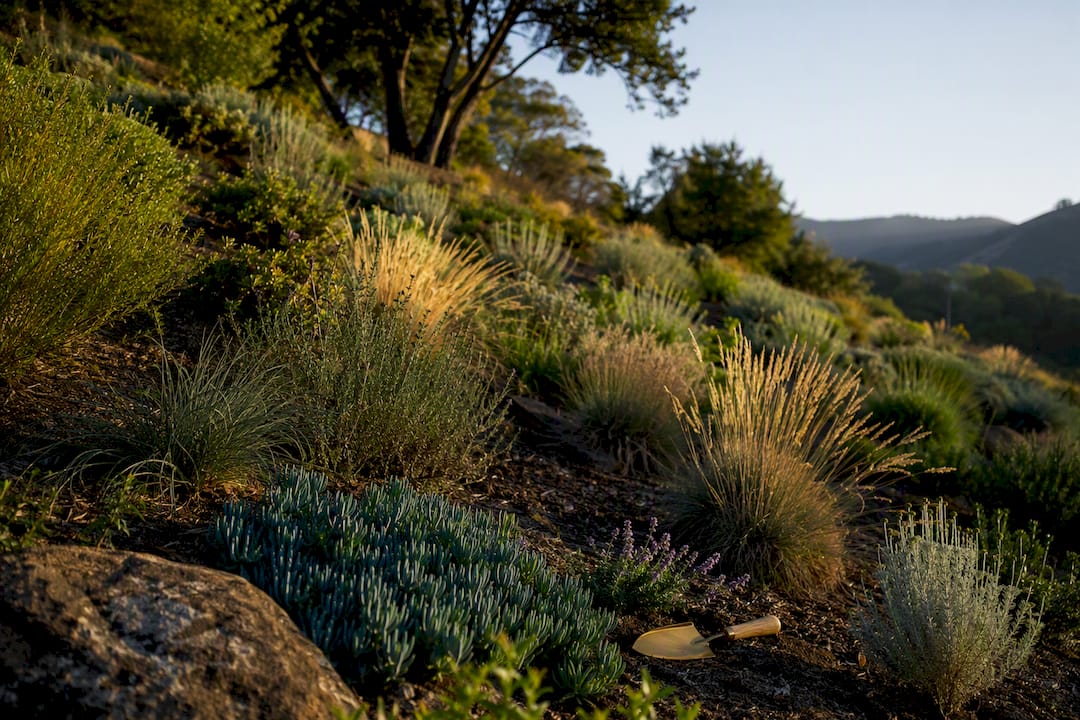
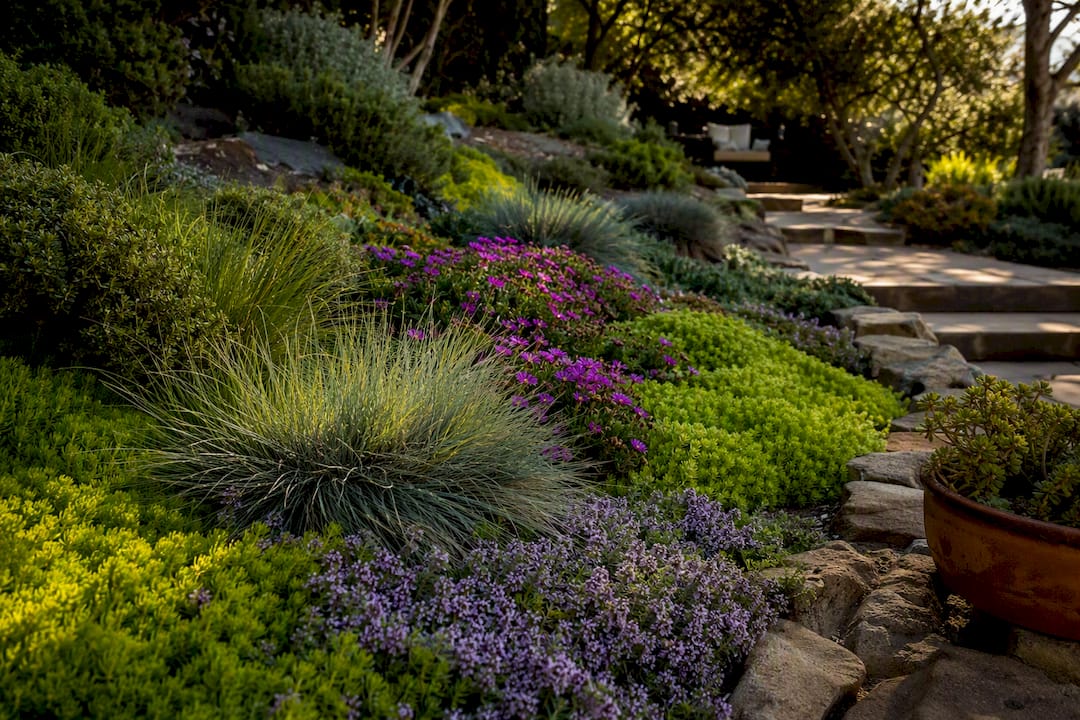
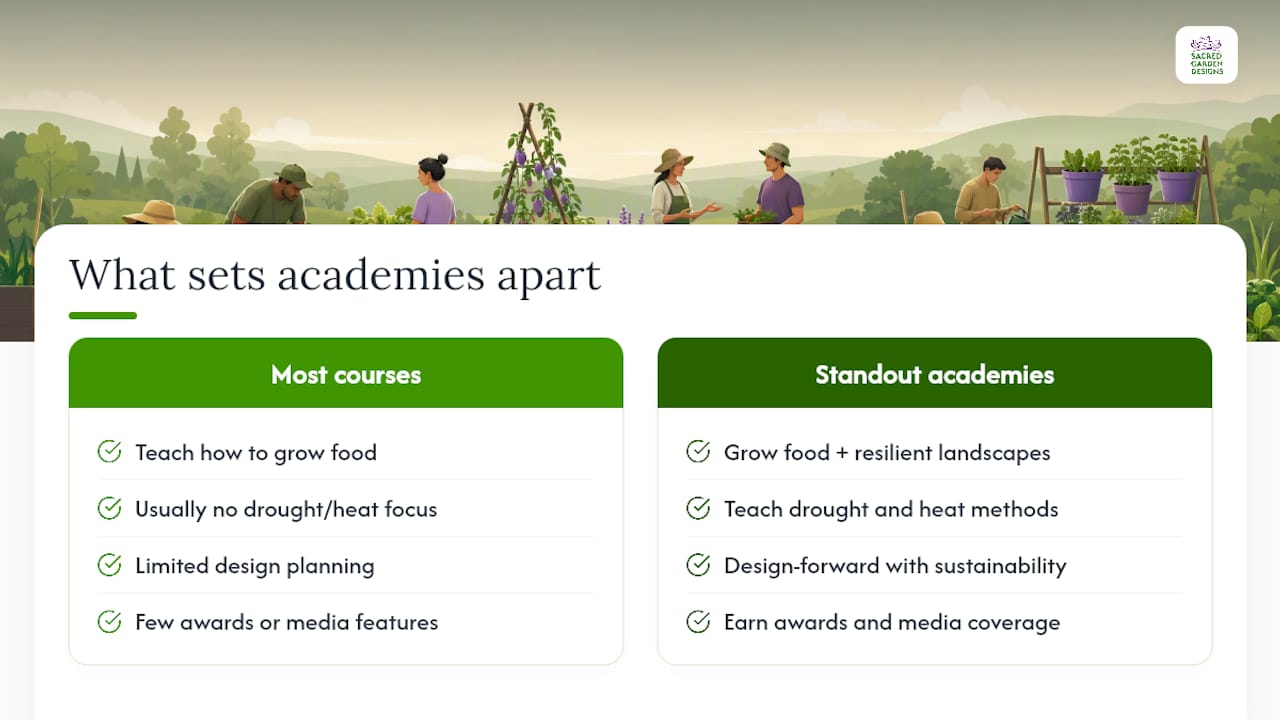
Most courses teach you to grow food, while some incorporate methods for cultivating food in landscapes designed to withstand drought and heat. Certain academies emphasize design-forward planning and sustainability alongside planting techniques, sometimes supported by awards and media features. They may combine digital modules with practical, hands-on elements drawn from residential and public-space projects.
If you want the syllabus checklist above answered with a sustainability lens built in, the Sacredgardendesigns blog is a good place to see how the curriculum translates into real projects before you commit.
A Practitioner’s Take on Why Structure Beats Trial and Error
Ad-hoc learning from scattered videos and forum posts teaches you to fix problems after they happen. A structured course teaches you to prevent them. That distinction shows up fastest with soil and site work: a beginner who maps sun and drainage in week one, then follows a planned calendar, typically reaches a full harvest cycle in one season instead of losing that first season to guesswork. Structure isn’t a nicety here. It’s the difference between learning from your own mistakes and learning from someone else’s.
— Denise Buchanan
Where to Verify Syllabus Details and Schedules
Check these directly before enrolling in anything:
- NC State Extension’s edible gardening course series for pricing and access-model examples
- UC Master Gardener’s From Seed to Harvest course for a hands-on, project-based syllabus
- Hamilton County Extension’s Food Gardening 101 for a real local workshop schedule and price point
Each link gives you the actual syllabus, schedule, and price rather than a marketing summary.
Learn Edible Gardening the Sustainable, Design-First Way
If you’ve been comparing extension workshops and generic online courses, here’s the gap most of them share: they teach you to grow vegetables, but not how to build a garden that survives a dry Los Angeles summer or a drought year without draining your water bill. Sacredgardendesigns built its edible garden academy around exactly that problem, combining hands-on planting fundamentals with the same water-wise design thinking behind 25 years of residential and public landscape projects.
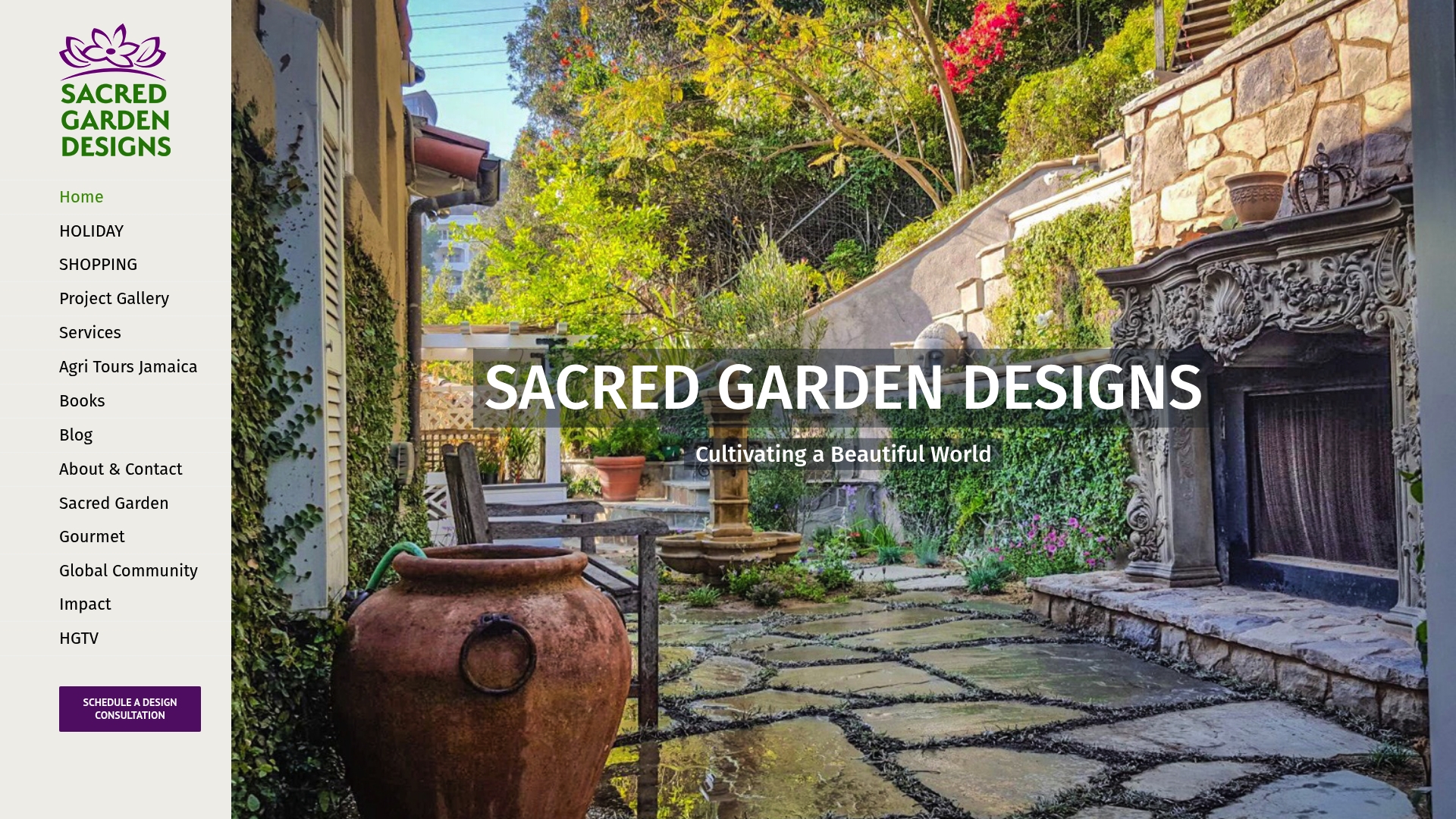
That means you’re not just learning succession planting and pest management in isolation. You’re learning how those skills fit into an irrigation-smart, drought-resilient landscape from the start, the same approach that earned Sacredgardendesigns eight HOUZZ Awards and a spot on HGTV’s Ground Rules. If your goal is a garden that actually holds up season after season, visit the Sacredgardendesigns site to explore the academy’s current course offerings and request more information on enrollment.
Sources
- Gardens, Lawns and Landscapes Series: Growing Edible Plants – Extension Gardener | NC State Extension
- Edible gardens: start here with home horticulture foundations (HGIC) — Clemson
- Food Gardening 101 | Hamilton County Extension
FAQ
What Is the 70/30 Rule in Gardening?
There’s no single agreed-upon “70/30 rule” in horticulture education; the phrase gets used loosely to describe spending roughly 70% of your effort on planning and soil prep and 30% on active planting and maintenance, which lines up with how most structured courses front-load site analysis and soil health before planting begins.
How Can I Start My Own Edible Garden?
Start by mapping your site’s sun exposure, drainage, and soil quality, then build a seasonal planting calendar around that assessment rather than buying seeds first. A structured course, whether a local workshop or Sacredgardendesigns’s edible garden academy, compresses that trial-and-error process into a guided sequence.
What Is the 3-Hour Gardening Rule?
This isn’t a standardized horticultural principle, and definitions vary depending on the source; some gardeners use it informally to describe checking on a new garden bed for roughly three hours a week during establishment, but no extension program treats it as an official guideline.
What Is an Edible Garden Called?
An edible garden is commonly called a kitchen garden, vegetable garden, or food garden, and when it combines vegetables, herbs, and fruit in one integrated space, it’s often described as a homestead or potager-style garden.