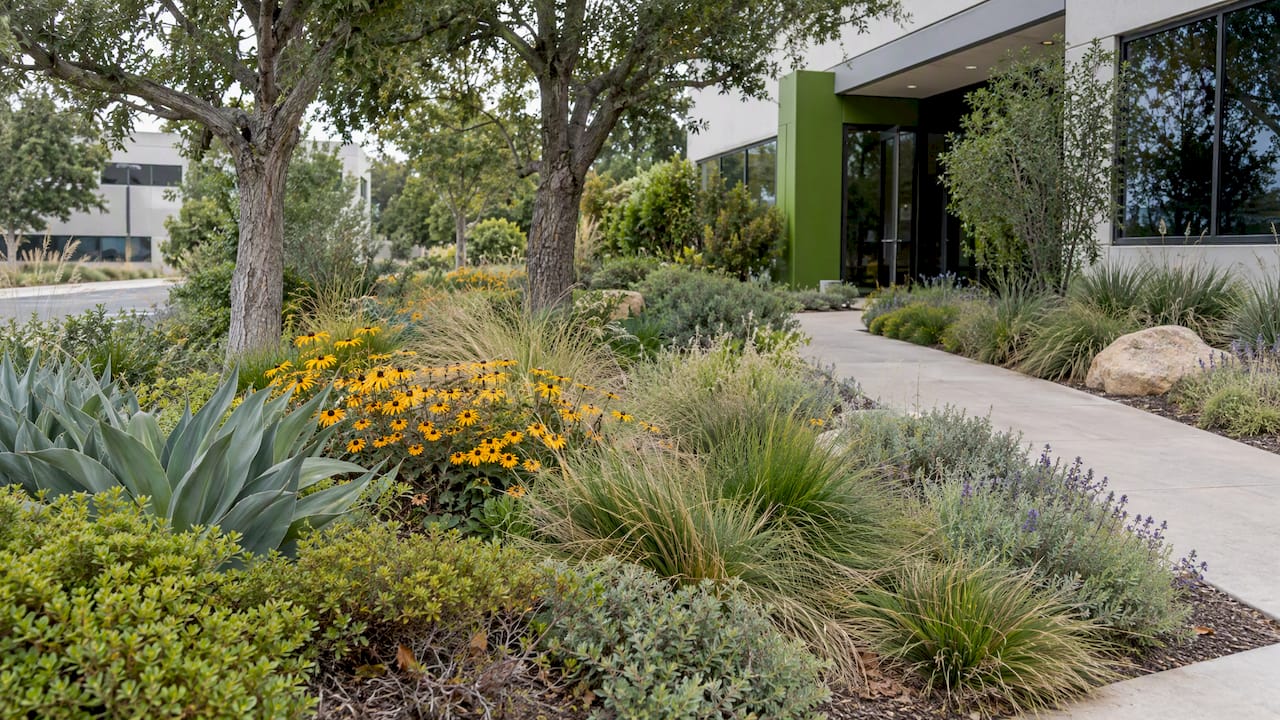
The best shade trees for a small Los Angeles yard are compact, drought-tolerant species that top out around 15 to 35 feet: Western redbud, hollyleaf cherry, Desert Museum palo verde, Chinese pistache, crape myrtle and Santa Cruz Island ironwood. The right pick depends on how much room the roots and canopy get, which side of the house the shade must fall on, and how much leaf drop and pruning you will tolerate. This guide gives you mature sizes, water needs, care and exact planting clearances, so you can choose once and not have to remove the tree later.
TL;DR
- For tight spaces, start with Western redbud, hollyleaf cherry, Desert Museum palo verde, crape myrtle or Santa Cruz Island ironwood. Chinese pistache works if you can give it a 30-foot crown.
- Plant for the west and southwest sides of the house, where the afternoon heat load is worst. A tree on the north side does very little for cooling.
- Small trees generally need at least 5 feet from structures and 3 feet from paving. Larger trees need more, and roots usually spread well beyond the canopy.
- Call DigAlert before you dig, and keep tall-growing species out from under overhead power lines.
- Water new trees deeply and infrequently so roots go down, not sideways.
Table of Contents
- What “small yard” means for a shade tree
- Shade trees that fit small Los Angeles yards
- Tree-by-tree notes
- Where to plant for real cooling
- Roots, paving and power lines: the clearances that matter
- Planting and early care
- Trees to consider carefully
- Perspective
- Get the tree and the plan right the first time
- FAQ
- Sources
What “small yard” means for a shade tree
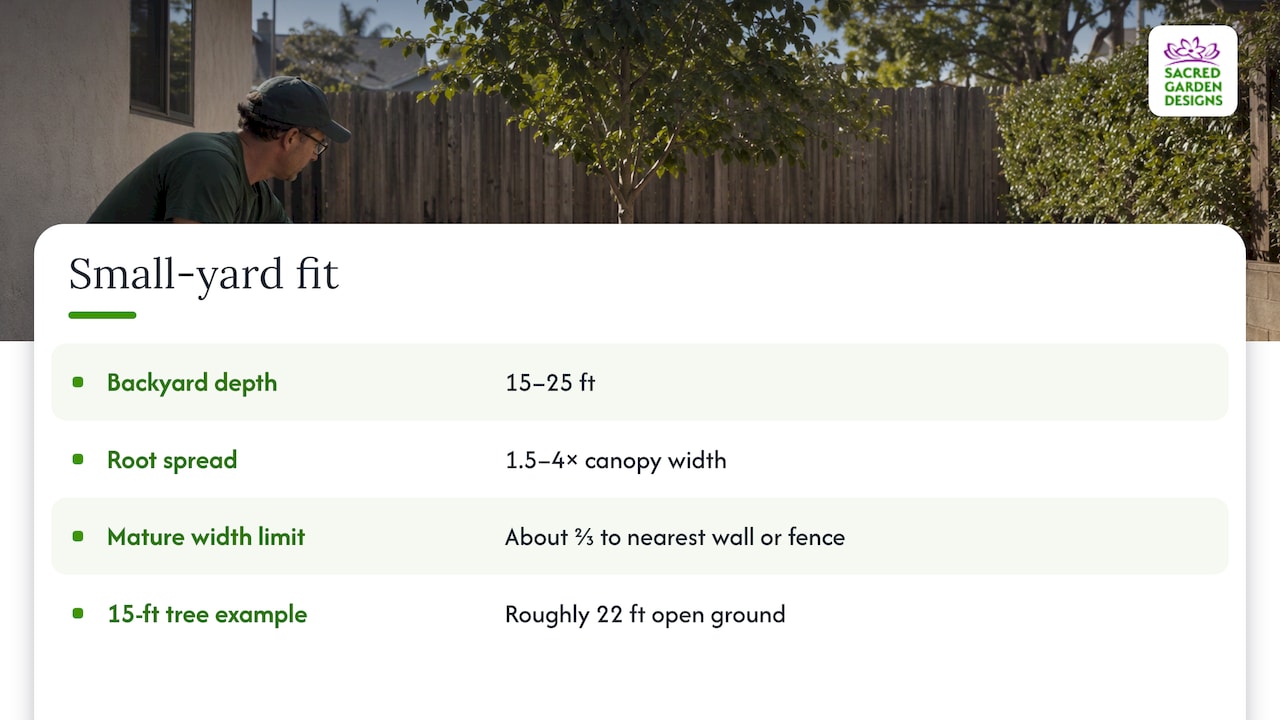
A small Los Angeles lot often means a 15 to 25 foot backyard, a patio beside a property line, or a narrow side yard. Three limits decide which tree fits, and mature size is only the first.
Canopy width. A tree listed at 30 feet tall and 30 feet wide will shade your whole yard and part of your neighbor’s. Choose by mature width as well as height.
Root room. Roots spread 1.5 to 4 times the width of the canopy, according to University of Arizona Cooperative Extension, a desert climate close to ours. Arbor Day Foundation guidance says root spread is often much larger than canopy spread, so you should err toward more clearance. In a small yard the roots reach the patio, the pool and the sewer line long before the branches do.
Overhead and underground conflicts. Power lines above and utilities below can rule out a species before you ever compare leaf shape.
A useful rule: pick a tree whose mature width is no more than about two thirds of the distance from the planting spot to the nearest wall or fence. A 15-foot-wide tree wants roughly 22 feet of open ground around it, or it will need constant pruning to stay in bounds.
Shade trees that fit small Los Angeles yards
The sizes below come from the sources linked in each row’s notes below the table. Mature size varies with soil, water and pruning, so treat each figure as a typical range, not a promise.
| Tree | Mature size | Water once established | Shade and season | Main care note |
|---|---|---|---|---|
| Western redbud | 10 to 20 ft tall, 10 to 15 ft wide | Low | Light shade, magenta spring flowers, warm fall color | Inland trees appreciate a few summer drinks |
| Hollyleaf cherry | 15 to 30 ft tall, about 25 ft wide | Low, salt tolerant | Evergreen, dappled shade | Seeds are toxic; shelter young trees from frost |
| Desert Museum palo verde | 20 to 25 ft | Very low | Dappled shade, long yellow bloom | Thornless, green trunk |
| Chinese pistache | 25 to 35 ft tall, 25 to 30 ft wide | Low | Rounded canopy, red fall color | Leaf drop in late fall |
| Crape myrtle | 15 to 25 ft | Moderate | Dappled shade, summer bloom, fall color | Light annual pruning; older types get powdery mildew |
| Santa Cruz Island ironwood | About 15 ft | Little summer water | Evergreen, lacy foliage, peeling bark | Native; give it a sheltered, well-drained spot |
Sizes for redbud, hollyleaf cherry and crape myrtle are from Green Thumb Nursery’s Southern California shade tree guide. Palo verde figures are from Southland Nursery’s Los Angeles shade tree page. Pistache numbers are from the UC Master Gardener Program. Ironwood details are from Cistus Nursery’s plant listing.
Tree-by-tree notes
Western redbud: the easy first choice
Western redbud is a California native that grows fast for its size and puts on magenta flowers in spring and warm color in fall. It is a light-shade tree, so it suits a patio corner where you want filtered sun, not a dark cave. It is low water overall, though trees inland, where summers run hotter, appreciate occasional deep watering.
Hollyleaf cherry: evergreen and coastal-friendly
Hollyleaf cherry stays green all year and gives dappled shade. Once established it is drought tolerant and salt tolerant, which makes it a strong fit for coastal gardens. Young trees are frost tender, so give them a sheltered spot while they get going. The seeds are toxic, so think twice before planting it where small children or pets forage under the branches.
Desert Museum palo verde: the lowest-water option
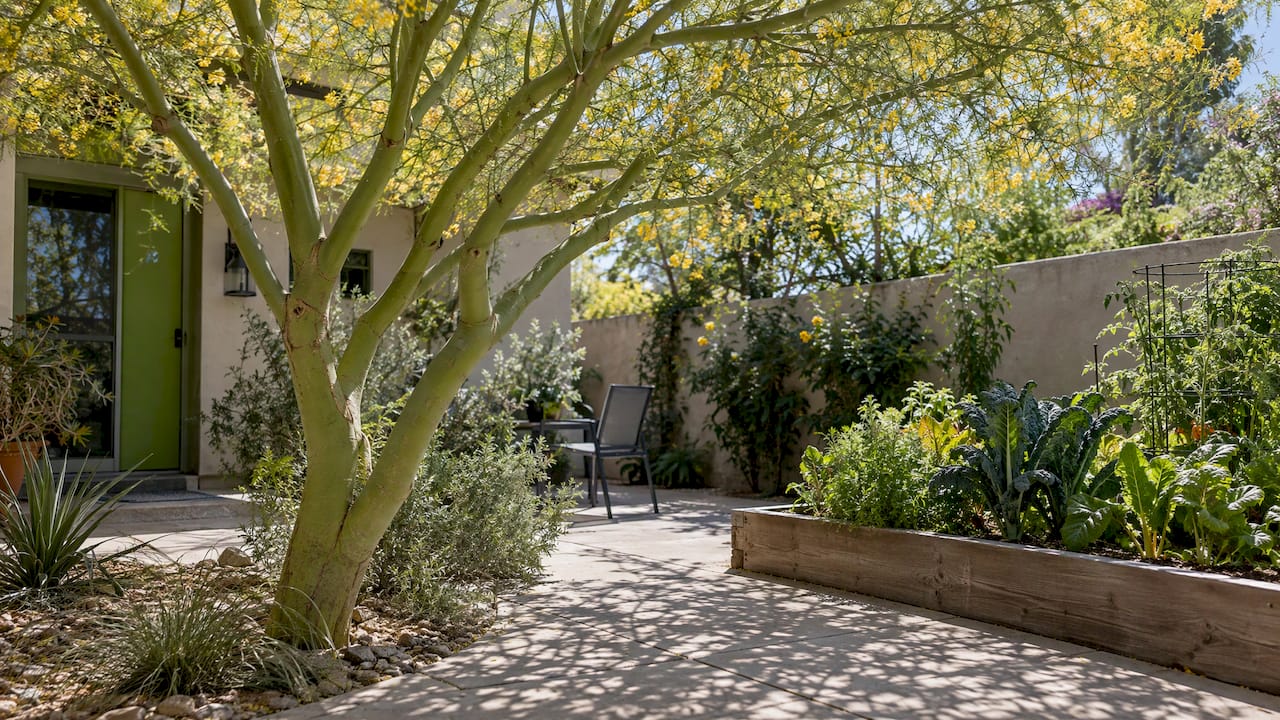
This thornless, green-trunked tree blooms yellow over a long season and needs essentially no irrigation once established. The shade is dappled rather than deep. That is a real advantage on a patio or beside a vegetable bed, where you want a cooler microclimate without losing all your light. If you want a dense, dark canopy, pick a different species.
Chinese pistache: the largest tree on the list
The UC Master Gardener Program describes Chinese pistache as a desirable tree where space is limited, with a usual mature height of 35 feet and a crown about 30 feet across. It describes the tree as heat and drought tolerant, pest-free and fire resistant, with deep, non-aggressive roots that make it a safe selection near patios and sidewalks. Leaf drop in late fall is the only significant maintenance issue. Structural pruning from an early age encourages a rounded, umbrella-like canopy. If your yard can handle a 30-foot crown, this is one of the most reliable choices in the Los Angeles basin. If it cannot, choose something smaller.
Crape myrtle: summer color with a pruning habit
Crape myrtle gives dappled shade, summer bloom and fall color at about 15 to 25 feet. It needs light pruning each year for the best flowers. Older Lagerstroemia indica types tend to get powdery mildew, so ask for a mildew-resistant hybrid when you buy. It is the one tree here that wants more than occasional water, so it fits best near an irrigated bed.
Santa Cruz Island ironwood: a native with character
This California native is evergreen, reaches about 15 feet, and has lacy foliage, honey-brown peeling bark and small white flowers in early summer. It is cold hardy to roughly 10 to 15°F and needs little summer water once established. It is a good fit for a narrow side yard where a smaller tree is the point.
Island oak: a compact oak with a conservation story
Cal Poly’s SelecTree describes island oak as a smooth-barked, medium-sized evergreen with a rounded, dark green canopy that grows fast and needs little maintenance in cultivation. The same page notes that in the wild it is the rarest California oak and is listed as endangered, so buy from a reputable grower of nursery-propagated stock. It is a larger tree than the ironwood, so check the mature size before you plant it in a small yard.
Where to plant for real cooling
Shade only cools the house if it lands in the right place. Southland Nursery advises that the west and southwest sides matter most, because that is where the worst afternoon heat arrives. A tree on the north side gives very little cooling benefit.
Practical placement rules:
- Shade the west wall and west windows first. Put the trunk far enough out that the mature canopy reaches the wall without touching the roof.
- Shade the patio or air conditioner next. Dappled trees such as palo verde or redbud keep a seating area bright but cooler.
- Keep the tree off the south side if you want winter sun. A deciduous tree such as Chinese pistache or crape myrtle lets light through when its leaves drop.
- Combine the tree with other shade. A young tree takes years to reach its full canopy, so patio shade ideas can cover the gap while it grows.
Our own write-up on how trees lower urban heat covers the evidence for neighborhoods and for single homes.
Roots, paving and power lines: the clearances that matter
Most tree regrets in small yards come from a tree planted too close to something. The UC Statewide Integrated Pest Management Program says to check proximity to structures, pavement, overhead lines and underground utilities, and to learn each candidate’s mature size. It adds that most small trees should be at least 5 feet from structures and 3 feet from paved areas, with larger trees farther away. It also says not to plant tall-growing species beneath utility lines.
The USDA Forest Service’s Tree Owner’s Manual is stricter. It says a planting spot should be at least 3 feet from pavement or fencing on all sides, 15 feet from buildings or other trees, and 25 feet from overhead electric wires if the tree will grow taller than 30 feet. Local rules can be stricter again. The City of Long Beach requires canopy trees at least 10 feet from the house foundation and 5 feet from fences, patios, driveways and sidewalks. Check your own city’s rules before you plant, especially for parkway trees.
A few more points:
- Call before you dig. Long Beach’s sheet tells owners to call DigAlert at (800) 227-2600 at least two days before digging, and the Forest Service manual asks for 72 hours’ notice to the locating service. Allow the longer time.
- Paving matters too. Iowa State University Extension notes that concrete pavers, bricks, rubber pavers or flexible asphalt accommodate roots better than rigid concrete. If you are building a patio near a new tree, flexible surfaces are worth the thought. Our guide to a decomposed granite patio shows one root-friendly surface.
- Keep big species out. Southland Nursery warns that sycamore and elm roots match their size, so keep large species well away from foundations, pools, driveways and sewer lines.
- Fences and property lines. If the tree will sit near a boundary, review fence height rules in Los Angeles before you plan a screen.
Planting and early care
Good planting matters as much as the species. Southland Nursery advises watering new shade trees deeply and infrequently rather than briefly and often, so roots go down instead of sideways. Stake only if the tree needs it, and remove stakes within a year.
A simple first-year routine:
- Plant in cooler months, so roots establish before the first summer. Our guide to planting native trees and shrubs in winter explains the timing.
- Mulch the root zone, but keep mulch off the trunk.
- Water deeply on a schedule that follows Los Angeles irrigation rules, including the allowed days and hours.
- Taper the watering as the tree matures. Native and Mediterranean species usually need far less once established.
- Prune for structure in the first few years, not just for size. Pistache and olive-type trees reward early shaping.
In dry years, established trees still need attention. Our drought tree care guide covers how to keep them alive when rainfall falls short.
Trees to consider carefully
Some popular choices need a second look before they go into a small yard.
- Coast live oak. It is a beautiful native, but Green Thumb Nursery lists it at about 70 feet tall and wide, and it has moderate root-lifting potential. It needs room away from pavement and very little summer water. Overwatering a mature oak invites crown rot and oak root fungus. It belongs on a large lot, not a small one.
- Fast, big shade trees. Anything that reaches 40 to 50 feet wide will overwhelm a small yard, however well it grows. Fruitless mulberry is a common example, and its mature size varies by cultivar, so check the label.
- Anything under power lines. Arbor Day Foundation guidance says tall trees planted beneath lines need constant pruning that leaves them less attractive and less vigorous.
- Toxic seed. Hollyleaf cherry seeds are toxic, so place it with children and pets in mind.
What goes underneath matters as well. See our guides to shade plants for Los Angeles and drought-tolerant groundcovers for planting beneath your new canopy.
Perspective
We have designed and built water-wise landscapes in Los Angeles for over 25 years, and the most common shade tree mistake we see is choosing a tree by how it looks in a one-gallon pot. Small yards punish that. A tree that is 20 feet wide at maturity does not stay a charming sapling, and it will find your patio, your pool plumbing and your neighbor’s fence.
Our approach is to start with the site and work backward. We look at which walls take the afternoon sun, where the utilities and roots will run, and how much water the garden really has to give. Then we choose a tree that suits the space at its mature size, so it can be left to grow into shade instead of being cut back every year.
We favor native and Mediterranean species because they are built for Los Angeles summers, and we pair them with groundcovers, drip irrigation and mulch so the whole planting area works as one system. A tree is not an ornament. In a small yard it is the cooling system, the privacy screen and the focal point at once, and it deserves a plan.
Denise Buchanan
Get the tree and the plan right the first time
If you would rather not guess at clearances, mature canopies and irrigation, we can do the planning for you. Our landscape design service covers yards under 5,000 square feet at $1,500, and a full landscape design is $2,500. We can fold tree selection, placement, irrigation and hardscape into one plan that fits your lot.
See our landscape design services for what each package includes, or browse our full list of services, including irrigation design, patios and decks, tree trimming and garden maintenance.
FAQ
What is the best small shade tree for Los Angeles?
There is no single best tree, but Western redbud, hollyleaf cherry and Desert Museum palo verde are strong small-yard picks. They stay under about 30 feet and need little water once established. Choose by where you need shade and how much root room you have.
How far from my house should I plant a shade tree?
UC guidance puts most small trees at least 5 feet from structures and 3 feet from paving, and larger trees farther. The USDA Forest Service suggests 15 feet from buildings, and Long Beach requires 10 feet for canopy trees. Use the larger figure when you can, and check your city’s rules.
Which side of the house should the tree go on?
Plant on the west and southwest sides, where afternoon heat is strongest. A tree on the north side provides very little cooling. If you want winter sun on the south side, choose a deciduous tree.
Do small shade trees need a lot of water?
Not once established. Redbud, hollyleaf cherry, palo verde, pistache and ironwood are low water, while crape myrtle and dwarf citrus need more. New trees of any type need deep, infrequent watering for the first year or two.
Can I plant a tree near a patio or sidewalk?
Yes, if you choose the species and the spacing carefully. The UC Master Gardener Program calls Chinese pistache a safe selection near patios and sidewalks because its roots are deep and non-aggressive. Keep at least the minimum clearances above, and consider flexible paving near the trunk.
Sources
- Green Thumb Nursery: Shade tree options for your SoCal yard
- Southland Nursery: Shade trees in Los Angeles
- UC Master Gardener Program: Pistacia chinensis (Chinese pistache)
- Cistus Nursery: Lyonothamnus floribundus var. aspleniifolius
- Cal Poly SelecTree: Island oak
- UC IPM: Choose a good location
- USDA Forest Service Tree Owner’s Manual
- City of Long Beach: Tree planting fact sheet
- Iowa State University Extension: Managing trees near sidewalks
- University of Arizona Cooperative Extension: Choosing the right plants
- Arbor Day Foundation: Choose the right tree planting site
- Patio shade ideas